

15 May What Is Architectural Visualization? A Practical Guide for Real Estate Marketing Teams
Architectural Visualization Defined: More Than Just Pretty Pictures
Architectural visualization is the practice of creating digital representations of buildings, interiors, and developments before, during, or after construction. It spans a wide range of deliverables — photorealistic 3D renders, 360-degree virtual tours, aerial drone footage, cinematic property videos, and interactive walkthroughs — all designed to communicate what a space looks and feels like without requiring a physical visit.
That definition matters because the term is frequently misunderstood. Many marketing leads and founders first encounter “architectural visualization” and assume it means a single glamorous hero image of a building. In reality, it is a full production discipline encompassing spatial modeling, material simulation, lighting design, camera work, post-production compositing, and distribution-ready output across multiple formats.
How Visualization Differs from Traditional Photography and Floor Plans
Traditional real estate photography captures what already exists. A photographer walks into a finished apartment, sets up lighting, and shoots. Floor plans translate spatial dimensions into a two-dimensional diagram. Both are reactive — they document the current state of a property.
Architectural visualization, by contrast, is generative. It creates visual assets for properties that may not yet exist, that exist but need to be shown in an idealized state, or that need to be placed in a broader site context that no single photograph can capture. A 3D render can show a condominium tower two years before groundbreaking. A virtual tour can let a buyer in Singapore walk through a Tokyo apartment without booking a flight. Drone imaging can place a single building within the full context of its neighborhood, transit connections, and surrounding landscape — something a ground-level photograph cannot achieve.
The practical gap between a smartphone photo and a professional 3D render is not merely aesthetic. It affects how prospects perceive the brand behind the property. A low-quality listing image communicates low-quality development. Research consistently shows that visual quality directly influences inquiry volume, time on listing pages, and ultimately transaction speed.
From Hand-Drawn Perspectives to Real-Time Rendering Engines
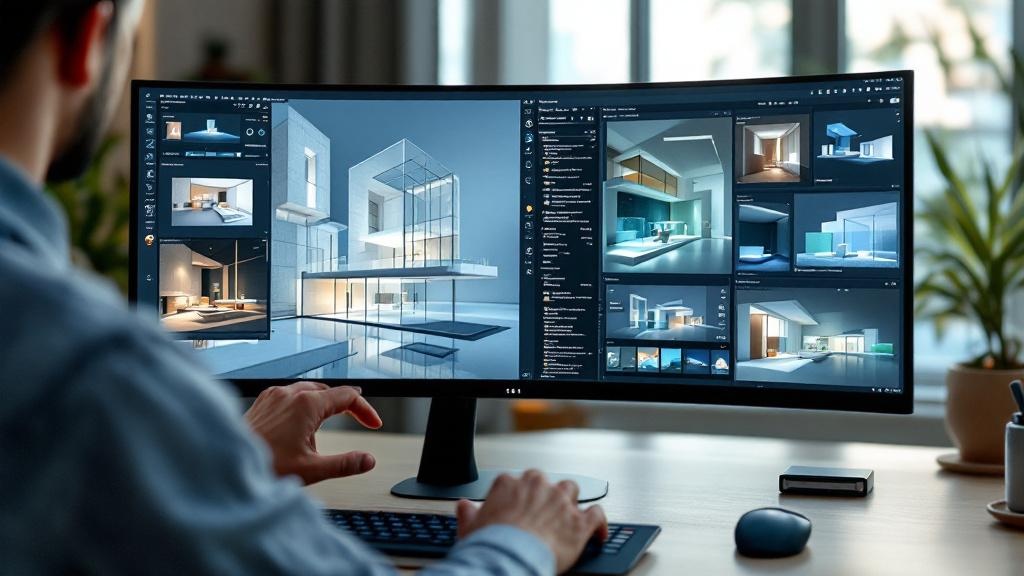
The discipline has a longer history than most marketing teams realize. Architects have produced perspective drawings since the Renaissance. By the mid-20th century, watercolor renderings and airbrush illustrations were standard deliverables for major development proposals. The shift to digital began in the 1990s with software like 3ds Max and AutoCAD, which allowed modelers to construct three-dimensional geometry and apply rudimentary textures and lighting.
The real inflection point came with GPU-accelerated rendering engines — V-Ray, Corona, and later real-time platforms like Unreal Engine, Twinmotion, and Lumion. These tools compressed rendering times from hours to minutes (or seconds, in the case of real-time engines), making visualization economically viable for mid-market projects rather than exclusively for trophy developments. Today, BIM-native workflows allow visualization artists to pull geometry directly from Revit or ArchiCAD models, eliminating redundant modeling steps and improving dimensional accuracy. Japan’s BIM adoption rate reached 58.7% in 2024, meaning a growing share of projects arrive at the visualization stage with usable digital geometry already in place.
The Five Core Deliverables in Modern Property Visualization
Understanding what architectural visualization includes — concretely, at the deliverable level — helps marketing teams scope projects accurately and evaluate vendor proposals with confidence.
Photorealistic 3D Renders
The most common deliverable. Exterior renders show a building in its site context, with accurate materials, landscaping, and ambient lighting. Interior renders show furnished spaces with realistic textures, natural light simulation, and styled decor. These are used for pre-construction marketing (where the building does not yet exist), renovation marketing (showing the intended result), and listing upgrades for existing properties.
In the Japanese market, photorealistic CG renders for residential properties typically range from ¥30,000 to ¥100,000 per image for mid-tier work, with commercial and high-rise projects commanding ¥150,000 to ¥300,000 or more per image depending on complexity.
360-Degree Virtual Tours and Interactive Walkthroughs
Virtual tours allow users to navigate through a space at their own pace, typically via web browser or VR headset. They range from photography-based tours (captured with 360-degree cameras like Matterport) to fully CG-generated walkthroughs built in game engines.
The business case is straightforward: listings with virtual tours see 87% more page views than those without, and properties sell up to 31% faster according to a Texas Tech University analysis of over 140,000 MLS transactions. A separate study published in *Information Systems Research*, analyzing 43,000 transactions on a major Chinese real estate platform, found that VR tours reduced average time on market from 34 days to 19 days — a 44% improvement — without affecting sale price.
Aerial and Drone Imaging
Drone footage provides site context that ground-level photography cannot. For large-scale developments, logistics hubs, resort properties, and mixed-use projects, aerial perspectives show the relationship between the property and its surrounding infrastructure — transit stations, parks, waterfront access, commercial districts.
Japan’s drone services market has grown rapidly, reaching ¥385.4 billion in fiscal 2023 with projections of ¥549 billion by fiscal 2025. Regulatory changes under Japan’s revised Aviation Act — including the national pilot certification system launched in December 2022 — have professionalized the industry and made licensed commercial drone operations more accessible. For real estate-specific shoots, average transaction prices run around ¥57,721 per flight, making drone imaging one of the most cost-effective visualization deliverables available.
Cinematic Property Videos
Scripted video production combines 3D animation, live-action footage, voiceover narration, and music to tell a property’s story. These are not simple walkthrough recordings — they are produced content designed for marketing campaigns, investor presentations, and social media distribution.
The impact on lead generation is significant. Properties marketed with video receive 403% more inquiries than those without, according to National Association of Realtors data. In Japan, video advertising spend continues to climb as part of the broader digital marketing shift, reinforcing the channel’s effectiveness for property marketing specifically.
Marketing Collateral — Brochures, Social Assets, Digital Presentations
Visualization assets do not live in isolation. They feed into brochures, pitch decks, social media campaigns, email marketing, and digital signage. A single 3D render might be repurposed as a hero image on a landing page, a carousel post on LinkedIn, a print brochure cover, and a slide in an investor presentation. Professional visualization vendors deliver assets in multiple resolutions and aspect ratios precisely for this purpose — ensuring that a single production investment generates value across every marketing channel.
Why Real Estate Teams Are Investing Now
The shift toward visualization is not speculative. It is supported by transaction data, behavioral research, and structural market changes that make the investment case increasingly difficult to ignore.
The Numbers Are Hard to Argue With
The statistics cited above — 403% more inquiries for video listings, 87% more page views for virtual tour listings, up to 31% faster sales for Matterport-equipped properties — come from large-sample studies, not vendor marketing claims. The UT Dallas research, published in a peer-reviewed journal, analyzed 43,000 real transactions and found that VR tours accelerate sales without depressing price, suggesting they improve information transparency rather than simply attracting bargain hunters.
A Matterport buyer survey found that over 55% of respondents would purchase a property without visiting in person if a high-quality 3D walkthrough were available. For cross-border transactions — where Japan saw ¥939.7 billion in foreign residential property purchases in 2024, up 63% year-over-year — remote decision-making tools are not a convenience. They are the transaction infrastructure.
Japan’s Online Viewing Shift Is Structural
In 2024, 37.4% of Tokyo-area renters conducted online viewings before signing a lease — the highest figure since tracking began and a clear upward trend from 27.5% in 2021 and 32.5% in 2022. The RSC 2025 survey found that 49% of prospective renters now prefer online IT-based property briefings, also a record high.
This is not a pandemic hangover. It is a structural change in how Japanese consumers evaluate properties, driven by convenience expectations, digital-native demographics entering the housing market, and the simple effectiveness of visual media in communicating spatial information. Real estate teams that lack professional visualization assets are increasingly invisible to the segment of the market that begins — and often completes — its property search online.
When Does Visualization Pay Off? Use Cases by Property Type
Not every property or transaction type benefits equally from visualization investment. Understanding where the return is strongest helps marketing teams prioritize budgets.
| Use Case | Why Visualization Pays Off | Key Deliverables |
|---|---|---|
| **Pre-construction condominiums** | No physical product to photograph; buyers decide based entirely on visual representations | 3D exterior/interior renders, virtual tours, cinematic video |
| **Grade A office leasing** | Tokyo vacancy at [3.4% with rents up 4.9% YoY](https://nippontradings.com/japans-real-estate-market-2024-2025-trends-challenges-and-opportunities/) means tenants have choices; visual differentiation matters | Virtual tours, drone site context, digital presentations |
| **Tourism and hospitality** | Inbound visitors evaluating accommodation remotely; visual quality directly influences booking | Cinematic video, 360-degree tours, aerial imaging |
| **Cross-border investment** | Buyers in Taiwan, Singapore, and mainland China [cannot visit in person](https://asia.nikkei.com/business/markets/property/japan-frets-over-land-purchases-by-foreigners-near-sensitive-sites); 89% of Chinese investors expressed interest in online property tours | Full-CG virtual tours, multilingual video, interactive walkthroughs |
Pre-Construction Sales
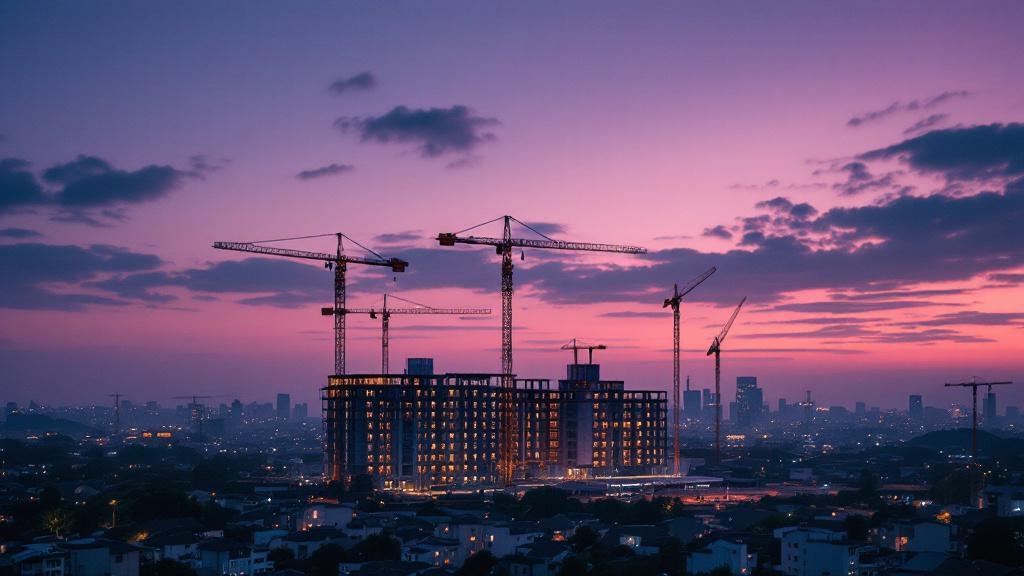
This is the original and still the strongest use case. When the building does not yet exist, visualization is the only way to sell. Condominium developers in Tokyo and Osaka routinely commission full visualization packages — exterior renders, interior room-type renders, common area walkthroughs, and cinematic promotional videos — as core sales collateral. Platforms like ROOV, which achieved the top market share for new condominium visualization in Japan, demonstrate how deeply embedded visualization has become in the pre-construction sales workflow.
Office Leasing in a Tightening Market
With Tokyo’s Grade A office vacancy holding at 3.4%, the leasing market has shifted from a landlord’s market to a competitive one where tenants evaluate multiple options side by side. Virtual tours and drone-captured site context help leasing teams differentiate their properties from comparable offerings, particularly when targeting multinational tenants who may be evaluating Tokyo office space from overseas headquarters.
Tourism and Hospitality
Japan welcomed record inbound tourism in 2024, and hospitality properties compete intensely for visibility on booking platforms. Professional visualization — particularly cinematic video and 360-degree tours — gives hotels, ryokan, and serviced apartments a measurable edge in conversion rates on platforms where visual quality directly determines click-through and booking behavior.
Cross-Border Investment
Foreign investment in Japanese real estate reached ¥4.66 trillion in 2024, a ten-year high. When institutional investors and high-net-worth individuals in Taiwan, Singapore, and Hong Kong evaluate Japanese properties, they rely almost entirely on digital assets. Visualization is not a marketing enhancement for this segment — it is the primary sales channel. Firms offering architectural and real estate visualization services with bilingual delivery capability are particularly well-positioned to serve this growing cross-border demand.
Common Misconceptions That Delay Adoption
Despite the clear evidence supporting visualization investment, several persistent misconceptions prevent real estate marketing teams from moving forward.
“It’s Only for Luxury Projects”
This is the most common objection and the most wrong. High-end developments have used visualization for decades — that much is true. But the ROI case is often stronger for mid-market properties, where marginal improvements in inquiry volume and time-on-market translate directly to cash flow improvements that matter more to the developer’s bottom line. A luxury tower will sell regardless of whether its marketing materials include a virtual tour. A mid-market condominium competing against ten comparable projects in the same ward may live or die on whether its listing generates enough clicks to fill an open house.
The cost structure has also shifted dramatically. Cloud-based rendering platforms and real-time engines like Twinmotion — which is free for companies earning under $1 million annually — have made professional-quality visualization accessible to projects with modest marketing budgets. AI-assisted tools have further compressed costs at the lower end, with some Japanese providers now offering floor-plan-to-VR conversion starting at ¥13,200 per image.
“We Can Do It with Our Phone Camera”
Smartphone cameras have improved enormously, and for certain listing types — particularly furnished rental apartments — a well-lit phone photo may suffice. But for any property where brand perception matters, the quality gap between smartphone photography and professional visualization is immediately visible to buyers. It affects perceived property value, developer credibility, and the likelihood that a prospect will inquire rather than scroll past.
The gap is especially pronounced for pre-construction marketing (where there is nothing to photograph), site context (where drone imaging is required), and interior staging (where virtual staging outperforms empty-room photography in every measurable metric). The question is not whether phone cameras are “good enough” in absolute terms. It is whether your competitors are using professional visualization — because if they are, your phone photos position your property as the lesser option.
“It Takes Too Long”
This was a valid concern a decade ago, when a single photorealistic render could take days to produce and weeks to revise. Modern real-time rendering engines have compressed turnaround to hours for simple scenes and days for complex projects. Real-time platforms like Unreal Engine and Twinmotion allow visualization artists to make material, lighting, and camera adjustments in real time, with clients watching changes live during review sessions.
For photography-based virtual tours (Matterport-style), a typical apartment can be scanned in under an hour and published within 24 hours. For CG-based visualization, turnaround depends on project complexity, but competitive Japanese vendors routinely deliver initial drafts within five to seven business days for standard residential renders. The bottleneck in most projects is not production time — it is the client’s own internal review and approval cycle.
| Misconception | Reality | Evidence |
|---|---|---|
| Only for luxury | Mid-market ROI is often higher due to competitive pressure | AI-assisted VR from ¥13,200/image; Twinmotion free for sub-¥150M revenue firms |
| Phone camera is fine | Quality gap directly impacts inquiry volume and brand perception | Video listings generate 403% more inquiries (NAR) |
| Takes too long | Real-time engines deliver drafts in days, not weeks | Matterport scans publish in 24 hours; CG drafts in 5–7 business days |
Where to Start
For marketing teams exploring architectural visualization for the first time, the entry point does not need to be a full production package. A single photorealistic render of a key property, or a Matterport-style virtual tour of a flagship listing, provides a low-risk way to test the impact on inquiry volume and prospect engagement before committing to a broader visualization strategy.
The important thing is to start with a clear understanding of what property visualization includes, which deliverables match your property type and sales channel, and what the realistic cost and timeline expectations are. This article has covered those foundations. The remaining articles in this series will address how to compare vendors, evaluate pricing models, and build a visualization workflow that scales with your portfolio.
If you are exploring how architectural visualization could strengthen your property marketing, DMPJ offers a full suite of services — from photorealistic 3D rendering to cinematic video production — tailored to the Japan market. Visit our professional property visualization page to see how we bring properties to life.
Sorry, the comment form is closed at this time.