

29 May Smart Aquaculture in Japan: How AI and IoT Are Reshaping a ¥1.5 Trillion Industry
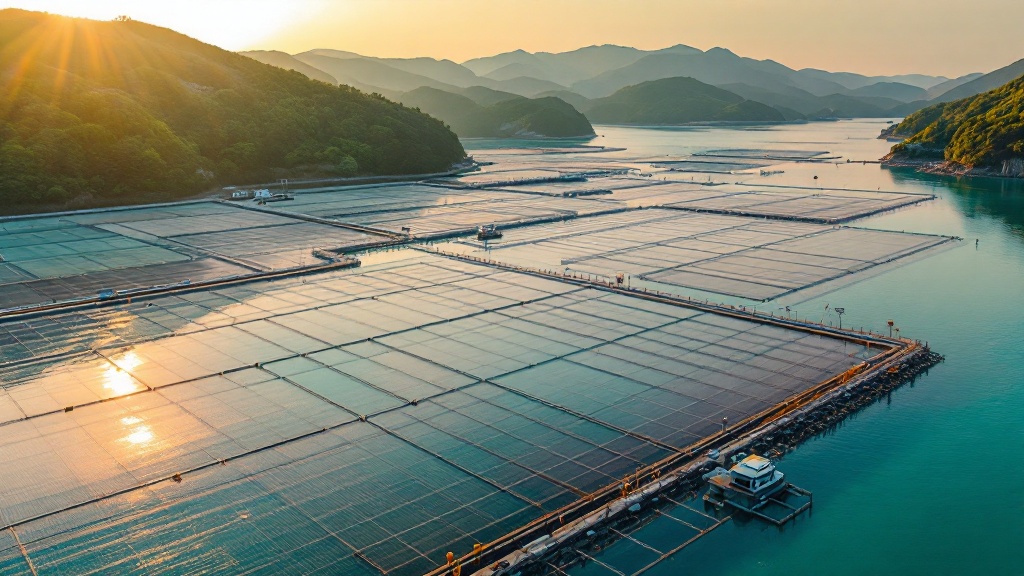
Japan has farmed the sea for centuries. Nori cultivation dates back to the Edo period, and yellowtail ranching in Kagoshima helped define modern aquaculture. But the industry that sustained coastal communities for generations now faces a collision of crises — a rapidly aging workforce, rising feed costs, and ocean conditions shifting faster than tradition can adapt. The response has been a wave of japan fisheries technology innovation that is fundamentally rewriting how fish are raised, monitored, and brought to market. Smart aquaculture in Japan is no longer a niche experiment. It is the sector’s survival strategy.
This article breaks down the technologies driving the transformation, the market forces behind them, and what international companies should understand before entering one of the world’s most sophisticated — and most regulated — seafood markets.
Why Japan’s Marine Industries Are at an Inflection Point
Japan’s aquaculture sector is growing, but under enormous structural pressure. Production volume reached an estimated 999.8 thousand metric tons in 2025, and forecasters project a 2.8% compound annual growth rate through 2033, when output is expected to hit approximately 1,280 thousand metric tons. Revenue tells a similar story: Japan’s sustainable aquaculture market reached USD 4.07 billion in 2024 and is projected to climb to USD 5.46 billion by 2030.
Yet these growth numbers mask a demographic crisis. The average age of aquaculture operators now exceeds 65 years. The total workforce has been halved over the past two decades, falling to roughly 137,000 workers — and recruitment from younger generations has not kept pace. Japan’s prefectural fisheries production data shows concentration in just a handful of regions, with Hokkaido alone accounting for over 870,000 tons of total catch, underscoring the vulnerability of relying on aging labor in geographically dispersed operations.
The government’s response has been direct. In 2024, the Ministry of Agriculture, Forestry and Fisheries (MAFF) published the Agricultural Research Innovation Strategy 2024, targeting food security, environmental sustainability, and productivity gains in a shrinking labor pool. In February 2026, four major institutions — the Japan Fisheries Research and Education Agency, the Japan Fisheries Association, Tokyo University of Marine Science and Technology, and the Bio-oriented Technology Research Advancement Institution — signed a formal partnership agreement to accelerate the commercialization of aquaculture innovation. These are not aspirational white papers. They represent funded, institutional commitments to making technology the backbone of Japan’s fisheries future.
The Five Pillars of Smart Aquaculture Technology
The term “smart aquaculture” covers a broad set of technologies, but in Japan the most commercially advanced solutions cluster around five distinct pillars. Together, they form a technology stack that is shifting the sector from intuition-driven operations to data-driven precision.
| Pillar | Core Function | Documented Impact |
|---|---|---|
| AI-Powered Feeding | Analyzes fish appetite in real time to automate and optimize feed delivery | 10–20% reduction in feed costs |
| IoT Environmental Monitoring | Tracks water quality, temperature, and dissolved oxygen continuously | Enables early intervention for disease and environmental shifts |
| Computer Vision | Deep-learning image analysis for health assessment and biomass estimation | Replaces manual sampling with automated precision |
| Autonomous Underwater Drones | Inspects nets, monitors subsurface structures without human divers | Reduces stock losses from undetected net damage |
| Digital Twin Platforms | Creates virtual replicas of farm environments for scenario planning | 12% profit increase in documented deployments |
AI-Powered Feeding Systems
Feed accounts for 50–60% of operating costs in most aquaculture operations, making feeding optimization the highest-leverage application for ai fish farming in Japan. The most prominent example is UMITRON’s smart feeding platform, built around the company’s proprietary Fish Appetite Index (FAI). The UMITRON CELL uses underwater cameras and edge-computing AI to assess fish behavior in real time, adjusting feed volume based on actual appetite rather than fixed schedules. Operators using the system have documented feed cost reductions of 10–20%, with corresponding improvements in feed conversion ratios and growth consistency.
IoT Environmental Monitoring
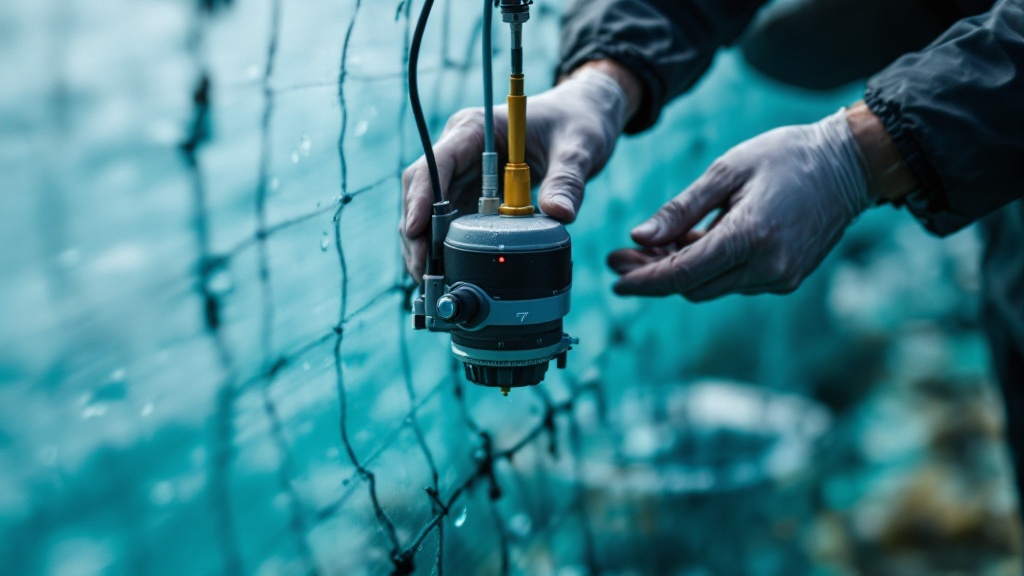
The iot aquaculture japan market has grown rapidly as sensor costs have dropped and connectivity has improved. Modern monitoring systems track water temperature, salinity, dissolved oxygen, pH, and current speed in real time, transmitting data to centralized dashboards accessible from shore-based offices or mobile devices. The value of these systems lies not just in data capture, but in automated alerting — the ability to detect early signs of harmful algal blooms, oxygen depletion, or temperature anomalies before they escalate into production losses.
Computer Vision for Fish Health
Manual fish sampling is labor-intensive, stressful for stock, and statistically unreliable. Companies like i-ocean have developed patented deep-learning image recognition systems that detect and measure individual fish through underwater video analysis. These systems enable continuous biomass estimation and health monitoring without physical contact, providing operators with far more granular data than periodic manual checks. The technology is particularly valuable for high-density operations where early disease detection can prevent catastrophic losses.
Autonomous Underwater Drones
Net integrity is a persistent concern in open-water aquaculture. A small tear in a containment net can lead to significant stock escape or predator intrusion. Autonomous underwater drones — often adapted from models originally developed for offshore energy inspection — now provide regular, automated surveys of net structures and mooring systems. These systems operate in conditions too dangerous or impractical for human divers, delivering high-resolution video and sensor data that supports predictive maintenance rather than reactive repair.
Digital Twin Platforms
The most sophisticated operations are beginning to adopt digital twin technology — virtual models of the physical farm environment that integrate data from sensors, cameras, and environmental databases to simulate outcomes under different conditions. In a documented case, a bluefin tuna operation in Mie Prefecture implemented a digital twin developed in partnership with Sojitz Corporation, achieving a 12% increase in net profitability through optimized feeding protocols and early net-damage detection. The platform’s sonar-based satiety detection reached 86.7% accuracy, substantially outperforming the 65–70% accuracy of experienced human observers.
Land-Based Aquaculture — Japan’s Fastest-Growing Segment
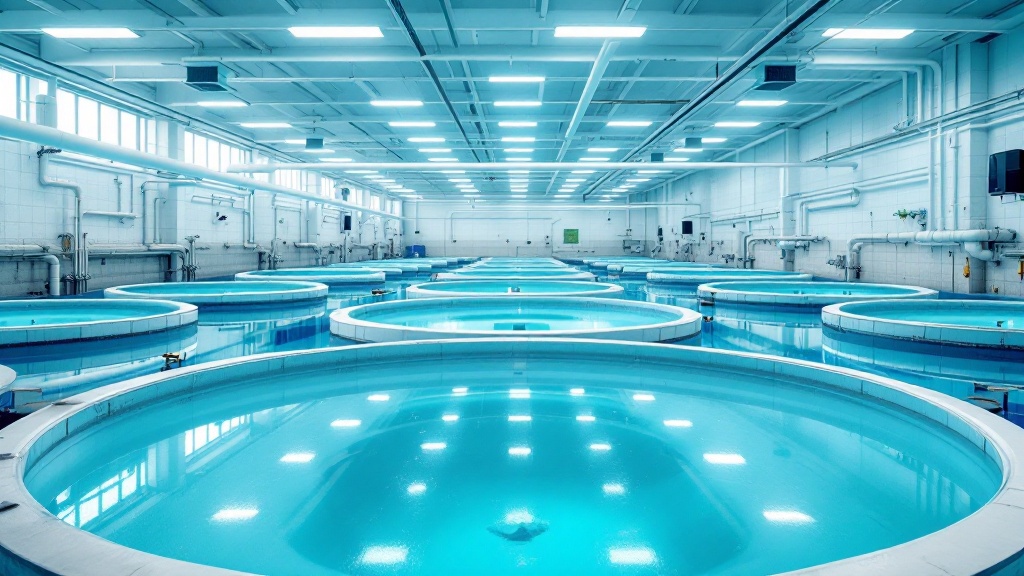
While offshore smart aquaculture captures headlines, the most explosive growth is happening on land. Japan’s land-based aquaculture market is projected to expand from ¥12 billion in 2020 to ¥33 billion by 2030, fueled by recirculating aquaculture systems (RAS) that offer near-total environmental control and dramatically lower water consumption compared to open-water operations.
The numbers reflect real momentum. As of January 2024, Japan had 662 registered land-based aquaculture facilities, with the count growing by more than 100 per year. These facilities range from small-scale urban operations producing premium shrimp to industrial-scale salmon farms designed to reduce Japan’s heavy dependence on imported Atlantic salmon.
One of the most significant entries into this space is the partnership between NTT Green & Food and Regional Fish, a Kyoto University spinout specializing in genome-edited fish breeding. Their collaboration targets sustainable closed-loop salmon production using renewable energy and advanced water purification — a model designed to demonstrate that land-based aquaculture can be both commercially viable and environmentally superior to conventional methods.
Water treatment innovation is central to this growth. Aerobic denitrification technology, promoted by firms such as withAqua, enables closed-loop systems to manage nitrogen and phosphorus levels without costly water exchanges. These advances are steadily reducing the environmental footprint of land-based operations, making them viable for locations far from the coast — including urban areas where proximity to consumers shortens supply chains and reduces transportation emissions.
How Smart Fisheries Differ From Conventional Approaches
The shift from conventional to smart fisheries is not incremental. It represents a fundamental change in how decisions are made, resources are managed, and products are tracked through the supply chain.
| Dimension | Conventional Approach | Smart Fisheries Approach | Measured Difference |
|---|---|---|---|
| Decision-making | Experience-based, intuitive | Data-driven, AI-assisted | 86.7% vs ~65% accuracy in satiety detection |
| Feeding precision | Fixed schedules, visual observation | Real-time appetite analysis | 10–20% feed cost reduction |
| Environmental discharge | Excess nutrients from overfeeding | Precision nutrient management | Nitrogen −22%, Phosphorus −20% |
| Labor allocation | Manual monitoring dominates workload | Automated monitoring frees staff | 35% reduction in feeding labor hours |
| Supply chain traceability | Paper-based, trust-dependent | Blockchain-enabled, digitally verified | 60–75% faster verification |
The operational gains are substantial. In documented deployments of precision feeding and monitoring systems, nitrogen discharge fell by 22% and phosphorus discharge by 20% — reductions that directly address Japan’s increasingly strict environmental regulations for coastal aquaculture. Labor savings of 35% in feeding operations freed experienced staff to focus on health monitoring, quality control, and harvest planning — tasks where human judgment still outperforms automation.
Perhaps the most strategically important shift involves traceability. Japan’s seafood supply chains remain largely paper-based, informal, and dominated by trust relationships that vary from cooperative to cooperative. This fragmentation creates significant risk for companies seeking to export to markets with stringent traceability requirements — and for foreign buyers attempting to verify sustainability claims. Blockchain-based traceability systems are beginning to address this gap, creating immutable digital records that follow product from harvest to plate. For international executives evaluating sustainable aquaculture technology in Japan for 2026 and beyond, the traceability dimension is often the deciding factor in market entry feasibility.
Understanding the full scope of these differences is essential for any international firm considering sustainable marine technology solutions for Japan.
What This Means for Foreign Companies Eyeing Japan
Japan’s aquaculture market offers genuine opportunity — but the barriers to unguided entry are high.
The fishery cooperative system (*gyogyō kumiai*) controls a significant share of Japan’s coastal fishing rights and seafood distribution. These cooperatives operate under a complex, prefectural governance structure that varies by region and species. Licensing, quota allocation, and market access are deeply embedded in these relationships. Foreign companies that attempt to enter without understanding cooperative dynamics risk misreading the market entirely. MAFF regulations add another layer of complexity, with distinct requirements for different production methods, species, and regions.
At the same time, Japan’s aquaculture sector is becoming more globally connected. M&A activity is accelerating as Japanese firms seek international assets and technology partnerships. In January 2024, a subsidiary of Kyokuyo — one of Japan’s major seafood companies — acquired Turkish aquaculture firm KOCAMAN BALIKÇILIK, signaling a growing appetite for cross-border deals. These transactions flow in both directions: foreign technology providers are finding receptive partners among Japanese firms that recognize the urgency of digital transformation but lack the in-house capability to execute it.
Across local sustainability initiatives, the nationwide “Hama Plan” program has established 554 regional revitalization plans linking local cooperatives with technology adoption targets. Foreign firms that align their offerings with these structured programs — rather than approaching the market cold — significantly improve their chances of gaining traction.
For companies entering from outside Japan, bilingual strategic partners are not a luxury. They are a requirement. Navigating MAFF regulations, building trust within cooperative networks, and communicating effectively with technical staff and local government officials all demand fluency in both language and business culture. Working with advisors who specialize in DMPJ’s smart fisheries and aquaculture consulting can compress the learning curve from years to months.
Japan’s smart aquaculture revolution is creating opportunities for technology providers, investors, and seafood companies worldwide — but navigating this complex market requires deep local expertise and bilingual communication. Explore how DMPJ’s maritime and aquaculture innovation services help international companies enter Japan’s marine sector with the right strategy, partnerships, and regulatory guidance.
Sorry, the comment form is closed at this time.