
18 Apr Shooting a Brand Video in Japan: Permits, Logistics, and What Foreign Companies Need to Know
Why Shooting in Japan Requires a Local Production Partner
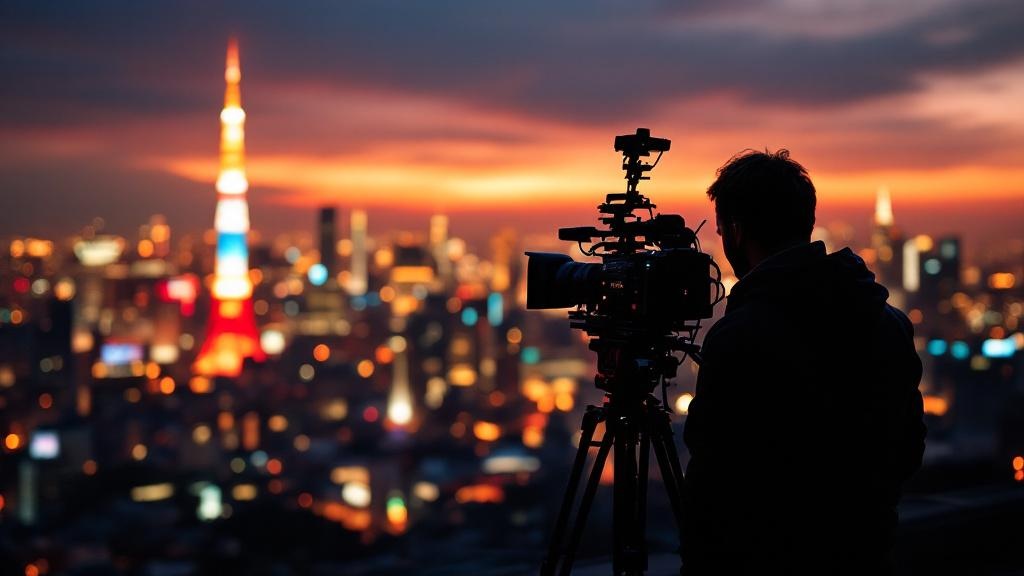
Japan ranks among the most visually striking countries on earth for brand video production — neon-lit streetscapes, centuries-old temples, and cutting-edge architecture all within a single city block. But the gap between scouting a dream location on Google Earth and actually rolling cameras there is wider than most foreign production teams expect. Securing the correct filming permit is one of the first — and most critical — steps in any Japan-based shoot.
Relationship-Driven Permitting — Why Transactional Approaches Fail
In many Western markets, securing a filming permit is a straightforward transaction: submit the paperwork, pay the fee, get the approval. Japan operates differently. Permitting here is fundamentally relationship-driven. Local police stations, park management offices, and neighborhood associations (町内会) all factor into the approval process, and their willingness to cooperate depends heavily on trust and prior relationships. A cold application submitted in English, without a warm introduction from a known local contact, frequently stalls — not because the regulations prohibit the shoot, but because no one on the receiving end feels confident vouching for an unfamiliar foreign entity.
This dynamic is why JFC data shows that only 28% of location filming inquiries in Japan convert to actual supported shoots — the other 72% fall away, often due to coordination gaps rather than outright refusals.
The Bilingual Coordination Gap That Causes Timeline Overruns
Production delays on cross-border shoots in Japan almost always trace back to language. Permit applications must be filed in Japanese. On-set communication with local crew, location managers, and authorities happens in Japanese. When the production team and the client operate in English while every official touchpoint operates in Japanese, even small miscommunications — a misunderstood restriction, an overlooked clause in a park usage agreement — cascade into costly delays.
Japan Film Commission Network: A Critical Resource
Japan’s Film Commission network includes 135 JFC-accredited organizations among a total of 385 film commissions nationwide. These FCs provide location databases, facilitate introductions to local authorities, and in many cases directly assist with permit applications. In FY2022, JFC-accredited FCs handled 16,248 domestic inquiries and 691 inquiries from overseas productions — with overseas inquiries up 248% year-on-year as post-pandemic international production resumed. For foreign brands, establishing a relationship with the relevant local FC through a Japan-based production partner is often the single most effective step in getting a shoot approved efficiently.
Location Permits: Road Use, Parks, and National Sites
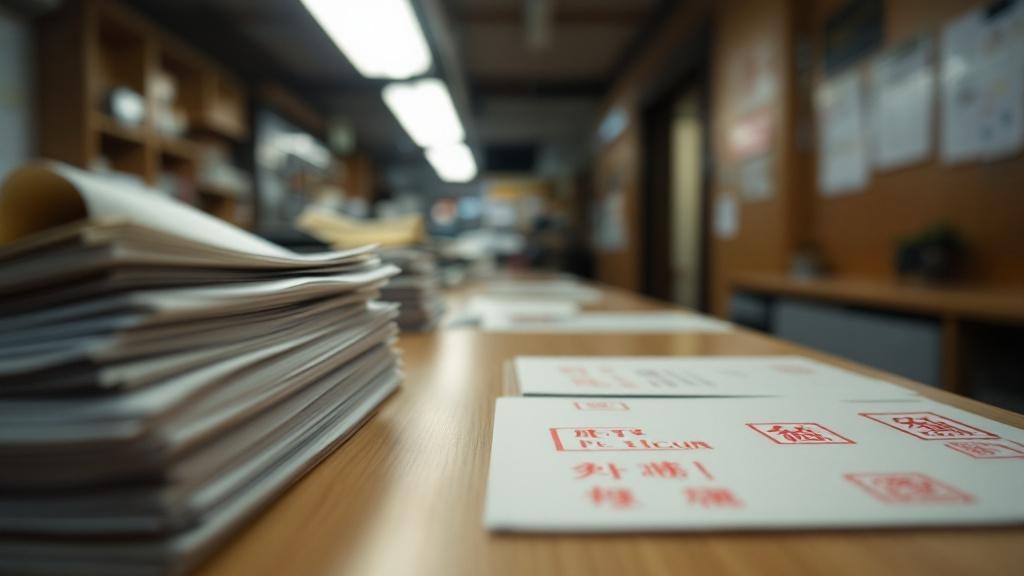
Japan does not have a single centralized filming permit. Instead, different authorities govern different types of locations, each with its own application process, timeline, and documentation requirements.
Road Use Permits (道路使用許可)
Any filming that occupies or affects traffic flow on a public road requires a road use permit under Road Traffic Act Article 77. Applications are filed at the local police station (交通課) overseeing the filming location.
| Detail | Specification |
|---|---|
| Legal basis | Road Traffic Act, Article 77, Paragraph 1, Item 4 |
| Filed at | Local police station (Kōtsū-ka / Traffic Division) |
| Processing time | 4–14 days (57% of applications processed within 4 days per JFC survey) |
| Fee | None (administrative; preparation costs only) |
| Required documents | Shooting plan, location map, staff deployment diagram, safety measures |
For straightforward sidewalk or street-corner setups, approvals can come in under a week. For shoots involving traffic rerouting or road closures, expect closer to two weeks and more extensive coordination with the traffic division.
Urban Park Occupancy Permits (都市公園法 Article 6)
Commercial filming in urban parks — Yoyogi Park, Ueno Park, Shinjuku Gyoen (when managed by the city), and similar — requires an occupancy permit filed with the park management office. Processing typically takes one to four weeks depending on the park’s booking calendar and the scale of the shoot.
National Sites: Imperial Palace Outer Gardens, National Parks
Filming at nationally managed sites — the Imperial Palace outer gardens, national parks, and Ministry of Environment-administered land — requires application to the relevant Ministry of Environment office. These applications involve longer review cycles, typically one to three months, and require detailed documentation of equipment, crew size, and intended use of the footage.
The 2025 MLIT Guideline Update
In September 2025, the Ministry of Land, Infrastructure, Transport and Tourism (MLIT) issued updated guidelines for location filming on major roads and bridges, streamlining the approval process for productions that previously required complex multi-agency coordination. For foreign brands planning shoots on iconic infrastructure — Rainbow Bridge, major expressway overpasses — these revised guidelines reduce administrative friction, though a local production coordinator who can navigate the updated process remains essential.
| Location Type | Authority | Typical Processing Time |
|---|---|---|
| Public roads | Local police station | 4–14 days |
| Urban parks | Park management office | 1–4 weeks |
| National sites (Imperial Palace outer gardens, national parks) | Ministry of Environment | 1–3 months |
| Major roads / bridges (post-2025 update) | MLIT / local road authority | 2–6 weeks |
Drone Filming: Navigating Japan’s Aviation Law
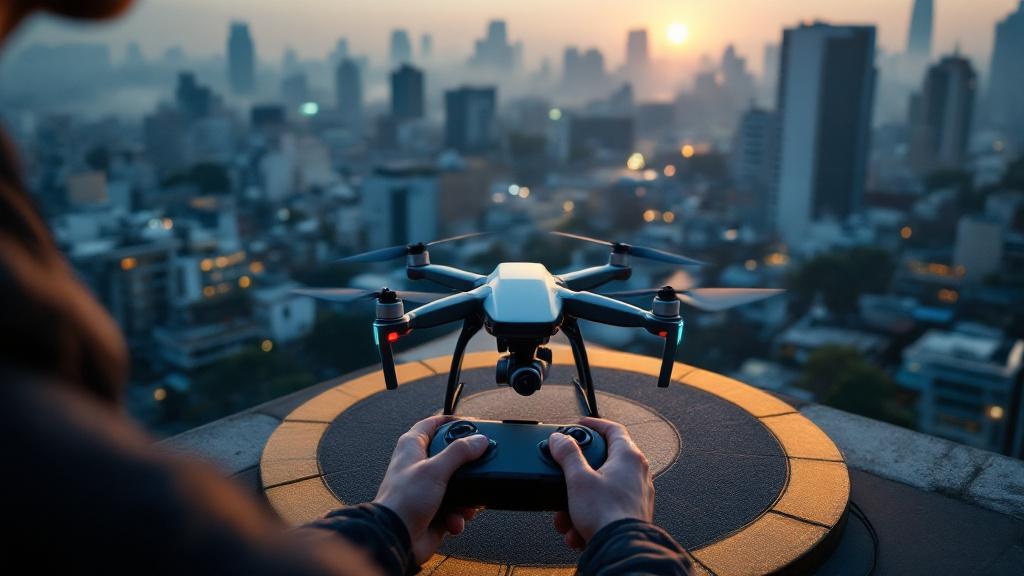
Aerial footage can transform a brand video, but drone filming regulations in Japan are among the most detailed in Asia. The rules tightened significantly with the 2022 Aviation Law amendments, and understanding the current framework is essential for any foreign brand planning drone shots.
2022 Aviation Law Amendments: Registration, Licensing, and Certification
Since December 5, 2022, all drones weighing 100 grams or more fall under Japan’s aviation regulations. Three new systems took effect simultaneously:
- Machine registration: Every drone 100g+ must be registered with the Ministry of Land, Infrastructure, Transport and Tourism, with the registration number displayed on the aircraft and a Remote ID function enabled.
- Pilot licensing: A two-tier license system — first-class (一種) and second-class (二種) — governs who can fly in restricted conditions. First-class certification is required for Level 4 flights (beyond visual line of sight over populated areas).
- Aircraft certification: Drones used for advanced operations require type certification from MLIT.
DIPS 2.0: The Online Application System
All drone flight applications are filed through DIPS 2.0 (Drone Information Platform System), Japan’s centralized online portal. Filing is free. Processing takes a minimum of 10 business days, though two to four weeks is more realistic for complex applications. In FY2024, the system processed 93,879 applications — a figure that reflects both the growing popularity of drone filming and the system’s accessibility.
Restricted Flight Zones and Special Requirements
“Special flights” (特定飛行) require explicit permission or approval from MLIT:
| Restriction Category | Details |
|---|---|
| DID areas (人口集中地区) | Densely inhabited districts as defined by national census data |
| Altitude above 150m | Any flight above 150 meters from ground or water level |
| Airport proximity | Within approach and departure surfaces of airports |
| Nighttime flight | Sunset to sunrise |
| Beyond visual line of sight | Including FPV goggle operations |
| Within 30m of people or structures | Requires approval |
| Over event gatherings | Festivals, sports events, concerts |
Small UAS Prohibition Act: The 300-Meter Rule
Separate from aviation law, the Small UAS Prohibition Act establishes 300-meter exclusion zones around government buildings, the National Diet, the Prime Minister’s residence, foreign embassies, and defense facilities. Foreign brands wanting sweeping aerial shots of central Tokyo need to be aware that many visually attractive downtown areas overlap with these exclusion zones.
Penalties
Unauthorized flight in prohibited airspace carries fines up to ¥300,000. Failure to maintain flight logs — a requirement since the 2022 amendments — carries fines up to ¥100,000.
Hire a Licensed Operator or Apply Yourself?
For foreign brands, hiring a licensed Japanese drone operator is almost always the practical choice. A licensed operator brings their own registered aircraft, holds the appropriate pilot certification, knows the DIPS filing process, and carries liability insurance that satisfies Japanese requirements. Applying for permits yourself as a foreign entity is technically possible but adds weeks of processing time and requires Japanese-language documentation. Industry estimates put professional drone operator day rates at ¥300,000–¥1,500,000 depending on equipment and complexity.
Visas for Foreign Talent and Crew
Visa requirements are the area where foreign production teams most frequently underestimate complexity — and where mistakes are most costly.
Entertainment Visa (興行 / Kogyo): The Default for Commercial Shoots
Any foreign national performing paid work on a commercial shoot in Japan — whether they are on-camera talent, a director, a camera operator, or a sound engineer — requires an Entertainment visa (在留資格「興行」). This applies regardless of whether the payment originates from a Japanese or foreign entity.
2023 Reform: Four Categories
A 2023 reform reorganized the Entertainment visa into four categories. For foreign brand video shoots, Category 3 is the relevant classification, covering:
- Commercial photography and videography
- TV and film production (including cable/streaming)
- Commercial audio recording
- Directors, camera operators, and other essential production crew
Category 1-イ applies when a Japanese company with a clean three-year track record sponsors the foreign talent. Category 1-ロ covers government events or engagements paying ¥500,000+ per day.
Certificate of Eligibility (COE) Processing
The COE is the prerequisite document for the Entertainment visa and must be filed at the regional Immigration Services Bureau in Japan.
| COE Detail | Specification |
|---|---|
| Average processing time | 14.7 days |
| Validity once issued | 90 days |
| Recommended filing lead time | 2–3 months before shoot date |
| Agent fee (immigration specialist / 行政書士) | ~¥120,000 per application |
The 14.7-day average is just that — an average. Complex cases or periods of high volume can extend processing. Filing two to three months ahead of the shoot date provides a comfortable buffer.
Short-Stay Business Visa Limitations
Foreign crew entering on a short-stay business visa (短期滞在, 90 days) are limited to unpaid activities. This works for location scouting trips or pre-production meetings, but attempting to conduct actual commercial filming on a short-stay visa is risky. Immigration authorities interpret “commercial shooting work” broadly, and a short-stay visa holder found performing paid production work faces visa revocation and potential re-entry restrictions.
Music Licensing and Talent Rights
JASRAC Sync Fees for Film and Video
Using published music in a brand video requires synchronization rights from JASRAC (Japanese Society for Rights of Authors, Composers and Publishers). For corporate videos and documentaries — the “その他” (other) category — rates are structured per track:
| Usage Duration | Corporate VP / Documentary Rate (per track) |
|---|---|
| Up to 1 minute | ¥5,000 |
| Up to 5 minutes | ¥20,000 |
| 5–10 minutes | ¥30,000 |
| 10–20 minutes | ¥40,000 |
These rates apply to domestic Japanese repertoire managed directly by JASRAC. Foreign songs require separate negotiation — JASRAC acts as intermediary, but the original rights holder sets the price (指し値), which can be multiples of the standard rate and takes significantly longer to clear.
Talent Image Rights (肖像権)
Japan has no statutory rate card for talent image rights. Fees are negotiated per project with the talent’s agency. For foreign brands unfamiliar with Japanese talent management practices, this negotiation process can be opaque. Usage scope (domestic vs. international, duration, media channels) dramatically affects pricing, and contracts must be reviewed carefully — Japanese talent agreements often include restrictions that differ from standard Western buyout terms.
SAG-AFTRA Implications
When US or UK union talent (SAG-AFTRA, Equity) appears in a Japan-based shoot, their union agreements may still apply. This means Japan-based productions must comply with union minimums for compensation, working conditions, and residual structures — requirements that can conflict with Japanese production norms. Clarifying union status and obligations during pre-production avoids costly surprises on set.
Government Incentives: JLOX+ Production Rebate
Japan’s production incentive program — JLOX+, administered by VIPO (Visual Industry Promotion Organization) under the Ministry of Economy, Trade and Industry — offers one of the more generous rebate structures in Asia for qualifying productions.
The Rebate Structure
| JLOX+ Detail | Specification |
|---|---|
| Rebate rate | 50% of qualifying domestic production spend |
| Cap per project | ¥1 billion (~$6.5M USD) |
| Eligibility threshold (Option A) | ¥500M+ local spend in Japan |
| Eligibility threshold (Option B) | ¥1B+ total budget with ¥200M+ in Japan |
| Eligibility threshold (Option C) | Distribution in 10+ territories with ¥200M+ in Japan |
2025 Reform: Multi-Year Program
In December 2025, JLOX+ transitioned from annual budget cycles to a two-year multi-year program with year-round application windows. This reform addressed a long-standing frustration: productions previously had to align their schedules with Japan’s fiscal year deadlines. The multi-year structure allows productions to plan shoots around creative and logistical needs rather than grant calendar constraints.
Track Record and Economic Impact
The program accepted 9 projects in 2023 and 10 in 2024, including major international titles like Neuromancer (Apple TV+), Monarch: Legacy of Monsters Season 2, and The Smashing Machine. An internal government review of earlier supported productions calculated an economic multiplier of approximately 44.6x — meaning every ¥1 of government support generated roughly ¥44.6 in domestic economic activity.
For most corporate brand videos, the ¥500M minimum spend threshold puts JLOX+ out of reach. But for large-scale commercial campaigns, multi-episode series, or documentary projects with theatrical or streaming distribution across 10+ territories, the 50% rebate fundamentally changes the production budget equation.
Practical Timeline: From Brief to Wrap
Recommended Lead Times by Permit Type
The single most common planning error foreign brands make is underestimating how far in advance Japanese permits need to be initiated. The table below summarizes realistic lead times:
| Permit / Requirement | Minimum Lead Time | Recommended Lead Time |
|---|---|---|
| Road use permit | 2 weeks | 4 weeks |
| Urban park permit | 3 weeks | 6 weeks |
| National site permit | 6 weeks | 12 weeks |
| Drone flight permit (DIPS 2.0) | 2 weeks | 4–6 weeks |
| Entertainment visa (COE) | 3 weeks | 8–12 weeks |
| JASRAC music sync license | 2 weeks (domestic) | 8–12 weeks (foreign repertoire) |
Sample 12-Week Pre-Production Timeline: 3-Day Corporate Shoot in Tokyo
The critical path runs through the Entertainment visa (COE) process. At an average of 14.7 days for COE processing plus time for the actual visa issuance at the overseas consulate, visa coordination must begin the moment the project is greenlit. Permit applications for parks and roads can be filed in parallel once locations are confirmed, and DIPS drone applications should go in no later than week 5 to allow buffer for any agency queries.
A Japan-based production coordinator manages all of these parallel workstreams simultaneously — something that is functionally impossible for a foreign team operating remotely across time zones and language barriers. This is precisely why choosing to work with a Japan-based production partner is not a luxury but a logistical necessity for any shoot of meaningful complexity.
The difference between a shoot that wraps on schedule and one that bleeds budget on idle crew days almost always comes down to how early and how competently the permit and visa timelines were managed. Starting three months out for a complex multi-location shoot is not conservative — it is the baseline.
Navigating Japan’s production logistics is far easier with an experienced local partner who handles permits, crew coordination, and regulatory compliance as part of a seamless end-to-end workflow. DMPJ’s comprehensive media production services cover every logistical detail — from DIPS drone applications to entertainment visa coordination — so you can focus on the creative vision. Learn more about working with a Japan-based production partner on our service page.
Sorry, the comment form is closed at this time.