

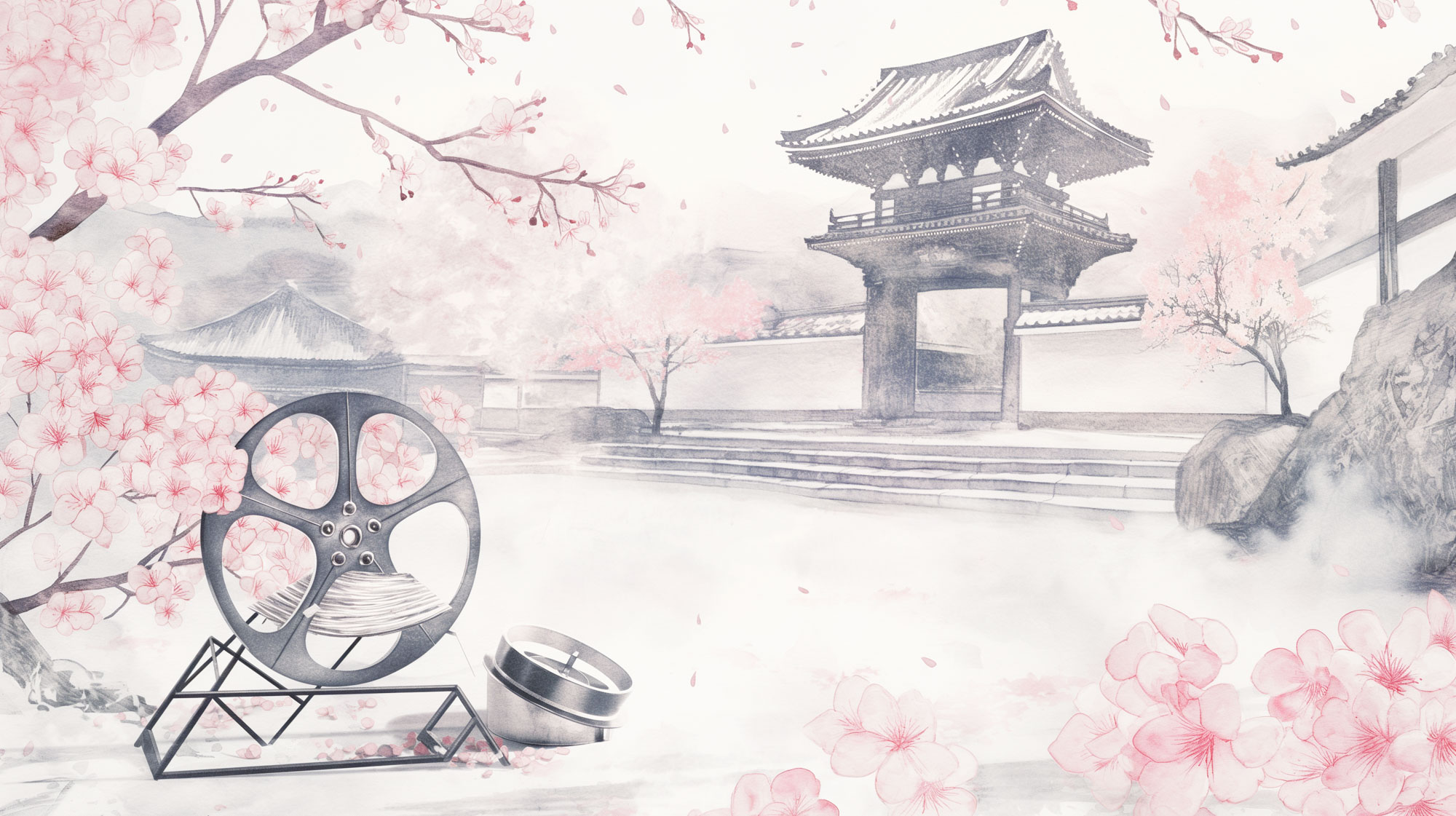
01. Comprehensive Media Production | DMPJ
At Daisho Media Partners Japan (DMPJ), we specialize in delivering high-quality, comprehensive media production services that transform ideas into captivating visual narratives. Japan’s video advertising market surpassed ¥1 trillion for the first time in 2025, growing 21.8% year-on-year to ¥1.03 trillion — with projections reaching ¥1.18 trillion in 2026. With 84.5 million active social media users (79% of all internet users) demanding platform-specific content, the need for professionally produced, culturally informed video has never been greater. From initial concept development to multi-platform delivery, we handle every stage with precision, creativity, and deep cultural insight — eliminating the 15–25% coordination overhead that accumulates when multiple vendors handle separate production stages.
Explore Our Insights
From a complete guide to the end-to-end production model to practical advice on filming permits, DIPS 2.0 drone regulations, entertainment visas, and production costs in Japan — our blog covers everything international brands need to know.
Explore in-depth articles on the in-house vs. outsourcing decision, our 10-point buyer’s checklist for choosing a production partner, transparent pricing benchmarks by project type, and a proven framework for measuring video ROI in the Japanese market.
Our Production Process
01 Discovery & Consultation
Understanding your goals, target audience, and creative vision through bilingual consultation — aligning messaging for both Japanese and international markets. This is the stage where cultural missteps are caught when they cost nothing to fix.
02 Creative Planning
Developing a detailed production strategy with timelines, deliverables, and multi-platform specifications — planning 16:9 broadcast masters, 9:16 social cuts, and 1:1 feed formats from a single shoot before cameras ever roll.
03 Production Execution
Filming on location with professional crews, managing road use permits, DIPS 2.0 drone applications, and entertainment-visa talent coordination across Japan’s 135-member Film Commission network.
04 Post-Production
Editing, color grading, VFX, sound design, and multi-language subtitling using industry-leading tools including DaVinci Resolve 20, whose AI-assisted workflows can cut post timelines without compromising quality.
05 Delivery & Distribution
Delivering optimized content across TV, YouTube, TikTok, Instagram, LinkedIn, and cinema — each formatted to platform-specific aspect ratios, duration limits, and captioning requirements.
Why Choose DMPJ for Media Production?
Japan-Based Expertise: Deep understanding of Japan’s culture, locations, and production logistics. We navigate relationship-driven permitting through Japan’s 135-strong Film Commission network — where only 28% of cold location inquiries convert to supported shoots without a trusted local introduction. We manage road use permits under Road Traffic Act Article 77, park occupancy clearances, and drone flight applications via DIPS 2.0 (10+ business-day review) — so your shoot runs on schedule without costly permit delays.
Global Standards: Delivering internationally competitive content with a local touch. Our bilingual creative directors provide native-level communication in both Japanese and English throughout every production stage — from scriptwriting and on-set direction to post-production review — ensuring nothing is lost in translation. For Japan-related projects, language is the single most common cause of timeline overruns, and we close that gap.
End-to-End Solutions: Seamlessly managing projects from pre-production to distribution. By keeping the entire workflow under one roof, we eliminate the 15–25% coordination overhead that typically accumulates when multiple vendors handle separate production stages — overhead that industry data shows can reduce per-deliverable cost by 25–40% once removed — saving you time, budget, and creative consistency.
State-of-the-Art Technology: Cutting-edge cinema cameras, licensed and insured drone operators, and advanced post-production tools including DaVinci Resolve 20 with over 100 AI-powered features — AI-driven color matching, automated subtitle generation, and intelligent audio optimization — enabling faster turnaround without compromising quality.
Our Media Production Services
1. Concept Development & Pre-Production
-
- Creative strategy, storytelling, and bilingual scriptwriting
- Storyboarding with multi-platform framing in mind
- Location scouting via Japan’s 135-member Film Commission network
- Talent casting, entertainment visa (興行) coordination, and budget planning
2. Filming & Production
-
- Full-scale video production: commercials, documentaries, brand films, and product launches
- Professional cinematography with cinema-grade cameras and stabilization rigs
- Licensed drone and aerial filming with full DIPS 2.0 permit management
- On-site bilingual production management, road use permits, and crew coordination
3. Post-Production Excellence
-
- High-end video editing, color grading, and AI-assisted DaVinci Resolve workflows
- Motion graphics, visual effects (VFX), and animation
- Professional sound design and audio mixing
- Multi-language subtitling, dubbing, and cultural localization
4. Multi-Platform Adaptation
-
- Optimized content for TV, cinema, YouTube, TikTok, Instagram, and LinkedIn
- Platform-specific aspect ratios, captions, and pacing for each channel
- Up to 15 deliverables from a single shoot for both Japanese and international markets
Japan Media Production by the Numbers
¥1.03 Trillion
Japan’s video advertising market in 2025 — the first time it crossed the ¥1 trillion mark, with ¥1.18 trillion projected for 2026.
21.8% Growth
Year-on-year growth of Japan’s video ad market — the fastest-growing major advertising channel in the country.
84.5 Million
Active social media users in Japan — 79% of all internet users — each platform demanding distinct content specifications.
135 Commissions
Member organizations in Japan’s Film Commission network that we tap for location access, introductions, and permit support.
15–25% Saved
Coordination overhead eliminated by keeping the entire workflow under one roof instead of stitching together separate vendors.
Industries We Serve
Corporate Branding Videos
Commercials & Advertisements
Narrative and Documentary Films
Tourism & Hospitality Videos
Product Launch Videos
Social Media Campaigns
Latest Insights on Media Production in Japan
What Is Comprehensive Media Production?
A complete guide to the end-to-end production model
In-House Team vs. Outsourcing: How to Decide
Compare the true costs of building an in-house video team vs. outsourcing in Japan
How to Choose a Production Company in Japan
A 10-point buyer’s checklist for hiring a video production company in Japan
Video Production Costs: Pricing Guide
Detailed pricing benchmarks by project type and budgeting tips for international brands
Filming Permits & Logistics in Japan
Everything foreign companies need to know about permits, drone regulations, and visas
Measuring ROI on Brand Video
A proven framework for measuring video production ROI with benchmarks by video type
Frequently Asked Questions
What does “comprehensive media production” actually mean?
It is a single-source, end-to-end model in which one partner owns the entire workflow — concept development, scriptwriting, filming, post-production, and multi-platform delivery — rather than fragmenting it across separate vendors. The model exists to eliminate the coordination tax: every vendor handoff adds a brief, a review cycle, and a margin, which industry estimates put at 15–25% of total budget.
How much does video production cost in Japan?
It depends on scope, quality tier, and complexity. As a benchmark, a bilingual corporate brand video (3–5 min) typically runs ¥1.5M–¥8M, a 15–30 second TV commercial ¥3M–¥20M, a documentary ¥5M–¥30M, and an ongoing social media package ¥450K–¥900K per month. Tokyo crew and location rates tend to run 15–30% higher than regional cities.
Do foreign companies need permits and visas to film in Japan?
Usually, yes. Road filming requires a road use permit under Road Traffic Act Article 77, drone flights are filed through DIPS 2.0 (10+ business-day review), and foreign on-camera talent or essential crew typically need an Entertainment (興行) visa — Certificate of Eligibility processing averages 14.7 days, so we recommend starting 2–3 months ahead. We manage all of these as integrated project-management tasks.
Should we build an in-house video team or outsource?
A four-person in-house team in Tokyo costs roughly ¥40M–¥50M per year before producing a single frame. For most companies making fewer than 15–20 substantial videos a year, outsourcing or a hybrid model — keeping strategy in-house and outsourcing execution — delivers more capability per yen. Cross-border and bilingual projects almost always tip the balance toward a capable local partner.
Can one shoot produce content for every platform?
Yes — when multi-platform delivery is planned during pre-production rather than treated as an afterthought. A single well-planned shoot can yield a hero film, 16:9 and 9:16 cuts, 1:1 feed formats, behind-the-scenes content, and stills. A ¥8M budget spread across 15 deliverables costs roughly ¥533,000 per asset versus ¥8M for a single film.
How do we measure the ROI of a brand video?
We use a three-tier framework: Tier 1 reach (views, impressions, share of voice), Tier 2 engagement (watch-through rate, shares, CTR), and Tier 3 business impact (leads, pipeline influence, brand recall). Well-executed brand videos typically lift aided recall 20–30%. Setting baselines before production starts is essential to proving the result.
Our Projects
Sorry, no posts matched your criteria.