

11 Jun How 5 Industries Use Japan-Themed VR: Tourism, Museums, Retail, Entertainment, and Corporate Training
# How 5 Industries Use Japan-Themed VR: Tourism, Museums, Retail, Entertainment, and Corporate Training
Virtual reality is no longer a novelty demo at trade shows. Across five distinct industries, organizations are deploying Japan-themed VR content to solve real business problems — from reducing booking uncertainty for international travelers to training factory workers on quality inspection procedures rooted in Japanese manufacturing disciplines.
The numbers behind this shift are substantial. Japan’s immersive entertainment market alone reached $3.9 billion in 2024, and the AR/VR tourism segment is projected to grow at 20% annually through 2032. But market size tells only half the story. What matters for a marketing lead or operations director evaluating VR is whether organizations in *their* sector are seeing measurable results.
This article examines how tourism operators, museums, retailers, entertainment companies, and corporate training departments are putting Japan-themed VR to work — with named deployments, specific data points, and the patterns that separate successful projects from expensive experiments.
Tourism and Travel: Destination Previews That Drive Bookings
Japan VR tourism use cases have moved beyond gimmick territory into measurable revenue drivers. Virtual destination previews allow international travelers to evaluate ryokan interiors, walking routes through temple complexes, and seasonal scenery before committing to flights and accommodation. The data supports the investment: hotels that deploy VR tours report up to 135% booking conversion uplift compared to properties relying on conventional photography alone.
The broader market is following suit. The AR/VR tourism market is expanding from $1.44 billion in 2025 to $5.16 billion by 2032, driven by a 20% compound annual growth rate that reflects both supply-side platform maturation and demand-side consumer expectations.
Real deployments in Japan are already operational. Activity Japan offers bookable VR experiences across the country, spanning traditional crafts workshops and adventure activities. At the institutional level, JNTO (Japan National Tourism Organization) promotes experiential tourism content in 10 languages across 8 activity categories, building an infrastructure that VR content naturally plugs into.
One of the most striking immersive experience examples in the Japan tourism industry is Hita City’s use of content tourism for rural revitalization. The Oita Prefecture city — historically an off-the-radar onsen town — launched an Attack on Titan GPS-AR mobile game that sends visitors through the city as expeditionary corps members. Developed in collaboration with Nippon Travel Agency and supported by a dedicated manga museum, the project transformed Hita from a passing mention in guidebooks into a destination with an engaged, international fan base.
For first-time Japan travelers facing high-consideration decisions — long-haul flights, unfamiliar transit systems, language barriers — pre-visit VR directly addresses booking uncertainty. When a prospective visitor can walk through a machiya guesthouse in Kyoto or stand on the observation deck at a Hokkaido ski resort before paying, the psychological distance between “interested” and “booked” shrinks considerably.
Museums and Cultural Institutions: Heritage Beyond Glass Cases
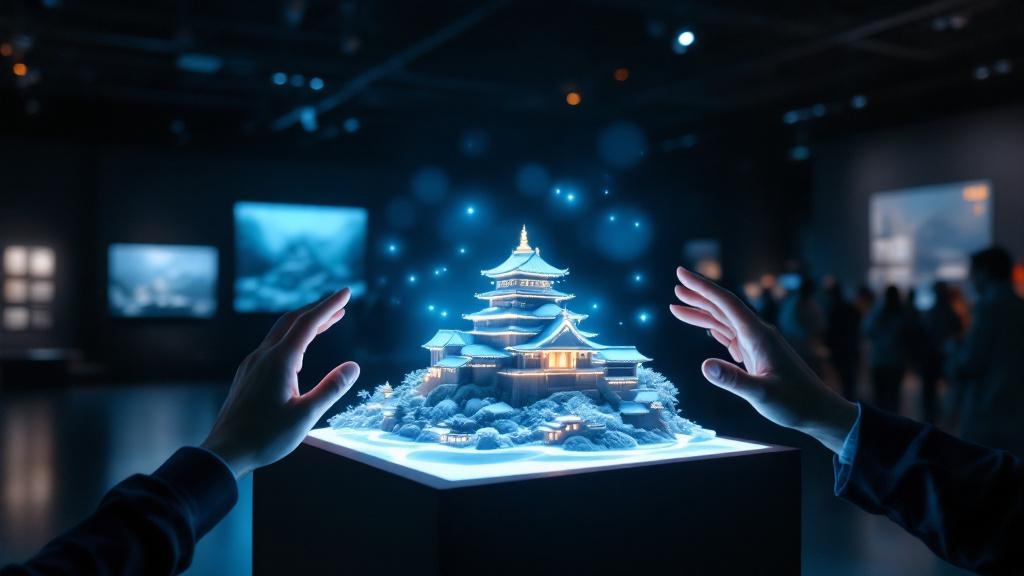
Museums and cultural institutions represent the leading end-user segment for AR/VR in Japan’s $3.4 billion tourism-culture immersive market. The reason is straightforward: traditional museum formats — artifacts behind glass, plaques with text — struggle to convey scale, context, and lived experience. VR changes that equation.
TOPPAN has set the benchmark for virtual reality museum exhibit work in Japan, having digitized over 50 national cultural assets into navigable VR reconstructions. The portfolio includes Edo Castle at the height of the Tokugawa shogunate, Kumamoto Castle before and after earthquake damage, and the elaborate polychrome carvings of Nikko Toshogu. These are not simplified walkthroughs — they are scholarly reconstructions built with advanced color management and measurement technology, allowing visitors to explore structures that no longer exist in their original form.
The Ukiyo-e Immersive Art Exhibition, which ran in Tokyo from December 2024 through March 2025 with a subsequent Fukuoka engagement in 2025, took a different approach. Over 300 classical artworks by Hokusai, Kuniyoshi, and Hiroshige were transformed into 3D immersive environments using CG animation and projection mapping. Instead of studying a woodblock print from two feet away, visitors stepped *into* the Great Wave.
Heritage education through VR has also gained traction. NHK developed a VR experience reconstructing the Hiroshima atomic bombing through the testimony of survivor Kodama Mitsuo. Deployed at high schools across Hiroshima City and scheduled for permanent installation at the Hiroshima National Peace Memorial Hall, the project produced profound emotional engagement among students — making historical trauma tangible in a way that textbooks and photographs cannot.
For institutions focused on accessibility, Kahaku VR at the National Museum of Nature and Science enables remote 3D/VR exhibit viewing from smartphones and personal computers. This approach extends museum reach far beyond physical visitors — a critical capability for institutions that want their collections to serve international researchers, homebound audiences, and school groups across Japan.
Retail and E-Commerce: Selling Japanese Products Through Immersive Showcases
VR for Japanese retail e-commerce sits at the intersection of two powerful trends: the global AR/VR retail market, which reached $9.98 billion in 2025 with a 24.8% CAGR and Asia Pacific leading regional growth, and the international appetite for Japanese craftsmanship and design.
The commercial case rests on hard evidence. Virtual try-on technology reduces fashion returns by 25% and boosts consumer confidence — 70% of consumers say that AR/VR ability to try products increases their shopping confidence, and 60% report willingness to spend more with retailers offering these interactive experiences.
Japan-themed retail VR goes beyond standard try-on. Consider the range of applications: virtual Japanese market experiences that let international buyers browse stalls of regional ceramics and textiles; 360° showcases of handmade washi paper or Echizen lacquerware; and artisanal production process documentation that shows a Bizen pottery kiln firing over five days. These experiences turn a product listing into a story.
Meta’s VR shopping initiatives have engaged Japanese retail partners in virtual showroom pilots, signaling that major platform providers see Japan as a priority market for immersive commerce. These partnerships provide template architectures that mid-sized retailers can adapt without building infrastructure from scratch.
What gives Japan-themed retail VR particular potency is the design tradition behind the products. Japanese aesthetics — minimalism, natural materials, seasonal sensitivity, the visible evidence of craftsmanship — translate powerfully into immersive product visualization. A hand-thrown tea bowl looks competent in a product photo. In VR, where a buyer can turn it, feel the asymmetry, and see the glaze catch light at different angles, it becomes compelling.
| Industry | Market Indicator | CAGR | Key VR Application | Primary Audience |
|---|---|---|---|---|
| Tourism & Travel | $1.44B → $5.16B (2025–2032) | 20.0% | Destination previews, virtual tours | International travelers, travel agencies |
| Museums & Culture | Part of $3.4B AR/VR tourism-culture market | — | Heritage reconstruction, remote exhibits | Visitors, students, researchers |
| Retail & E-Commerce | $9.98B global (2025) | 24.8% | Virtual try-on, product showcases | Online shoppers, wholesale buyers |
| Entertainment & Gaming | $3.9B Japan (2024) | 24.3% | Location-based VR, social VR events | Consumers, IP fan communities |
| Corporate Training | ¥26.5B Japan B2B XR (2024) | — | Safety training, cultural onboarding | Manufacturers, global enterprises |
Entertainment and Gaming: Japan’s Cultural IP in Interactive Worlds
Japan’s immersive entertainment market reached $3.9 billion in 2024, growing at 24.3% annually, with VR as the largest revenue segment. This is not surprising for a country that has exported cultural IP — anime, manga, games — more successfully than almost any other nation.
The most ambitious recent deployment is Samurai’s Dream: Osaka Castle, a free-roam location-based VR experience that launched in Tokyo in March 2026. A co-production between NHK, NTT DOCOMO Studio & Live, and HTC’s VIVERSE platform, the experience reconstructs Sengoku-period Osaka Castle at the height of Toyotomi Hideyoshi’s power. Visitors wearing VIVE headsets walk freely through the castle halls alongside other participants — not isolated in individual headsets, but sharing the same virtual space. National and international expansion is planned.
At the opposite end of the scale spectrum, HIKKY’s Virtual Market (Vket) — the world’s largest VR event — demonstrates Japan-themed content operating at global metaverse scale. Held regularly on platforms like VRChat, Vket draws participation from major brands and independent creators, functioning as both a commerce platform and a cultural showcase for Japanese digital craftsmanship.
The addressable market for licensed Japanese immersive experiences is enormous. Anime, manga, and game IP fan bases span hundreds of millions of people globally, and these communities actively seek new ways to engage with the fictional worlds they love. VR delivers that engagement in a way no other medium can match — you do not watch a Studio Ghibli landscape, you stand in it.
The cultural alignment between Japan and social VR platforms is quantifiable. VRChat’s Japanese user base surged from 12.9% to 27% of total traffic between 2023 and 2025, making Japan the platform’s fastest-growing major market. This growth was driven by avatar customization culture and intimate social spaces — both deeply resonant with Japanese digital aesthetics. Approximately 40% of Japanese VRChat users spend over $350 annually on in-platform content, indicating serious community investment rather than casual browsing.
Corporate Training: Japanese Operational Excellence in VR
Japan cultural VR corporate training addresses a specific market need: transferring operational methodologies that Japan is globally recognized for — lean manufacturing, kaizen, omotenashi hospitality — into scalable, repeatable training formats.
Japan’s B2B XR content market hit ¥26.5 billion in 2024, with enterprise projections pointing toward 870,000 deployed devices by 2030. The scale of investment reflects the practical returns: VR training consistently demonstrates faster competency acquisition and higher knowledge retention compared to classroom instruction, and in safety-critical environments, the ability to practice without risk is not a convenience — it is a requirement.
Manufacturing and Quality Control
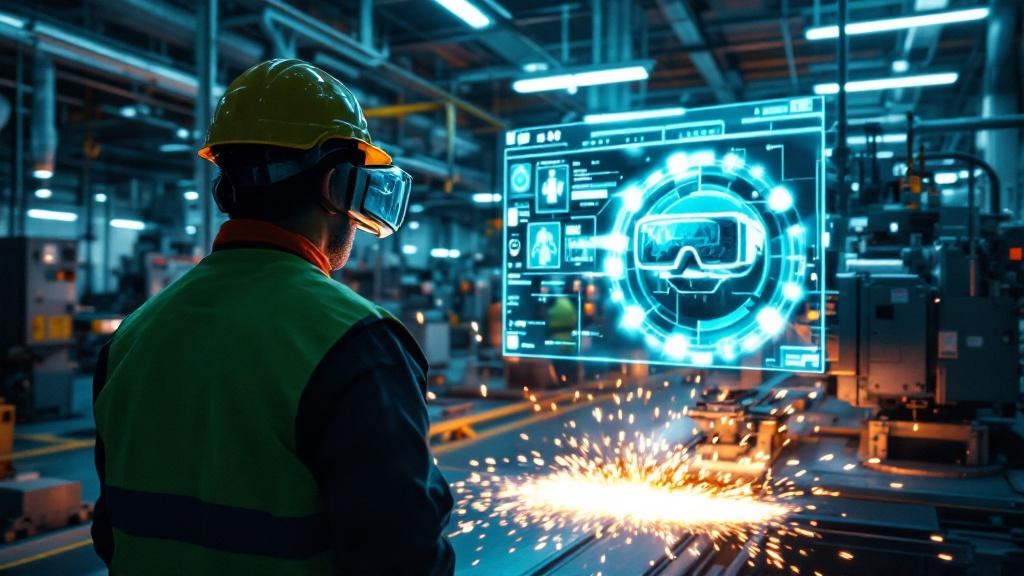
Automotive and electronics manufacturers use VR to train workers on assembly procedures, quality inspection sequences, and safety protocols. The advantage over conventional training is repeatability: a trainee can run the same inspection sequence dozens of times in VR without consuming materials, halting production lines, or risking product defects. For international manufacturers operating Japanese production partnerships, VR training modules built around Japanese quality standards ensure consistency across geographically distributed facilities.
Construction and Hazard Identification
Construction firms deploy VR simulations for site planning and hazard identification before ground is broken. Workers practice emergency procedures and navigate site-specific safety scenarios in controlled virtual environments, reducing on-site accidents and accelerating onboarding for new crew members entering complex project sites.
Hospitality and Omotenashi Standards
International hotel chains seeking to replicate Japanese service excellence use VR training modules that immerse staff in omotenashi scenarios — the precise choreography of guest greeting, room presentation, and anticipatory service that defines high-end Japanese hospitality. These modules are particularly valuable for properties outside Japan that want to deliver authentically Japanese service standards without relocating their entire training operation to Tokyo.
Cross-Cultural Business Training
For foreign employees entering the Japan market, VR modules teaching nemawashi (consensus-building), ringi (formal approval processes), and Japanese workplace communication norms provide experiential learning that reading a cultural guide cannot replicate. Trainees practice navigating a virtual meeting where they must identify the real decision-maker, time their proposal correctly, and read non-verbal cues — all skills that determine success or failure in Japanese business contexts. Organizations looking for production partners who understand these cultural dynamics should explore DMPJ’s Japan VR content creation services.
Cross-Industry Pattern: What Successful Deployments Share
Across all five industries, a clear pattern separates VR projects that deliver results from those that become expensive novelties.
Successful deployments define business KPIs before development begins. The tourism board that measures booking conversion, the museum that tracks dwell time, the retailer that monitors return rates — these organizations can evaluate their VR investment against concrete targets. Projects launched as “innovation initiatives” without defined success metrics consistently underperform because no one agrees on what success looks like.
Pilot-first approaches outperform big-bang launches. A $40,000–$80,000 pilot at a single location, measured over three months, generates the real-world data needed to justify broader rollout. Organizations that skip the pilot and commit $200,000+ to full deployment based on vendor projections absorb unnecessary risk.
Integration with existing customer journeys matters more than standalone novelty. A VR destination preview embedded in a booking flow converts better than one hosted on a separate “innovation” microsite. A training simulation tied to existing onboarding timelines gets used; a standalone VR experience gathering dust in a conference room does not.
All five industries benefit from bilingual production capability that bridges Japanese cultural source material and international audience expectations. A VR reconstruction of Edo Castle is technically impressive. One that presents the same reconstruction with English narration calibrated for a Western museum audience, contextual information appropriate for non-specialists, and interaction design tested with international users is commercially viable.
The most effective Japan VR content succeeds because of cultural authenticity, not just technical sophistication. Photorealistic rendering of a temple matters less than getting the spatial relationships, the light quality, and the atmospheric details right — the elements that make a visitor feel they are in Kyoto, not in a 3D model of Kyoto. This is where DMPJ’s industry-specific VR solutions are built to deliver: deep cultural knowledge combined with technical execution calibrated to specific business outcomes.
Whether you’re in tourism, education, retail, entertainment, or corporate training, the starting point is the same: understanding how Japan’s cultural assets can be translated into immersive experiences that serve your specific business goals. DMPJ works across all five industries with deep expertise in authentic cultural representation. Visit our Japan-Themed Virtual Reality Content Creation page to see how our approach matches your sector.
Sorry, the comment form is closed at this time.