


32 Japan-Themed Virtual Reality Content Creation | DMPJ
At Daisho Media Partners Japan (DMPJ), we create captivating virtual reality experiences inspired by Japan’s rich cultural heritage, technological advancements, and scenic landscapes. Japan’s VR market reached USD 2.2 billion in 2024 and is expanding at a 16.4% compound annual growth rate through 2033 — backed by METI’s ¥20 trillion content export strategy and the Cultural Agency’s dedicated VR/AR guidelines for heritage tourism. With 36.9 million foreign tourists visiting Japan in 2024 and government targets aiming for 60 million by 2030, the demand for immersive cultural content has never been stronger. Our VR solutions place audiences inside visually stunning, interactive worlds — from reconstructed Edo-period streetscapes to living craft workshops — delivering the depth and dimension that flat screens simply cannot match.
Explore Our Blog
Insights on Japan VR: Platforms, Budgets & Industry Use Cases
Explore our in-depth guides covering VR platform comparisons, content creation costs and ROI benchmarks, industry-specific use cases across tourism, museums, retail, entertainment, and corporate training — plus a step-by-step launch playbook for your first Japan VR project.
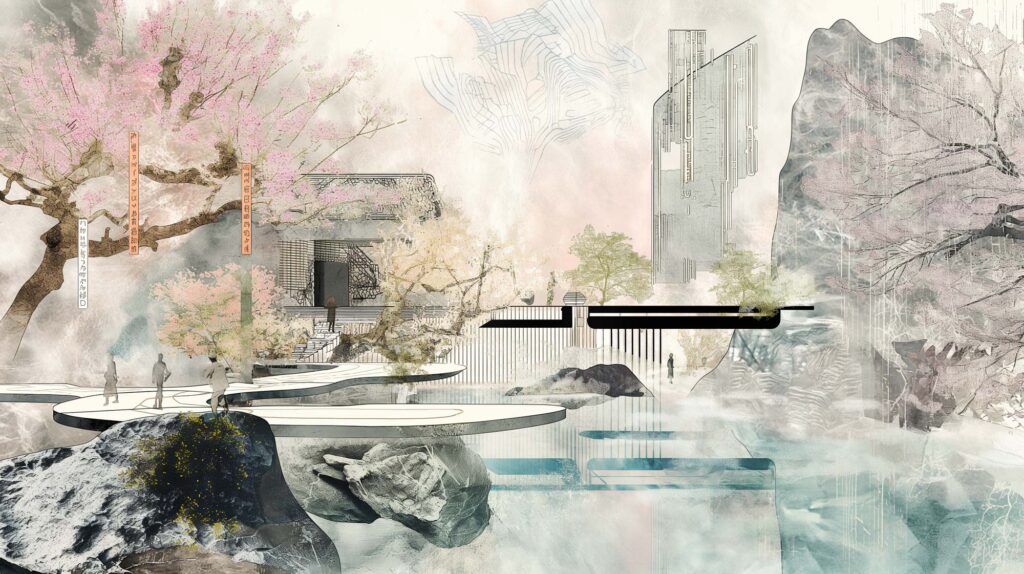
Our Service Offerings
1. Cultural & Historical VR Experiences
-
-
Bringing Japan’s heritage to life through museum-grade virtual reality reconstructions.
- Fully immersive tours of historical sites with academic-grade cultural accuracy
- 3D reconstructions of ancient Japan — temples, castles, and Edo-period streetscapes
- Educational VR experiences aligned with Cultural Agency heritage tourism guidelines
-
2. Travel & Tourism VR Content
-
-
Transporting global audiences to Japan’s most iconic destinations — with proven booking conversion impact.
- Virtual city and nature explorations with interactive wayfinding
- Pre-visit VR destination previews that shorten the traveler decision cycle
- Interactive travel guides with multilingual narration for international visitors
-
3. Virtual Shopping & E-Commerce Integration
-
-
Revolutionizing retail with immersive Japanese-themed virtual stores and AR product showcases.
- VR shopping experiences with real-time transactions and 360-degree product visualization
- AR try-before-you-buy showcases for traditional crafts, textiles, and artisanal goods
- Virtual Japanese market experiences bringing regional specialties to global audiences
-
4. VR Entertainment & Media Production
-
-
Blending Japanese aesthetics with next-gen entertainment in a $3.9 billion immersive market.
- VR concerts, cultural performances, and social VR events for global fan communities
- Anime and game-inspired interactive VR worlds leveraging Japan’s iconic cultural IP
- Location-based free-roam experiences and live-event streaming in VR
-
5. Corporate & Educational VR Solutions
-
-
Leveraging VR for business training that achieves 4× faster competency acquisition.
- Corporate training simulations for Japanese manufacturing, kaizen, and quality standards
- Cross-cultural business modules covering nemawashi, ringi, and omotenashi protocols
- Virtual classrooms and event spaces with multilingual support
-
6. Heritage Preservation & Digital Archiving
-
-
Preserving irreplaceable cultural assets through high-fidelity digital archiving and remote access.
- Photogrammetry-grade digitization of temples, shrines, and heritage structures
- Remote-access virtual exhibits for global researchers, educators, and diaspora communities
- Long-term digital preservation of endangered cultural sites and living traditions
-
The Japan VR Market Opportunity
$2.99B
Japan’s immersive content creation market projected by 2030, growing at 27.5% CAGR from a USD 724.6 million base in 2024.
$5.16B
Global AR/VR tourism market forecast by 2032, expanding at 20% CAGR — driven by destination previews and in-venue immersive experiences.
$3.9B
Japan’s immersive entertainment market in 2024, growing at 24.3% CAGR — with VR technology as the largest revenue segment.
135%
Increase in online reservations reported by hotels deploying VR destination previews versus standard photography.
4×
Faster competency achievement in VR training compared to traditional classroom instruction, with 275% higher learner confidence.
36.9M
Foreign tourists visited Japan in 2024 — with government targets of 60 million by 2030 driving demand for immersive tourism content.
Japan sits at the intersection of a globally recognized cultural brand, a maturing VR technology market, and active government support through METI’s content industry strategy and the Cultural Agency’s heritage tourism guidelines. B2B XR content spending in Japan reached ¥26.5 billion in 2024, while global VR content creation services are growing at 33.9% CAGR toward USD 3.26 billion by 2031. For organizations considering Japan-themed VR, the market window is open — and early movers are establishing positions that late entrants will find difficult to match.
Why Choose DMPJ for VR Content Creation?
- Authentic Cultural Representation: Faithfully recreating Japan’s heritage and modernity in VR with deep knowledge of Japanese aesthetics, historical accuracy, and cultural protocols. Our team brings direct experience in Japanese visual culture — from ukiyo-e composition and zen spatial philosophy to matsuri choreography and tea ceremony precision — ensuring content that resonates with discerning audiences and institutional partners alike.
- Advanced VR Technology & Multi-Platform Delivery: Delivering across WebXR, Meta Quest, location-based installations, and 360-degree video — selecting the right platform for your audience and budget rather than defaulting to a single technology. With WebXR adoption surging 40% in 2026 and Japan’s household VR penetration reaching 10%, we match technology choices to measurable business outcomes.
- Custom-Tailored Virtual Environments: Designing experiences calibrated to specific business goals — from $40K pilot projects that generate real-world ROI data to enterprise-scale deployments. Whether building a tourism destination preview, a museum heritage reconstruction, a retail product showcase, or a corporate training simulation, every environment is scoped to your KPIs and audience profile.
- Bilingual Cross-Cultural Expertise: Bridging Japanese cultural source material with international audience expectations through native bilingual consulting. We do not simply translate narration — we reframe cultural context for viewers across markets, eliminating the cross-cultural gap that generic VR studios, however technically skilled, cannot close. This bilingual capability spans creative direction, stakeholder communication, and deliverable localization.
Our Approach
01 Cultural Authenticity & Innovation
Combining Japan's traditions with cutting-edge VR technology, guided by Cultural Agency heritage guidelines and deep cultural expertise.
02 Immersive Storytelling
Creating interactive narratives that transform heritage sites, seasonal landscapes, and cultural traditions into explorable virtual worlds.
03 Global Accessibility
Reaching worldwide audiences via WebXR, Meta Quest, and 360-degree video — spanning 5 billion+ browser-equipped devices.
04 Seamless Integration
Cross-platform VR delivery spanning browsers, standalone headsets, location-based installations, and 360-degree video.
05 User-Centered Design
Intuitive, impactful VR experiences validated through structured testing with real users across all target devices.

Industries We Serve
Tourism & Travel Agencies
Education & Cultural Institutions
Retail & E-Commerce Platforms
Entertainment & Gaming Studios
Corporate & Training Solutions
Latest Insights on Japan Themed Virtual Reality Content Creation
What Is Japan-Themed Virtual Reality Content? A…
Discover what japan themed virtual reality content is, how businesses use immersive VR for tourism a
WebXR vs. Meta Quest vs. Location-Based VR: Cho…
Compare WebXR, Meta Quest, location-based VR, and 360° video for Japan-themed cultural tourism. Cost
Japan VR Content Creation Costs: Budget Ranges,…
Realistic VR content creation cost ranges for Japan-themed projects in 2026 — from $10K prototypes t
How 5 Industries Use Japan-Themed VR: Tourism, …
Discover how tourism, museums, retail, entertainment, and corporate training deploy Japan-themed VR.
How to Choose a Japan VR Content Creation Partn…
Structured VR agency selection guide for Japan-themed cultural content. 8 evaluation criteria, vendo
Your First Japan VR Project: A Step-by-Step Lau…
A 7-step playbook for marketing teams launching their first Japan VR content project — scoping, budg
Our Projects
Sorry, no posts matched your criteria.
Frequently Asked Questions
What types of Japan-themed VR content can DMPJ produce?
We produce six categories of immersive content: cultural and historical VR experiences featuring heritage site reconstructions, travel and tourism destination previews, virtual shopping and e-commerce showcases for Japanese products, VR entertainment and media productions, corporate and educational training simulations, and heritage preservation through digital archiving. Each project is tailored to your specific audience, business objectives, and platform requirements.
How much does a Japan VR project typically cost?
Budgets range from $10,000–$50,000 for basic 360° virtual tours and proof-of-concept prototypes, $50,000–$200,000 for mid-complexity interactive applications such as museum exhibits or destination previews, and $200,000–$1,000,000+ for advanced enterprise platforms with multiplayer capability and photorealistic rendering. We recommend starting with a constrained pilot in the $40,000–$80,000 range to generate measurable ROI data before scaling. Plan for 5–15% of initial development cost annually as a maintenance line item.
Which VR platform is right for my project?
The best platform depends on your audience and goals. WebXR (browser-based) reaches 5 billion+ devices with no downloads required, making it ideal for tourism previews and broad accessibility. Meta Quest standalone apps deliver higher fidelity for museum exhibits and premium training experiences. Location-based installations offer the most immersive venue experiences with haptics and free-roam capability. 360° video provides the broadest reach at the lowest cost for destination marketing and heritage documentation. Most successful deployments combine two or three platforms for comprehensive audience coverage — and DMPJ advises on the optimal mix for your specific use case.
What ROI can we expect from Japan-themed VR content?
Documented industry benchmarks include up to 135% increases in hotel booking conversions with VR destination previews, 4× faster competency achievement and 275% higher learner confidence in VR training programs, 25% reductions in product returns with AR/VR retail showcases, and 70% higher consumer purchase confidence through immersive product visualization. We define measurable KPIs before development begins and build analytics into every experience for rigorous performance tracking.
How long does a VR project take from concept to launch?
Timelines vary by complexity: 3–8 weeks for basic 360° tours, 4–6 months for mid-complexity interactive applications, and 6–12+ months for advanced enterprise platforms. For organizations operating within Japanese business structures, internal approval cycles of 6–9 months should be factored into overall planning — and up to 12–18 months for traditional manufacturers or financial institutions. We recommend beginning vendor conversations during the exploratory phase to align project scoping with internal approval timelines.
Experience Japan in a whole new way through immersive virtual reality — from heritage reconstructions and destination previews to interactive retail showcases and corporate training — tailored for global audiences in a market growing at 27.5% annually.
Get in Touch
CONTACT US