


29 May Why Japan Is the World’s Testing Ground for Elderly Care Innovation
Japan doesn’t simply have an aging population — it has the most rapidly aging society on Earth. With nearly one in three citizens over 65, the country has become the world’s default laboratory for aging society technology solutions. The innovations being tested here — from AI-powered monitoring platforms to community dementia-prevention networks — will define elderly care globally for the next two decades. For international businesses evaluating the Japan senior care technology landscape, and for Japanese SMEs looking to scale their solutions abroad, understanding this ecosystem isn’t optional. It’s a prerequisite for participating in one of the decade’s most consequential market shifts.
Japan’s Demographic Reality: The Numbers Behind the Urgency
Japan’s elderly population reached a record 36.25 million in 2024, accounting for 29.4% of the total population. That figure is projected to climb past 35% by 2040, a threshold no major economy has ever reached. The trajectory is not slowing — it’s accelerating.
Behind the headline percentage sits a social crisis. As of 2020, 22% of elderly women and 15% of elderly men in Japan were living alone — figures projected to rise to 25% and 21% respectively by 2040. That translates to roughly 9 million seniors living without daily in-person support, roughly the population of Austria.
The workforce can’t keep pace. Japan will need an estimated 250,000 additional care workers by 2026 — a gap that existing recruitment efforts show no sign of closing. Meanwhile, long-term care expenditures hit 11.9 trillion yen in fiscal 2024, a record high representing a 2.7x increase since the care insurance system launched in 2001. These numbers don’t describe a gradual shift. They describe a structural transformation that demands innovation at every level of the care ecosystem.
Five Pillars of Japan’s Elderly Care Innovation Ecosystem

Japan’s response to its demographic challenge has produced a remarkably diverse innovation ecosystem. Rather than a single silver bullet, the country is advancing simultaneously across five distinct but interconnected domains — each representing a substantial market in its own right.
| Innovation Pillar | Market Projection | Growth Indicator | Primary Demand Driver |
|---|---|---|---|
| Smart Home & Assistive Tech | [¥1.344 trillion by 2030](https://space-core.jp/media/12796/) | ~11% CAGR | 9M+ seniors living alone by 2040 |
| Senior Healthcare & Telemedicine | [$20 billion by 2033](https://www.atpress.ne.jp/news/2609421) | 16.2% CAGR | Chronic disease management at home |
| Community-Based Aging Models | Part of ¥13.2T LTC budget | Policy-driven expansion | Kodokushi (lonely death) prevention |
| AI & Robotics in Care | [$871.3M by 2033](https://www.grandviewresearch.com/horizon/outlook/elder-care-assistive-robots-market/japan) | 15.3% CAGR | 250,000-worker caregiver gap |
| Policy & Consulting | [¥13.2T care benefits budget](https://www.mhlw.go.jp/content/12300000/001364995.pdf) | Record annual increases | 16 government-designated priority fields |
Smart home and assistive technology
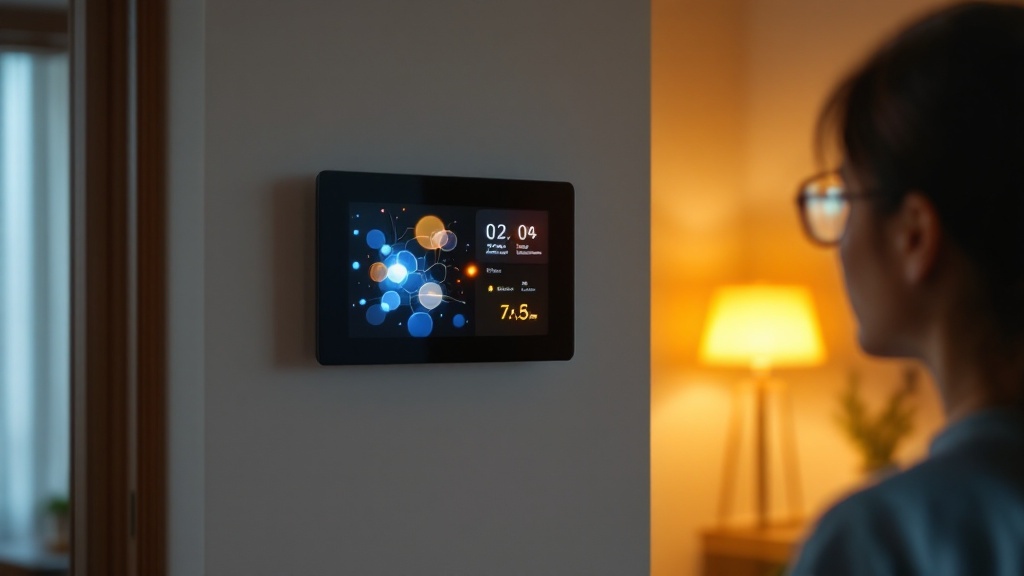
Japan’s smart home market is projected to reach ¥1.344 trillion by 2030, roughly tripling from its 2019 baseline. For elderly care specifically, the most traction is in voice-activated assistants adapted for older users, smart locks enabling remote access for caregivers, and environmental monitoring sensors that detect abnormal activity patterns. These solutions directly address the growing population of seniors aging alone, turning private homes into passive safety nets.
Senior healthcare and telemedicine
The remote healthcare market in Japan is on track to hit $20 billion by 2033, growing at a 16.2% CAGR. Wearable health monitors, tele-rehabilitation platforms, and AI-driven vital sign analysis are shifting chronic disease management from hospital wards to living rooms. For a country where the average elderly citizen manages multiple chronic conditions, this shift is both a clinical necessity and a fiscal imperative.
Community-based aging models
Perhaps the most distinctly Japanese innovation in aging care is the evolution of community-based models designed to prevent *kodokushi* — the phenomenon of elderly people dying alone and remaining undiscovered. These initiatives coordinate across neighborhood associations, local businesses, and municipal services to create social safety nets that technology alone can’t replicate. The government’s Community Integrated Care System framework has expanded steadily, with municipalities nationwide piloting models that blend human connection with digital monitoring.
AI and robotics in care
The Japan senior care technology landscape is defined by its commitment to robotics. The elder care assistive robots market generated $276.5 million in 2025 and is expected to reach $871.3 million by 2033, growing at a 15.3% CAGR. Physically assistive robots — devices that help with transfers, bathing, and mobility — are the fastest-growing segment. The elderly care DX market reached an estimated ¥54.6 billion in fiscal 2024 across care systems, functional training support, electronic billing, monitoring systems, and in-facility communication devices.
Critically, research on Japanese nursing homes shows that robot adoption doesn’t replace workers — it retains them. A 10% increase in robots was associated with a 0.24% increase in total employment and lower staff turnover rates, as technology shifted physical burden away from caregivers and improved job satisfaction.
Policy and consulting for aging society
The Japanese government allocated ¥13.2 trillion for care benefits in the 2026 fiscal year — a figure that has grown every year since the care insurance system’s inception. This massive public spending creates structured demand for solutions that meet government-defined priority areas, making policy literacy a competitive advantage for any company operating in this space.
Government Investment Fueling Innovation
Japan’s public sector isn’t simply funding elderly care — it’s actively engineering an innovation ecosystem through targeted policies, subsidies, and strategic frameworks.
The Society 5.0 strategy, promoted as Japan’s vision for a “human-centered smart society,” explicitly positions aging as a technological opportunity rather than just a burden. Demonstration zones in cities like Osaka and Tsukuba serve as living laboratories where exoskeletons, AI care allocation systems, and rehabilitation robots are tested in real communities under real conditions.
The Ministry of Health, Labour and Welfare (MHLW) recently expanded its priority fields for care robot technology from 13 to 16 items across nine categories. Three entirely new areas were added: functional exercise support, eating and nutrition management assistance, and daily support for people with dementia. These priority designations directly shape which technologies receive government backing, creating a clear roadmap for developers.
For care facilities seeking to adopt technology, the government offers digitalization subsidies covering 50% of cloud service costs for the first two years of approved implementations. The Small Business Labor Saving Investment Subsidy provides additional funding of up to ¥15 million for equipment that addresses workforce shortages. These programs effectively reduce the payback period for technology investments from years to months.
Looking further ahead, the Moonshot R&D Program targets the development of AI-enabled care systems and autonomous robotic caregivers by 2050, with current funding supporting foundational research in natural language processing for elderly communication, predictive health monitoring, and adaptive rehabilitation robotics.
Why Mid-Sized Companies Are Leading the Charge
While large hospital groups and national insurers dominate Japan’s institutional care landscape, the real innovation in aging care is happening at the mid-market level — and for structural reasons.
Japan’s care infrastructure is remarkably fragmented. The country has approximately 259,103 care facilities nationwide, with home care services alone accounting for over 160,000 providers. This fragmentation creates demand for specialized, adaptable solutions that large agencies are poorly positioned to deliver. A transfer-assist robot designed for a 30-bed rural facility has different requirements than one built for a 200-bed urban complex. SMEs that can tailor solutions to these diverse settings hold a natural advantage.
Foreign companies increasingly view Japan as the premier test market for aging technology. The logic is straightforward: if a solution works in the world’s most demanding elderly care environment — with its exacting quality standards, unique cultural expectations, and rigorous regulatory framework — it can work anywhere. Industry surveys suggest that 78% of Japanese care tech firms now prioritize international partnerships as part of their growth strategy, up significantly from just a few years ago.
This creates a two-way opportunity. Japanese innovators need bilingual market access to scale globally. International companies need cultural and regulatory expertise to enter Japan. DMPJ’s elderly care innovation services are designed to bridge precisely this gap — connecting technology developers, care providers, and policy stakeholders across language and market boundaries.
What International Stakeholders Should Watch
Japan’s elderly care innovation trends carry implications far beyond its borders. For international stakeholders, four dynamics deserve close attention.
Japan as proof-of-concept market
Any technology that gains traction in Japan’s elder care market arrives in other aging societies with built-in credibility. The country’s combination of demanding consumers, strict regulatory oversight, and sophisticated care infrastructure makes it the gold standard for real-world validation. Solutions proven here carry weight with decision-makers in Germany, South Korea, Italy, and increasingly China — all countries facing their own demographic reckonings within the next two decades.
The bilingual expertise bottleneck
One of the most persistent barriers to cross-border collaboration in elderly care is language. Municipal tender documents, MHLW guidelines, facility certification requirements, and care worker training materials are overwhelmingly in Japanese. International companies routinely underestimate the depth of localization required — not just translation, but cultural adaptation of user interfaces, care workflows, and stakeholder communication. This bottleneck represents both a barrier and an opportunity for firms with genuine bilingual capability.
Policy shifts creating reimbursement pathways
Japan’s expansion of government-designated priority fields for care technology from 13 to 16 items signals a widening reimbursement landscape. As new technology categories gain recognition — AI-based dementia support, nutrition management systems, functional exercise devices — they become eligible for subsidies and insurance coverage that dramatically improve adoption economics. Stakeholders who track these policy shifts early can position their solutions before markets become crowded.
Lessons for other aging societies
Japan is roughly 15–20 years ahead of most developed nations on the aging curve. The community-based care coordination models being refined in Japanese municipalities today will become templates for cities across Asia and Europe. The workforce challenges Japan is addressing through robotics and AI will arrive in Germany, South Korea, and China within the next decade. Understanding Japan’s elderly care market in 2026 is effectively previewing the global care landscape of 2040.
For organizations looking to understand — and participate in — this transformation, senior care solutions from Daisho Media Partners Japan offer a practical entry point, combining deep local market knowledge with the bilingual fluency that cross-border projects demand.
Japan’s elderly care innovation landscape is vast — but navigating it requires deep local expertise and bilingual fluency. Daisho Media Partners Japan (DMPJ) helps international businesses and Japanese SMEs alike unlock opportunities across smart home technology, senior healthcare, community aging models, and policy advocacy. Visit our Elderly Care Innovation service page to discover how DMPJ can help you engage with the world’s most advanced aging society.
Sorry, the comment form is closed at this time.