

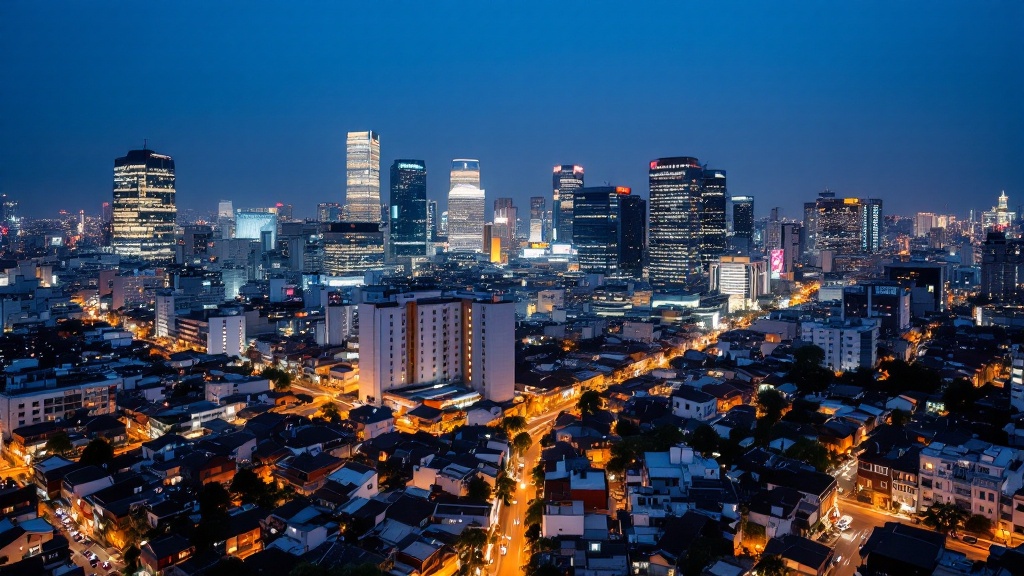
30 May What Is Urban Renewal and Community Development in Japan? A Primer for International Business Leaders
Japan is remaking its cities. Not with the bulldoze-and-build approach of the postwar economic miracle, but through a deliberate, multi-layered process that blends cutting-edge technology with deep cultural preservation and grassroots community engagement. For international business leaders and Japanese SME executives alike, understanding what urban renewal means in the Japanese context is essential — because the rules, players, and expectations here differ sharply from those in London, Singapore, or New York.
This article provides a comprehensive urban renewal Japan overview for business. It explains why Japan treats renewal as a national strategic priority, breaks down the five pillars that define the country’s approach to community development, highlights key differences from Western models that foreign firms routinely underestimate, and outlines what this means for companies considering the market. Whether you lead a foreign firm assessing Japan entry, a Japanese SME navigating new sustainability requirements, or a cross-border team evaluating smart city partnerships, this sustainable urban planning Japan introduction will give you the context you need.
Why Urban Renewal Is a Strategic Priority in Japan
Japan’s Demographic and Infrastructure Imperative
Japan’s population peaked at 128 million in 2008 and has been declining since, with projections showing a drop below 100 million by 2050. As of 2024, 63 countries face declining national populations, but Japan’s challenge is compounded by the world’s oldest population and severe rural depopulation. Entire municipalities are losing their tax base, schools are closing, and infrastructure built during the high-growth era — bridges, water systems, public housing — was designed to serve a much larger workforce.
This isn’t abstract policy. For business leaders, it means shrinking consumer markets in regional cities, labor shortages that delay construction projects by an average of 2.7 years, and mounting pressure on municipalities to do more with less.
From Expansion to Renewal
Japan’s postwar urban planning was built around one assumption: growth. Cities expanded outward, highways connected suburbs to industrial centers, and new construction was the default answer to every infrastructure question. That era is over.
The current paradigm centers on compact-city models — concentrating services, housing, and commercial activity in walkable urban cores while repurposing or retiring underused infrastructure in the periphery. MLIT now promotes urban renovation and compact cities as the primary framework for local planning, with guidelines designed to reduce greenhouse gas emissions while maintaining livability. For a country that once defined urban success by how fast it could build, the redefinition is profound: Japan now measures progress by how intelligently it can maintain, renew, and adapt what already exists.
Society 5.0 and National Economic Strategy
Urban renewal in Japan is not a standalone policy — it is embedded in the country’s overarching economic vision. The Cabinet Office’s Society 5.0 framework positions smart cities as the physical infrastructure for a “super-smart society” where data, AI, and IoT bridge the gap between the digital and physical worlds. Urban renewal projects are the proving grounds where this vision takes tangible form: sensor networks monitoring aging infrastructure, data-driven municipal services compensating for shrinking workforces, and green energy systems meeting the country’s 2050 carbon neutrality commitment.
The economic stakes are substantial. Japan’s smart city market was valued at approximately USD 63 billion in 2024 and is projected to reach USD 144 billion by 2030, growing at a 14.7% compound annual growth rate. The 2026 national budget — a record JPY 122.31 trillion — reflects this priority, with billions allocated to green transformation, smart infrastructure, and next-generation energy systems.
The Five Pillars of Urban Renewal in Japan
Japan community development explained through its current practice rests on five interconnected pillars. Each represents a distinct market segment and policy priority, and together they form the framework within which all urban renewal projects operate.
| Pillar | Focus | Key Standards / Programs | Lead Agencies |
|---|---|---|---|
| Smart City & IoT | Sensors, Urban OS, data-driven services | Society 5.0, Digital Garden City | Cabinet Office, METI |
| Historic District Revitalization | Tourism, preservation, community identity | Preservation Districts, Japan Heritage | Agency for Cultural Affairs |
| Green Urban Planning | Low-carbon building, energy efficiency | CASBEE, ZEB/ZEH, GX ZEH | MLIT, Min. of Environment |
| Affordable & Sustainable Housing | Public-private housing, eco-housing | UR programs, Flat 35 | MLIT, JHFA |
| Civic Engagement & Public Space | Community participation, placemaking | Chōnaikai system | Municipal governments |
Smart City and IoT Infrastructure
Japanese smart city development emphasizes what the Cabinet Office defines as using new technologies and public-private data to solve urban challenges while improving quality of life. In practice, this means sensor networks monitoring bridge fatigue, “Urban OS” platforms integrating municipal data across departments, and AI-assisted systems managing everything from traffic flow to waste collection. McKinsey research suggests that cities implementing comprehensive smart technologies can achieve 10–30% improvements across key quality-of-life indicators, including commute time reductions of up to 20% and greenhouse emission decreases of 15%. MLIT recently designated two new districts for smart city funding in FY2025 — Koto Ward in Tokyo, focusing on advanced urban technologies, and Numazu City in Shizuoka, targeting mobility solutions for aging communities.
Historic and Cultural District Revitalization
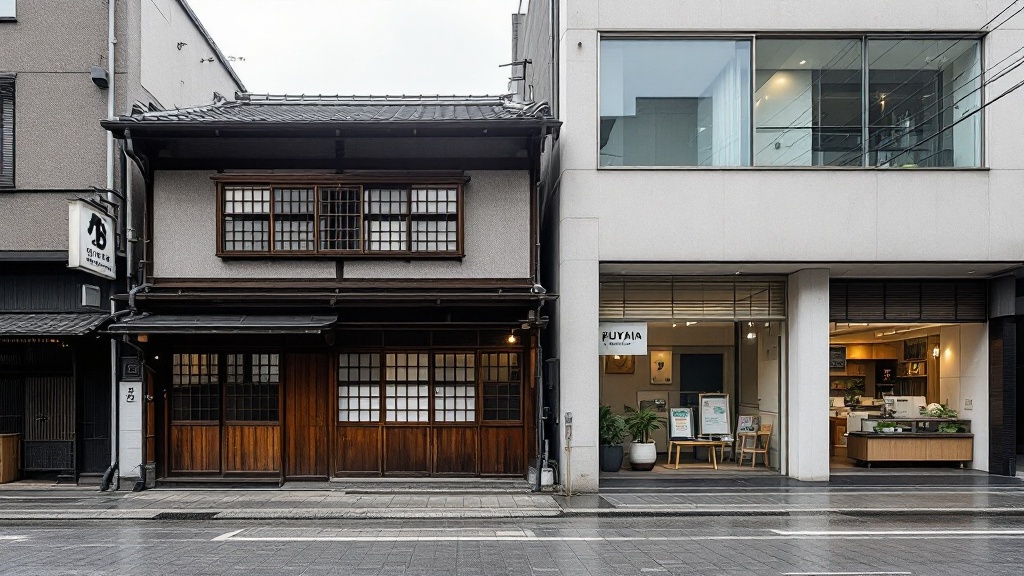
Unlike many Western countries that treat cultural preservation as an amenity, Japan positions it as economic infrastructure. The Agency for Cultural Affairs administers the Preservation Districts for Groups of Traditional Buildings program, which enables municipalities to designate historic areas for special protection while unlocking financial support for restoration, facade enhancement, and disaster prevention facilities. These programs balance tourism revenue with community quality of life — a tension that has intensified as overtourism strains historic districts in cities like Kyoto. Subsidies typically cover 50–70% of eligible restoration costs, with tax reductions on fixed assets and city planning taxes available to property owners who maintain traditional character.
Green Urban Planning
Japan’s sustainable urban planning framework centers on the CASBEE certification system, which evaluates buildings across four dimensions: energy efficiency, resource efficiency, outdoor environment, and indoor environment. Municipalities like Osaka and Yokohama require CASBEE assessments for new buildings exceeding 2,000 square meters. In parallel, the government is pushing Zero Energy Building (ZEB) and Zero Energy House (ZEH) standards toward universal adoption. In September 2025, METI redefined these as “GX ZEH” and “GX ZEH-M” for implementation from April 2027, raising the required reduction in primary energy consumption. The target: ZEH/ZEB-level efficiency in all new buildings by 2030, and across the entire building stock by 2050. The FY2026 budget allocated JPY 605 billion (USD 3.8 billion) for green transformation and renewable energy initiatives — an unmistakable signal of where national priorities lie.
Affordable and Sustainable Housing
Japan’s Urban Renaissance Agency (UR) runs one of the country’s largest affordable housing programs, offering rental units without key money, guarantor requirements, or renewal fees — a significant departure from the conventional Japanese rental market. The agency uses income-based screening, and eligibility extends to foreign residents holding residence visas of one year or more. Alongside UR, the Japan Housing Finance Agency’s Flat 35 program provides 35-year fixed-rate mortgages designed to incentivize energy-efficient construction. Public-private partnerships are increasingly used to develop eco-housing that meets both affordability and sustainability targets, particularly in regional cities where population decline has created surplus housing stock that can be retrofitted rather than demolished.
Civic Engagement and Public Space Innovation
Japan’s chōnaikai (neighborhood association) system provides a uniquely granular layer of civic governance that has no direct equivalent in most Western countries. These volunteer-run organizations manage local festivals, coordinate disaster preparedness, mediate between residents and municipal government, and — critically — serve as informal gatekeepers for development projects. Creative placemaking initiatives are increasingly layered on top of this traditional structure, with municipalities experimenting with pop-up markets, community gardens, and redesigned public spaces that strengthen grassroots ties. This is where the Japanese approach to smart city and community development basics becomes most visible: change happens through dialogue, not decree. For organizations accustomed to top-down planning processes, this pillar represents both the greatest cultural adjustment and one of the largest opportunities. Projects that earn genuine community support gain a resilience that regulatory approval alone cannot provide.
How Japan’s Approach Differs from Western Urban Renewal
For leaders accustomed to urban renewal processes in the United States, United Kingdom, or Europe, Japan’s approach will feel fundamentally different. The contrasts aren’t minor procedural details — they shape every aspect of project planning, partner selection, and timeline.
| Dimension | Japan | Western Markets |
|---|---|---|
| Decision-making | Consensus-based (*nemawashi*) — multi-stakeholder alignment before formal approval | Top-down executive or regulatory authority |
| Cultural preservation | Non-negotiable design constraint from project inception | Often a trade-off against development economics |
| Regulatory landscape | Municipal fragmentation — each city has distinct zoning and permitting | More standardized national or state-level frameworks |
| Community gatekeepers | Chōnaikai hold informal veto power over local projects | Public comment periods with limited binding authority |
| Project timelines | Longer; nearly [80% of projects experience delays](https://www.patiencerealty.com/post/delays-and-cost-overruns-disrupt-urban-redevelopment-projects-across-japan) | More predictable but less community-integrated |
Consensus Over Speed

The concept of nemawashi — building agreement through informal, pre-meeting consultation — governs how urban renewal decisions are made in Japan. Proposals circulate through multiple organizational layers before reaching a formal decision point. This extends timelines but produces durable buy-in that prevents the community opposition and legal challenges common in top-down Western redevelopments. For foreign companies, this means that the timeline between initial interest and project kickoff is typically measured in months, not weeks — and that relationship-building with all stakeholders, not just the primary decision-maker, is essential.
Cultural Preservation as a Design Constraint
In many Western markets, historic preservation competes with development pressure. In Japan, it is treated as a non-negotiable constraint that shapes project scope from the beginning. The Agency for Cultural Affairs maintains comprehensive subsidies for restoration of National Treasures and Important Cultural Properties, and municipalities that designate Preservation Districts gain access to dedicated financial support. Buildings within these zones receive tax incentives that reinforce preservation — a system designed to make protecting heritage economically rational, not merely aspirational.
Municipal Fragmentation
Each Japanese municipality is effectively a regulatory island. Zoning codes, permitting processes, building standards, and community engagement expectations vary from one city to the next — and sometimes between wards within the same city. There is no national “one-stop shop” for urban renewal approvals. This fragmentation raises the cost of market entry significantly and creates a steep learning curve for organizations unfamiliar with local governance structures.
Neighborhood Associations as Gatekeepers
The chōnaikai system means that formal regulatory approval is necessary but not sufficient. These neighborhood associations maintain unwritten protocols for community engagement, and failing to secure their support can delay or kill projects regardless of permits in hand. Understanding how to work within this informal layer is often the difference between a project that advances smoothly and one that stalls indefinitely.
Why This Matters for Foreign Companies and Japanese SMEs
The Market Entry Challenge for Foreign Firms
Industry analysis suggests that approximately 83% of municipal procurement in urban technology favors firms with existing local partnerships. Foreign companies entering urban renewal projects without domestic allies face significantly longer qualification timelines and lower win rates. The preference isn’t protectionism — it reflects practical realities: municipalities need partners who understand local regulations, speak the language of community engagement, and maintain relationships with neighborhood associations and prefectural officials.
The IMD Smart City Index consistently ranks Japanese cities among the top performers in Asia-Pacific, but accessing these markets requires navigating an ecosystem where informal networks matter as much as formal qualifications. For international firms with strong technical capabilities in smart city technology or green building systems, the challenge is not competence — it is cultural translation. The gap between having a world-class sensor network and getting permission to deploy it in a Japanese municipality can be vast.
The Pressure on Japanese SMEs
Japanese SMEs face the opposite challenge. They possess the local relationships and cultural fluency that foreign firms lack, but most do not have dedicated sustainability or smart city departments. As municipal procurement increasingly includes sustainability criteria — driven by Japan’s carbon neutrality commitments and the OECD’s emphasis on green investment — these companies face growing pressure to participate in urban renewal projects they are not fully equipped to lead independently.
Bridging the Gap
This is precisely where bilingual consulting creates value. A firm that can translate international best practice into Japanese regulatory and cultural context — and vice versa — unlocks opportunities for both sides. Foreign firms gain access to local networks and community engagement expertise. Japanese SMEs gain access to global benchmarks, technical standards, and funding mechanisms they would not otherwise reach. To explore DMPJ’s approach to sustainable urban renewal in Japan is to see this bridging function in practice.
Key Takeaways and Where to Start
The Five Pillars Are Interconnected
The five pillars of urban renewal in Japan — smart city infrastructure, cultural preservation, green planning, sustainable housing, and civic engagement — do not operate in isolation. A successful project in a historic district might integrate IoT sensors for visitor management, CASBEE-certified retrofits, UR housing partnerships for affordable residential units, and chōnaikai-led stakeholder processes. Understanding sustainable urban planning in Japan means understanding how these elements interact, and how neglecting any one of them can undermine the others.
Cultural Fluency Is Not Optional
Technical expertise matters. So do credentials, certifications, and project track records. But in Japan, none of these will compensate for a lack of cultural fluency. The ability to navigate nemawashi, earn chōnaikai trust, communicate effectively with municipal officials, and demonstrate long-term commitment to community outcomes is not a nice-to-have — it is a prerequisite for any organization serious about operating in this space.
A Specialized Partner Accelerates Entry
Japan’s urban renewal market is growing fast, but the barriers to entry are real: fragmented regulations, consensus-driven processes, language barriers, and deeply embedded local networks. Companies that attempt to enter this market without specialized guidance often spend years learning lessons that a knowledgeable partner could have anticipated. For firms serious about this market, the most effective first step is to work with a partner who understands both sides — the international standards and the Japanese realities. DMPJ’s urban renewal and community development services are built specifically for this purpose: connecting global expertise with local execution in one of the world’s most complex and rewarding urban development markets.
If you’re exploring how urban renewal and community development in Japan could impact your business strategy, DMPJ can help you navigate this complex landscape. Our bilingual team combines deep cultural understanding with expertise in sustainable urban planning and smart city development. Visit our Urban Renewal and Community Development service page to discover how we facilitate projects that integrate sustainability, cultural preservation, and technological innovation.
Sorry, the comment form is closed at this time.