

03 Jun A Step-by-Step Playbook for Preparing Your First Business Negotiation in Japan
A Step-by-Step Playbook for Preparing Your First Business Negotiation in Japan
Your first business negotiation in Japan will not resemble the negotiations you have run before. The pacing is different, the signals are different, and the things that build — or destroy — trust are often invisible to outsiders. A well-prepared negotiator who understands Japanese business negotiation etiquette step by step will outperform a more experienced one who walks in cold.
This cross-cultural negotiation preparation guide for Japan breaks the process into five phases, starting six weeks before the meeting and extending through the critical follow-up period afterward. Whether you are entering a joint venture discussion, a procurement deal, or a market-entry partnership, this japan business negotiation preparation checklist will help you avoid the mistakes that derail first-timers and capitalize on the opportunities that only arise when preparation meets cultural fluency.
Before You Book the Flight: Foundational Research (4–6 Weeks Out)
Research Your Counterpart’s Company
Surface-level research is not enough. Japanese companies operate within networks — keiretsu affiliations, banking relationships, supplier hierarchies — that shape their priorities and constraints in ways that will not appear on their English-language website. Dig into recent press coverage in Japanese business media (Google Translate will get you directionally close). Look at their annual reports, especially sections on mid-term management plans (中期経営計画), which most publicly listed Japanese firms publish. Understand their organizational hierarchy: is the company you are negotiating with a subsidiary, a division of a holding company, or an independent entity?
According to JETRO’s 2025 survey of foreign-affiliated companies in Japan, approximately sixty percent of foreign companies operating in Japan plan to strengthen or expand their operations — meaning competition for Japanese partners is intensifying. The more you know about your counterpart’s strategic direction, the better positioned you are to frame your proposal as aligned with where they are heading.
Understand Who Will Be in the Room
Request the attendee list in advance. In Japanese business culture, the composition of the meeting room communicates intent. If your counterpart sends a large delegation including senior executives, they are signaling seriousness. If they send mid-level managers only, this is likely an information-gathering session, and no decision will be made that day.
Identify the Real Decision-Maker
The most senior person in the room may not be the decision-maker — and the decision-maker may not be in the room at all. In many Japanese organizations, the visible spokesperson (often the department head or general manager) presents the company’s position, but the actual decision flows through a consensus process called ringi that involves multiple layers of internal approval. Understanding this dynamic early prevents the frustration of thinking you have closed a deal with the wrong person.
Map the Regulatory Landscape
Japan’s regulatory environment for foreign businesses has grown more complex. The Japanese government expanded its foreign direct investment screening framework in 2025, adding new subcategories of “specified core sectors” and introducing two new categories of foreign investors subject to heightened scrutiny. If your deal involves equity investment, technology transfer, or operations in sectors the government considers strategically sensitive, you need to know the compliance requirements before you sit down at the table — not after.
| Research Area | What to Look For | Where to Find It |
|---|---|---|
| Corporate structure | Keiretsu affiliations, parent-subsidiary relationships, banking group | Annual reports, Toyo Keizai company profiles |
| Attendee roles | Titles, division, decision-making authority | Request attendee list; cross-reference LinkedIn and company org charts |
| Regulatory exposure | FDI screening, sector-specific compliance, licensing | METI, MOF guidelines, legal advisors |
| Strategic direction | Mid-term management plan, recent M&A, capital allocation priorities | IR pages, Nikkei press coverage |
Cultural Preparation: The Norms That Shape the Negotiation (3–4 Weeks Out)
Getting the cultural fundamentals right is not about performing rituals — it is about demonstrating that you have taken the time to understand your counterpart’s world. As research from Harvard’s Program on Negotiation makes clear, respect for cultural differences generates substantially superior negotiation outcomes compared to cultural ignorance.
Meishi (Business Card) Exchange Protocol
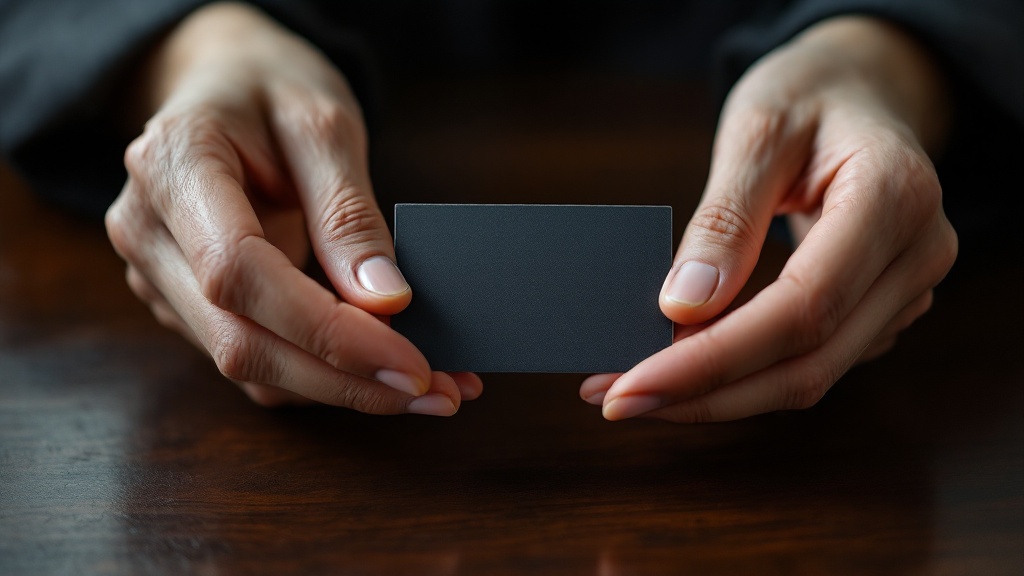
The meishi exchange is not a formality. It is the opening act of the relationship. Present your card with both hands, Japanese side facing your counterpart, and receive theirs the same way. Read it carefully. Place it on the table in front of you for the duration of the meeting, arranged to mirror the seating order of the other side. Never write on a business card in front of the person who gave it to you. Order of exchange follows seniority — the most senior members exchange first.
Seating Arrangements and Hierarchy
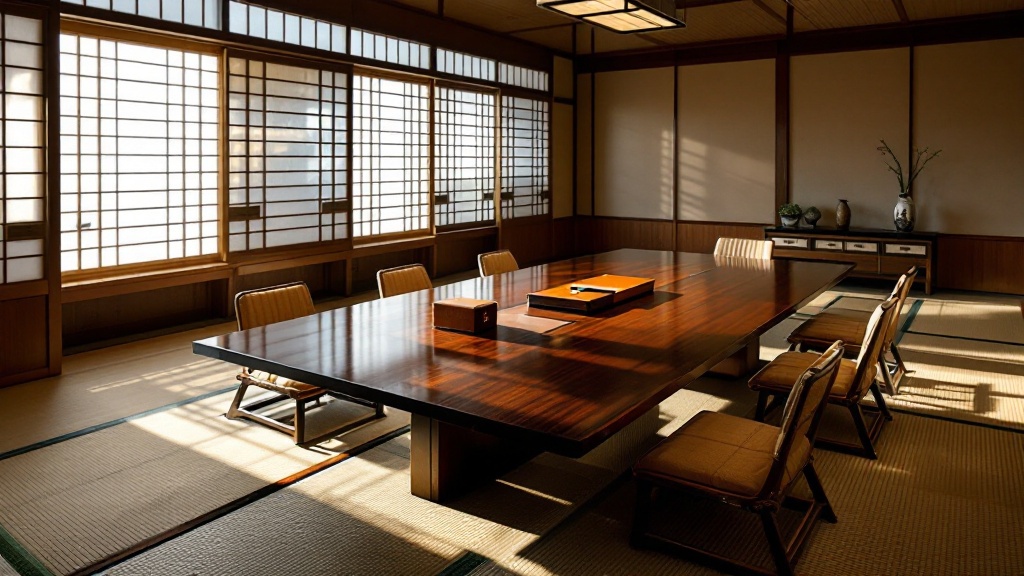
In Japanese meeting rooms, seating positions carry hierarchical meaning. The seat farthest from the door (kamiza) is reserved for the most senior person. If you are the guest, you will typically be guided to the kamiza side. Do not choose your own seat — wait to be directed. Sitting in the wrong position signals either ignorance or disrespect.
Gift-Giving Norms
A modest, well-chosen gift from your home region is appropriate for a first meeting. Avoid sets of four (the number is associated with death in Japanese), anything overly personal, and anything too expensive that could create an uncomfortable sense of obligation. Present gifts with both hands at the beginning or end of the meeting. Wrapping matters — invest in clean, professional presentation.
The Role of Silence
Silence in a Japanese negotiation is not awkward — it is functional. Your counterparts may pause for extended periods to consider what has been said, to consult internally through glances or subtle cues, or to formulate a response that maintains group consensus. Do not rush to fill the silence. It is processing time, not rejection. Western negotiators who interpret silence as disagreement and start making concessions to break it are giving away value unnecessarily.
Dress Code and Punctuality
Conservative business attire is standard. Dark suits, minimal accessories, clean shoes. Arrive five to ten minutes early. In Japanese business culture, punctuality is a baseline expectation, not a virtue — being late, even by a few minutes, damages credibility before the conversation begins.
Strategic Preparation: Defining Your Objectives and Flex Points (2–3 Weeks Out)
Set Internal Alignment on Must-Haves vs. Negotiables
Before you negotiate with your Japanese counterpart, negotiate with your own team. Every member of your delegation should understand which terms are non-negotiable, which have flexibility, and what your walk-away position is. Misalignment within your own side is immediately visible to experienced Japanese negotiators and undermines your credibility.
Prepare for a Multi-Meeting Arc
Japanese counterparts rarely decide in a single session. Expect two, three, or more meetings before reaching agreement. Each meeting serves a purpose: the first establishes relationship and intent, the second explores details and concerns, and subsequent meetings narrow toward agreement. Trying to compress this into a single power meeting signals impatience and cultural tone-deafness.
Build In Time for Relationship Development
Dinners, facility tours, and informal conversations are not extras — they are load-bearing parts of the negotiation structure. Japanese business culture places significant weight on trust built outside the conference room. If your counterpart invites you to dinner, accept. If they offer a factory tour, go. These interactions provide information that formal meetings never will, and they signal your commitment to a long-term relationship rather than a transactional hit.
Draft a Bilingual Negotiation Brief
Prepare a concise document summarizing your objectives, key terms, and discussion agenda in both English and Japanese. This ensures your interpreter or bilingual advisor understands not just the words but the strategic intent behind them. The Japanese-English interpretation market commands premium rates — Class A simultaneous interpreters earn ¥100,000–¥130,000 per day — precisely because the linguistic and cultural distance between the two languages is vast. A bilingual brief reduces the risk of miscommunication at critical moments.
| Preparation Element | Timeline | Purpose |
|---|---|---|
| Internal must-haves vs. negotiables alignment | 3 weeks out | Prevent visible internal disagreement |
| Multi-meeting schedule planning | 2–3 weeks out | Allow for iterative decision process |
| Relationship-building events | 2 weeks out | Build trust beyond the conference room |
| Bilingual negotiation brief | 1–2 weeks out | Align interpreter/advisor with strategic intent |
The Day Of: In-Meeting Tactics and Real-Time Awareness
Opening: Let the Senior Japanese Participant Set the Pace
Resist the urge to launch into your pitch. The senior member of the Japanese delegation will typically open with introductory remarks, context-setting, and possibly a review of the relationship to date. Follow their lead. This opening phase establishes tone, hierarchy, and mutual respect. Trying to accelerate past it signals that you value your time more than the relationship.
Reading the Room
Japanese negotiators rarely say “no” directly. Instead, watch for indirect signals: phrases like “that would be difficult” (muzukashii), requests for more time to “consider internally,” group glances between team members, or a shift from engaged discussion to polite but vague responses. These are not stalling tactics — they are communication. Learning to read them is one of the most valuable first business meeting japan negotiation tips you can internalize.
Effective cross-cultural negotiators, as Harvard research emphasizes, develop conscious awareness of how their own cultural perspectives appear to their counterparts and adjust accordingly. Inexperienced negotiators tend to dismiss unfamiliar customs as inefficient; effective ones seek to understand the value system behind them.
Introducing Pricing and Difficult Terms
Timing matters more in Japanese negotiations than in most Western contexts. Introducing price too early — before relationship and mutual understanding are established — feels transactional and aggressive. Wait until the discussion has covered scope, mutual benefits, and operational alignment before moving to commercial terms. When you do introduce pricing, frame it within the context of long-term value and partnership, not as a take-it-or-leave-it number.
Managing Interpreters or Bilingual Advisors
If you are working with an interpreter, speak in short, clear sentences. Pause after each thought to allow interpretation. Maintain eye contact with your Japanese counterpart, not the interpreter — you are building a relationship with the person across the table, not with the language professional beside you. Brief your interpreter in advance on technical terminology, acronyms, and any culturally sensitive topics. If you are working with bilingual negotiation support for your Japan meetings, your advisor can go further — reading cultural cues in real time, flagging potential misunderstandings before they escalate, and suggesting tactical adjustments mid-meeting.
After the Meeting: Follow-Up That Builds Momentum
Send a Bilingual Meeting Summary Within 24 Hours

A concise summary in both English and Japanese, covering key discussion points, agreed next steps, and outstanding items, demonstrates professionalism and ensures alignment. This document becomes the reference point for your counterpart’s internal discussions. Make it easy for them to circulate internally by keeping it clear, structured, and free of ambiguity.
Follow-Up Timing
There is a window. Following up the same afternoon feels aggressive. Waiting more than a week signals disinterest. The sweet spot is typically 24–48 hours for the meeting summary, then a follow-up check-in at the one-week mark. Adapt based on the signals you received in the meeting — if your counterpart mentioned internal review timelines, respect them.
The O-Rei (Thank-You) Communication
A brief, sincere thank-you message sent separately from the meeting summary is a small gesture that carries outsized weight. It acknowledges the time your counterpart invested and reinforces your commitment to the relationship. In Japanese business culture, this kind of courtesy (o-rei) is expected and noticed when absent.
Navigating the Ringi Process
After your meeting, your counterpart is likely running an internal consensus-building process (ringi) that involves circulating a proposal document through multiple layers of management for approval. This process can take weeks. Do not mistake the silence for disinterest. Instead, make yourself available for follow-up questions, provide additional information promptly when requested, and demonstrate patience. Pushing for a faster decision during ringi is counterproductive — it signals that you do not understand or respect the organization’s decision-making process.
When to Bring In Professional Bilingual Support
Signals That Your Deal Exceeds DIY Preparation
This playbook will take you a long way — but there are situations where preparation alone is not enough. If your deal involves complex regulatory considerations under Japan’s expanded FDI review framework, if multiple stakeholders with competing interests will be at the table, if the commercial terms require nuanced positioning that depends on real-time cultural reading, or if your organization has no prior track record in Japan, the gap between preparation and execution becomes a risk factor.
The global cross-cultural training market is valued at USD 2.26 billion in 2026 and growing at 6.97% CAGR — evidence that organizations worldwide increasingly recognize cultural competence as a critical factor in deal success, not a nice-to-have.
The Cost of Learning on the Job
The cost of a failed first negotiation is rarely just the deal itself. It is the reputational damage within a market where business relationships are long-memory and word travels through industry networks. Japan’s management consulting market has reached USD 7.57 billion and is growing at 10.78% CAGR precisely because Japanese and foreign companies alike recognize that professional guidance on high-stakes interactions delivers measurable returns. The SME segment of this market is growing even faster at 14.05% CAGR — smaller companies facing their first cross-border negotiations are investing in external support at accelerating rates.
With approximately 928,270 foreign workers in Japan as of October 2025 and sixty percent of foreign-affiliated companies planning to expand operations, the competitive landscape for Japan partnerships is intensifying. Your counterpart has options. Showing up underprepared — or worse, culturally miscalibrated — hands the advantage to competitors who took preparation more seriously.
How Bilingual Negotiation Support De-Risks First Interactions
A professional bilingual negotiation advisor does more than translate. They read cultural cues that non-native participants miss. They recognize when a polite “we will consider it” means genuine interest versus a soft decline. They advise on pacing, framing, and concession timing in real time. And they provide continuity across the multi-meeting arc that Japanese negotiations typically follow — ensuring that relationship capital built in meeting one compounds rather than dissipates by meeting three.
For organizations where the stakes of the first Japan negotiation are high and the margin for error is low, DMPJ’s bilingual business negotiation support bridges the gap between thorough preparation and effective execution.
Preparation gets you to the table — but navigating what happens at the table requires cultural fluency and real-time judgment. If your first Japan negotiation is approaching and the stakes are too high for trial and error, explore DMPJ’s bilingual business negotiation support to ensure your preparation translates into results.
Sorry, the comment form is closed at this time.