


29 May Smart City Projects in Japan: 6 Case Studies With Measurable Results
Why Case Studies Matter for Smart City Investment Decisions
If you are evaluating a smart city technology investment, you do not need another whitepaper about what smart cities could theoretically achieve. You need before-and-after metrics from projects that have already been built, operated, and measured. Verified CO2 reductions, documented cost savings, actual adoption rates—these are the data points that separate promising concepts from proven approaches.
Japan offers an unusually diverse set of reference projects. The six case studies below span greenfield construction (Fujisawa), area-wide energy retrofits (Kashiwa-no-ha), post-disaster community recovery (Aizuwakamatsu), open-data governance (Takamatsu), hydrogen energy supply chains (Kobe), and research-driven pilot programs (Tsukuba). Each project tackles a different starting condition, and each produces different lessons for decision-makers considering their own initiatives. Japan’s Cabinet Office allocated $225 million in FY2025 specifically for smart city technologies, and these projects illustrate where that kind of investment delivers returns.
Fujisawa Sustainable Smart Town: 70% CO2 Reduction Over a Decade

Backed by Panasonic’s $740 million investment, Fujisawa Sustainable Smart Town (Fujisawa SST) has been operational since 2014 as a purpose-built residential community in Kanagawa Prefecture. The project integrated solar panels, energy storage batteries, LED street lighting with proximity sensors, a community-wide smart grid, and electric car-sharing services from day one. Rather than retrofitting existing infrastructure, Fujisawa SST was designed from the ground up to test whether an entire neighborhood could function at dramatically lower resource consumption levels.
After more than a decade of continuous operation, the verified numbers are striking. Fujisawa SST has achieved a 70% reduction in CO2 emissions compared to 1990 levels, a 30% reduction in household water consumption versus the 2006 standard, and over 30% renewable energy utilization across the community. These are not projections—they are measured outcomes from a functioning town.
The project also built its emergency infrastructure to sustain essential services for three full days without external support during disasters. In a country where seismic events can sever utility connections for extended periods, this kind of resilience has direct operational value.
The lesson that decision-makers should note, however, involves accessibility. With housing costs near $500,000, the town attracted roughly 1,000 residents against an original target of 3,000. The technology works. The sustainability metrics are outstanding. But the price point limited adoption, illustrating a fundamental tradeoff: the most sophisticated smart city technologies do not create impact if they remain financially out of reach for the populations they are designed to serve. Future projects that apply Fujisawa’s technical approaches at lower cost points could achieve broader adoption without sacrificing performance.
Kashiwa-no-ha: How Area Energy Management Cut Peak Power by 26%
Located 30 kilometers north of Tokyo in Chiba Prefecture, Kashiwa-no-ha Smart City took a different path from Fujisawa’s greenfield approach. Rather than building a community from scratch, the project integrated smart systems into a mixed-use development connecting offices, retail properties, hotels, and residences under a unified energy management framework. The vision was formulated in 2008 around three pillars—environmental symbiosis, health and longevity, and new industry creation—with Mitsui Fudosan as the primary developer.
The critical infrastructure milestone arrived in May 2014 when the Area Energy Management System (AEMS) and Home Energy Management System (HEMS) went live, connecting distributed energy resources including solar generation and storage across the entire district. The AEMS functions as a centralized nervous system that balances supply and demand across all building types in real time.
The documented results justify the investment. According to Hitachi’s analysis of the implementation, the system achieved a 26% reduction in peak power consumption during normal operations while maintaining zero power outages during disaster scenarios. The district’s health station, ASHITA, grew to serve approximately 3,000 members receiving personalized lifestyle recommendations driven by IoT-collected health data.
The project earned LEED Neighborhood Development Platinum certification—the largest project globally to receive this designation—validating its integration of environmental design with community development. With completion projected for 2030, the full district is expected to house 26,000 residents and 10,000 workers while attracting 10 million annual visitors.
What sets Kashiwa-no-ha apart for SMEs is the deliberate creation of the Kashiwa-no-ha Open Innovation Lab (KOIL), a dedicated facility designed to integrate startups and small enterprises into the innovation ecosystem alongside larger corporate partners. KOIL provides physical space, mentorship, and investor access specifically structured to ensure that smaller technology providers can participate meaningfully in the smart city development process rather than being sidelined by larger incumbents.
Aizuwakamatsu: Post-Disaster Recovery Through Targeted Apps
When the Great East Japan Earthquake struck in 2011, Aizuwakamatsu in Fukushima Prefecture faced compounding challenges: aging infrastructure, population decline, and the broader economic disruption of the disaster. The city established its Smart City Promotion Council in May 2012 and formally launched Smart City Aizuwakamatsu in February 2013, choosing a radically pragmatic approach to technology deployment.
Instead of building a grand platform, the city started with a single, painful, visible problem: snow removal. Heavy snowfall makes winter mobility a daily challenge in the region, and the city developed a snow plow navigation app that shows residents the real-time location and routes of municipal plows. It became the most-used citizen digital service in the city—not because of sophisticated AI or a large budget, but because it solved an immediate problem that every resident could see. That visible success built public trust in digital initiatives, creating political and social capital for broader smart city expansion.
The city then established the SmartCityAiCT consortium, described as a base for open innovation bringing together industry, government, and academia. The consortium deliberately integrates companies ranging from major corporations like Epson to local startups, creating a collaborative framework where ideas for real-world applications can be tested and implemented in the city’s living environment.
The core lesson from Aizuwakamatsu is strategic sequencing. Start with a single citizen pain point that technology can solve visibly and immediately. Use that early win to build trust. Then expand. Cities that begin with comprehensive platforms before establishing citizen buy-in tend to struggle with adoption. Aizuwakamatsu’s approach—earning trust through utility before pursuing ambition—has become a reference model for regional smart city deployments across Japan.
Takamatsu: Japan’s First FIWARE-Based Open Data City
Takamatsu City, located on Shikoku Island in Kagawa Prefecture, made a strategic technology choice in 2020 that distinguished it from every other smart city project in Japan: it adopted FIWARE, the European open-source data platform, becoming the first Japanese municipality to build its urban data infrastructure on an open standard rather than a proprietary system.
The FIWARE-based Common IoT Platform collects data from sensors distributed across the city—river levels, weather stations, traffic monitors, tide gauges—and standardizes it through a unified context management layer. The immediate priority application was disaster management. The platform enables real-time visualization of emergency data on a single dashboard, allowing disaster prevention personnel across multiple local governments to share situational awareness simultaneously. Critically, the system uses AI analysis of water level data and rainfall patterns to produce predictive river level forecasts, a significant improvement over the previous method of sending government employees to physically inspect waterways.
The decision to adopt an open-source platform had structural consequences beyond technical performance. By implementing standardized APIs based on open specifications, Takamatsu created an environment where diverse SME application developers could build services on top of city data without navigating proprietary interfaces. Any qualified developer with API access can create applications using the same data infrastructure, lowering barriers to entry and fostering a competitive ecosystem of urban service providers.
For organizations evaluating smart city integration expertise for Japan, Takamatsu demonstrates that platform architecture decisions made early in a project have lasting effects on who can participate and innovate within the resulting ecosystem.
Kobe: From Earthquake Devastation to Hydrogen Energy Pioneer
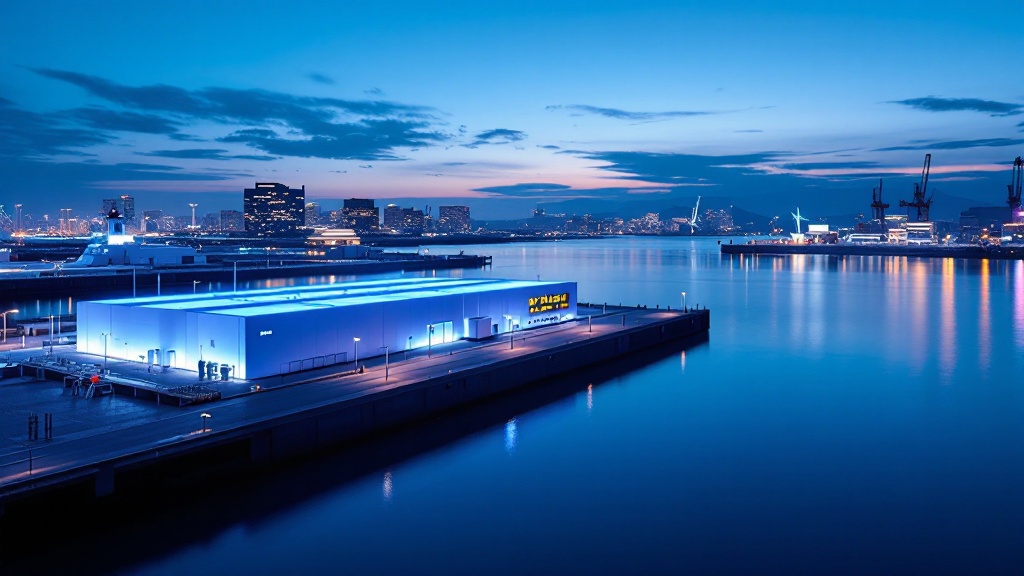
Kobe’s smart city trajectory is inseparable from the 1995 Great Hanshin Earthquake, which caused an estimated $100 billion in damage and fundamentally reshaped the city’s approach to urban resilience. Three decades later, that recovery journey has evolved into one of the world’s most ambitious hydrogen energy initiatives.
Under Mayor Hisamoto’s leadership beginning in 2013, Kobe pursued what he called “a supply chain for hydrogen energy.” In 2016, the city helped establish HySTRA (Hydrogen Energy Supply-Chain Technology Research Association), a consortium bringing together Kawasaki Heavy Industries, Iwatani Corporation, Shell Japan, and J-Power. The partnership model is significant: while anchored by major industrial players, the hydrogen supply chain requires specialized SME suppliers at multiple points—production, liquefaction, transport, storage, distribution, and end-use applications—creating natural entry points for smaller technology providers with targeted expertise.
The landmark achievement came with the successful 2023 pilot of the world’s first liquefied hydrogen tanker transporting hydrogen from Australia to Japan. This was not a laboratory demonstration; it was a full-scale logistics operation proving that intercontinental hydrogen supply chains are technically feasible.
Kobe’s broader smart city infrastructure extends beyond hydrogen to include AI-based disaster prediction systems, an Intelligent Transport System with real-time congestion data, and the Kobe Biomedical Innovation Cluster (KBIC)—Japan’s largest biomedical cluster supporting startup commercialization. The overarching target is a carbon-neutral Port of Kobe by 2050, leveraging the port’s connections to over 500 ports in more than 130 countries to establish hydrogen as a viable energy commodity for international urban logistics.
Tsukuba: Research City Meets Real-World Urban Challenges
Japan’s premier science city, Tsukuba in Ibaraki Prefecture, approaches smart city development differently from any other project on this list. Home to dozens of national research institutions, Tsukuba leverages its concentration of scientific talent through the Tsukuba Smart City Consortium, which translates research capabilities into solutions for practical urban problems.
The consortium operates through a subcommittee model organized around four domains—Mobility, Healthcare and Welfare, Green, and Data Integration—each creating a natural entry point for specialized SMEs with relevant expertise. A company focused on autonomous vehicle sensors does not need to compete across every domain; it can contribute to the Mobility Subcommittee specifically, alongside partners addressing different components of the same urban challenge.
Active pilot projects include autonomous driving shuttle buses operating around Tsukuba Station, AI on-demand transportation services that dynamically route vehicles based on real-time demand, and hands-free ticketing systems that remove friction from public transit usage. The Healthcare Subcommittee is building integrated databases to support online medical services and seamless home care delivery—directly addressing the needs of Japan’s aging population. The Green Subcommittee is developing self-owned microgrids using existing shared infrastructure and exploring green hydrogen co-firing cogeneration, with Tsukuba designated as a decarbonization pioneer area.
For technology suppliers evaluating Japan-focused urban technology integration, Tsukuba’s subcommittee structure offers a clear model for how specialized companies can participate in smart city ecosystems without needing end-to-end capabilities.
Patterns Across All Six Projects
Examined together, these six projects reveal consistent patterns that should inform any smart city investment or market entry strategy.
| Project | Location | Key Measured Outcome | Launch | Partnership Model |
|---|---|---|---|---|
| Fujisawa SST | Kanagawa | 70% CO₂ reduction vs 1990 | 2014 | Corporate-led (Panasonic) |
| Kashiwa-no-ha | Chiba | 26% peak power reduction | 2014 | Public-private-academic |
| Aizuwakamatsu | Fukushima | Highest-adoption citizen app | 2013 | Municipal consortium |
| Takamatsu | Kagawa | First FIWARE city in Japan | 2018 | Open-platform ecosystem |
| Kobe | Hyōgo | World-first H₂ tanker pilot | 2016 | Multi-corporate R&D |
| Tsukuba | Ibaraki | 4 specialized subcommittees | Ongoing | Research-city hybrid |
Visible citizen pain points drive adoption. Aizuwakamatsu’s snow plow app and Kashiwa-no-ha’s health station achieved strong uptake because they solved problems residents experienced daily. Projects that led with infrastructure-level platforms before demonstrating direct citizen value tended to face slower adoption curves.
Open platforms correlate with stronger SME ecosystems. Takamatsu’s FIWARE adoption and Kashiwa-no-ha’s KOIL innovation lab both created structural conditions for smaller technology providers to participate and build on shared infrastructure. Proprietary, closed-architecture projects concentrated value among fewer, larger partners.
Long implementation timelines are normal. Kashiwa-no-ha spans 2005 to 2030. Kobe’s hydrogen journey stretches from 1995 earthquake recovery through a 2050 carbon-neutrality target. Fujisawa SST needed a decade to produce its verified environmental metrics. Decision-makers should plan for 5–15 year horizons and structure investments around phased milestones rather than expecting rapid payback.
These projects share a common thread: measurable results required expert integration of diverse technologies into cohesive urban systems. If you’re planning a smart city initiative in Japan—or supplying technology to one—DMPJ’s smart city technology integration services bring the local expertise, government relationships, and sustainability focus that turn pilot concepts into operational outcomes. Explore the service page to learn more.
Sorry, the comment form is closed at this time.