

17 Jun Sensory Marketing for Luxury Retail and Hospitality: How Top Brands in Japan Use Scent, Sound, and Touch to Drive Sales
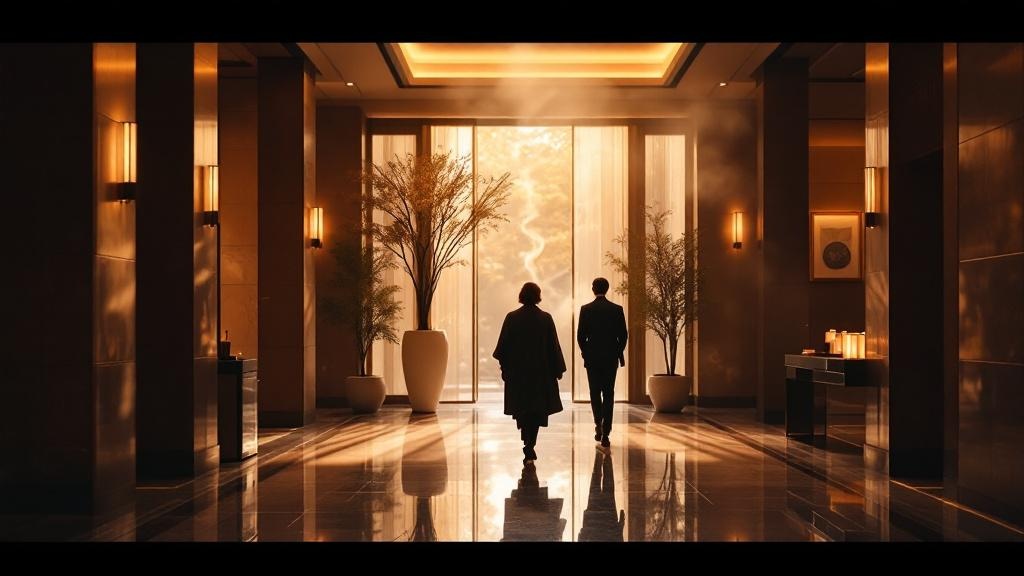
A guest stepping into a luxury hotel lobby in Kyoto forms an emotional impression in milliseconds — before consciously registering the decor, the welcome drink, or the staff’s greeting. The olfactory nerve is the only sensory pathway that connects directly to the brain’s limbic system without first passing through the thalamus for conscious processing, meaning scent triggers emotion before reason has a chance to intervene. This neurological reality is precisely why the world’s most competitive luxury retail and hospitality brands are investing in sensory marketing: orchestrated strategies using scent, sound, and touch to shape perception, drive purchasing behavior, and build durable emotional loyalty. A 2026 Nielsen study of 12,400 consumers across eighteen countries found that brands activating three or more senses simultaneously achieved a 73 percent average recall rate, compared to just 21 percent for visual-only campaigns. In Japan — where aesthetic refinement and experiential quality sit at the core of consumer culture — sensory marketing in retail stores and hospitality venues has moved from creative experiment to competitive necessity.
Why Luxury and Hospitality Brands Lead Sensory Marketing Adoption
Japan’s luxury goods market was valued at $36.4 billion in 2025, growing at a 4.44 percent CAGR and projected to reach $53.9 billion by 2034. In a market of that scale and intensity, traditional advertising alone cannot sustain differentiation. Major luxury conglomerates including LVMH and Kering have reported strong double-digit revenue growth in the Japan market even as their sales declined in Greater China and other Asia-Pacific regions — a divergence that underscores Japan’s strategic importance for global luxury brands and the fierceness of competition for Japanese consumer attention. Brands that win here need experiences consumers feel, remember, and talk about.
The physical retail environment reflects this pressure acutely. A 2026 CBRE Japan market report found that four of nine surveyed high-street areas in Tokyo — including Ginza and Shibuya — recorded zero vacancy rates, with average rents exceeding pre-pandemic peaks in seven of nine areas. These aren’t just expensive storefronts; they’re stages for brand performance. Retailers occupying premium spaces at premium rents face a direct imperative to maximize the value of every visitor interaction, and multisensory design is proving to be one of the most effective levers available.
On the hospitality side, Japan’s tourism boom is adding fuel. The country welcomed 36.87 million inbound visitors in 2024, spending a combined ¥8.1 trillion and positioning tourism as Japan’s second-largest export sector after automobiles. Luxury hotels and resorts competing for these high-spending international travelers need more than elegant rooms and attentive staff. Multisensory hospitality experience design — the strategic orchestration of scent, sound, texture, lighting, and spatial flow — is how leading properties create the kind of emotional differentiation that drives repeat bookings and premium rate justification. For brands evaluating how to compete in this environment, DMPJ’s sensory marketing campaigns for luxury and hospitality brands offer a structured path from strategy through implementation.
Scent Marketing in Action: How Hotels Build Emotional Loyalty Through Fragrance
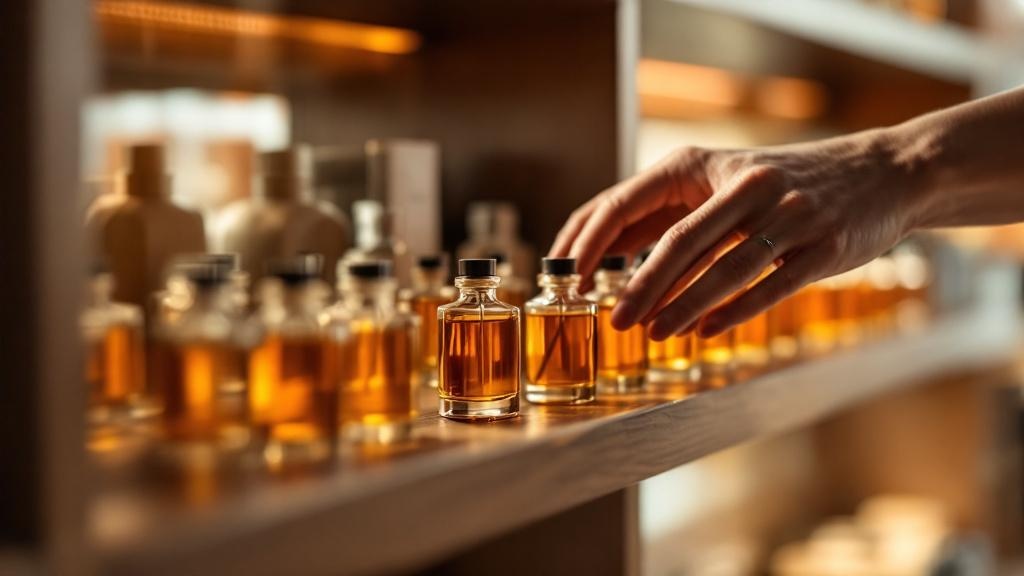
The gold standard for olfactory brand consistency remains Singapore Airlines. For over twenty years, the airline has maintained Stefan Floridian Waters as its cabin fragrance — integrating the scent into hot towels, crew perfume, and cabin air across all aircraft. The result is a fragrance so deeply associated with the brand that passengers who encounter it in unrelated settings immediately think of Singapore Airlines. It functions as the olfactory equivalent of a logo: an independently recognizable brand asset built through decades of relentless consistency.
Marina Bay Sands in Singapore took a different approach entirely. Rather than applying a single signature fragrance uniformly, the resort deployed zone-by-zone scent programming across its full property. The Shoppes luxury retail precinct, hotel lobbies, and reception areas each carry distinct aromatic profiles calibrated to different emotional objectives: energizing in retail spaces, calming in reception, aspirational in the lobby. This precision reflects a core principle of advanced scent marketing for hotels in Japan and across Asia — guests have different emotional needs in different spaces, and olfactory environments should adapt accordingly.
Pan Pacific Hotels extended this thinking to portfolio scale with an integrated scent and sonic branding rollout spanning Asia-Pacific properties. The multi-year program coordinates fragrance composition and curated audio programming so both sensory channels occupy the same emotional territory. When two senses receive congruent stimuli — stimuli sharing emotional associations and brand narrative — the combined impact on mood, memory, and behavior substantially exceeds the sum of each element in isolation. Practitioners describe this as a multiplicative rather than additive effect.
In Japan specifically, the Ritz-Carlton Kyoto worked with Air Aroma Japan to develop a custom fragrance honoring Japanese traditions — incorporating notes informed by local botanicals and cultural aromatics — while maintaining alignment with the Ritz-Carlton’s global luxury positioning. The installation demonstrates how luxury brands use sensory branding to navigate the tension between heritage authenticity and international brand consistency, a challenge particularly acute in Japan’s culturally rich hospitality market.
| Brand | Sensory Approach | Scope | Key Differentiator |
|---|---|---|---|
| Singapore Airlines | Stefan Floridian Waters cabin fragrance | All aircraft, 20+ years | Longest-running olfactory brand identity in aviation |
| Marina Bay Sands | Zone-specific scent programming | Full property (retail, lobby, reception) | Fragrance calibrated per zone’s emotional objective |
| Pan Pacific Hotels | Integrated scent + sonic branding | Asia-Pacific portfolio, multi-year rollout | Combined olfactory and audio brand identity at scale |
| Ritz-Carlton Kyoto | Custom Japanese-inspired fragrance | Flagship property | Heritage-informed scent bridging local tradition and global brand |
Sonic Branding and Curated Audio for Retail Environments
Music is not background noise — it’s a revenue lever. Research on how in-store music influences customer behavior demonstrates that tempo directly affects spending patterns in measurable ways. Slower tempos encourage diners to linger, increasing revenue per cover and average check size. Faster tempos accelerate table turns during peak hours without guests feeling rushed. Genre and volume matter equally — music perceived as congruent with a venue’s positioning increases perceived quality and willingness to pay, while incongruent selections create psychological friction that undermines even the most carefully designed physical environment.
The technology infrastructure supporting sonic branding in Japan advanced significantly when Astro Spatial Audio partnered with Audio Brains, a Tokyo-based audio technology distributor within the MSI Japan group. Astro Spatial Audio is a leading independent solution for object-based three-dimensional sound — technology capable of placing individual sound objects in precise spatial positions around a listener, creating enveloping audio environments that conventional stereo systems cannot reproduce. Audio Brains brings deep roots in Japan’s concert touring and theater communities alongside an established portfolio of premium professional audio brands including Powersoft, AVID, and Martin Audio. The partnership introduces immersive spatial audio technology to Japan’s live entertainment sector and, critically, to the hospitality and retail venues seeking next-generation sonic differentiation.
The commercial case for curated soundscapes extends well beyond restaurants and concert halls. Luxury hotels deploying optimized audio environments report that carefully managed ambient music reduces perceived wait times at front desks and increases dwell time in revenue-generating areas like lobby lounges, bars, and spa reception zones. For retailers, the mechanism is parallel: curated sound encourages browsing and emotional engagement, while silence or poorly chosen music accelerates departure. When audio programming aligns with a space’s intended pace and emotional register, guests and shoppers stay longer, spend more, and leave with stronger positive associations.
Tactile and Visual Engagement in Luxury Retail
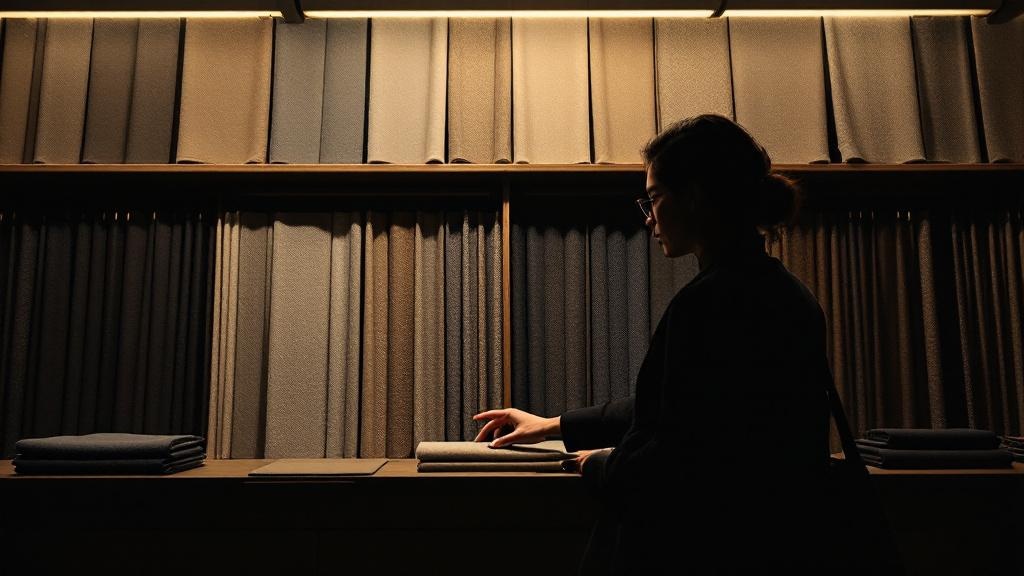
Touch remains one of the most underutilized senses in retail marketing, yet it may be the most decisive at the point of purchase. A peer-reviewed study on multisensory design in boutique retail environments found that tactile product interaction — handling materials, feeling textures, engaging physically with packaging — significantly increased purchase likelihood. Textured packaging, hand-finished surfaces, and weighted product containers activate haptic perception in ways that shift buyer psychology from detached evaluation toward a sense of ownership. For luxury brands selling through physical retail, enabling and encouraging touch is not a courtesy. It is a conversion strategy grounded in behavioral science.
Visual innovation in Japanese flagship stores has escalated rapidly over the past several years. Projection mapping transforms walls, ceilings, and product displays into dynamic storytelling canvases that shift with the season, the collection, or the time of day. Interactive displays that respond to customer proximity, gesture, or touch extend dwell time and generate organic social media content. When a customer photographs an immersive in-store experience and shares it, the brand gains earned media at zero marginal cost — a feedback loop that makes sensory retail design self-amplifying.
Japan’s retail sector has consistently led globally in combining aesthetic appeal with advanced in-store analytics. Japanese luxury retailers integrate meticulous visual merchandising with customer behavior tracking, heat mapping, and dwell-time analysis to continuously refine sensory environments based on observed patron responses. This data-driven approach to sensory marketing in retail stores — adjusting lighting, display positioning, and product staging based on real customer movement patterns — represents a significant competitive advantage. It is also the kind of capability that bespoke sensory branding solutions can help brands implement systematically, turning intuition about what “feels right” into measurable, optimizable strategy.
Multisensory Dining: The Rise of Immersive Culinary Experiences
The most ambitious demonstration of multisensory hospitality experience design in recent years may be the Regent Taste Studio at Regent Shanghai on The Bund. Its second season, themed “The Magic of Beauty of Contrast,” featured five choreographed chapters integrating culinary performance by four chefs from Shanghai and Chongqing with curated music, visual art installations, and fashion elements. Each chapter unfolded as a sequential sensory narrative — lighting, spatial design, and sound providing emotional texture around the culinary centerpiece. Dining became theater, and the result was an experience guests not only remembered but felt compelled to share and revisit.
This is not an isolated experiment. Marriott International’s 2026 Future of Food report, drawing from insights across 270 properties in Asia-Pacific, confirmed that nearly half of surveyed food and beverage associates observed rising demand for interactive and immersive dining experiences. The trend extends beyond five-star hotels: mid-tier restaurants and independent operators across Japan, Shanghai, and Southeast Asia are incorporating elements such as dining in the dark, edible art installations, and fully themed environments designed to engage all senses simultaneously rather than relying on taste alone.
The economic logic is straightforward. Restaurants that invest in coordinated scent design, adaptive lighting, and curated audio create environments where diners perceive higher value — and accept premium pricing without resistance. A well-executed multisensory dining environment does not just sell food; it sells an experience that justifies margins traditional restaurants struggle to command. When the ambient fragrance reinforces the cuisine’s origin story, when the soundtrack matches the meal’s emotional arc, and when the visual setting transports guests beyond the dining room, the perceived gap between price and value narrows dramatically.
Measuring Impact: Sales Lift, Dwell Time, and Guest Satisfaction
Sensory marketing’s credibility with senior decision-makers hinges on measurement, and the evidence base has grown substantially. Among the most rigorously documented sensory marketing experiments to date is the INTERSPORT Amsterdam trial, conducted by Mood Media. Researchers divided a test store into two zones: one configured as a comprehensive multisensory environment with curated music, the scent of fresh-cut grass, and animated digital signage, while the other was deliberately stripped of all sensory elements. The results were unambiguous.
| Metric | Result |
|---|---|
| Overall sales increase | +10% |
| Items purchased per visit | +4% |
| Average item value | +6% |
| Dwell time extension | ~6 minutes longer |
| Emotional elevation in scented zone | +28% |
| Category sales in scented football zone | +26% vs. national average |
| Digital screen awareness (animated vs. static) | +5% |
The scent of fresh-cut grass deployed in the football products zone elevated customers’ emotional levels by 28 percent compared to baseline, and the behavioral shift that followed drove a 26 percent increase in category sales compared to every other store in the national chain. These are not marginal gains — they are the kind of sensory marketing luxury retail examples that change how operators think about store design and category merchandising.
Scent marketing’s ability to drive foot traffic independently was validated by the McDonald’s Netherlands “Smells Like McDonald’s” campaign. Hidden aroma dispensers embedded near blank billboards — no logos, no images, no text, just scent — drove a 14 percent sales increase at restaurants within 200 meters. Street surveys showed 89 percent of respondents recognized the scent, and 71 percent identified it specifically as french fries. The campaign generated an estimated €49.9 million in earned media value, demonstrating that a fragrance can function as an independent brand asset with commercial impact rivaling traditional visual advertising.
For luxury hotels, measurement centers on guest-level commercial metrics tracked pre- and post-sensory implementation. Properties implementing integrated scent and music programs monitor F&B spend per guest, spa revenue per guest, and repeat booking rates against established baselines. Guest satisfaction surveys updated to capture olfactory and acoustic dimensions consistently show that scent and sound rank among the most memorable elements of a stay — and correlate strongly with intent to recommend and return. When a guest recalls a hotel’s signature fragrance weeks after checkout and associates it with warmth, refinement, and personal attention, the sensory investment pays dividends that no rate discount can replicate.
Whether you manage a luxury retail flagship or a boutique hospitality brand, DMPJ’s sensory marketing campaigns team can design a multisensory strategy tailored to your brand identity, target audience, and market context. Explore our full service offering to see how we bring scent, sound, touch, and visual storytelling together into cohesive brand experiences.
Sorry, the comment form is closed at this time.