
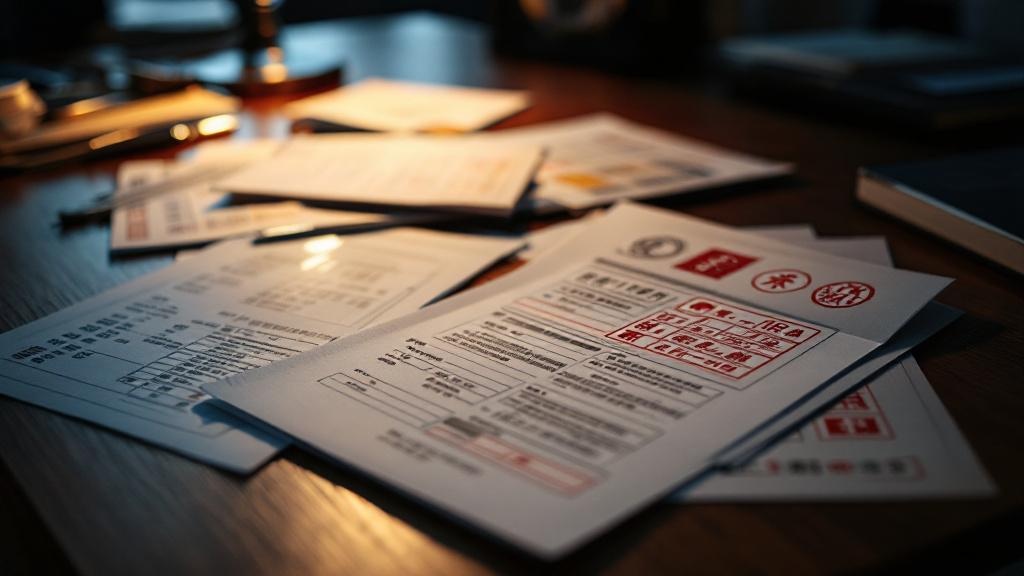
15 Jun Permits, Visas, and Fire Safety: The Regulatory Checklist for Hosting International Events in Japan
Why Regulatory Compliance Is Non-Negotiable for Events in Japan
Japan hosted 1,702 international conferences in 2024 alone, drawing over 1.24 million participants. That volume runs on a regulatory system designed for precision, and it leaves no room for shortcuts.
Local fire departments conduct inspections during both the construction phase and the exhibition period. If inspectors find a single violation — an unlabeled carpet, an unapproved ceiling structure, a missing extinguisher — they have the authority to halt construction or order the booth dismantled on the spot. There is no appeal window that will save your opening day.
This enforcement culture extends across every regulatory domain covered in this article: fire codes, customs clearance, immigration, insurance, and food service licensing. Japan does not operate on verbal assurances or informal grace periods. Penalties for non-compliance range from fines and denied permits to forced removal of physical structures — outcomes that translate directly into lost revenue, reputational damage, and strained relationships with venues that may decline to host you again.
For international organizers unfamiliar with the specifics, the regulatory landscape can feel overwhelming. The rest of this article breaks it down into a concrete, actionable checklist.
Fire Safety and Building Code Requirements
The Fire Prevention Administration Framework

Japan’s fire safety regulations for events fall under the Fire Prevention Administration framework, administered by the Fire and Disaster Management Agency (FDMA) as an external bureau of the Ministry of Internal Affairs and Communications. National standards set the baseline, but municipalities enforce their own ordinances on top of those standards. This means your obligations can differ between, say, a Tokyo Big Sight exhibition and a Kyoto conference center. Early consultation with the local fire department is essential — not optional.
Fire-Retardant Labeling and Prohibited Materials
All display materials used at events in Japan — plywood, fiberboard, carpets, curtains, tablecloths, banners, and artificial flowers — must carry visible flame-retardant labels certified by the Japan Fire Retardant Association (JFRA). This requirement applies regardless of whether materials are sourced domestically or imported.
Several materials are outright prohibited because they cannot be treated effectively for fire retardancy:
| Category | Prohibited Materials | Compliant Alternatives |
|---|---|---|
| Foams & plastics | Urethane, styrofoam, acetate | Fire-retardant treated plywood, fiberboard |
| Textiles | Untreated nylon, polyester | JFRA-labeled flame-retardant fabrics |
| Decorative | Untreated artificial flowers | Certified flame-retardant artificial flowers |
| Flooring | Untreated carpet | JFRA-labeled carpet and floor coverings |
Thin processed paper or cloth attached directly to fire-retardant plywood is acceptable, but thick cloth or pleated paper must independently meet fire-retardant standards.
Booth Height Restrictions and Two-Story Structures
Standard booth décor, including lighting, is limited to a maximum height of 3.0 meters. Booths located 3.0 meters or more from aisles, adjacent booths, and walls may apply for heights up to 6.0 meters — but only with fire authority approval. Approved structures above 3.0 meters require commercial-grade smoke detectors (home-use models are not accepted) and may require packaged fire extinguishing equipment at the exhibitor’s expense.
Two-story booth structures face even stricter requirements: automatic fire alarm and fire extinguishing equipment must be installed on both floors, Type 10 fire extinguishers are mandatory on upper levels, and the structure must have at least two exits on the aisle side to permit emergency evacuation.
Importing Equipment and Display Materials: ATA Carnet and Customs
The ATA Carnet System
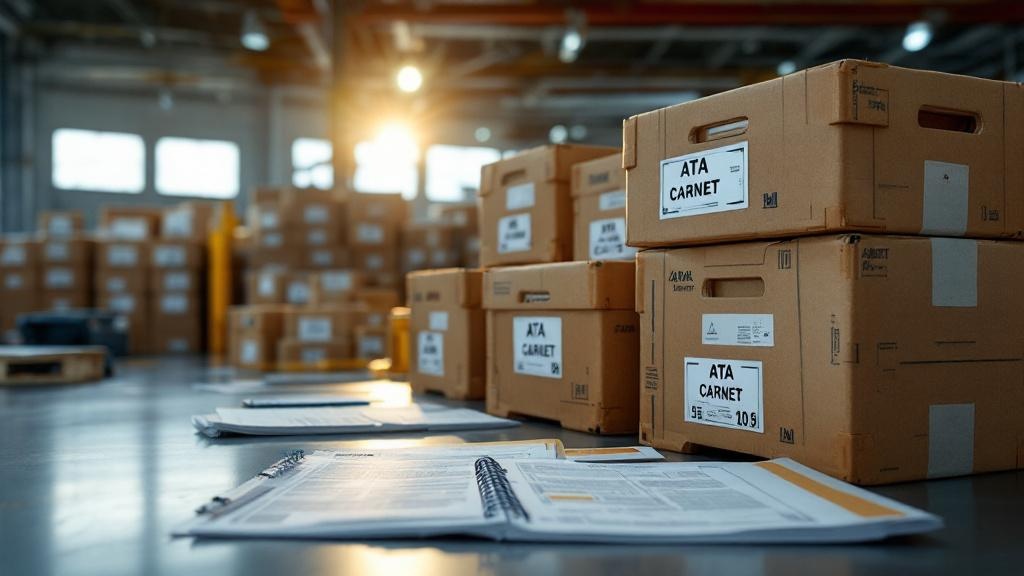
The ATA Carnet is the primary mechanism for duty-free temporary import of AV gear, display materials, commercial samples, and exhibition equipment into Japan. Japan acceded to the ATA Convention in 1973, and the system allows qualifying goods to enter and leave without paying customs duties or consumption tax — provided they are re-exported within the carnet’s one-year validity period.
Step-by-step process:
- Apply for the ATA Carnet through your home country’s issuing body (e.g., the U.S. Council for International Business in the United States, or equivalent national chambers of commerce).
- Present the carnet to Japanese customs upon import declaration to receive an import permit.
- After the event concludes, present the carnet again at customs and obtain an export permit before the carnet expires.
Alternative: Customs Tariff Law Article 17
For goods shipped from countries that are not ATA Convention signatories, Japan offers temporary admission under Article 17 of the Customs Tariff Law. Qualifying goods — including items for processing, repair, scientific research, or personal professional use — may enter duty-free on condition of re-export. This route requires additional documentation at both import and export, and customs may require a security deposit equivalent to the duty that would otherwise apply.
When Temporary Admission Does Not Apply
Items that do not qualify for either the ATA Carnet or Article 17 exemption face Japan’s standard customs tariff schedule. The average applied rate across all goods is 1.8%, with product-specific rates varying. On top of duties, consumption tax at the standard rate of 10% is calculated on the customs value plus duty payable.
Shipping Document Requirements
Commercial invoices for exhibition goods should be marked with: “No commercial value — customs purposes only,” a statement that goods are for exhibition and will be returned afterward, and the exhibition booth number. These annotations are critical for securing duty-free treatment and avoiding delays at port.
Work Permits and Visas for Foreign Event Staff
Certificate of Eligibility (COE)
The Certificate of Eligibility, issued by Japan’s Immigration Services Agency, certifies that a foreign national meets landing conditions for their intended activity. With a COE in hand, visa issuance at a Japanese embassy typically takes about five working days. Without one, processing can stretch to one to three months or longer during peak periods.
COE processing itself averages one to three months depending on the visa category and the regional immigration office’s workload. Applications spike in January through April (employment visas for the April hiring cycle), so event organizers should initiate COE applications three to four months before the event date.
Visa Categories for Event Staff
| Visa Category | Typical Roles | Key Requirements |
|---|---|---|
| **Entertainer** | Performers, athletes, accompanying technical crew | [Contract specifying ≥¥200,000/month](https://hr.visajapan.jp/kougyo.html); venue must meet stage and dressing room size minimums |
| **Engineer / Specialist in Humanities** | AV technicians, conference coordinators, interpreters | University degree or 10+ years’ experience in the relevant field |
| **Intra-Company Transferee** | Multinational employees coordinating from a Japan branch | [≥1 year continuous employment](https://hr.visajapan.jp/tenkin.html) at the overseas entity; duties must fall within Engineer/Specialist scope |
The Entertainer visa also covers essential support staff — stage managers, trainers, and technicians — whose work is directly integrated with the performer’s or athlete’s activity. For professional athletes specifically, compensation must equal or exceed what a Japanese national would receive for equivalent work.
Post-Arrival Requirements
Within 14 days of arriving in Japan, every foreign staff member must complete three administrative steps: receive a residence card at airport immigration, register their address at the local municipal office, and enroll in National Health Insurance. These deadlines are strictly enforced and should be communicated to all incoming personnel well before departure.
Insurance Obligations for Event Organizers
Mandatory Coverage
Japan requires comprehensive insurance for all event operations. Based on frameworks established for major events including Expo 2025, the following categories represent the baseline:
Workers’ compensation insurance is mandatory for all employees, including foreign nationals. Japan’s Industrial Accident Compensation Insurance covers medical expenses, temporary absence compensation, and disability benefits for work-related injuries — regardless of the employee’s nationality or visa status.
Civil liability insurance should carry minimum coverage of US$250,000 per occurrence, including bodily injury, property damage, and contractual liability. Policies must name the client and its subsidiaries as additional insureds and provide cross-liability coverage.
Product liability and third-party automobile liability apply where relevant — particularly when vehicles are used in event operations or when products are demonstrated or distributed.
Event Cancellation Insurance
Event cancellation coverage is not legally required but is strongly recommended for international events where weather disruptions, transportation failures, or public health incidents could force postponement. The organizer does not arrange this on participants’ behalf — each party must assess their own exposure and secure coverage independently.
Japanese-Licensed Providers Only
All insurance policies must be purchased from providers licensed by Japan’s Financial Services Agency. Policies issued by foreign insurers without Japanese licensing do not satisfy compliance requirements. Organizers should engage insurance brokers with specific expertise in Japanese event regulations to ensure every policy meets both legal standards and practical coverage needs.
Food Service Licensing and Hygiene Requirements
Any event involving food or beverage service — from a full catering operation to a single promotional tasting booth — requires a business license from the local Public Health Center. The licensing process involves submitting floor layout drawings and service details for consultation, undergoing a facility inspection, and receiving formal approval before any food-related activity begins.
Every licensed food operation must appoint a Food Hygiene Supervisor who holds proper qualifications in food safety management. This role is non-negotiable and must be filled before the license is issued.
For temporary food stalls at events, a simplified “Application of Hosting Events” may replace the full business license — but only for operations limited to five days or fewer per vendor per year, with cooking processes kept as simple as possible (heating, assembly, portioning). Outdoor event food stalls face additional scrutiny because tent-based operations make it difficult to maintain the drainage, refrigeration, and sanitation standards required for permanent facilities.
Your Pre-Event Compliance Timeline
The regulatory requirements above are not items you can tackle in the final weeks before an event. Japan’s approval processes reward early engagement and penalize late starts. Here is the timeline that experienced organizers follow for business events in Japan:
T-12 months: Begin venue consultation and initiate pre-approval discussions with local fire authorities. Popular venues in Tokyo and Osaka book up quickly, especially during spring and autumn peak seasons.
T-6 months: Formally book the venue and submit Certificate of Eligibility applications for all foreign staff requiring work visas. COE processing averages one to three months, and embassy visa issuance adds another one to two weeks.
T-4 months: Submit detailed booth designs — including any structures exceeding 3.0 meters — to fire authorities for review. Simultaneously, apply for ATA Carnets in your home country for all equipment and display materials requiring temporary import.
T-2 months: Finalize all insurance policies with Japanese-licensed providers. Complete food service licensing applications and schedule facility inspections with the local Public Health Center.
T-2 weeks: Conduct on-site fire inspections with the local fire department. Complete final documentation review to confirm every permit, visa, insurance certificate, and customs document is in order.
Missing any of these windows does not just create inconvenience — it can make compliance impossible within your event date, forcing costly postponements.
Let the Experts Handle the Complexity
Japan’s event permits and regulations are rigorous, but they follow a logic that rewards preparation, documentation, and local knowledge. The fire codes, visa requirements for event staff, ATA Carnet procedures, and insurance obligations described above are all navigable — provided you start early and know exactly where to look.
If this checklist makes clear that your team would benefit from a partner who already knows the terrain, let DMPJ navigate Japan’s event regulations for you. From fire authority consultations and customs documentation to immigration coordination and insurance procurement, DMPJ’s end-to-end event support including compliance removes the regulatory burden so you can focus on delivering the event itself.
Japan’s regulatory landscape is rigorous, but it doesn’t have to be a roadblock. DMPJ’s event management team has deep experience navigating fire codes, customs procedures, immigration requirements, and insurance compliance for international events across Japan. Visit our Event Management & Technical Support page to see how we handle the regulatory complexity so you can focus on delivering a world-class event.
Sorry, the comment form is closed at this time.