

27 Customized Retail Experience Design | DMPJ
At Daisho Media Partners Japan (DMPJ), we specialize in designing immersive and tailored retail experiences that enhance brand identity and customer engagement. With the global experiential retail market expanding at a 14.9% compound annual growth rate and 61% of shoppers now placing high value on in-store experiences — a figure up 21% since 2023 — the physical retail environment has become the most powerful brand communication channel available. In Japan, where 42.7 million international visitors in 2025 intensified competition across Tokyo’s premium retail corridors and prime rents in Ginza and Omotesando reached historic highs with vacancy rates below 1%, every square meter of your store must earn its place through engagement. DMPJ brings together spatial design, digital integration, multi-sensory branding, and data-driven optimization under one strategic lens — purpose-built for the Japanese market and grounded in the omotenashi hospitality philosophy that Japanese consumers expect.
Explore Our Blog
Deep Insights on Retail Experience Design in Japan
Explore in-depth articles on multi-sensory branding strategies, real-world case studies from brands winning in Tokyo and Kyoto, budget planning guides with ROI benchmarks, and expert frameworks for choosing the right retail design partner.
Our Service Offerings
1. Conceptual Retail Design & Layout Planning
-
-
Data-informed spatial design that transforms customer flow and boosts purchase value
- Circular and loop layouts that increase average purchase value by 25–30% over traditional grids
- Omotenashi-driven design integrating cultural identity and brand storytelling
- 3D walkthroughs and spatial simulations for pre-construction validation
-
2. Digital & Interactive Retail Experiences
-
-
Cutting-edge digital integration for Japan’s rapidly evolving smart retail market
- AR mirrors, interactive signage, and AI-powered personalization kiosks
- Smart fitting rooms with real-time product visualization and style matching
- Gamified retail touchpoints that extend customer dwell time by up to 45%
-
3. Sensory Branding & Experiential Marketing
-
- Multi-sensory environments that boost brand recall by up to 70%
- Dynamic circadian lighting with Vitasolis-class LED technology for up to 14% sales lift
- Programmable scent delivery and strategic audio design — combined, they boost transaction values by 15%
- Wabi-sabi material strategy and Japandi design philosophy for culturally resonant environments
- Multi-sensory environments that boost brand recall by up to 70%
4. Pop-Up & Experiential Store Development
-
-
Short-term activations engineered for long-term brand impact
- Turnkey pop-up solutions from ¥5M — designed for maximum social shareability and urgency-driven conversion
- Instagram-first environments and content-generation touchpoints engineered for organic reach
- Limited-edition concept stores with Japan-exclusive collections and co-location partnerships
-
5. Retail Data Analytics & Customer Insights
-
-
Advanced analytics that give you a decisive edge — only 28% of Japanese retailers have adopted them
- Foot traffic heatmaps and dwell time sensors tracking engagement across every zone
- AI-driven recommendations and behavioral analytics for continuous layout optimization
- Conversion attribution linking design changes to sales outcomes week over week
-
6. Cultural Storytelling & Brand Localization
-
-
Cultural fluency that ensures your brand resonates authentically with Japanese consumers
- Omotenashi-inspired customer journey mapping and service design
- Blending traditional Japanese aesthetics — shoji, washi, natural materials — with contemporary brand identity
- Japandi and wabi-sabi material strategies for culturally resonant luxury retail spaces
-
Why Choose DMPJ for Customized Retail Experience Design?
- Blending Traditional & Modern Retail Aesthetics: From shoji-inspired interiors to wabi-sabi material strategies, we integrate Japan’s cultural heritage with contemporary design — creating spaces that feel authentically Japanese while communicating your global brand identity, as demonstrated by stores like Tsuruyachosei Kyoto’s award-winning heritage-meets-modern renovation.
- Advanced Digital Integration: AR mirrors, AI-powered personalization, smart fitting rooms, and interactive displays — all calibrated for how Japanese consumers engage with technology. With Japan’s smart retail technology market projected to reach $26.5 billion by 2033, we ensure your store stays at the forefront.
- Expertise in Experiential Retail Design: We design multi-sensory environments where scent, sound, lighting, and materials work in concert — boosting brand recall by up to 70%, extending dwell time by up to 45%, and increasing customer loyalty by 40% compared to single-sense engagement.
- Data-Driven Retail Optimization: Foot traffic heatmaps, dwell time sensors, and conversion attribution that deliver 15–30% improvements in sales per square foot within 6–12 months. Your store becomes a system that improves every week, not a one-time redesign.
- Bilingual & Cross-Cultural Project Management: Seamless coordination between English-speaking headquarters and Japanese execution teams. We bridge brand guidelines, local vendor networks, and cultural expectations — eliminating the miscommunication that derails projects in Japan’s premium retail districts.
Our Approach
01 Understanding Brand Identity
Deep analysis of brand culture, omotenashi principles, and retail objectives through diagnostic assessment and competitive benchmarking.
02 Retail Environment Strategy
Engineering customer flow with circular layouts proven to increase purchase value by 25–30%, plus zone mapping for discovery, engagement, and conversion.
03 Integration of Smart Technologies
Deploying AR mirrors, AI-powered personalization, and interactive displays that extend dwell time by up to 45% — calibrated for the Japanese market.
04 Multi-Sensory Retail Engagement
Crafting unified scent, sound, and lighting environments using programmable fragrance, strategic audio, and circadian LED systems that boost brand recall by up to 70%.
05 Continuous Optimization
Heatmap analytics, dwell time tracking, and conversion attribution for ongoing performance improvements — delivering 15–30% sales-per-sqft gains within 6–12 months.
The Business Case for Immersive Retail Design
14.9%
Annual growth rate of the global experiential retail market, with Asia-Pacific as a lead growth region
+70%
Brand recall boost from multi-sensory environments vs. single-sense engagement
+45%
Customer dwell time increase with strategically placed digital touchpoints
25–30%
Purchase value increase from circular and experiential layouts over traditional grids
+14%
Sales increase from dynamic circadian lighting systems vs. static illumination
+10%
Sales uplift through full sensory activation — scent, sound, lighting, and materials working in concert
84%
Of consumers are significantly more likely to remember a brand with a signature scent
2–4 yr
Typical payback period for mid-range retail experience redesigns with digital integration
Japan’s immersive entertainment market reached $5.19 billion in 2025 and is projected to grow at a 32.5% CAGR through 2033 — reflecting the consumer appetite for experiences that physical retail can capture. Sensory marketing alone can increase sales by 10% and extend dwell time by nearly six minutes when all senses are activated simultaneously. For retailers weighing whether to invest, the question is no longer whether immersive design delivers returns — it is whether you can afford to remain in spaces that do not.
Brands Winning in Japan with Immersive Store Design
KATE TOKYO Shibuya — AI-Powered Personalization
-
-
Kanebo’s first global flagship turned AI facial analysis into a personalized in-store experience
- AI-driven mascara customization — previously web-only — translated into physical retail for the first time
- Futuristic monochrome interiors embody the brand’s “NO MORE RULES” positioning
- Became a significant driver of brand awareness among younger consumers and international visitors
-
3CE Pink Space Hotel — 4-Day Pop-Up Phenomenon
-
-
Korean beauty brand transformed Omotesando into an Instagram-first fantasy boutique hotel
- Hotel-concierge framing with room-themed product displays and photo moments at every turn
- Limited-edition exclusives reinforced urgency within a compressed four-day window
- Organic social reach far exceeded the physical activation cost — proof that constrained budgets can generate outsized impact
-
Tsuruyachosei Kyoto — Heritage Meets Modern Design
-
-
Traditional confectionery brand achieved tourism destination status through design-led renovation
- UNC Studio integrated shoji sliding doors and Kaishi paper motifs within a contemporary retail frame
- Natural materials and refined lighting invite visitors to engage with confectionery as craft, not commodity
- Successfully repositioned for younger audiences without abandoning traditional heritage values
-
Onitsuka Tiger Ginza Red — Heritage Meets Café Culture
-
-
530 m² experiential destination integrating retail, customization, and a full coffee stand
- Four brand pillar zones allow customers to self-select into the narrative that resonates most
- Café concept dramatically extended dwell time beyond fashion-retail norms
- Designed as a base for global brand engagement — a model studied by larger competitors
-
Timberland Daikanyama — First-Ever Concept Store
-
-
Japan chosen as the global testing ground for a premium experiential retail format
- Local creative partnerships with fashion director Akio Hasegawa and design office Daikei Mills
- Japan-exclusive “Timberland +81 3” collection leveraging limited-edition psychology
- Repositioned from utility outdoor brand to design-forward lifestyle label in the Japanese market
-
ANREALAGE HOMME — Smart Mirrors & AR Fashion
-
-
Harajuku store uses optical illusions, AR displays, and smart mirrors as authentic brand expression
- Smart mirrors let customers visualize garments under different lighting and social media angles
- AR displays provide interactive digital explanations of technical fabric innovations
- Customer dwell time dramatically exceeded fashion-retail averages — the store positions the brand as a design institution
-
Industries We Serve
Retail Brands & Luxury Stores
Fashion & Apparel Industry
Technology & Smart Retail Enterprises
Shopping Malls & Commercial Spaces
Pop-Up & Event Marketing Agencies
Beauty & Cosmetics Brands
Food, Beverage & Hospitality
Investment Tiers & Flexible Engagement
We offer structured engagement models designed for mid-market budgets — from low-risk diagnostic assessments to comprehensive flagship transformations. Every engagement includes defined decision gates so you can evaluate results before expanding scope.
Diagnostic
¥500K–1.5M
Customer flow analysis, competitive benchmarking, sensory environment audit, and a prioritized roadmap — completed in 4–6 weeks.
Aesthetic Refresh
¥2–5M
Targeted high-impact upgrades to lighting, layout, and visual merchandising for your highest-traffic zones. 8–14 weeks.
Mid-Range Redesign
¥8–20M
Full aesthetic overhaul with foundational digital integration, customer flow redesign, and sensory elements. 16–28 weeks.
Flagship Transformation
¥30–100M+
AI/AR integration, advanced analytics, multi-sensory design, staff training, and multi-location rollout. 6–12 months.
Latest Insights on Customized Retail Experience Design

What Is Customized Retail Experience Design? A …
Discover what customized retail experience design means for brands entering Japan. Five pillars, key
In-House vs. Agency: Who Should Design Your Ret…
Compare in-house vs agency retail experience design for Japan. Real cost data, decision framework &

How Much Does Retail Experience Design Cost in …
Retail experience design costs in Japan range from ¥500K to ¥100M+. See budget tiers, ROI benchmarks
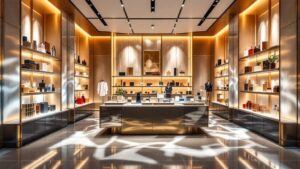
Multi-Sensory Retail Design in Japan: How Scent…
Discover how scent marketing, sound design, and advanced lighting systems drive sales in Japanese re
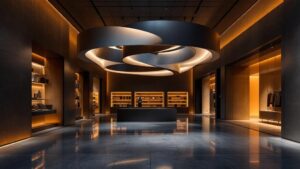
7 Small Retail Brands Winning in Japan with Imm…
Real case studies of small-to-mid-sized brands winning in Japan through immersive store design. See

How to Choose a Retail Experience Design Partne…
Evaluation framework with 8 criteria, red flags, and a scoring matrix to help you choose the best re
Our Projects
Sorry, no posts matched your criteria.
Ready to transform your retail space into an immersive brand destination? From ¥500K diagnostic assessments to comprehensive flagship redesigns, let’s create an unforgettable shopping experience that drives measurable results.
Schedule a No-Obligation Strategy Consultation
CONTACT US