

29 May Japan’s Renewable Energy Market in 2026: What Foreign Investors Need to Know
Japan’s clean energy sector is entering a pivotal investment cycle. The government’s 2050 carbon neutrality commitment, declining technology costs, and rapidly growing corporate demand are converging to create substantial openings across solar, wind, and energy storage. For foreign investors evaluating where to deploy capital in Asia’s energy transition, Japan’s renewable energy market warrants serious attention — not as a future prospect, but as a market with active deal flow and committed government backing right now.
Why Japan’s Renewable Energy Market Demands Attention Now
Japan has committed to carbon neutrality by 2050 and set an interim target of generating 36–38% of its electricity from renewable sources by 2030. As of 2024, renewables accounted for 26.7% of Japan’s total electricity generation — up from roughly 20% in 2020, but still more than 10 percentage points short of the 2030 floor. That gap is not a policy failure; it is an investment signal. Closing it will require tens of gigawatts of new capacity across solar, wind, and storage, along with the grid infrastructure to support them.
The financial scale of this transition is without precedent in Japan’s postwar energy history. The government’s Green Transformation (GX) strategy aims to mobilize ¥150 trillion (approximately $1.1 trillion) in combined public-private investment over the coming decade, anchored by ¥20 trillion in GX Economic Transition Bonds — the world’s first government-labeled transition bond framework. Bond issuance is underway, and capital is flowing into project pipelines across the country.
Critically, the Japanese government is not trying to do this alone. JETRO has designated sustainability and energy as a priority sector for foreign direct investment, actively recruiting international companies through advisory services, partner matching, and regulatory navigation support. The GX strategy specifically identifies four energy-related sectors with the highest growth potential: offshore wind and solar, hydrogen and fuel cell technologies, energy storage solutions, and grid infrastructure. For each, the government has published decade-long roadmaps with concrete milestones — the kind of policy predictability that institutional capital requires. The message from Tokyo is clear: foreign expertise, technology, and capital are welcome and needed.
Japan’s solar, wind, and storage market size forecasts point to sustained growth across each major segment. The following table summarizes the current scale and trajectory driving near-term investment activity.
| Segment | Current Scale | Growth Forecast | Key Metric |
|---|---|---|---|
| Solar PV | 94 GW installed (2025) | 110 GW by 2031 (CAGR 2.63%) | Installation costs down 10% YoY to ¥213k/kW |
| Wind Power | 5,849 MW cumulative (2024) | Offshore target: 10 GW by 2030 | 703 MW added in 2024 — record year |
| Energy Storage | 15.1 GW (2024) | 29.4 GW by 2033 (CAGR 7.32%) | BESS auctions: 2.4 GW secured in two rounds |
| Smart Grid | $8.1B market (2023) | $10.8B by 2032 | Critical enabler for renewable integration |
Solar PV: Mature Infrastructure, Evolving Business Models
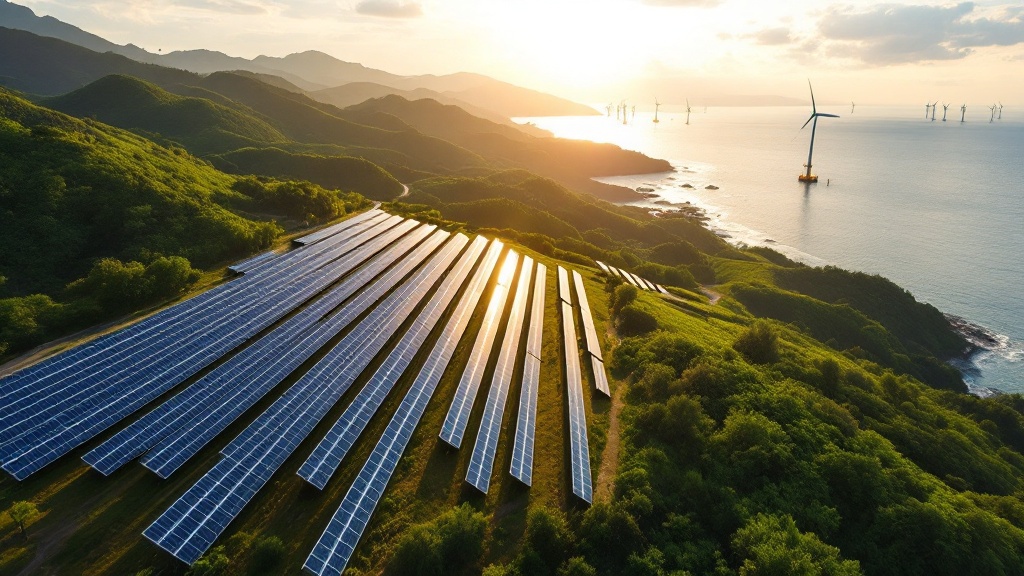
Japan’s solar photovoltaic sector is its most established renewable energy segment, with an installed base of 94 GW as of 2025 — placing Japan among the top three solar markets globally by cumulative capacity. Growth has moderated compared to the post-2012 FIT boom, with the market projected to expand at a 2.63% CAGR to reach 110 GW by 2031. But maturity in installed capacity does not mean maturity in business opportunity. The market is undergoing a structural shift that is creating new entry points for foreign companies.
Installation costs continue to fall. Rooftop solar capital costs dropped to ¥213,000 per kilowatt in 2025, a 10% decline from the prior year’s ¥237,000/kW. Ground-mount systems sit slightly higher at ¥246,000/kW. These price reductions are widening the range of commercially viable projects, particularly for mid-sized commercial and industrial installations where payback periods now fall comfortably under ten years.
The most consequential change is the transition from Japan’s feed-in tariff (FIT) system to the feed-in premium (FIP) framework. Under FIT, generators received fixed purchase prices for 20 years. Under FIP, they sell into the wholesale market and receive a premium on top — introducing price exposure but also creating opportunities for corporate power purchase agreements (PPAs) and self-consumption models that did not exist under the old regime. This shift is pulling corporate buyers directly into renewable procurement and opening doors for independent power producers, project developers, and energy management firms.
For foreign solar companies, the implications are significant. Under FIT, the market was largely domestic and installation-focused. Under FIP, there is growing demand for energy management, forecasting, and trading capabilities that international firms often bring from more liberalized electricity markets. Companies with experience structuring corporate PPAs in Europe or North America will find an expanding addressable market in Japan.
Policy is adding further momentum. Tokyo mandated solar installation on new residential buildings starting April 2025, and national regulations are expanding reporting requirements for factories and large commercial facilities. The downstream effects extend well beyond installation: Japan’s PV Outlook 2050 projects that solar operations and maintenance services alone will generate a ¥2.5 trillion annual market by 2050 — a massive, long-duration opportunity for service-oriented companies willing to commit to the Japanese market.
Offshore Wind: Japan’s Fastest-Growing Frontier
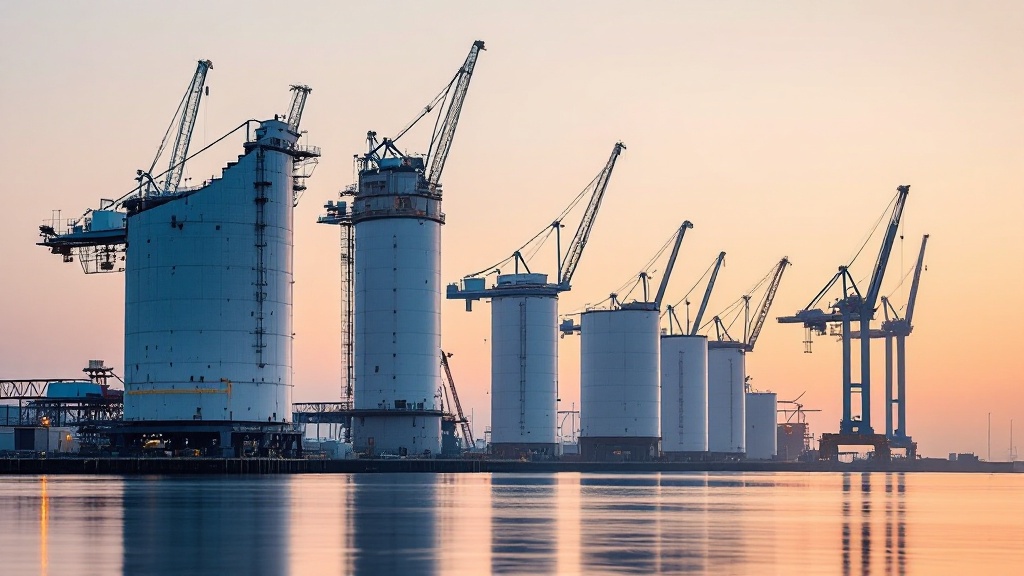
Wind power is Japan’s fastest-expanding renewable segment, and offshore wind in particular carries the most ambitious government targets in the country’s energy transition. Japan’s offshore wind strategy calls for 10 GW of installed capacity by 2030 and 30–45 GW by 2040 — targets that would place Japan among the world’s largest offshore wind markets within 15 years.
The sector is already accelerating. In 2024, Japan added a record 703 MW of new wind capacity across 23 sites, the largest single-year addition in the country’s history. Cumulative installed wind capacity reached 5,849 MW by year-end — a 12.8% increase over 2023. While this still trails European wind markets in absolute terms, the growth rate signals a market entering its steepest adoption curve.
The breakthrough moment came in January 2026, when Japan’s first commercial floating offshore wind farm began operation off Nagasaki Prefecture. Eight floating turbines with a combined output of 16.8 MW now supply power to the Goto Islands. While modest in scale, this project validates a technology category uniquely suited to Japan’s deep coastal waters, where fixed-bottom foundations are impractical across much of the coastline.
The government reinforced this direction in August 2025 with the second edition of its Offshore Wind Power Industry Vision, which added a specific target of 15 GW of floating offshore wind by 2040. With European developers already forming consortiums with Japanese trading houses for Round 3 auction projects, the offshore wind pipeline is attracting serious international capital and creating demand for specialist support for renewable energy projects in Japan.
The offshore wind supply chain is also creating opportunities beyond turbine manufacturing. Port logistics, subsea cabling, marine surveying, environmental monitoring, and specialized O&M services are all areas where foreign companies with North Sea or Baltic experience can contribute. Japan’s offshore wind procurement process favors consortiums that demonstrate both technical capability and local community engagement — a combination that naturally requires international-Japanese partnerships. For foreign technology providers and developers, this represents a multi-decade market opportunity, but one that overwhelmingly rewards those who enter through collaboration rather than going it alone.
Energy Storage and Smart Grid: The Critical Enablers
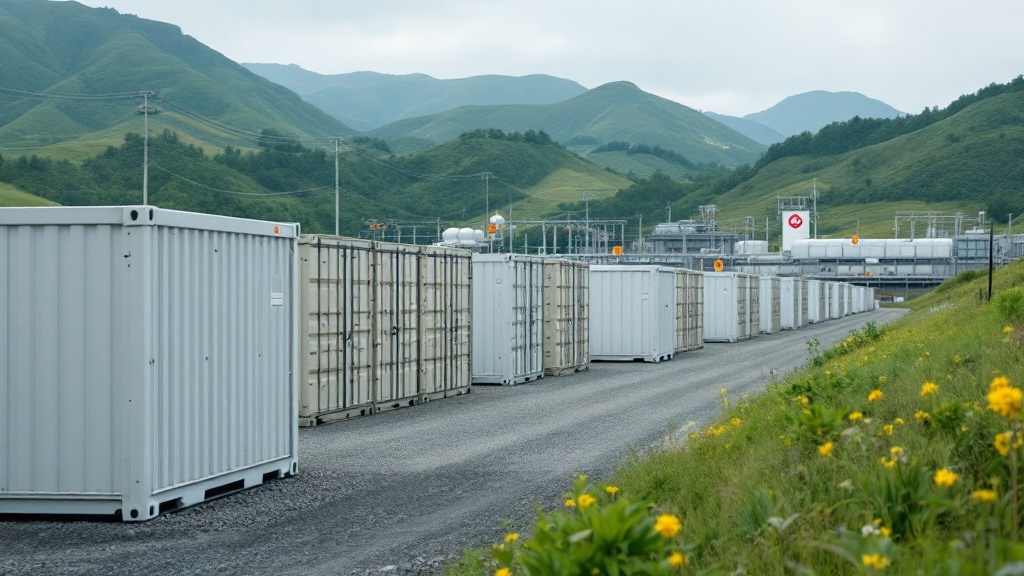
Renewable generation matters only if the grid can absorb it. In Japan, that equation is under severe stress. Grid curtailment — where solar or wind generators are ordered to reduce output because the grid cannot handle the supply — has become the single largest constraint on renewable energy growth. The problem is structural, not temporary: Japan’s grid was designed for centralized baseload generation, not distributed variable output. This constraint is driving explosive growth in energy storage and smart grid technologies.
Japan’s energy storage market stood at 15.1 GW in 2024 and is projected to reach 29.4 GW by 2033, a CAGR of 7.32%. The government is actively building this market through competitive auctions: BESS (battery energy storage system) procurement secured 1.1 GW in Round 1 and 1.3 GW in Round 2, with Round 3 underway as of early 2026. These auctions create bankable revenue streams for storage developers and are pulling international battery technology and project development firms into the Japanese market. For foreign companies with storage technology, grid management software, or power electronics expertise, the auction pipeline alone represents a multi-gigawatt addressable opportunity over the next several years.
The smart grid market is on a parallel growth path, expanding from $8.12 billion in 2023 to a projected $10.8 billion by 2032. Investments span advanced metering infrastructure, demand response platforms, distribution automation, and virtual power plant systems — all essential for integrating higher shares of variable renewable energy without compromising grid reliability.
Japan’s curtailment problem is not a risk factor for storage and grid companies — it is the demand driver. Every megawatt of curtailed renewable output represents unmet demand for flexibility solutions. The structural nature of this demand, rooted in grid physics rather than policy cycles, offers long-term market visibility that few other clean energy segments can match.
Corporate Sustainability Driving Demand from the Buy Side
While government policy sets the supply-side framework, Japan’s renewable energy growth is increasingly pulled by corporate demand. The number of Japanese companies participating in RE100 — the global commitment to 100% renewable electricity — has risen to 94 as of late 2025, up from 70 in 2024. These companies are actively seeking long-term renewable procurement contracts, corporate PPAs, and green power certificates to meet their commitments, creating a deep and growing pool of creditworthy offtakers for new renewable projects.
The market for environmental value trading is expanding in parallel. Japan’s environmental value market — encompassing renewable energy certificates, carbon credits, and related instruments — was worth ¥44.2 billion annually in 2023 and is projected to grow fourfold to ¥176.3 billion by 2050. Notably, the Non-Fossil Certificates (NFC) market is already larger than the carbon credit market, creating an additional and often overlooked revenue stream for renewable energy generators beyond electricity sales.
Regulatory pressure is tightening as well. Japan’s GX Emissions Trading System (GX-ETS) is shifting from voluntary participation to mandatory compliance starting in 2026, creating direct financial exposure to carbon for a widening range of companies. The GX-ETS is expected to become Asia’s second-largest carbon market, adding an explicit price signal that further strengthens the business case for renewable energy procurement across Japanese industry.
The corporate buy side also shapes what kinds of projects get built. Companies with round-the-clock renewable targets are driving demand for wind and storage alongside solar, while data center operators require certified green power at scale. These procurement patterns are increasingly sophisticated and internationally aligned, creating natural entry points for foreign firms that already serve global corporate buyers in other markets.
What This Means for Foreign Companies
Japan offers substantial renewable energy opportunities for foreign companies — but the market does not reward casual entry. Regulatory complexity is the first and most persistent challenge. Renewable energy projects touch multiple regulatory domains — energy law, environmental assessment, land use, maritime safety, grid connection standards — administered across national, prefectural, and municipal jurisdictions. Business practices add another layer: Japan’s consensus-driven decision-making, relationship-oriented procurement, and implicit communication norms create barriers that no amount of technical excellence can overcome alone. The structural demand for bilingual advisory and strategic mediation services is not incidental — it is a defining feature of this market.
Regional variation compounds the complexity. Grid capacity, interconnection queues, permitting timelines, and local incentive programs differ sharply by prefecture. A solar project viable in Kyushu may face insurmountable grid constraints in Hokkaido. A wind farm welcome in Akita may encounter community opposition in a neighboring prefecture. Effective market entry requires localized intelligence that national-level research alone cannot provide.
The dominant entry model for foreign companies is the consortium or partnership structure. Joint ventures with Japanese trading companies, co-development agreements with regional utilities, and technology licensing arrangements are far more common — and far more successful — than solo market entry. The Japanese business environment rewards trust built through long-term relationships, and foreign companies that attempt to bypass this dynamic typically face extended timelines, regulatory friction, and limited deal flow.
The strategic opportunity for new entrants lies in emerging segments. Floating offshore wind, solid-state batteries, AI-driven grid optimization, and green hydrogen are all early enough in their Japanese market development that first-mover advantages remain available. Companies bringing proven technology in these areas can establish positions before incumbents consolidate — but only if they pair their technology with credible local partnerships and regulatory navigation.
For foreign firms weighing these trade-offs, Japan renewable energy consulting services that combine deep market expertise with strategic introductions can significantly compress the learning curve and reduce market entry risk.
Japan’s renewable energy market offers substantial growth across solar, wind, and storage — but navigating its regulatory landscape and business culture requires deep local expertise. Daisho Media Partners Japan (DMPJ) connects global stakeholders with sustainable energy opportunities in Japan through tailored market intelligence, regulatory guidance, and strategic introductions. Explore DMPJ’s renewable energy sector services to start building your Japan market strategy on a solid foundation.
Sorry, the comment form is closed at this time.