

20 Jun In-House vs Outsourced Heritage Preservation in Japan: How to Decide What’s Right for Your Organization
The Three Strategic Decisions Every Heritage Organization Faces
Every organization managing cultural assets in Japan eventually confronts three linked strategic decisions — choices that shape not just individual project outcomes, but institutional capability for years to come.
In-house development vs outsourcing is the threshold question in any in-house vs outsourced heritage conservation analysis. Building internal preservation teams creates deep institutional knowledge and mission alignment, but carries fixed costs — salaries, equipment, ongoing training — that must be justified by consistent demand. Outsourcing shifts these costs to variable, project-based spending, but introduces coordination overhead and potential misalignment with your preservation philosophy.
Domestic Japanese vendor vs international provider defines how you balance cultural fluency against technical breadth. Japan’s heritage preservation sector operates within its own regulatory logic, relationship norms, and philosophical traditions. Choosing between a vendor who navigates that system natively and one who brings outside capabilities requires honest assessment of what your projects actually need.
Full-service package vs modular individual services determines how much project management complexity your organization absorbs. A single-vendor solution simplifies accountability; a best-of-breed approach lets you optimize each capability independently — if you have the internal expertise to integrate the pieces.
These decisions interact. An organization might keep traditional lacquerwork restoration in-house while outsourcing 3D digital archiving to a specialist, then hire a bilingual consulting partner to coordinate across both. With Japan’s Agency for Cultural Affairs nearly tripling its cultural property protection budget from ¥44.7 billion in 2023 to over ¥106 billion in 2024, the market for preservation services is expanding rapidly — and getting the operating model right has never mattered more.
When Building In-House Makes Sense
Consistent, Recurring Needs That Justify Dedicated Resources
Organizations with daily preservation demands — ongoing collections care, continuous environmental monitoring, regular structural maintenance — can amortize the fixed costs of dedicated staff and infrastructure across a high volume of work. If your team spends the majority of its time on preservation activities, the economics favor building capability internally. Budgeting guides for collections care emphasize that sustainable preservation requires dependable, institutionally supported resources — not intermittent project funding that disappears between budget cycles.
Traditional Craftsmanship That Resists Outsourcing
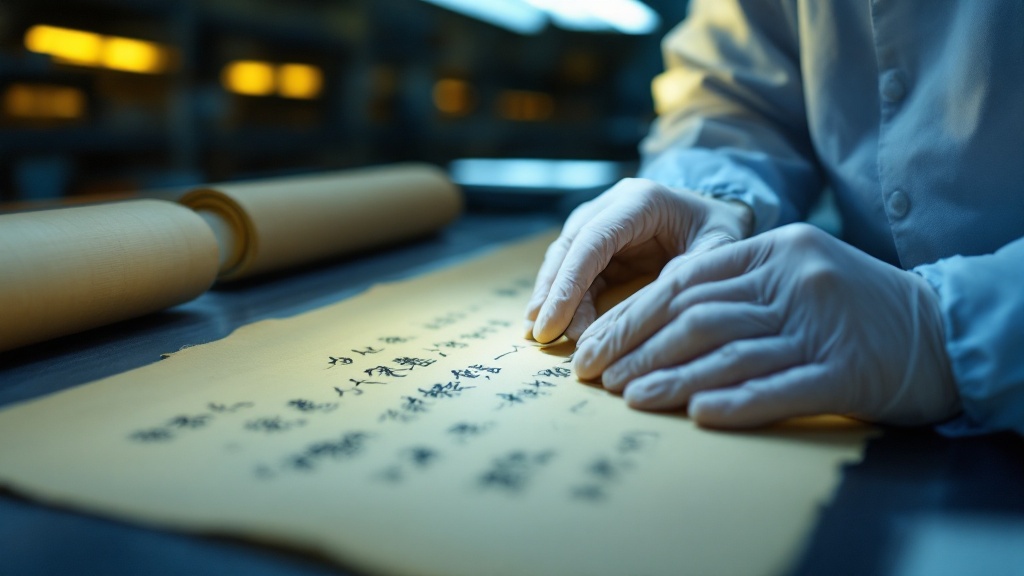
Some preservation work simply cannot be effectively delegated. Traditional Japanese craftsmanship — lacquerwork, textile conservation, paper restoration, temple carpentry — depends on embodied knowledge accumulated through years of apprenticeship. The International Course on Conservation of Japanese Paper attracted 165 applicants from 60 countries for its 2025 session, illustrating both the global demand for these skills and the difficulty of transferring them outside structured master-apprentice relationships. When preservation hinges on this kind of deep tacit expertise, keeping it in-house protects craft integrity and institutional continuity.
Preservation as Core Mission
For museums, archives, and temple administrations where heritage preservation *is* the organization’s reason for being, outsourcing core preservation functions risks diluting mission alignment. External vendors may deliver technically adequate results without fully sharing your philosophical approach to intervention levels, material authenticity, or community engagement with cultural assets. When preservation decisions carry spiritual and historical weight, internal ownership matters.
Key Risk: A Shrinking Talent Pool
The strongest case for in-house teams is also the most fragile. Japan faces acute skills shortages in traditional preservation crafts, with the average age of master practitioners exceeding 65. The Agency for Cultural Affairs maintains a “Selected Preservation Technologies” program specifically to prevent critical techniques from disappearing entirely. Organizations relying solely on internal capability must plan seriously for succession — what happens when your lead conservator retires with no qualified replacement in sight?
When Outsourcing Delivers Better Results
Technology That Moves Faster Than Internal Teams Can Follow
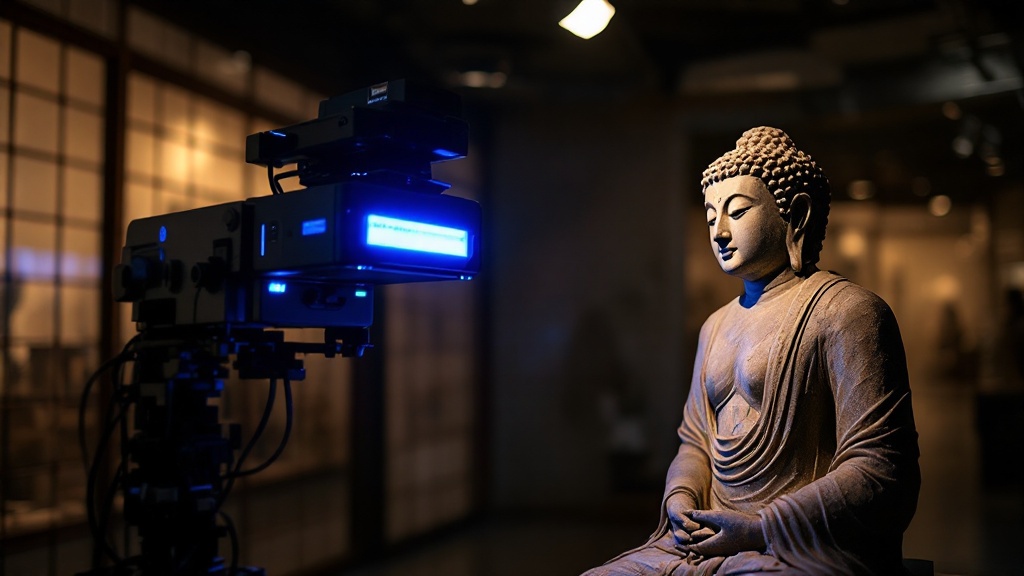
Digital preservation technologies — 3D laser scanning, AI-enabled deterioration detection, virtual reality access platforms — evolve at a pace that makes it nearly impossible for small internal teams to stay current. When Shimizu Corporation partnered with Eiheiji Temple to create digital twins of 19 buildings using point cloud surveying that captured millions of measurement points per second, the project required specialized equipment and expertise that no single temple administration could realistically maintain. For organizations weighing the pros and cons of cultural property restoration outsourcing, the technology gap alone often tips the balance.
The Expertise Gap Is Real
The numbers are stark. Research from the Heritage Research Hub finds that 46% of heritage institutions cite lack of technical expertise as their primary barrier to innovation, with 57% identifying budget constraints and 33% pointing to internal resistance to change.
For organizations facing all three barriers simultaneously, outsourcing to specialists who have already invested in technology and training is often the only viable path to adopting modern preservation methods.
Project-Based Needs Where Fixed Costs Cannot Be Justified
If your preservation requirements are episodic — a one-time digitization campaign, a seismic assessment of a historic building, documentation ahead of a loan exhibition — the fixed costs of a permanent internal team simply cannot be justified. Deciding to outsource cultural heritage preservation in Japan for project-based needs lets you access world-class capability for exactly the duration required, without carrying idle capacity between engagements.
Key Risk: Quality Control, Ethical Alignment, and Communication Overhead
Outsourcing introduces real risks. Best practices in vendor relations for preservation require clear communication of quality standards, ethical handling protocols, and documentation expectations. Communication overhead grows with vendor distance — both geographical and cultural. Organizations outsourcing cultural property restoration work must verify that vendors understand not just technical specifications but the philosophical frameworks guiding Japanese preservation, including principles of minimal intervention and reversibility.
Domestic Japanese Vendors vs International Providers — A Practical Comparison
Heritage preservation vendor selection in Japan involves weighing factors that go well beyond price and technical capability. The table below summarizes the core trade-offs.
| Factor | Japanese Domestic Vendor | International Provider |
|---|---|---|
| **Cultural alignment** | Native regulatory and philosophical knowledge | May lack understanding of Japanese preservation principles |
| **Language** | Japanese only (typical) | English or multilingual |
| **Regulatory navigation** | Deep familiarity with Cultural Properties law and [subsidy programs](https://www.bunka.go.jp/seisaku/bunkazai/joseishien/hojo/hojokin.html) | Limited — requires local guidance |
| **Technical innovation** | Strong in traditional methods; moderate in digital | Often stronger in emerging digital tools |
| **Cost structure** | Higher labor costs; premium for specialization | Potentially lower for digital work; travel overhead |
| **Relationship depth** | Long-term, trust-based partnerships | More transactional; harder to build institutional trust |
| **Cross-cultural capability** | Limited for international stakeholders | Natural fit for global projects |
Where Japanese Vendors Excel
Domestic vendors operate natively within Japan’s cultural properties regulatory framework, which governs everything from permitted intervention methods to subsidy applications for Important Cultural Properties. They understand the relationship-based procurement culture where trust, consistency, and long-term partnership carry as much weight as technical proposals. For restoration work involving designated cultural properties, Japanese vendors have existing relationships with Agency for Cultural Affairs certification systems that foreign firms would spend years learning to navigate.
Where International Providers Add Value
International providers may offer cost advantages for digital preservation work, access to technologies developed in global R&D hubs, and broader experience across diverse cultural contexts. Organizations managing cross-border heritage projects — documenting Japanese diaspora collections, collaborating with international museums, or presenting Japanese heritage to global audiences — often need multilingual workflows and technical capabilities that domestic specialists rarely offer.
The Critical Gap: Language and Cross-Cultural Capability
Most Japanese preservation vendors operate monolingually. This is not a limitation for purely domestic projects, but it becomes a serious constraint when international stakeholders, foreign funders, or cross-cultural interpretation requirements enter the picture. Conversely, foreign vendors entering Japan frequently underestimate the depth of Japanese preservation philosophy — concepts like cyclical renewal in the Ise Shrine tradition and philosophical approaches to impermanence that inform preservation decisions in ways Western conservation frameworks do not anticipate.
This gap — between domestically rooted cultural expertise and internationally connected technical capability — is precisely where DMPJ’s heritage preservation consulting services operate, bridging both worlds through bilingual teams with deep knowledge of Japanese heritage practices and strong international networks.
Full-Service Packages vs Best-of-Breed Modular Selection
When Full-Service Reduces Coordination Burden
Full-service packages consolidate planning, execution, and documentation under a single vendor, drastically reducing coordination complexity. This model is particularly valuable for organizations with limited internal project management capacity — smaller museums, regional heritage organizations, or foreign entities establishing their first preservation projects in Japan. When research highlights the real challenges facing cultural heritage institutions with constrained staff and budgets, the appeal of a single accountable partner becomes clear.
When Modular Selection Optimizes Value
Modular selection lets you pick the best specialist for each task — the most skilled traditional restorer, the most advanced scanning lab, the strongest metadata architect — optimizing both cost and quality at each stage. But it demands integration expertise. Someone must ensure 3D scan data feeds correctly into your digital asset management system, that metadata schemas are consistent across vendors, and that conservation documentation meets both Japanese regulatory requirements and international standards.
A Fragmented Market
Japan’s preservation market is structurally fragmented between traditional craft studios and digital service providers. Emerging technology adoption in cultural heritage is driven by an entirely different ecosystem than physical restoration work. Few Japanese vendors bridge both domains effectively, which means organizations pursuing integrated preservation strategies — combining physical conservation with digital archiving, for instance — often find themselves assembling capabilities from multiple unconnected suppliers with no shared language or workflow.
The Hybrid Approach Often Wins for SMEs
For the small and mid-sized enterprises that dominate Japan’s business landscape, the most practical model is often a hybrid: a bilingual consulting partner who manages specialized subcontractors while maintaining overall quality control, cultural alignment, and project coherence. This approach delivers the optimization benefits of modular selection without requiring in-house integration expertise, and provides the accountability of a single relationship while accessing best-of-breed specialists for each project component.
A Decision Framework for Your Organization
Assess Your Preservation Profile
Start with three fundamental questions. The answers point you toward the right operating model before you evaluate a single vendor.
| Factor | Favors In-House | Favors Outsourcing |
|---|---|---|
| **Preservation frequency** | Daily or weekly recurring needs | Periodic, project-based |
| **Internal expertise** | Specialist staff already on team | Significant skills gaps |
| **Strategic importance** | Core organizational mission | Support function |
| **Technology requirements** | Stable, traditional methods | Rapidly evolving digital tools |
| **Budget structure** | Can sustain fixed payroll costs | Prefers variable, project-based costs |
| **Scope of cultural assets** | Large, permanent collection | Focused or finite project scope |
Organizations scoring high on the left column should invest in building in-house capability. Those landing consistently on the right will find outsourcing delivers better results. Most organizations fall somewhere in between — making the hybrid model the strongest option.
Evaluate Cultural Competence Alongside Technical Capability
In Japan, heritage preservation vendor selection must weigh cultural competence as heavily as technical specifications. A vendor with cutting-edge digital capabilities but no understanding of how Japanese cultural property designations affect permissible intervention methods will generate compliance problems and stakeholder friction. Ask vendors to demonstrate specific experience with Japan’s regulatory environment, not just general preservation credentials.
Plan for Long-Term Sustainability
Can your chosen model scale with evolving needs? Heritage preservation requirements rarely shrink. Digital archiving standards advance, climate change threatens physical collections, and disaster resilience planning is becoming a baseline expectation for nationally designated sites. The operating model you choose today must accommodate expanded scope without requiring a structural overhaul in three years.
Japan-Specific Factor: Relationship-Based Procurement
Japan’s institutional culture favors long-term partnerships over transactional vendor relationships. Organizations that treat preservation vendors as interchangeable suppliers — bidding every project competitively, switching providers after each engagement — often find they cannot access the best specialists, who prioritize established relationships and mutual trust over short-term revenue. Building a durable partnership with a culturally fluent preservation partner is itself a strategic asset that compounds in value over time.
To discover DMPJ’s flexible heritage service packages and discuss which combination of in-house and outsourced capabilities fits your organization, start with a consultation that maps your specific preservation needs to available solutions.
Choosing the right preservation model depends on your organization’s specific context, capabilities, and goals. DMPJ offers a flexible hybrid approach — combining deep Japanese cultural expertise with innovative digital capabilities and strong international networks — that lets you access world-class preservation services without the overhead of building everything in-house. Visit our Cultural Heritage Preservation page to discuss which model fits your organization best.
Sorry, the comment form is closed at this time.