


02 Jun How to Build a Circular Fashion Program in Japan: A Step-by-Step Playbook for SMEs
Why Circular Fashion Is Accelerating Faster in Japan Than Most Markets
Japan’s circular fashion market is not emerging — it is surging. The country’s secondhand apparel market has been expanding at a 12.3% compound annual growth rate, reaching approximately 1.27 trillion yen in 2024. That growth rate outpaces most developed economies and signals that circularity has moved from niche to mainstream consumer behavior.
Regulatory tailwinds are strengthening this momentum. Japan’s Environment Ministry published an action plan in early 2026 targeting a 25% reduction in household clothing waste by 2030 from 2020 levels — a dramatic acceleration from the current reduction rate of less than 2%. The plan includes measures targeting consumers, local governments, and businesses, creating urgency for brands to demonstrate circular capabilities before compliance becomes mandatory.
Perhaps the strongest structural advantage is cultural. The concept of *mottainai* — a deeply ingrained Japanese value expressing regret over wastefulness — makes consumers uniquely receptive to circular propositions. Unlike markets where sustainability messaging must overcome indifference, Japanese consumers already carry an emotional framework that aligns with take-back, repair, and upcycling programs. This cultural readiness, combined with over 1,099 textile companies that have declared sustainability commitments, creates a market where circular fashion programs face lower adoption barriers than virtually anywhere else.
The Five Circular Business Models and Which Ones Work Best in Japan
The Ellen MacArthur Foundation identifies five circular business models applicable to fashion: circular supply chains, recovery and recycling, product life extension, sharing platforms, and product-as-a-service. Each operates differently in the Japanese context.
| Model | Description | Japan Fit | Consumer Adoption |
|---|---|---|---|
| Circular supply chains | Bio-based or fully recyclable inputs | Strong | Growing with certification |
| Recovery & recycling | Take-back and material regeneration | Very strong | 68% participate via donation |
| Product life extension | Repair, refurbishment, resale | Very strong | 42% buy secondhand |
| Sharing platforms | Rental, swapping, lending | Moderate | 8% adoption |
| Product-as-a-service | Subscription and leasing | Weak | 5% adoption |
Japanese consumers strongly prefer repair and resale over rental and subscription models. Market data shows that 68% of consumers participate in circular fashion through donation, 42% through secondhand purchasing, but only 8% through rental services. This preference reflects cultural attitudes around personal hygiene and ownership — Japanese consumers want to own fewer, better items and extend their life, rather than share wardrobes.
For SMEs exploring how to start an upcycling fashion brand in Japan, this data points clearly: build programs around take-back, repair, and resale rather than attempting to shift deeply held ownership preferences.
Designing Your Take-Back Program: Cost Structure and Consumer Incentives
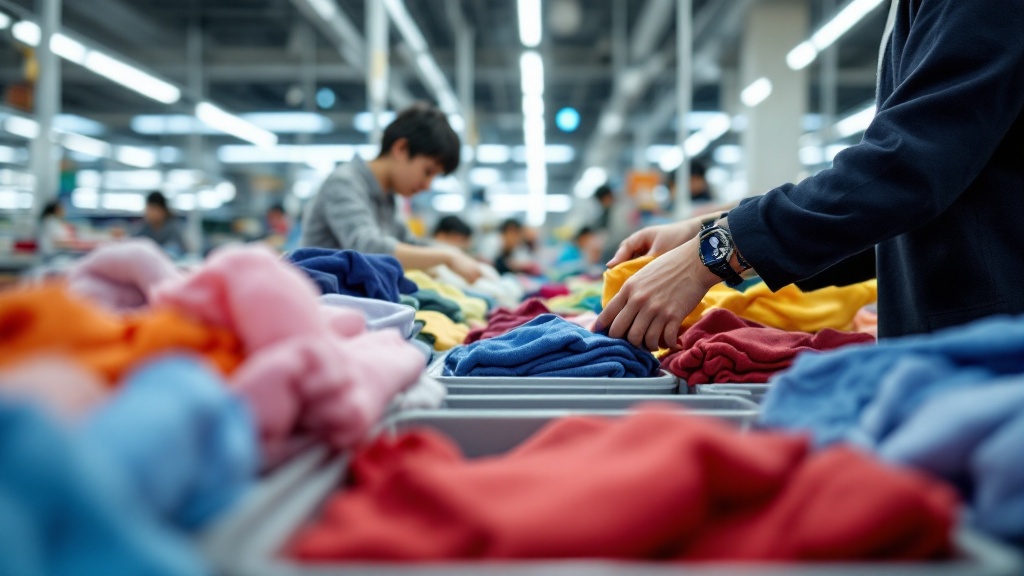
A successful clothing take-back program in Japan requires careful alignment of collection logistics, processing infrastructure, and consumer rewards. The implementation cost framework breaks into three core components:
Collection Logistics
Collection points can be physical (in-store bins, partner retail locations) or digital (scheduled pickup services). In-store collection represents the lowest cost-per-unit option at 200–500 JPY per collected item when leveraging existing retail footprint. Third-party collection partnerships with established Japanese secondhand retailers like Book Off or 2nd Street reduce capital requirements while providing immediate operational scale.
Consumer Incentives
Effective incentive structures in Japan typically offer 1,500–3,000 JPY in store credits per returned item. This range reflects a balance: enough to motivate return behavior, but structured as store credit rather than cash to drive repeat purchases. Programs offering credits below 1,000 JPY see participation rates drop by roughly half.
| Incentive Type | Typical Value | Participation Impact |
|---|---|---|
| Store credit | ¥1,500–3,000 | High — drives repeat purchase |
| Discount on next purchase | 10–20% off | Moderate — time-limited urgency |
| Loyalty points | Variable | Low unless integrated with existing program |
| Donation receipt | ¥0 (tax value) | Low for fashion consumers |
Partnership Models
Rather than building processing infrastructure from scratch, SMEs should partner with existing Japanese secondhand retailers and recyclers. Organizations like Withal have established collection-to-processing pipelines that brands can plug into. This partnership approach converts what would be a multi-million yen capital expenditure into a variable cost structure tied to actual collection volumes.
From Collected Clothing to Revenue: Processing and Monetization
Once clothing is collected, the question becomes: how do you turn waste into revenue? Advanced processing systems in Japan now separate collected textiles into four material recovery streams.
The four streams — recycled yarn, durable boards, paper products, and eco-friendly solid fuel (biocoke) — maximize value extraction from collected garments. Programs leveraging all four streams achieve an 83% material recovery rate versus the industry average of approximately 32%. That gap represents both environmental impact and revenue opportunity.
Revenue generation flows through two channels. First, direct material sales: recycled yarn commands 800–1,200 JPY per kilogram in the Japanese market, while durable boards and biocoke serve construction and energy sectors respectively. Second, service fees from partner brands who pay for collection and processing as part of their ESG commitments — typically 300–600 JPY per kilogram processed. Combined, these revenue streams can offset 60–80% of operational costs within the first year of full operation.
Digital Infrastructure for Tracking and Consumer Engagement
Circular programs without digital infrastructure are operationally blind. Three technology layers make a circular fashion program measurable and engaging.
QR-Coded Garment Tags
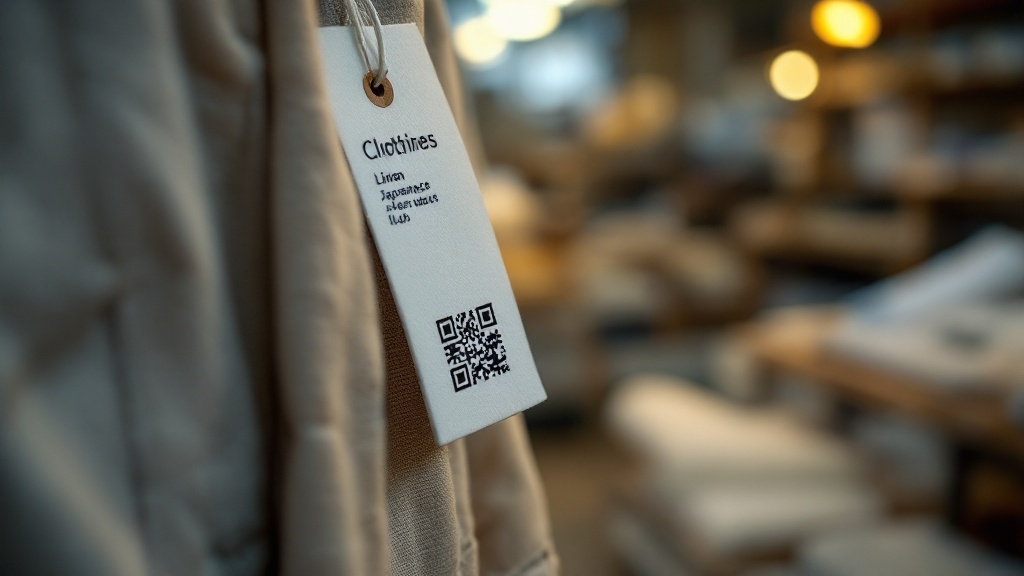
Each garment produced under a circular program should carry a QR code linking to lifecycle information: material composition, care instructions optimized for longevity, and end-of-life recycling instructions specific to the item’s construction. This aligns with emerging EU Digital Product Passport requirements and positions brands ahead of likely Japanese regulatory alignment. Implementation cost is modest — 5–8 JPY per garment for QR tag integration.
Impact Tracking Systems
Digital dashboards showing consumers the aggregate impact of their participation — kilograms diverted from landfill, water saved, CO₂ avoided — transform abstract sustainability into tangible personal achievement. Research indicates that 80% of consumers are willing to pay more for sustainable products, and transparent impact data strengthens that willingness by providing verification.
Gamified Loyalty Integration
Building loyalty through gamified engagement that rewards circular behavior — points for returns, badges for repair service usage, tier upgrades for consistent participation — converts one-time take-back actions into habitual circular behavior. Japanese consumers respond particularly well to structured reward systems, with brands implementing gamified circularity reporting 27% higher repeat engagement versus flat incentive programs.
For brands seeking circular fashion strategy support from DMPJ, the digital layer is where consulting expertise delivers outsized returns — the difference between a collection bin and a growth engine.
Timeline and ROI: What to Expect in Year One
A circular fashion program in Japan is not an overnight transformation. It follows a predictable trajectory with measurable milestones.
Payback Period
Programs structured with consumer incentives (store credits driving repeat purchases) typically achieve a 14–18 month payback period. The store credit model is critical here — it converts a cost (the incentive) into a customer retention mechanism that generates additional revenue, compressing the break-even timeline compared to cash incentive programs.
Phase 1 Pilot Structure
Start with 50–100 collection points before scaling nationally. A pilot at this scale generates enough volume data to optimize logistics, test incentive structures, and validate processing economics without committing to national infrastructure. Most successful programs in Japan run their pilot phase for 5–6 months, iterating incentive values and collection point placement before expansion.
Metrics That Matter
Three metrics determine whether a circular program is on track:
- Recovery rate — percentage of collected material converted to revenue-generating outputs (target: >70% in year one)
- Customer participation rate — percentage of active customers who engage with the take-back program at least once (target: >15% in year one)
- Cost per unit collected — total collection and processing cost divided by items collected (target: <2,000 JPY declining to <1,200 JPY at scale)
These metrics connect operational performance to business outcomes. A program hitting all three targets is on track for the 14–18 month breakeven; missing on cost-per-unit typically signals logistics inefficiency that requires route optimization or partner renegotiation.
Launching a circular fashion program requires expertise in Japanese consumer behavior, logistics partnerships, and regulatory compliance. DMPJ’s sustainable fashion and circular economy services team has deep experience designing circular economy solutions that work specifically in the Japanese market — from take-back infrastructure to upcycling partnerships. Connect with us to explore how a circular program can strengthen your brand and reduce waste simultaneously.
Sorry, the comment form is closed at this time.