

14 Jun Government Grants and Programs for Japanese Fashion Brands Going Global
Japan’s Ecosystem of Fashion Internationalization Support — An Overview
Japan operates one of the most comprehensive government support ecosystems for creative industry internationalization anywhere in the world. From national-level investment funds and ministry-backed IP development programs down to prefectural export subsidies and industry association trade show platforms, multiple layers of government grants for Japanese fashion international expansion exist — and most eligible brands never apply.
The support architecture traces back to the “Cool Japan” strategy, which began in the mid-2010s as a soft-power concept aimed at leveraging Japan’s cultural attractiveness — anime, cuisine, design, fashion — to drive economic growth. What started as a branding initiative has matured into a well-funded investment apparatus with dedicated capital, structured acceleration programs, and direct subsidies targeting creative industries. The Cool Japan Fund alone was capitalized with over ¥60 billion, with a 20-year operational mandate that signals the government’s long-term commitment.
Yet despite this infrastructure, the majority of eligible fashion SMEs leave significant money on the table. Application processes can be opaque, eligibility criteria are often misunderstood, and many founders assume government programs are reserved for large corporations or technology startups. The reality is different: programs like JETRO’s accelerators are completely free, METI’s Fashion IP initiative actively recruits emerging designers, and fashion week prize programs provide direct cash support plus production assistance.
This guide breaks down the major programs available in 2026, what they offer, who qualifies, and how to strengthen your application.
Cool Japan Fund — Investment Criteria and How Fashion Brands Qualify
The Cool Japan Fund is the single largest financial commitment Japan’s government has made to creative industry internationalization. Launched on November 25, 2013, the Fund was established with initial capitalization of ¥60 billion — approximately $500 million — contributed by both government and private sector partners, with provisions for up to an additional ¥50 billion. The Fund operates on a 20-year timeline, giving it the patience to support fashion brands through the long cycles required to build international presence.
Three Evaluation Dimensions
The Cool Japan Fund evaluates every investment opportunity against three core criteria: purpose, profitability, and knock-on effect.
| Criterion | What the Fund Evaluates | What Fashion Brands Should Demonstrate |
|---|---|---|
| **Purpose** | Does the venture cultivate overseas demand for Japanese products and build Japan’s brand globally? | Clear connection between your brand narrative and Japanese aesthetic heritage, craft traditions, or design innovation |
| **Profitability** | Is there a sound business model, co-investment from private partners, and a feasible exit scenario? | Revenue traction, private co-investors already committed, realistic financial projections |
| **Knock-on Effect** | Will the investment benefit the broader industry — not just the individual company? | Potential to lift regional manufacturers, create collaborative platforms, or pioneer new markets for other Japanese brands |
The knock-on effect criterion is particularly important and often overlooked by applicants. A Cool Japan Fund fashion brands application that only describes individual company growth will struggle. The Fund wants to see how your international expansion creates a pathway others can follow — whether that means opening a new retail channel for regional textile producers, establishing a Japanese fashion presence in an underserved market, or building infrastructure other brands can leverage.
Fashion Portfolio and Investment Scale
The Fund’s fashion and textile investments reflect its strategic interest in cutting-edge material and fiber development as well as direct-to-consumer brand expansion. Notable investments include participation in Coolmate’s Series C round — a Vietnamese D2C fashion brand aligned with the Fund’s mission to commercialize Japanese lifestyle products in Southeast Asia. The Fund has also committed up to $40 million for a dedicated fund targeting startups selling Japanese products in Indonesia and other Southeast Asian markets, and invested in apparel production platforms like Sitateru Inc. that reduce operational barriers for fashion brands scaling internationally.
Individual investments range widely. For reference, Gojo raised $23 million from the Cool Japan Fund as part of an $80 million Series E round. Smaller fashion-focused investments typically start in the tens of millions of yen, scaling with demonstrated traction.
JETRO Programs — Accelerators, Mentorship, and Market Access
The Japan External Trade Organization operates the most hands-on Japan government subsidy and support ecosystem for fashion brand overseas expansion. With more than 70 overseas offices and approximately 50 domestic bases, JETRO provides infrastructure that individual fashion SMEs could never build alone.
Global Startup Acceleration Program
JETRO’s flagship GSAP welcomed 105 Japanese startups in its 2024 cohort, bringing total participation to over 500 companies since the program’s 2020 launch. The JETRO fashion brand support program offers multiple specialized tracks including a B2B Market Discovery Course (led by AlchemistX) and a six-month long-term program for companies seeking deeper traction in the U.S. market.
Participation is completely free. The program provides business strategy lectures, face-to-face bootcamps, structured interviews with potential partners and investors, one-on-one mentoring, and for certain tracks, participation in overseas exhibitions where brands meet international buyers directly.
Techstars Tokyo Partnership
The Techstars Tokyo accelerator, established through JETRO partnership, runs a three-month intensive equity-based program providing mentorship, capital investment, and access to an extensive global network. The published track record is striking: 31% of companies achieve a successful exit within eight years — the highest documented rate among global accelerators.
J-StarX Women Entrepreneur Program
The J-StarX 2025 Women Entrepreneur Program supports 20 selected women founders through a multi-phase program: a four-day intensive bootcamp in Japan, 12 weeks of hybrid training, and a one-week immersion in Silicon Valley with direct exposure to American venture capital and customer acquisition strategies. The program is entirely free, with costs covered through JETRO’s partnership with Gener8tor.
How to Apply and What Selection Committees Look For
GSAP applications follow an annual cycle with competitive selection. Expect to submit a comprehensive business plan, financial documentation, management team backgrounds, and a detailed international expansion strategy identifying specific target markets. Selection committees prioritize companies with existing market traction, clear international growth potential, and founders who demonstrate both ambition and operational readiness.
METI’s Fashion IP Program and Creative Industry Initiatives
The Ministry of Economy, Trade and Industry approaches fashion internationalization through a distinct lens: building intellectual property value from Japan’s cultural and craft heritage.
The Program for Creating Global Fashion IP
The METI Fashion IP Program 2026 represents the ministry’s most ambitious fashion-specific initiative. With TNL Mediagene’s subsidiary Infobahn selected as Lead Partner, the program cultivates emerging fashion creators by treating traditional craft techniques and cultural design sensibilities as intellectual property with global commercial potential.
The program goes beyond financial support. Infobahn provides direct mentoring from industry experts, fieldwork visits to production regions across Japan’s textile and fashion manufacturing clusters, and structured opportunities for business collaboration with domestic and international fashion stakeholders. The core thesis is compelling: Japan’s inherited craftsmanship and design traditions represent underleveraged competitive advantages that, when reinterpreted through contemporary fashion, can generate high-value-added “Fashion IP” combining cultural depth with commercial sustainability.
UNFOLDING — Tokyo and Kyoto Showcase
The program culminated in the UNFOLDING presentation and exhibition event in January 2026, held in both Tokyo and Kyoto. The event provided participating designers a high-profile platform to present their work to international buyers, media representatives, retailers, and investors — the kind of concentrated exposure that emerging brands would otherwise spend years building independently.
SX Brands Recognition Program
METI’s SX Brands initiative, developed in partnership with the Tokyo Stock Exchange, recognizes companies that integrate sustainability transformation into their business models. Now in its third edition, the program identifies fashion and lifestyle companies that enhance their ability to generate growth capital while pursuing genuine environmental and social sustainability. While SX Brands does not provide direct funding, the recognition functions as a certification that enhances visibility among impact investors, sustainability-focused institutional investors, and corporate partners seeking ethical fashion partnerships.
Connecting Designers with International Buyers and Media
Across all these METI-backed programs, the common thread is structured access. Emerging designers and smaller brands gain introductions to international buyers, media contacts, and distribution partners that would otherwise require years of relationship-building and significant travel budgets. For brands that work with DMPJ to maximize your global branding investment, these programs become force multipliers — the branding strategy shapes the narrative, and the government programs provide the platform.
Fashion Week Support and Trade Show Funding
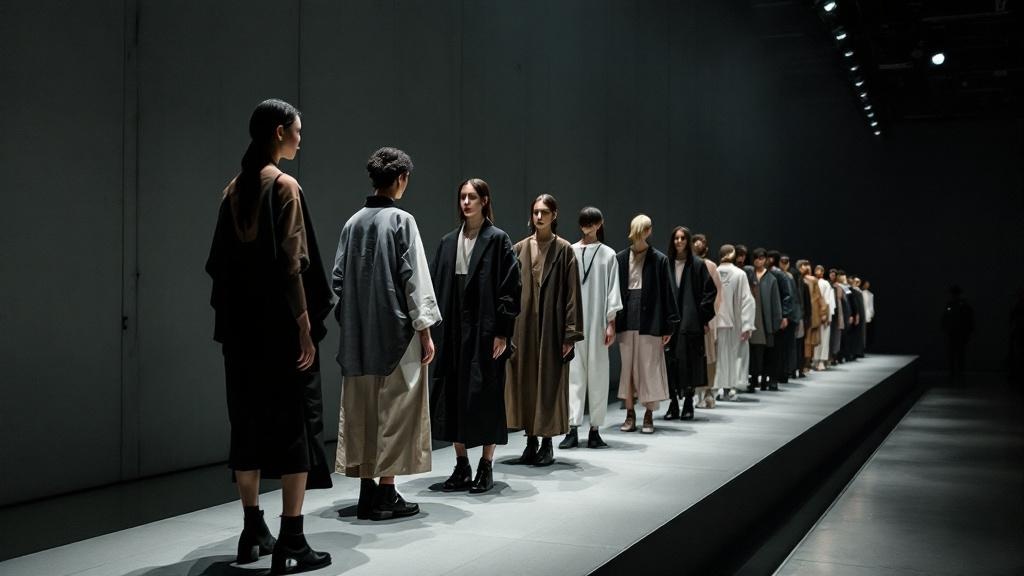
Beyond strategic programs and investment funds, Japan’s government and industry bodies provide direct support for fashion week participation and trade show exhibition.
JFW NEXT BRAND AWARD
The JFW NEXT BRAND AWARD 2027 offers emerging designers ¥3 million in prize money split across two seasons of Rakuten Fashion Week TOKYO presentations, plus substantial production support: waived venue and registration fees, professional videography and photography, discounted venue rates for subsequent seasons, and arranged meetings with JFWO’s network of international buyers.
MADE in JAPAN EXPORT FAIR
The MADE in JAPAN EXPORT FAIR operates semi-annually at Tokyo Big Sight, functioning as a dedicated B2B platform for global importers, wholesalers, and buyers seeking Japanese apparel, textiles, and OEM/ODM partners. The next events are scheduled for October 7–9, 2026, and April 7–9, 2027.
Rakuten Fashion Week TOKYO
Rakuten Fashion Week TOKYO provides participation subsidies and production support for selected designers, with official venues at Shibuya Hikarie offering both full-scale runway shows and experimental presentation formats. The event connects designers with both domestic and international media, creating visibility that extends well beyond the event itself.
Application Deadlines for 2026–2027
| Program | Key Dates | What You Get |
|---|---|---|
| JFW NEXT BRAND AWARD 2027 | Applications open April 2, 2026; deadline June 9, 2026 | ¥3M prize, venue fees waived, media production, buyer matching |
| MADE in JAPAN EXPORT FAIR (Fall) | October 7–9, 2026 at Tokyo Big Sight | B2B exhibition platform for international buyers |
| MADE in JAPAN EXPORT FAIR (Spring) | April 7–9, 2027 at Tokyo Big Sight | B2B exhibition platform for international buyers |
| SX Brands 2026 | Applications expected fall 2026 (2025 cycle: Oct 6 – Nov 28) | Sustainability certification, investor visibility |
| JETRO GSAP | Annual cycle, typically mid-year applications | Free acceleration, mentorship, international market access |
Maximizing Your Chances — Practical Application Tips
Government programs can transform an international expansion plan from aspirational to actionable — but only if your application stands out in a competitive field.
Build the Co-Investment Signals Funds Want to See
The Cool Japan Fund and most government-backed programs look for evidence that private capital is already committed alongside public support. Before applying, secure at least preliminary commitments from private co-investors, strategic partners, or anchor customers in your target market. An application showing ¥10 million in confirmed private investment signals credibility that no amount of projections can replace.
Prepare a Credible International Expansion Plan
Vague ambitions to “go global” will not survive screening committees. Name your specific target markets, identify the retail channels or distribution partners you plan to work with, and present realistic financial projections grounded in comparable brand performance. Selection committees at JETRO and METI evaluate whether your plan is executable, not just exciting.
Combine Multiple Programs Strategically
The smartest applicants stack programs to address different needs. Use an accelerator like GSAP for mentorship and investor connections. Apply for Cool Japan Fund investment to secure growth capital. Leverage fashion week awards and trade show platforms for visibility and buyer access. Each program strengthens the next — GSAP participation on your track record makes a Cool Japan Fund application more credible, and a strong brand narrative makes fashion week applications more compelling.
Work with an Experienced Branding Agency
Government applications are stronger when backed by professional brand strategy. A clear positioning narrative, defined target audience, credible market analysis, and polished visual identity all signal the kind of strategic readiness that selection committees reward. DMPJ’s fashion and lifestyle branding services help Japanese fashion brands build exactly this strategic foundation — the positioning, media presence, and brand narrative that make applications stronger and international launches more successful.
Government programs can significantly reduce the financial risk of international expansion — but they work best when paired with a clear branding strategy and professional execution. DMPJ’s fashion and lifestyle branding services help Japanese fashion brands build the strategic positioning, media presence, and brand narrative that make government applications stronger and international launches more successful. Get in touch to plan your next move.
Sorry, the comment form is closed at this time.