

25 Jun How Foreign AgTech Companies Entered Japan: 5 Market-Entry Case Studies
Japan needs agricultural technology more urgently than almost any country on earth. Over 80% of its farmers are now over 70 years old, the nation imports more than 60% of its food, and the smart agriculture market is projected to grow from USD 213 million in 2023 to USD 651 million by 2033. Yet for foreign companies, entering this market remains one of the hardest plays in global AgTech.
The case studies below show how four AgTech companies from China, Israel, and the United States found footholds in Japan—and how one well-funded domestic player still couldn’t make it work alone.
Why Japan Is Both Attractive and Treacherous for AgTech Entrants
The numbers make the case for Japan’s AgTech potential. The precision farming market alone reached USD 602.1 million in 2025, with projections reaching USD 1,363.8 million by 2034. Japan’s share of Asian agrifoodtech investment jumped to 13.0% in 2025 from 6.1% in 2024, making it Asia’s third-largest AgTech funder behind India and China. The structural demand is severe and accelerating.
Yet roughly 73% of Japan’s existing AgTech providers focus exclusively on the domestic market, leaving foreign entrants with limited local infrastructure to plug into. The JA cooperative system still controls agricultural distribution and financing nationwide, and meaningful reform has been slow. Cultural expectations around vendor relationships, after-sales support, and consensus-based purchasing create timelines that catch foreign companies off guard. Where a European AgTech company might close a deal in 6–9 months, Japan’s average decision cycle stretches to 12–18 months—with multiple stakeholders requiring alignment before any technology purchase moves forward.
The regulatory environment compounds the difficulty. Drone operations require coordination between two ministries. Pesticide application technologies must comply with product-specific label requirements that vary by chemical and crop type. Agricultural data handling rules impose obligations that differ from Western standards. Companies that underestimate these barriers consistently struggle.
But companies that navigate these barriers correctly find a market where loyalty runs deep, premium-product margins justify technology investment, and government subsidies cover up to 50% of smart farming equipment costs. The five case studies below show exactly what separates successful Japan entry from expensive failure.
DJI Agriculture (China): Drone Partnership with Syngenta Japan
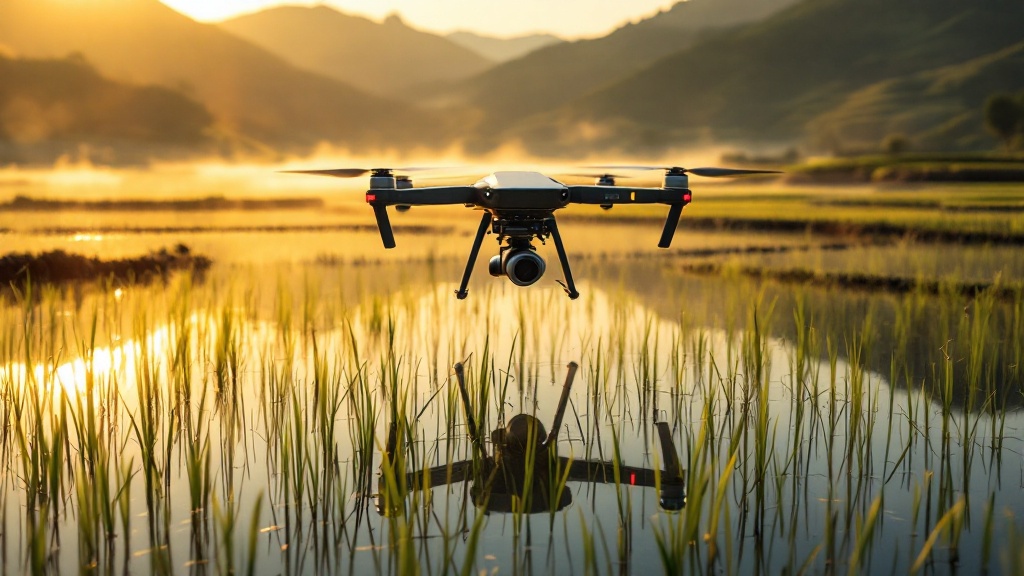
DJI Agriculture, the farming division of China’s dominant drone manufacturer, chose a partnership-first strategy when entering Japan’s agricultural drone market.
Rather than building a direct sales force, DJI signed a cooperation agreement with Syngenta Japan to jointly develop safe spraying technical standards and multi-rotor drone training courses for Japanese farmers. The partnership gave DJI immediate access to Syngenta’s established relationships with JA cooperatives across the country—relationships that would have taken years to build from scratch.
The structure was designed around Japan’s specific regulatory reality. Agricultural drone operators in Japan require specialized certification, and pesticide application via drone must comply with product-specific label directions. The technology provider and the chemical company need to work in lockstep. By partnering with Syngenta rather than competing with the agricultural supply chain, DJI sidestepped the regulatory navigation burden that has tripped up other foreign drone entrants.
By early 2026, DJI had approximately 8,500 agricultural drones deployed across Japanese farmlands, with strongest adoption in rice-growing regions where labor shortages are most acute. The global agricultural drone market has grown to $3.37 billion in 2025, and DJI captured a meaningful share of Japan’s slice by leveraging a partner’s infrastructure rather than building its own.
What Made It Work
DJI’s restraint was its advantage. The company brought world-class drone hardware and let Syngenta handle the relationship, compliance, and training layers. No direct sales force. No standalone dealer network. Just a focused partnership with a company that already had the keys to Japan’s farming communities.
Taranis (Israel): Precision Intelligence via Sumitomo Corporation Investment
Israeli precision agriculture company Taranis took a different path: accepting a direct equity investment from Sumitomo Corporation, one of Japan’s largest trading companies.
Taranis provides an AI-powered crop intelligence platform—a “digital crop doctor”—that analyzes aerial and satellite imagery to detect pest infestations, disease outbreaks, and nutrient deficiencies before they become visible to the human eye. The technology had proven effective in Western markets, but Japanese agriculture presented unique requirements: smaller and fragmented fields, unfamiliar crop varieties, and a cooperative-dominated distribution system that doesn’t respond well to cold outreach from unknown foreign companies.
Sumitomo’s equity stake solved multiple problems simultaneously. The trading company provided access to its extensive agricultural network, including JA cooperatives, input distributors, and farming communities across multiple regions. More critically, Sumitomo contributed local agronomic expertise that accelerated Taranis’s technology adaptation. The Israeli company rebuilt its AI models specifically for Japanese rice varieties and local pest profiles—a process that required multiple growing seasons of field data collected in close collaboration with Sumitomo’s agricultural partners.
The results demonstrate what deep localization achieves. Taranis reached approximately 50,000 hectares of Japanese farmland, with particularly strong adoption in Niigata and Hokkaido rice-growing regions. Deploying farms reported 8–12% yield increases alongside 15–20% reductions in pesticide usage. These are smart farming Japan market entry examples that show how rebuilding core algorithms for local conditions—not just translating an interface—drives real adoption.
For companies exploring DMPJ’s AgTech market entry support, the Taranis case illustrates why the investment partnership model works: it aligns the foreign company’s technology with a Japanese partner’s market access and local knowledge.
Bloomfield Robotics (US): Acquisition by Kubota

Pittsburgh-based Bloomfield Robotics developed cutting-edge AI for harvest timing and yield prediction in specialty crops. Rather than attempting to enter Japan independently, the startup was acquired by Kubota Corporation—Japan’s largest agricultural machinery manufacturer.
The acquisition model is the most direct path through Japan’s regulatory and distribution barriers. Kubota brought immediate access to its domestic dealer network, established relationships with farming communities and cooperatives, and decades of regulatory navigation experience. Bloomfield’s AI technology was integrated into Kubota’s existing product ecosystem rather than launched as a standalone offering.
This approach was particularly effective for specialty crops. Japanese peach varieties behave differently from American ones, grape training systems follow different patterns, and harvest timing standards reflect Japan’s quality-obsessive consumer market. By embedding within Kubota’s domestic R&D infrastructure, Bloomfield gained access to the crop-specific data and field testing capabilities that would have taken a startup years to develop alone.
The Acquisition Trade-Off
The acquisition model eliminates regulatory navigation burden entirely, but the foreign company surrenders operational independence. For Bloomfield, the trade-off was favorable—Kubota’s resources accelerated technology adaptation far beyond what the startup could have achieved solo. This path is only available, however, to companies whose technology aligns with a major Japanese manufacturer’s strategic priorities.
Nileworks (Japan): A Cautionary Tale of Drone Market Exit
Not every story ends well. Nileworks offers a critical lesson for any foreign agricultural technology company evaluating Japan market entry—even though Nileworks itself was Japanese.
Despite strong technology and backing from Sumitomo Corporation, Nileworks dissolved in November 2025 after its shareholders decided to transfer agricultural drone development resources to NTT e-Drone Technology.
The core problem was not technology. It was infrastructure. Nileworks could not sustain the nationwide network of training centers, maintenance facilities, and regulatory compliance support that Japanese agricultural drone operations demand. Japan’s drone certification system requires specialized operator training, and agricultural spraying operations require product-by-product coordination with pesticide manufacturers. Building and maintaining this support ecosystem across Japan’s diverse agricultural regions proved economically unsustainable for a standalone company.
The aftermath reinforces the partnership imperative. In February 2026, Sumitomo Corporation and NTT e-Drone Technology launched a marketing collaboration specifically designed to build the training, maintenance, and compliance framework that Nileworks couldn’t sustain alone. The two companies recognized that drone adoption requires not just good hardware, but a comprehensive support ecosystem.
The Lesson for Foreign Entrants
If a well-funded Japanese company with Sumitomo backing couldn’t sustain standalone operations, a foreign company attempting the same without a major local partner faces even steeper odds. The Nileworks case is the strongest argument against solo market entry in Japan’s AgTech sector.
Common Patterns Across Successful Entries
Across these agtech japan partnership success stories, three patterns emerge with striking consistency.
| Company | Country | Entry Model | Japanese Partner | Technology | Key Outcome |
|---|---|---|---|---|---|
| DJI Agriculture | China | Partnership | Syngenta Japan | Agricultural drones | ~8,500 drones deployed |
| Taranis | Israel | Equity investment | Sumitomo Corporation | AI crop intelligence | ~50,000 hectares, 8–12% yield lift |
| Bloomfield Robotics | US | Acquisition | Kubota Corporation | AI harvest timing | Integrated into Kubota ecosystem |
| Nileworks | Japan | Independent | Sumitomo (investor only) | Agricultural drones | Dissolved November 2025 |
Every Success Involved a Major Japanese Partner
DJI partnered with Syngenta Japan. Taranis accepted investment from Sumitomo. Bloomfield was acquired by Kubota. The partner types varied—agrochemical subsidiary, trading house, equipment OEM—but the principle held across every case: foreign AgTech companies that succeed in Japan do so through entities that already hold JA cooperative relationships, regulatory expertise, and trusted presence in farming communities.
Technology Adaptation Was Non-Negotiable
Japan’s farms average roughly 1.5 hectares—a fraction of Western standards. Fields are fragmented, often terraced, and planted with crop varieties that behave differently from their international equivalents. Every successful entrant invested heavily in rebuilding core technology for Japanese conditions. Taranis retrained its AI on Japanese rice varieties and pest profiles. DJI developed Japan-specific spraying protocols with Syngenta. Bloomfield’s harvest-timing algorithms were adapted to Japanese specialty crops through Kubota’s R&D infrastructure. Companies that tried to deploy global solutions unchanged consistently stalled at pilot stage.
Japanese-Language Support Proved Decisive
This goes far beyond translating an interface. Agricultural terminology carries operational meanings that generic translation misses. Training materials must work for a farming population where most operators are over 70. Technical support must be available in Japanese during critical growing seasons when system failures could compromise an entire harvest. Companies that invested in agricultural-specific localization—not just language localization—gained decisive advantages in commercial adoption rates. For companies evaluating agricultural technology consulting for Japan entry, this depth of localization is often what separates pilot-stage interest from full-scale commercial deployment.
The pattern is clear: foreign AgTech companies that succeed in Japan do so through strategic local partnerships, not solo market entry. DMPJ bridges global agricultural innovation with Japan’s farming ecosystem—connecting you with JA cooperatives, trading companies, and the regulatory expertise you need. Explore our agricultural technology services to start building your Japan entry strategy.
Sorry, the comment form is closed at this time.