

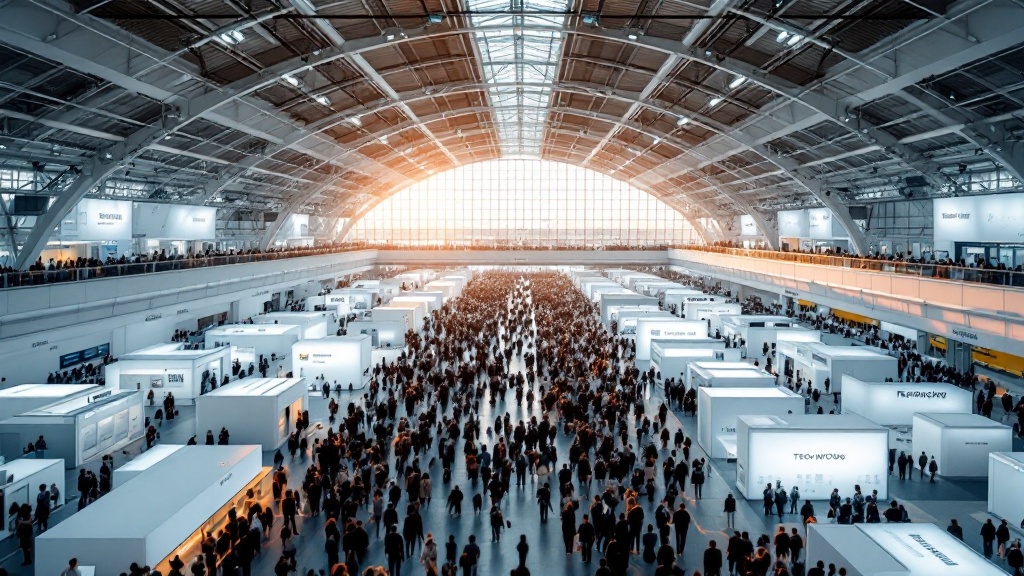
08 Jun Your First Technology Showcase in Japan: A Step-by-Step Planning Playbook
Your First Technology Showcase in Japan: A Step-by-Step Planning Playbook
Japan’s technology exhibition ecosystem is one of the most structured and commercially productive in the world. B2B exhibitions account for 93.7% of all trade shows held in the country, and the total event industry reached ¥2.85 trillion in 2024 — surpassing pre-pandemic levels by 109%. For companies ready to exhibit, the opportunity is real. But so is the complexity.
This guide is a first time exhibiting in Japan guide built for companies that have already decided to showcase their technology. What follows is the complete japan tech exhibition planning checklist: a month-by-month timeline, demonstration prep, cultural protocols, matchmaking strategy, post-event follow-up, and the mistakes that sink most first-timers.
The 12-Month Timeline — When to Start What
Most companies underestimate how far in advance Japan’s exhibition cycle demands action. JETRO subsidy applications, early-bird booth discounts, and matchmaking profile submissions all operate on timelines that punish late starters. Here is a realistic japan trade show preparation timeline broken into actionable phases.
Month 12–10: Event Selection and Subsidy Applications
Choose your event based on strategic fit, not prestige alone. CEATEC suits AI, IoT, and consumer tech. BioJapan is the premier partnering event for life sciences. SMART ENERGY WEEK covers renewables and storage. Robot Technology Japan targets industrial automation.
This is also when you apply for government subsidies. JETRO’s FDI Stimulation Project can reimburse up to 50% of eligible costs for SMEs, with an upper limit of ¥15 million — but applications require 120+ day lead times and detailed demonstration plans. Miss the window and you pay full price.
Month 9–7: Booth Booking, Goal-Setting, and KPI Chain Design
Early-bird discounts expire six to nine months before most events. At BioJapan, booking by April saves 10% on standard booth rates (¥517,000 versus ¥572,000 for a 9m² space). At CEATEC, startup plans start at ¥143,000 for 6m².
More importantly, this is when you design your KPI chain. Don’t measure booth traffic alone. Define the full funnel: target number of qualified conversations → meetings secured → proposals delivered → deals closed within 12 months. Companies that build this chain before the event achieve dramatically better conversion rates than those tracking attendance alone.
Month 6–4: Booth Design, Demo Preparation, and Staff Training
Design your booth for the Japanese context: clean, professional, technically detailed. Japanese visitors spend approximately 30% more time at exhibition booths than global averages, so build your space for sustained engagement, not quick impressions.
Begin training all booth staff on Japanese business protocols. This is not optional — it is a core preparation step covered in detail below.
Month 3–1: Pre-Event Matchmaking and Meeting Scheduling
Submit your exhibitor profile to the event’s matchmaking system. Request 40–50 meetings. Research each target account and prepare one-page briefing dossiers. Schedule your calendar, blocking 30% for follow-up meetings and walk-in opportunities.
Week of Event: Final Logistics and Cultural Briefing
Run full rehearsals of every demonstration. Confirm interpreter availability. Brief all staff on gift-giving conventions, business card protocol, and hierarchical meeting etiquette. Pack small branded gifts — avoid sets of four.
Post-Event: The 48-Hour, One-Week, Three-Week Cadence
Send personalized thank-you notes within 48 hours. Deliver tailored technical documentation within one week. Propose concrete next steps within three weeks. This cadence is not aspirational — it is the operational baseline that separates productive exhibitors from the rest.
Preparing Your Technology Demonstration for a Japanese Audience
Japanese exhibition attendees are technically rigorous and commercially precise. Your demonstration needs to serve both the engineer evaluating feasibility and the executive evaluating strategic fit.
Shift from Features to Problems
Translate your demonstration from “what our technology does” to “what problem it solves.” Japanese buyers evaluate technology through the lens of specific operational challenges — labor shortages, quality control, regulatory compliance — not abstract capability lists. Lead with the problem, show the solution, then present the technical architecture.
Build for Two Lengths
Rehearse every demonstration at two lengths: a 30-minute deep dive for technical evaluators and a 5-minute executive summary for senior decision-makers. Japanese exhibition schedules are tightly packed, and you will need both versions multiple times per day.
Prepare Bilingual Materials
Create Japanese-language materials for domestic stakeholders and English versions for international visitors. Machine translation is not acceptable for technical documentation — invest in professional technical translation. Japanese stakeholders will judge your seriousness by the quality of your localized materials.
Anticipate Regulatory and Compliance Questions
Japanese buyers will ask about safety certifications, regulatory pathways, and integration requirements early in the conversation. Prepare clear answers about JIS compliance, PMDA status (for health tech), electrical safety standards, and data residency requirements. Inability to address these questions signals unpreparedness.
Navigating Japanese Business Culture at Exhibitions
Understanding how to exhibit at technology trade show Japan events means understanding the cultural framework that governs every interaction on the floor.
Business Card Exchange Protocol
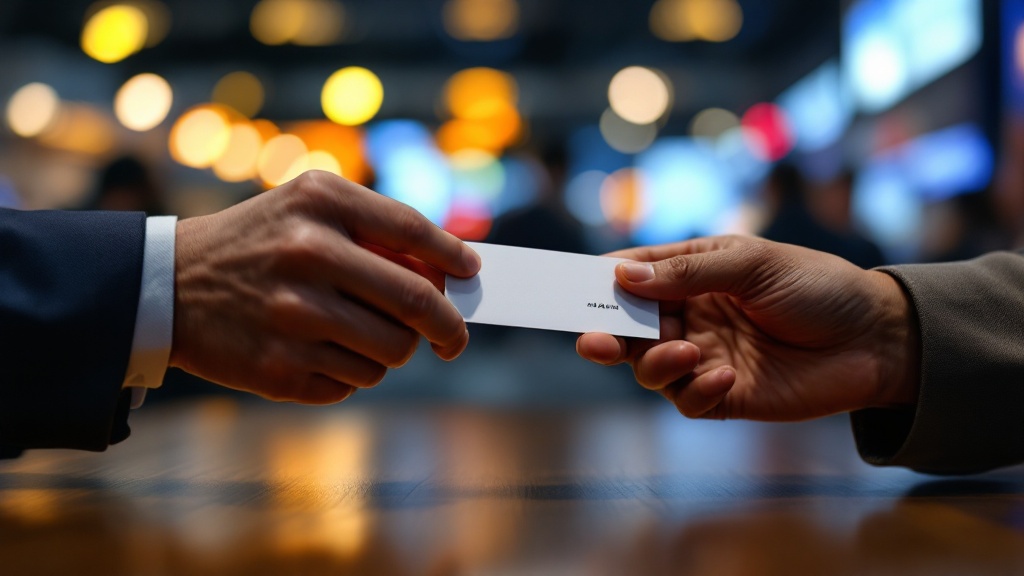
Present your card with both hands, Japanese side facing the recipient. When you receive a card, study it carefully. Place it on the table during the meeting — never in your back pocket, and never write on it. The card represents the person. Treating it casually signals disrespect.
Hierarchical Meeting Etiquette
Match seniority levels in your meetings. If a Japanese company sends a department director, do not send a junior sales representative. Defer to the most senior person present on both sides. Seat the most senior members facing the door, following standard Japanese seating protocol.
Honne and Tatemae: Reading Indirect Signals
Polite interest does not equal buying intent. Japanese businesspeople distinguish between *tatemae* (what is expressed publicly) and *honne* (actual intention). A prospect who says “this is very interesting, we will consider it” may be declining politely. Watch for concrete signals: requests for specific technical documentation, introductions to colleagues, and suggestions for follow-up meetings at their offices.
Nemawashi: Decisions Happen After the Booth
Expect zero purchase decisions at the booth. Japanese organizations make decisions through *nemawashi* — internal consensus-building that involves multiple stakeholders, most of whom will not attend the exhibition. Your goal at the booth is to secure the follow-up meeting where the real evaluation begins.
Gift-Giving Conventions
Small, branded items are appropriate and expected. Quality matters more than value — a well-made pen or notebook reflects better than a cheap promotional item. Avoid sets of four (the number four is associated with death in Japanese culture). Present gifts with both hands.
Maximizing the Matchmaking System
Japan’s exhibition matchmaking systems are the single most productive channel for generating qualified connections. Data from major events suggests that 73% of meaningful partnerships originate through the partnering system, not from spontaneous booth traffic.
Submit Detailed Profiles Early
Submit your exhibitor profile at least three months before the event. Vague profiles (“innovative technology company seeking partners”) generate poor matches. Specify your technology domain, the type of partnership you seek (licensing, distribution, joint development, investment), your target company size, and the seniority level of your preferred meeting counterpart.
Request Volume to Build a Full Schedule
Request 40–50 meetings and expect a 60–70% acceptance rate. This yields 24–35 confirmed meetings — enough to fill your schedule while leaving room for the follow-ups that inevitably emerge during the event.
Prepare Briefing Dossiers
For each confirmed meeting, prepare a one-page briefing document highlighting alignment points between your technology and the counterpart’s stated needs. Reference their recent initiatives, published challenges, or strategic priorities. This preparation signals respect and dramatically improves meeting quality.
| Matchmaking element | Recommended action | Why it matters |
|---|---|---|
| Profile submission | 3+ months before event | Algorithm needs time; late profiles get poor matches |
| Meeting requests | 40–50 targets | 60–70% acceptance rate yields a full schedule |
| Briefing dossiers | 1 page per confirmed meeting | Shows preparation; improves conversation quality |
| Schedule buffer | Block 30% of time slots | Accommodates follow-ups and walk-in opportunities |
Block Open Time
Reserve 30% of your schedule for follow-up meetings and unexpected opportunities. The best connections at Japanese exhibitions often come from introductions made during other meetings — a senior executive may suggest you meet a colleague in a different division. You need calendar space to act on these introductions immediately.
Post-Event Follow-Up — Where 70% of the Value Is Created
The exhibition itself is the beginning. Structured post-event follow-up is where the majority of commercial value materializes. Companies with disciplined follow-up protocols achieve 85% conversion rates on qualified leads versus 32% without.
The Three-Phase Follow-Up Protocol

| Phase | Timeframe | Action | Purpose |
|---|---|---|---|
| Immediate | Within 48 hours | Handwritten thank-you notes or personalized emails referencing specific conversation points | Demonstrates sincerity and attention |
| Technical | Within 1 week | Tailored technical documentation addressing each prospect’s stated needs | Provides ammunition for internal nemawashi |
| Commitment | Within 3 weeks | Propose concrete next steps: site visit, pilot project, joint development discussion | Converts interest into forward motion |
Configure Your CRM for Japanese Timelines
Japanese business development cycles run 6–18 months from initial contact to closed deal. Your CRM must accommodate this timeline without flagging leads as “stale” at the 90-day mark. Configure pipeline stages that reflect the Japanese decision process: introduction → technical evaluation → internal consensus → proposal request → negotiation → agreement.
Categorize Leads Immediately
After the event, categorize every lead:
- A-leads — Ready for a formal proposal. The counterpart expressed specific interest, requested pricing, or introduced you to procurement.
- B-leads — Needs nurturing. Genuine interest exists but internal consensus has not formed. Provide supporting materials and maintain regular contact.
- C-leads — Long-term relationship. No immediate opportunity, but the connection has strategic value. Schedule quarterly check-ins.
This categorization prevents you from applying equal effort to unequal opportunities — a common failure mode that dilutes follow-up effectiveness.
Common First-Timer Mistakes and How to Avoid Them
Understanding how to exhibit at technology trade show Japan means learning from the failures that derail most first-time exhibitors.
Sending Junior Staff to Meet Senior Executives
Japanese organizations carefully calibrate the seniority of their exhibition representatives. Sending a junior account manager to meet a Japanese vice president is perceived as disrespectful — it signals that you do not take the relationship seriously. Match seniority or exceed it.
Using Aggressive Sales Language
Hard selling at the booth will cause Japanese prospects to walk away permanently. Phrases like “limited-time offer,” “sign today,” or pressure-close techniques violate Japanese business norms. Focus on technical substance and relationship building. The sale comes later, through follow-up.
Skipping the Partnering System
Some first-timers skip the matchmaking system to reduce costs, relying instead on walk-in traffic. This is a critical mistake. The partnering system is where 73% of meaningful connections are made. Walk-in traffic skews toward information-gathering rather than decision-making.
Expecting Deals to Close at the Event
No significant deal closes at a Japanese exhibition. The event is the starting point for a relationship that leads to a deal 6–18 months later. Build your internal reporting and ROI projections around a 12-month conversion timeline, not event-week results.
Neglecting Post-Event Follow-Up
This is the single most common and most costly mistake. Companies that invest heavily in booth presence but skip structured follow-up waste the majority of their exhibition investment. The data is unambiguous: 85% conversion with structured follow-up versus 32% without. Every dollar spent on the booth is a dollar wasted if the follow-up does not happen.
Turn Planning Into Results
Planning your first technology showcase in Japan is a significant undertaking — but you don’t have to do it alone. DMPJ’s technology and innovation showcase services manage every step, from event selection and subsidy applications through booth design, cultural coaching, and post-event business development. Whether you are a Japanese SME expanding internationally or a foreign company entering the Japanese market, the difference between a productive showcase and a wasted one comes down to preparation, cultural intelligence, and disciplined execution. Let DMPJ handle your Japan showcase from start to finish — and turn your exhibition investment into measurable business results.
Sorry, the comment form is closed at this time.