


07 Jun What Does Disaster Preparedness Cost in Japan? Budget Ranges, ROI, and Government Incentives for International Businesses
If you hold the budget for a disaster preparedness program at a company operating in Japan — or one planning to enter the market — the first question is straightforward: what will this actually cost? Japan’s disaster prevention industry exceeds ¥20 trillion in total market value, roughly 5% of nominal GDP. Yet the cost of preparing *your* business depends on size, scope, sector, and how aggressively you pursue the government incentives that can substantially reduce net investment. This article provides concrete disaster preparedness budget ranges for international companies in Japan, a transparent cost breakdown, a summary of the financial incentives available to foreign businesses and SMEs, and the ROI data that turns a line-item expense into a defensible strategic investment.
Typical Budget Ranges by Company Size and Scope
The disaster preparedness cost for a business in Japan scales with headcount, operational complexity, and geographic footprint. Based on industry pricing benchmarks and government survey data on corporate disaster measures, the following ranges represent annual all-in costs for a credible preparedness program:
| Company Size | Employees | Annual Budget Range | What It Covers |
|---|---|---|---|
| Micro-enterprise | 1–9 | ¥300,000–¥1,000,000 | Basic BCP documentation, emergency kits, communication protocols, minimal training |
| Small business | 10–99 | ¥1,000,000–¥5,000,000 | Comprehensive risk assessment, full BCP development, staff drills, basic IT disaster recovery |
| Mid-sized enterprise | 100–299 | ¥5,000,000–¥15,000,000 | Integrated multi-location disaster management, advanced monitoring, simulation exercises, supply chain mapping |
These figures assume a domestically focused operation. International-facing companies — foreign firms with Japan offices, or Japanese SMEs serving export markets — typically allocate 25–35% more than domestic-only counterparts. The premium reflects bilingual documentation requirements, cross-border supply chain continuity planning, alignment with both Japanese and home-country regulatory standards, and the added complexity of coordinating emergency responses across time zones.
For a foreign company establishing its first Japan office with 30 employees, a realistic first-year disaster preparedness budget falls between ¥2 million and ¥6 million, depending on sector risk and the level of integration with Japan’s local emergency response frameworks. Companies in manufacturing, healthcare, or critical infrastructure trend toward the higher end due to sector-specific regulatory expectations and the physical safety requirements tied to those industries.
A common question from foreign companies evaluating Japan BCP consulting pricing is how these ranges compare internationally. Japan’s costs are broadly comparable to Western European markets and 15–20% higher than equivalent services in Southeast Asia, reflecting the country’s regulatory depth, higher labor costs, and the technical sophistication required to address its unique hazard profile. When government incentives are factored in, however, the net cost often falls below international benchmarks.
Cost Breakdown — Where the Money Actually Goes
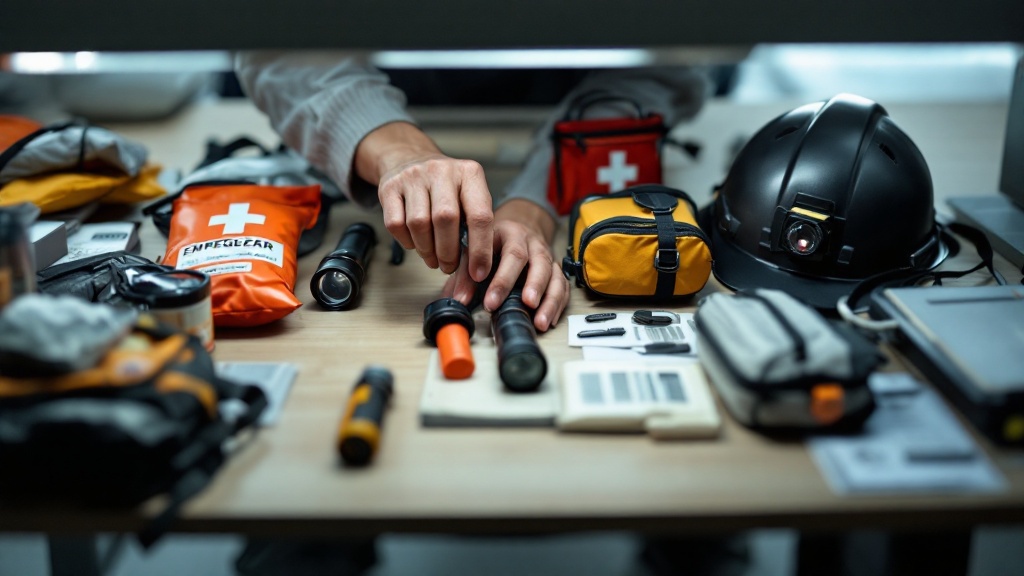
Understanding where the budget goes matters as much as knowing the total. Too many first-time investors in disaster preparedness end up over-spending on technology while under-investing in the training that makes those systems useful during an actual event.
Initial implementation (30–40% of first-year cost) covers the foundational work: site-specific risk assessment, business impact analysis, BCP document development, and system setup. For international companies, this phase also includes aligning Japanese regulatory requirements with home-country standards — a step domestic firms skip but one that creates the compliance backbone your headquarters and insurers will require. Firms profiled in the World Bank’s study on resilient industries in Japan found that thorough initial assessments dramatically reduced downstream costs.
Technology (25–35%) includes monitoring systems, emergency communication infrastructure, and cloud-based disaster recovery. Japan’s growing disaster recovery-as-a-service (DRaaS) market — projected to reach $46 billion globally by 2032 — has driven down per-seat costs for cloud backup and failover solutions. Even smaller firms can now access enterprise-grade recovery tools through subscription pricing.
Training and drills (20–30%) covers staff training, tabletop exercises, full-scale simulation drills, and preparation for certifications such as the Business Continuity Enhancement Plan. This is the category most often under-funded, despite evidence that drill frequency correlates directly with recovery speed during actual events.
Ongoing maintenance (15–25% of initial cost annually) includes plan updates as your operations evolve, annual reviews triggered by regulatory changes, and monitoring for emerging risks. Japan’s upcoming Disaster Prevention Agency, scheduled to become fully operational in fiscal year 2026, will likely introduce new reporting requirements that make this ongoing investment non-negotiable.
Government Incentives That Reduce Your Net Investment
Japan offers some of the strongest government incentives for disaster preparedness in any developed economy, and they are available to foreign-owned businesses registered in Japan — not only domestic firms. Understanding these programs is essential for any budget holder researching the true cost of business continuity planning.
Business Continuity Enhancement Plan Certification
The centerpiece incentive is the Business Continuity Enhancement Plan (Jigyō Keizoku Ryoku Kyōka Keikaku) certification administered by the SME Agency. Companies that develop and certify a qualifying plan unlock 18–20% special depreciation on qualifying disaster-prevention equipment such as backup generators, seismic reinforcement, and emergency communication systems. For a mid-sized company investing ¥10 million in qualifying equipment, the tax benefit alone can exceed ¥1.8 million.
Preferential Financing
Certified companies gain access to Japan Finance Corporation preferential loans at rates 0.9% below standard market rates. On a ¥50 million facility hardening loan over ten years, the interest savings total roughly ¥4.5 million — a material reduction that shifts the cost-benefit calculation significantly in favor of proactive investment.
Priority for Government Grants
Certification also provides priority consideration for Monodzukuri (manufacturing) subsidies and other government grants targeting SME competitiveness. While grant amounts vary by program cycle, a certified BCP consistently improves an applicant’s scoring — turning disaster preparedness into an enabling condition for broader business development funding.
Emergency Subsidies for Certified SMEs
When a declared disaster causes revenue to drop more than 50% compared to the same month of the prior year, certified SMEs can access emergency subsidies of up to ¥2 million alongside credit guarantees and emergency loan programs with subsidized interest rates. Non-certified companies face longer wait times and fewer options. For foreign-owned SMEs, the key takeaway is that these programs do not discriminate by ownership — eligibility is based on entity registration and certification status, not nationality.
Calculating ROI — The Numbers That Justify the Investment

For budget holders, the most important question is not “what does it cost?” but “what does it return?” The data on business continuity plan cost and ROI in Japan strongly favors proactive investment, especially when measured over a multi-year horizon.
Revenue Protection During Disasters
Research on resilient industries in Japan consistently shows that prepared companies experience 30–40% lower revenue impact during disaster events compared to unprepared competitors. During the 2025 Kamchatka Peninsula earthquake that triggered tsunami alerts across the Pacific, companies with tested BCPs resumed operations days ahead of those relying on ad-hoc response. In sectors like automotive manufacturing, where supply chain interruptions cascade globally, the revenue protection effect is even more pronounced — one study documented how the absence of alternate sourcing at a sole-source plant halted production at multiple OEMs worldwide.
Recovery Time Reduction
Companies with a properly implemented BCP achieve an average recovery time reduction of 25–35% after disruption events. This gap widens for companies that conduct regular drills. Japan’s government-led disaster simulation programs demonstrate that organizations participating in structured exercises recover significantly faster than those relying on written plans alone.
Customer Retention and Market Access
In Japan’s business culture, disaster resilience is increasingly a procurement criterion rather than a nice-to-have. Japanese clients — particularly in automotive, electronics, and healthcare — now routinely require suppliers to demonstrate documented disaster preparedness capabilities. This trend is accelerating: an increasing share of Japanese procurement departments include resilience criteria in their supplier evaluation scorecards. For a foreign company entering Japan, demonstrating a credible BCP is not just risk management — it directly affects your ability to win and retain contracts.
Five-Year Return
When direct benefits (avoided downtime costs, reduced emergency logistics spending, insurance premium reductions) are combined with indirect benefits (customer retention, preferential government financing, competitive positioning), industry estimates consistently point to a 3–5x return on investment over a five-year period. Given that Japan’s government has committed roughly $134 billion between 2026 and 2030 to strengthening national disaster resilience, the business environment will only continue to reward companies that invest early.
Full-Package vs. Modular — Which Pricing Model Fits Your Stage?
Once you have a budget range and understand the incentives, the next decision is how to structure the engagement. Japan BCP consulting pricing for foreign companies generally falls into three models, each suited to different organizational stages.
| Factor | Full-Package | Modular (Best-of-Breed) |
|---|---|---|
| Upfront cost | 20–35% premium over modular | 15–25% lower than full-package |
| Integration complexity | Reduced by 30–40% (single vendor) | Requires ongoing integration management |
| Customization | Limited to vendor’s framework | High — choose best tool per category |
| Best for | Market entrants, lean teams, single-location | Established operations, in-house expertise, multi-vendor IT |
Full-package solutions command a 20–35% premium over equivalent modular builds, but they reduce integration complexity by 30–40% — a decisive advantage for foreign companies setting up their first Japan operation without an in-house disaster management team. A single vendor handling risk assessment, BCP development, technology deployment, and training removes the coordination burden that can overwhelm lean international teams.
Modular approaches save 15–25% upfront and allow companies to select the best solution for each category — a specific monitoring vendor, a separate training provider, a standalone communication platform. The trade-off is ongoing integration management: keeping systems, platforms, and plan documents synchronized across multiple vendors requires either dedicated internal resources or a managed service layer. This model works best for companies with established Japan operations and the technical staff to manage vendor relationships.
Subscription and Phased Models
Subscription models are emerging across Japan’s business continuity management market, particularly for ongoing monitoring, communication platforms, and plan maintenance. These spread costs into predictable monthly fees and reduce the capital expenditure barrier that stops many SMEs from starting. AI-powered services like Spectee Pro — which analyzes social media, weather, and traffic data to deliver real-time disaster alerts — are now available on subscription terms that put advanced situational awareness within reach of even micro-enterprises.
Phased implementation over three years, following a 30-40-30 budget split, offers the most practical path for SMEs managing cash flow pressure. Year one (30%) covers risk assessment, core BCP development, and essential communication systems. Year two (40%) funds the largest investments — technology deployment, facility hardening, and comprehensive training programs. Year three (30%) completes the system with advanced monitoring, certification preparation, and integration testing. This phased approach aligns with the Business Continuity Enhancement Plan certification timeline and allows companies to begin accessing government incentives as early as year one.
For international companies evaluating which model fits their stage, DMPJ’s disaster preparedness and response solutions are designed to support either approach — from turnkey packages for market entrants to modular consulting engagements for established operations looking to fill specific gaps.
Disaster preparedness is not an expense — it is an investment with measurable returns in reduced downtime, protected revenue, and strengthened client relationships. DMPJ works with international businesses to design preparedness programs that fit your budget, maximize available government incentives, and deliver documented ROI. Contact us through our Disaster Preparedness and Response page to discuss a tailored proposal for your organization.
Sorry, the comment form is closed at this time.