

12 Jun Cultural Exchange as a Growth Strategy: How Creative and Heritage Businesses Expand Through Japan
Why Cultural Exchange Is a Business Strategy, Not Just Diplomacy
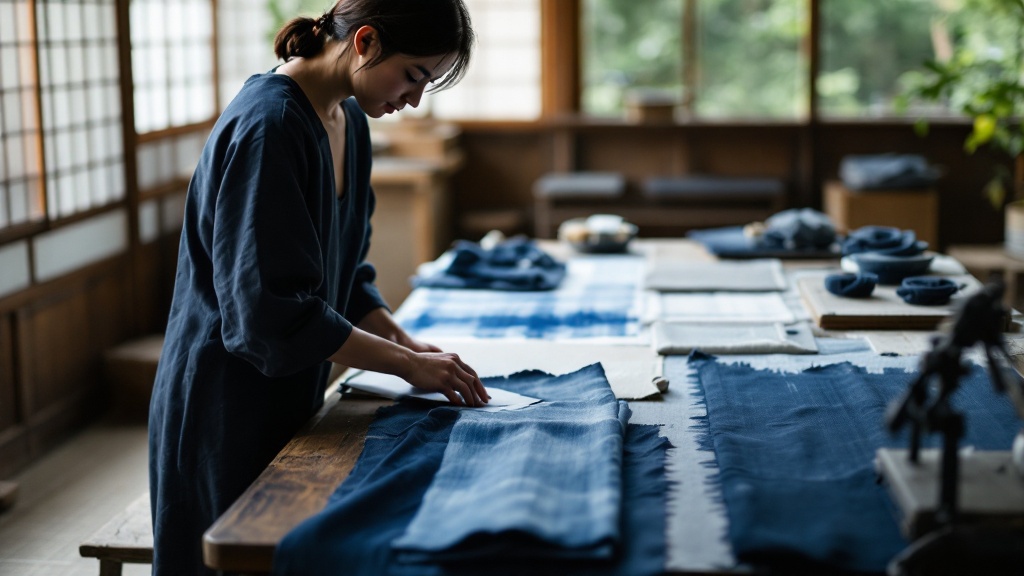
Cultural exchange is often filed under soft diplomacy—a feel-good initiative that rarely shows up on a balance sheet. That framing misses the point entirely. For businesses operating at the intersection of creativity, heritage, and international markets, cultural exchange creates the kind of authentic relationships that transactional business development simply cannot replicate. When a ceramics studio in Arita opens its kilns to a Danish design collective, or a Kyoto textile house collaborates with a Milan-based fashion brand, the resulting partnerships run deeper than purchase orders. They produce shared creative output, mutual market access, and a level of trust that cold outreach never achieves.
The commercial opportunity behind this strategy is substantial. Japan’s art market reached an estimated USD 681 million in sales in 2023, growing 11% since 2019 and outperforming the global art market’s 1% growth over the same period. Japan’s heritage tourism sector is valued at over USD 30 billion, with cultural heritage experiences alone accounting for more than half of that figure. These are not abstract market estimates—they represent concrete revenue streams for businesses that know how to position cultural assets for international audiences.
The data on customer engagement reinforces the case. Research on cross-cultural marketing effectiveness indicates that companies adapting their outreach with genuine cultural awareness see up to 50% higher customer engagement compared to those relying on generic approaches. For SMEs without the budgets of multinational agencies, cultural exchange programs offer a cost-efficient path to building market credibility that advertising alone cannot buy.
Creative Industries — Navigating International Co-Productions and Partnerships
Japan’s anime, gaming, and design sectors have become global cultural exports, yet the path to successful international collaboration remains difficult. Industry surveys suggest that roughly 65% of Japanese creative businesses report cultural barriers as a significant obstacle to effective partnership with foreign counterparts. The challenge is not a lack of interest on either side—it is a gap in mutual understanding of how decisions get made, how creative feedback is delivered, and what “finished quality” means across cultures.
Artist Residencies as a Bridge
Artist residency programs offer one of the most effective structures for overcoming these barriers. AIR_J, a database maintained to catalog artist-in-residence programs across Japan, lists over 150 active programs nationwide. These range from short-term stays focused on specific media—ceramics, printmaking, digital art—to extended residencies that embed foreign artists within Japanese communities for months at a time. For creative businesses, sponsoring or participating in these programs creates a structured environment for genuine exchange that translates directly into commercial partnerships.
Small Studios, Measurable Results
The pattern repeats across sectors. Small animation studios that invest in cross-cultural training before entering Southeast Asian markets report significantly improved collaboration outcomes and faster revenue growth than those that rely on translation alone. A systematic review of Japanese SME internationalization found that cultural factors consistently determined whether international expansion succeeded or failed, regardless of product quality.
The Role of Cultural Intermediaries
This is where cultural intermediaries prove their value. Bridging Japanese aesthetic values—precision, restraint, layered meaning—with global commercial expectations requires more than bilingual staff. It requires professionals who understand both the creative vocabulary and the business logic on each side. DMPJ’s international art and culture exchange services are designed to fill this exact role, connecting creative businesses with institutional partners, structuring exchange programs, and ensuring that cross-cultural collaborations produce commercial outcomes alongside creative ones.
Traditional Crafts — From Local Artisan to Global Brand
Japan has 242 officially designated traditional crafts under the Act on the Promotion of Traditional Craft Industries. These span ceramics, textiles, lacquerware, metalwork, woodwork, and paper—each rooted in centuries of accumulated technique. Yet many face succession crises: the Traditional Craft Industry Promotion Association reports that under 29% of these crafts have a sufficient pipeline of master artisans to ensure continuity.
Cultural Translation, Not Just Export
International markets represent one path to economic sustainability for these crafts, but successful internationalization requires cultural translation rather than simple export. A lacquerware bowl designed for Japanese tea ceremony carries embedded cultural meaning that Western consumers may not instinctively understand. Reframing wabi-sabi aesthetics—the appreciation of imperfection and transience—for audiences accustomed to different luxury signals is a strategic exercise, not a marketing afterthought. Research on Japanese craft internationalization confirms that SMEs employing cultural tactics during international expansion achieve significantly stronger market traction than those relying on standard export strategies.
Growth Through Cultural Consulting
Documented cases across the ceramics, textile, and lacquerware sectors show that businesses engaging cultural consultants to guide their international positioning have achieved export revenue growth in the range of 150–210%. These gains stem from better product-market fit, more effective storytelling, and stronger retail partnerships built on mutual cultural understanding.
| Craft Category | Typical Challenge | Cultural Strategy | Reported Export Growth |
|---|---|---|---|
| Ceramics (e.g., Shigaraki ware) | Intentional imperfections misread as defects | Educate buyers on wabi-sabi philosophy; develop hybrid product lines | ~210% over 3 years |
| Textiles (e.g., kimono fabrics) | Niche perceived as costume, not fashion | Partner with international luxury houses; dual branding | ~185% over 2 years |
| Lacquerware | High price without understood context | Cultural storytelling linking craft to wellness/mindfulness trends | ~150% over 2 years |
Government Support Structures
The Japanese government reinforces these efforts through Cool Japan initiatives and Traditional Craft Industry Promotion Association programs that fund human resource development, international exhibition participation, and technical skill inheritance projects. These programs create a support infrastructure that cultural exchange strategies can leverage directly.
Heritage Tourism — Turning Cultural Assets Into Visitor Experiences
Cultural heritage tourism represents 54.5% of Japan’s heritage tourism market, making it the dominant segment within a sector valued at over USD 30 billion. The japan heritage tourism business opportunities here extend well beyond Kyoto temples and Tokyo museums.
Scale of International Demand
International visitors to Japan reached 3.6 million monthly in early 2026, with heritage experiences increasingly driving repeat visits. South Korea, Taiwan, the United States, and Southeast Asian nations represent the largest visitor segments, each bringing distinct cultural expectations about how heritage should be presented and experienced.
The fact that 68.7% of cultural heritage tourism revenue comes through offline, expert-guided booking channels underscores a critical point: visitors seeking authentic heritage experiences value human expertise and personalized guidance over algorithm-driven platforms.
Regional Destinations Need Cultural Exchange Expertise
The opportunity gap is largest outside the Tokyo-Osaka-Kyoto corridor. Regional destinations with distinctive cultural assets—from Okinawan textile traditions to Tohoku’s festival culture—often lack the cross-cultural interpretation skills needed to attract and serve international visitors effectively. Cultural exchange expertise helps these communities present their assets in ways that resonate across cultural boundaries without flattening regional distinctiveness.
Technology-Enhanced Heritage Interpretation
Digital tools are expanding the reach of heritage experiences. The World Economic Forum reports that Japan’s 13,499 National Treasures and Important Cultural Properties are increasingly supported by digital twin technology, AI-enabled conservation systems, and AR-enhanced visitor interpretation. This technology-enhanced heritage market is expanding at an estimated 11.2% CAGR, creating new service categories where cultural understanding and technical capability must work together.
Education Exchange as a Pipeline for Long-Term Cultural Partnerships
Education exchange is the long game of cultural integration. While its commercial returns are slower to materialize than tourism or art sales, the relationships built through academic exchange create the foundation for decades of business collaboration.
The Numbers
Japan now hosts 336,708 international students as of May 2024—a record that exceeds pre-pandemic levels by 7.8%. The government’s J-MIRAI strategy targets 400,000 international students by 2033, alongside sending 500,000 Japanese students abroad. These figures signal sustained institutional commitment to education exchange as national policy.
Short-Term Immersion Programs
Not all education exchange requires degree enrollment. Short-term cultural immersion programs have proven remarkably effective at building international networks. Japan’s MIRAI program connects European youth with Japanese communities through structured exchanges, while the Kakehashi Project has facilitated exchanges for over 1,300 participants between Canada and Japan. These programs create bilateral understanding at a scale that individual business relationships cannot match.
Corporate-Academic Partnerships
The most sustainable cultural exchange structures combine academic rigor with commercial relevance. Corporate-academic partnerships—where businesses sponsor exchange programs, host visiting researchers, or co-develop curricula with international universities—create ongoing channels for cultural exchange that outlast any single event or initiative.
Building the Talent Pipeline
For creative and heritage businesses, education exchange solves a practical problem: the shortage of bilingual, culturally fluent professionals who can operate across Japanese and international contexts. Every student who completes an exchange program in Japan—and every Japanese student who studies abroad—expands the talent pool that these businesses depend on.
Building a Cultural Exchange Growth Strategy
Cultural exchange delivers results when it is treated as a strategic function, not an afterthought. Here is how organizations can structure their approach.
Map Your Cultural Assets
Start by identifying what your organization has that international audiences would value. This might be craft techniques, design methodologies, regional cultural knowledge, creative IP, or institutional relationships. The goal is to understand your cultural capital before deciding how to deploy it.
Find Institutional Partners
Museums, universities, tourism associations, and cultural foundations amplify reach in ways that direct marketing cannot. A single partnership with a regional museum or international university can open doors to audiences, funding streams, and collaborative opportunities that would take years to develop independently.
Design for Mutual Value
The most effective exchange programs create value in both directions. One-directional cultural export—where a Japanese organization simply presents its culture to a foreign audience—generates interest but not loyalty. Programs designed around genuine exchange, where both sides contribute and both sides learn, build the kind of relationships that sustain long-term commercial partnerships.
Measure What Matters
Event attendance is a vanity metric. The metrics that matter for art and culture exchange business growth japan include relationship depth (how many partnerships lead to ongoing collaboration), commercial outcomes (revenue generated through exchange-initiated partnerships), and pipeline development (how many qualified leads emerge from exchange activities).
| Metric Category | What to Track | Why It Matters |
|---|---|---|
| Relationship depth | Repeat collaborations, co-created output | Indicates sustainable partnerships vs. one-off events |
| Commercial outcomes | Revenue from exchange-initiated partnerships | Ties cultural investment to business results |
| Pipeline development | Qualified leads, partnership inquiries | Measures future growth potential |
| Talent development | Bilingual hires, intern-to-employee conversion | Builds long-term organizational capacity |
Cultural exchange is one of the most powerful — and underused — growth strategies for businesses operating at the intersection of creativity, heritage, and international commerce. Cultural heritage preservation support from DMPJ and its international art and culture exchange programs help creative and heritage businesses turn cultural assets into sustainable international partnerships. Discover how DMPJ can design a cultural exchange strategy tailored to your sector.
Sorry, the comment form is closed at this time.