

22 Jun Automotive Marketing in Japan: Digital Advertising, Events, and Bilingual Content Strategies That Work
Japan’s advertising market has crossed a structural tipping point. For automotive brands evaluating the world’s fourth-largest car market, the old media playbook — heavy on television, light on measurement — no longer applies. Digital channels now command nearly half of Japan’s record ¥7.67 trillion ad market, video is the fastest-growing format, and social media advertising has crossed the ¥1 trillion mark for the first time. Meanwhile, events like the Japan Mobility Show and Tokyo Auto Salon remain indispensable for building credibility with buyers who value physical experience before committing to high-value purchases. This guide breaks down what actually works when building an automotive marketing strategy for Japan — platform-level engagement data, influencer economics, bilingual content practices, event ROI, and agency cost benchmarks — so you can allocate budget based on evidence rather than assumption.
Japan’s Advertising Landscape: What Automotive Marketers Need to Know
Japan’s total advertising expenditure reached a record ¥7,673 billion in 2024, growing 4.9% year-on-year for the fourth consecutive year of expansion. The most significant structural shift: internet advertising now accounts for 47.6% of all spending, reaching ¥3,652 billion and cementing its position as the dominant advertising medium — a status it first claimed by surpassing television in 2019 and has extended every year since.
Within digital, the growth is not uniform. Video advertising surged 23% year-over-year to ¥843.9 billion, making it the fastest-growing digital format and a natural fit for showcasing vehicles in motion. Social media advertising crossed ¥1 trillion for the first time, propelled by 13.1% year-over-year growth — with social media ads (¥455 billion) and video sharing platforms (¥405 billion) driving the majority. Search advertising remains the single largest digital channel at ¥1,193 billion, capturing 40.3% of internet media spend — reflecting the research-heavy nature of Japanese automotive purchases.
The global picture reinforces this direction. Automotive dealer ad spending reached $9.96 billion in 2025, with digital media accounting for 74.9% of the total — a record share. Search engine marketing alone captures one in five dealer ad dollars, while social media advertising has climbed to 14.2% of spend. For automotive brands entering or expanding in Japan, these japan automotive digital advertising benchmarks translate to a clear directive: video production, social media fluency, and search marketing expertise are table-stakes requirements.
Platform Performance: Where Automotive Engagement Happens in Japan
Knowing where to spend is one thing. Knowing where automotive audiences actually engage is another. Platform dynamics in Japan differ sharply from Western markets, and understanding these differences separates effective campaigns from wasted budget.
| Platform | Regular Usage | Auto Engagement Rate | Primary Role for Auto Brands |
|---|---|---|---|
| LINE | 81% | — (messaging ecosystem) | CRM, service reminders, loyalty |
| 76.6% | 4.8% | Visual storytelling, brand building | |
| YouTube | Leading video platform | Varies by creator | Long-form reviews, influencer content |
| X (Twitter) | 45.6% | ~0.6% | Real-time launches, customer service |
| TikTok | Growing (under-30 skew) | High for short-form | Discovery, younger demographics |
Instagram delivers a 4.8% average engagement rate for automotive brands — the highest of any platform and well above cross-industry averages. For a brand launching a new model in Japan, Instagram is where visual storytelling translates most directly into consumer attention.
But the platform that defines Japan’s digital ecosystem is LINE. With 81% regular usage among Japanese consumers, LINE is not a chat app — it is the dominant communication ecosystem, integrating payments, news, shopping, and brand engagement into a single interface. Automotive brands that treat LINE as a CRM and service channel rather than an advertising platform capture ongoing customer relationships well beyond the initial sale.
YouTube leads Japan’s influencer marketing market share, ahead of Instagram and TikTok, making it the primary channel for detailed vehicle reviews, test drives, and technical deep-dives that Japanese buyers rely on during extended research phases. Format matters significantly here: short-form video content under 60 seconds achieves roughly 50% higher engagement than longer formats, reflecting the mobile-first consumption habits of Japanese users — who average just 3 hours and 45 minutes of daily internet time, the lowest among major markets.
Influencer Marketing: ¥86 Billion and Growing
Japan’s influencer marketing market is projected at ¥86 billion in 2024 and expected to exceed ¥164 billion by 2029. YouTube commands the largest share, followed by Instagram and TikTok — an ordering that reflects Japanese consumers’ preference for substantive content over ephemeral formats.
Micro-Influencers Outperform at Scale
For automotive brands, influencer tier selection matters more in Japan than in most markets. Micro-influencers with 10,000 to 100,000 followers consistently outperform mega-influencers on engagement rate, particularly within niche automotive communities focused on JDM performance, kei cars, or electric mobility. These smaller creators maintain closer audience relationships and carry more perceived authenticity — a currency that resonates strongly in a market where trust is built incrementally rather than broadcast at volume.
Rethinking KPIs for Passive Audiences
Measuring influencer ROI in Japan demands fundamentally different KPI frameworks than Western markets. Japanese consumers exhibit a distinctly passive engagement style: 46.1% rarely like, share, or comment on content — even when they find it valuable. Standard engagement metrics dramatically undercount actual influence. Brands that optimize for visible engagement alone will systematically underinvest in Japan. Those that track assisted conversions, branded search lift, and content consumption depth — rather than surface-level interactions — will see the true performance picture.
Bilingual Creators as a Strategic Asset
Bilingual influencers occupy a strategically valuable position, supporting both domestic and international brand narratives from a single partnership. A Japanese-English creator can produce content that resonates with domestic enthusiasts while simultaneously reaching global audiences, offering dual-market returns on a single collaboration fee. This capability is especially relevant for Japanese automakers expanding internationally and foreign brands entering Japan — both segments well-served by DMPJ’s event coverage and digital campaign services for automotive brands.
Event Marketing: Japan Mobility Show and Tokyo Auto Salon
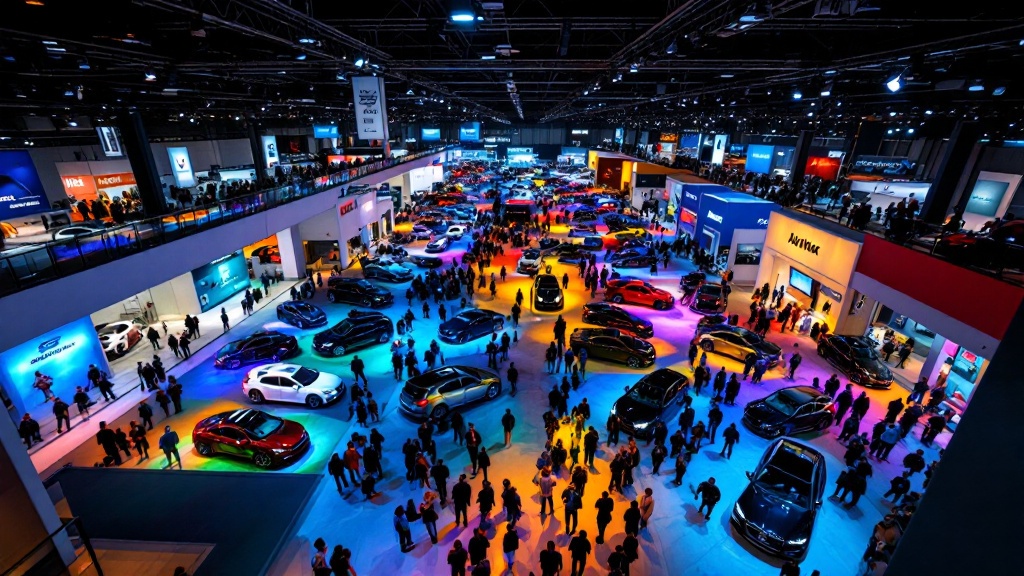
Physical events remain indispensable in Japan’s automotive marketing ecosystem, delivering concentrated access to buyers, media, and industry partners that digital channels alone cannot replicate. Two events dominate.
| Event | 2025 Attendance | Exhibitors | Focus | Entry Cost Range |
|---|---|---|---|---|
| [Japan Mobility Show](https://www.japan-mobility-show.com/en/) | ~1,000,000 (projected) | 480+ (incl. ~40 overseas OEMs) | Future mobility, OEM launches | ¥50M–¥500M |
| [Tokyo Auto Salon](https://www.tokyoautosalon.jp/2025ex/en/files/TAS2025_eventreport_eng.pdf) | 258,406 | Hundreds | Custom cars, aftermarket | Lower tier available |
Japan Mobility Show: The Industry’s Main Stage
The Japan Mobility Show — formerly the Tokyo Motor Show — is the country’s premier automotive event, with approximately 1 million visitors expected at the 2025 edition and over 480 exhibitors including roughly 40 overseas OEMs such as BMW, Mercedes-Benz, Hyundai, and BYD. For brands looking to signal innovation leadership and earn Japanese media coverage, this event represents the single most concentrated japan mobility show exhibition roi opportunity of the year. Booth costs range from ¥50 million to ¥500 million depending on size and location, with additional expenses for vehicle logistics, staffing, and integrated campaigns that can double the base investment. Smaller brands should note that strategic positioning in emerging technology zones can deliver meaningful visibility at a fraction of prime-location costs.
Tokyo Auto Salon: Enthusiast Engagement at Scale
Tokyo Auto Salon drew 258,406 visitors in 2025, building on the 230,000 attendees in 2024 that cemented its position as the world’s largest custom car event. TAS delivers direct access to a highly engaged enthusiast audience that drives outsized social amplification — content from major automotive events typically generates 3 to 5 times normal engagement rates on social platforms, making on-site content production especially high-leverage.
Measuring What Matters
The critical discipline is measuring event ROI beyond foot traffic. Leading automotive exhibitors track lead quality (not just quantity), earned media value from press coverage, social amplification metrics, and downstream sales attribution. A BCG analysis on automotive marketing ROI reinforces the importance of connecting physical event participation to digital measurement frameworks — an area where many brands still fall short.
Bilingual Content Strategy: Beyond Translation
Bilingual automotive content marketing in Japan is not a translation exercise — it is a strategic capability that determines whether a brand earns trust or loses credibility.
Native Language as a Trust Signal
For high-value purchases like vehicles, Japanese consumers overwhelmingly prefer native-language content. This is not merely a convenience preference — it is a trust signal. Research-intensive decisions involving safety, reliability, and long-term ownership costs demand the precision and nuance that only properly localized Japanese content can deliver. Foreign automotive brands that rely on machine-translated specifications or culturally generic marketing materials face an immediate credibility deficit.
Localization vs. Translation
The distinction is critical. Translation converts words; localization adapts tone, imagery, and value messaging to Japanese cultural expectations. Japanese automotive consumers prioritize reliability, fuel efficiency, and safety in ways that differ from European buyers who may emphasize performance or American buyers drawn to size and capability. Effective localization reshapes the entire value proposition to reflect what Japanese buyers actually evaluate when choosing a vehicle.
Toyota’s multilingual content approach offers a useful benchmark. The company maintains a consistent brand voice across languages while carefully adapting messaging priorities, visual elements, and content formats for each market — global consistency with local execution. This is the standard that foreign brands entering Japan should aim for.
SEO and Technical Implementation
Japan-specific SEO requires more than translated keywords. Search patterns in Japan emphasize terms around reliability (信頼性), fuel economy (燃費), and safety ratings — reflecting domestic purchase priorities that diverge significantly from English-language search behavior. Proper hreflang implementation ensures search engines serve the correct language version to Japanese users, while region-specific keyword research reveals the long-tail queries that capture high-intent automotive traffic. Brands working with Daisho Media Partners’ bilingual automotive content solutions gain a structural advantage in navigating these technical and cultural dimensions simultaneously.
Interactive and Emerging Formats
Automotive marketing in Japan is moving beyond static content into interactive formats that match the expectations of a tech-savvy consumer base.
AR Configurators and Virtual Showrooms
Augmented reality vehicle configurators are gaining traction among Japanese consumers who expect digital experiences to match the quality of in-person interactions. AR-enabled apps let potential buyers visualize vehicles in their own environment and explore features in detail — extending the showroom experience to smartphone screens in a market where mobile video increasingly drives purchase decisions. For brands without extensive dealer networks in Japan, virtual showrooms reduce the geographic barrier that has historically limited foreign automotive companies to major urban centers.
Connected Cars Create Post-Sale Touchpoints
Connected car sales rose 34% year-over-year in Q1 2025, driven by domestic OEMs embedding digital services across their lineups. This growth creates an entirely new category of post-sale marketing touchpoints — over-the-air feature updates, personalized service reminders, and usage-based offers that maintain brand engagement long after the initial purchase. For automotive marketers, the connected vehicle is becoming a persistent media channel.
Digital Twins and Metaverse Experiments
The Japan Mobility Show has become a proving ground for digital twin technology and metaverse showroom concepts. Exhibitors are experimenting with virtual environments that allow remote attendees to explore vehicles and technology demonstrations, expanding event reach beyond physical attendance. While still early-stage, these experiments point toward a future where Japan’s major automotive events operate as hybrid physical-digital platforms with significantly larger addressable audiences.
Building a Japan Automotive Marketing Stack
Assembling an effective automotive marketing stack in Japan requires realistic budgeting and clear priorities. Here is what mid-sized engagements typically cost and what they deliver.
| Component | Monthly Cost (Japan) | Key Performance Metric |
|---|---|---|
| Agency retainer (mid-sized) | ¥500K–¥2M | Campaign management, strategic planning |
| Search engine marketing | ~40% of digital budget | 12.96% conversion rate (service/repair) |
| Social media management | ¥200K–¥800K | Engagement rate, qualified leads |
| Video production (per project) | ¥500K–¥3M | View-through rate, social shares |
| Influencer partnerships (per campaign) | ¥100K–¥2M | Assisted conversions, reach |
Monthly agency retainers for mid-sized automotive engagements in Japan typically range from ¥500,000 to ¥2,000,000 ($3,300–$13,000), covering strategic planning, campaign execution, and performance reporting. These figures apply to specialized automotive agencies; generalist firms may charge less but typically lack the sector expertise that produces measurable results in Japan’s competitive landscape.
Search engine marketing deserves outsized attention, capturing 40.3% of digital ad spending in Japan. For automotive brands, this investment pays off disproportionately: automotive repair and service advertising achieves 12.96% conversion rates on search — the highest across all industries. Even for vehicle sales where conversion cycles stretch longer, search captures consumers at their highest-intent moments.
The global automotive digital advertising market was valued at $61.9 billion in 2024 and is projected to reach $152.7 billion by 2030 at a 16.1% CAGR. Competing for attention in this expanding market requires both domestic strategy and international reach — a combination that favors agencies with bilingual capabilities and cross-market experience.
Automotive marketing in Japan demands more than a translated campaign — it requires bilingual creative, cultural fluency, and deep knowledge of which platforms, events, and formats actually move Japanese buyers. DMPJ’s Automotive Media Production service delivers high-quality video campaigns, event coverage for Japan’s top automotive expos, and interactive content designed for Japanese consumers. See the full range of automotive media services on the DMPJ service page.
Sorry, the comment form is closed at this time.