
25 Jun The ROI of AgTech in Japan: Costs, Subsidies, and What Farms Actually Save
Japan’s agricultural sector faces an existential math problem. Over 80% of its farmers are past retirement age, the country imports more than 60% of its food, and arable land continues to shrink. For AgTech companies evaluating this market, the question isn’t whether Japanese farms need technology — it’s whether the investment case holds up under scrutiny.
This article breaks down the real costs of deploying smart agriculture solutions in Japan, the government subsidies that can cover more than half the bill, and the documented returns from actual farm deployments. The Japanese smart agriculture market is projected to grow from USD 213 million in 2023 to USD 651 million by 2033, driven by labor shortages that make technology adoption a matter of survival rather than competitive advantage. But Japan’s average farm size of just 1.5 hectares, fragmented landholdings, and conservative purchasing culture create a cost structure unlike any Western market. Whether you’re pricing an IoT sensor network, a drone monitoring service, or an AI platform for Japanese vegetable growers, the figures below provide the benchmarks you need to build a defensible business case. Here’s what the numbers say about agtech ROI on Japan’s farms.
What AgTech Implementations Actually Cost in Japan
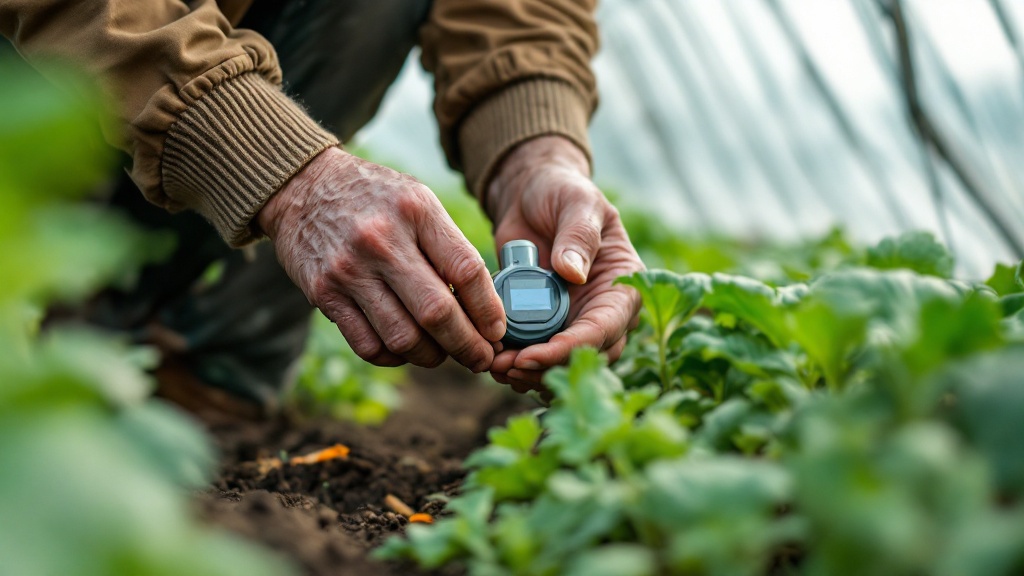
Smart agriculture cost in Japan per hectare varies dramatically by technology category. The table below summarizes current price ranges across the four major implementation types.
| Technology | Typical Cost | Key Notes |
|---|---|---|
| IoT sensor networks | USD 500–1,500 per hectare | Scales with sensor density; Japan’s fragmented plots increase effective cost |
| Agricultural drones | USD 40,000–50,000 per unit | Includes aircraft, spray/imaging payload, and mandatory operator certification |
| AI farm management platforms | JPY 60,000–360,000 per year | Subscription model; scales with farm size and analytical features |
| Typical single-project investment | JPY 3–8 million | Represents 7–12% of a typical agricultural SME’s annual revenue |
IoT sensor networks form the data backbone of most precision agriculture deployments. At the lower end, basic soil moisture and temperature monitoring runs around USD 500 per hectare. Comprehensive systems tracking CO2 levels, light intensity, humidity, and microclimate conditions push toward USD 1,500. Japan’s fragmented landholdings inflate these costs further — gateways, communication nodes, and edge devices must be replicated across dispersed plots rather than shared across contiguous fields.
Agricultural drones represent a more concentrated capital commitment. The USD 40,000–50,000 figure covers the aircraft, specialized spraying or imaging payloads, and Japan’s mandatory operator certification process. DJI Agriculture’s partnership with Syngenta Japan to develop safe spraying standards and operator training underscores the regulatory overhead embedded in drone deployment costs. Certification alone can add weeks of training and examination before a unit becomes operational.
AI farm management platforms carry lower entry costs but create recurring obligations. Annual subscriptions of JPY 60,000–360,000 vary by farm size and analytical depth. Platforms like Seraku’s Midori Cloud consolidate sensor data, weather feeds, and work records into decision-support dashboards purpose-built for Japanese cropping systems — but these subscriptions compound over time, and switching costs rise as historical data accumulates within a vendor’s ecosystem.
The predominant single-project investment range lands at JPY 3–8 million, roughly 7–12% of a typical agricultural SME’s annual revenue. This is large enough to demand rigorous justification but small enough that government subsidies can meaningfully tilt the equation. For companies planning precision agriculture investment return in Japan, these cost ranges should be the starting point for financial modeling — but they tell only half the story. The measured outcomes on the other side of the ledger are what close the business case.
Measured Outcomes from Japanese Farm Deployments

The business case for precision agriculture investment return in Japan rests on documented results from real deployments, not theoretical projections. Several government-backed programs and commercial implementations have produced hard numbers worth examining.
The most striking data comes from MAFF’s NoshoNavi1000 smart agriculture program, which reduced labor time by 87% and increased rice production by over 30% across participating farms. The program also cut fertilizer usage by 20%. For rice cultivation — still the dominant use of Japanese agricultural land — these figures represent a fundamental reshaping of production economics. An 87% labor reduction doesn’t just save wages; it makes continued operation viable for aging farmers who can no longer sustain traditional workloads.
Greenhouse operations tell a similarly compelling story. Microclimate control systems deployed in vegetable production achieved a 22% yield increase with a corresponding 19% reduction in labor input per unit of output. These improvements materialized within seven months of installation — well within the payback windows that Japanese agricultural buyers demand. The combination of higher throughput and lower labor intensity attacks both sides of the profitability equation simultaneously.
Precision water management systems are demonstrating 10–15% water savings in rice paddy cultivation. While less dramatic than labor reductions, these gains carry compounding value: lower pumping costs, more consistent yields during drought-stress periods, and reduced environmental impact that supports compliance with Japan’s tightening sustainability regulations.
On the input side, Optim’s pinpoint pesticide application technology uses drone imagery and AI to identify specific pest outbreak locations, enabling targeted spraying that reduces overall pesticide usage while maintaining crop protection. The resulting low-residue rice is marketed as a premium product through Amazon, Rakuten, and Yahoo Japan — demonstrating how precision technology can simultaneously cut costs and unlock higher prices. This dual benefit is particularly relevant in Japan, where consumers willingly pay premiums for verified production practices.
These documented outcomes point to a pattern: the farms seeing the strongest returns deploy technology against specific, high-impact pain points rather than pursuing comprehensive digitization all at once. The NoshoNavi1000 results came from targeted sensor and automation deployment in rice operations — not from attempting to digitize every aspect of farm management simultaneously. For AgTech companies designing their Japan offering, modular and problem-specific solutions with clear measurement frameworks will outperform comprehensive platforms that promise everything but prove nothing within a buyer’s evaluation window.
Government Subsidies That Change the Math
Japan’s government smart farming subsidy programs fundamentally reshape the investment equation, and understanding their mechanics is essential for any company pricing solutions for this market.
The flagship program — the Smart Agriculture Introduction Promotion Project — covers 50–70% of implementation costs for qualifying projects under JPY 5 million. At maximum coverage, a JPY 4.8 million deployment could cost the farmer as little as JPY 1.4 million out of pocket.
At the national level, the fiscal year 7 supplementary budget allocated JPY 8.9 billion specifically for technology development and supply acceleration in agriculture, alongside JPY 15.6 billion for agricultural support services and JPY 12.8 billion for regional structural transformation. These are committed budget lines reflecting the government’s conviction that technology is the only viable answer to agriculture’s demographic crisis.
Subsidy eligibility requires certified solutions, and this creates a pricing dynamic that every market entrant must understand. The JPY 5 million threshold produces a ceiling effect: technology providers consistently observe solutions with list prices of JPY 7–10 million being discounted to JPY 4.9 million to maximize subsidy eligibility. Companies entering this market need to decide whether to compete within the subsidized tier — accepting compressed margins for volume — or deliberately position above it in the premium segment where buyers prioritize capability over cost reduction.
Beyond direct grants, qualifying equipment is eligible for accelerated depreciation and investment tax credits. These mechanisms don’t reduce the initial outlay but improve the after-tax ROI, particularly for corporate farming operations with enough taxable income to benefit from faster write-offs. To explore DMPJ’s agricultural technology ROI analysis and navigate Japan’s incentive structures, AgTech companies should treat subsidy optimization as a core element of their market strategy — not an afterthought.
How Japan’s ROI Compares to the US, EU, and Australia
Benchmarking agtech ROI across Japan’s farms against other major agricultural markets reveals why Japan requires a distinct investment thesis.
| Metric | Japan | United States | European Union | Australia |
|---|---|---|---|---|
| Documented productivity gain | 22–30% (greenhouse/rice) | [5% row crops](https://www.aem.org/news/aem-study-quantifies-the-benefits-of-precision-agriculture-higher-yields-lower-costs-and-reduced-inp) | Varies by member state | Limited published data |
| Input reduction | 10–20% (fertilizer, pesticide, water) | 8% fertilizer, 9% herbicide | Tied to CAP compliance | Industry estimates ~10% |
| Typical farm tech budget vs. US | 30–40% smaller | Benchmark | Comparable (with CAP support) | Smaller (market-driven) |
| Per-hectare implementation cost | Higher (fragmented plots) | Lower (scale economics) | Mid-range | Lower (large holdings) |
| Quality premium opportunity | Strong (traceability valued) | Limited (commodity focus) | Moderate (PDO/organic) | Limited |
In the United States, an AEM study quantified a 5% increase in crop productivity, 8% reduction in fertilizer use, and 9% reduction in herbicide application across row crop operations — translating to roughly USD 66,000 in additional annual revenue per 1,000 acres plus USD 36,000 in avoided input costs. The scale advantage is unmistakable: spreading technology costs across thousands of contiguous acres drives per-hectare investment down to levels Japanese farms cannot match.
Japanese farms operate with 30–40% smaller technology budgets than comparable Western operations while facing higher per-hectare implementation costs. A sensor network that efficiently covers 500 contiguous hectares in Iowa requires reconfiguration — and often multiplication — to serve the same total area split across dozens of dispersed parcels in rural Japan.
The EU’s Common Agricultural Policy post-2027 allocates an €865 billion envelope that includes technology support, but this funding is distributed across 27 member states with competing priorities. Japan’s agricultural technology support is more concentrated but also more fragmented across programs with overlapping eligibility requirements.
Australia’s smart agriculture market, projected to reach USD 1,037 million by 2034, operates with minimal direct government subsidy compared to Japan, the US, or EU — creating a purely market-driven adoption dynamic where technology must demonstrate clear, immediate returns. Japan sits between these extremes: heavily subsidized yet burdened with higher per-unit costs and a quality-premium market structure that rewards investment in traceability and verification systems Australian commodity operations rarely deploy.
What distinguishes Japan’s ROI equation is the quality and traceability premium. Products verified through precision agriculture data — low-pesticide rice, greenhouse vegetables with documented growing conditions, organic produce with blockchain-backed provenance — can command 15–30% price premiums in domestic retail channels. This premium pathway, largely unavailable in commodity-focused markets, creates an ROI lever unique to Japan that can offset higher per-hectare technology costs. For foreign AgTech companies, the business case here should be built around value creation, not just cost reduction.
Budget Planning for AgTech Market Entry
For AgTech companies building a Japan market entry budget, the allocation pattern across successful deployments follows a consistent structure.
Hardware typically consumes 40–50% of total project expenditure, reflecting Japanese buyers’ strong preference for tangible, demonstrable equipment. Software licensing accounts for 20–30%, while implementation, training, and ongoing support services take the remaining 30–40%. This services-heavy allocation is not incidental — Japanese agricultural buyers value after-sales support and hands-on training as highly as the technology itself, and vendors who underinvest in services consistently lose to those who don’t.
Plan for extended evaluation cycles. Industry data indicates that 85% of Japanese agricultural SMEs require on-farm equipment trials before committing to a purchase — compared to roughly 55% in European markets. This means budgeting for demonstration units, field trial logistics, and 6–12 months of pre-sale engagement. Rushing this evaluation phase is one of the most common and costly mistakes foreign AgTech companies make in Japan.
Payment structures differ from Western norms. Seasonal arrangements with 30–40% of project costs deferred to post-harvest are standard practice, reflecting the cash flow rhythms of agricultural operations. Vendors entering Japan should build financing flexibility into their pricing models rather than requiring full upfront payment.
Risk-adjusted ROI expectations demand demonstrable improvements within 12–18 months. Japanese agricultural SMEs evaluate technology on a shorter payback horizon than manufacturing or service-sector peers, driven by seasonal revenue patterns and thin operating margins. Solutions that cannot show measurable labor savings, yield improvements, or input reductions within this window face an uphill battle — regardless of their theoretical long-term potential.
For companies working through these budget dynamics, contact DMPJ for AgTech budget planning to build a financially credible Japan market entry strategy that accounts for subsidies, payment timing, and realistic adoption cycles.
Understanding the real numbers behind AgTech in Japan is essential before committing budget. DMPJ helps AgTech companies build credible business cases tailored to Japanese farm economics — including subsidy optimization, phased deployment planning, and ROI modeling. Contact our agricultural technology team to build your Japan investment case.
Sorry, the comment form is closed at this time.