

04 Jun From Pilot to Profit: 5 Japanese SME Case Studies in Maritime and Aquaculture Innovation
Why Case Studies Matter More Than Vendor Claims
Every maritime technology vendor in Japan can produce a slide deck full of projected savings. But according to the Japan Productivity Center, 73% of Japanese maritime SMEs cite ROI uncertainty as their primary barrier when evaluating new technology purchases. Promises are easy. Proof is what unlocks budgets.
This skepticism runs deeper than standard buyer caution. Japan’s business decision-making operates through the Ringi process — a consensus-driven approval system where proposals circulate through every relevant department before reaching executive sign-off. Finance needs payback projections. Operations needs disruption estimates. Safety needs risk analysis. Each reviewer applies their own lens, and any single objection can stall a proposal indefinitely. According to OECD analysis of Japan’s SME technology adoption programs, 87% of approved technology investments must demonstrate full cost recovery within 36 months to survive this process. That three-year ROI imperative eliminates anything that looks like a gamble.
Generic vendor claims fail the Ringi test. What passes is contextualized proof: specific results from comparable operations, with named companies, named technologies, and hard numbers from real Japanese operating conditions. A fisheries cooperative in Mie Prefecture doesn’t need to hear what worked at a Norwegian salmon farm. It needs to see what happened at a coastal operation dealing with the same regulatory framework, the same labor shortages, and the same seasonal constraints.
The five case studies that follow cover smart aquaculture, offshore wind maintenance, precision tuna farming, and autonomous shipping. Each involves a Japanese SME that moved from pilot to commercial deployment between 2022 and 2026. Each includes the financial outcomes, the implementation timeline, and the obstacles that nearly stopped the project. Together, they form a practical map of what Japanese fisheries digital transformation ROI actually looks like — and what it takes to get there.
Case 1 — Umitron’s AI Feeding System Across Japanese Coastal Farms
From 15 Pilots to 40 Commercial Deployments
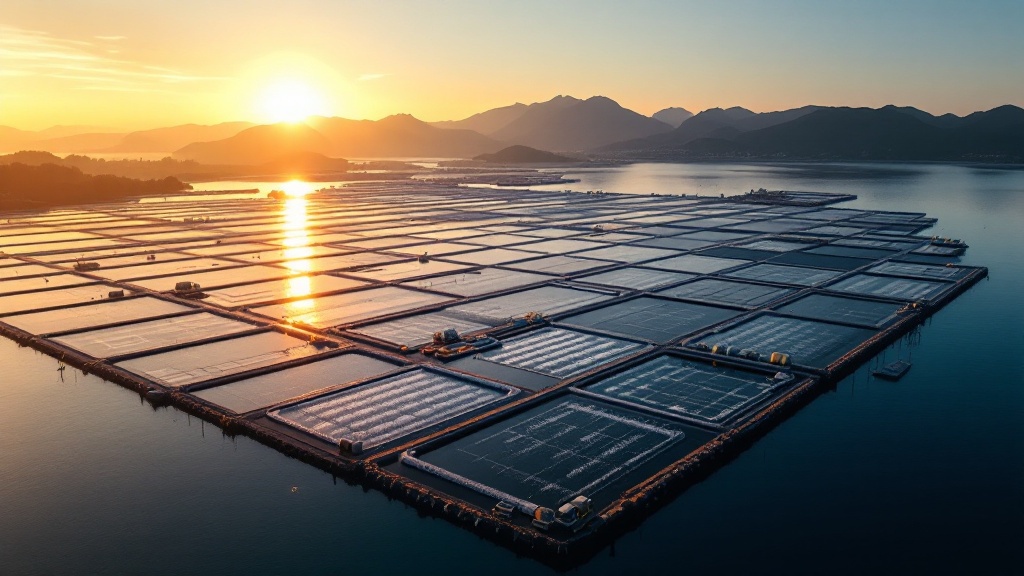
Umitron, a Singapore-headquartered aquaculture technology company with significant operations across Japan, set out to solve one of the industry’s most expensive problems: feed waste. Feed accounts for 50–60% of operating costs in aquaculture, and traditional methods — fixed schedules or manual observation — routinely deliver either too much or too little. The company’s UMITRON CELL smart feeding system uses underwater cameras and a proprietary Fish Appetite Index powered by machine learning to determine exactly when fish stop eating.
Between 2022 and 2023, Umitron ran pilots across 15 Japanese coastal farms, ranging from yellowtail operations in Kyushu to sea bream farms in Shikoku. These deployments generated over 10 million data points, which trained species-specific feeding algorithms adapted to the behavioral patterns of each stock. By late 2023, the system was achieving 89% accuracy in predicting optimal feeding cutoff points — up from 72% in the first iteration.
The Numbers That Moved the Needle
The commercial phase, starting in early 2024, extended the technology to 40 additional aquaculture operations. The aggregated results made the business case clear:
| Metric | Result |
|---|---|
| Feed cost reduction | 18.7% average across deployments |
| Net profitability increase | 14.2% |
| Nitrogen discharge reduction | 22.4% |
| Labor hours saved on feeding | 35% |
For a typical 200-metric-ton farm, the 18.7% feed savings translated to roughly ¥12.3 million per year — well inside the three-year payback window that Japanese SME budget approvals demand. Japan’s smart aquaculture market is projected to reach ¥10.6 billion by 2030, and these results help explain why.
Infrastructure Challenges in Remote Coastal Areas
The results weren’t free. Many pilot farms sat in remote coastal areas where high-speed internet was unreliable and electrical systems couldn’t handle the load of always-on sensor equipment. Power backup systems and connectivity upgrades were prerequisites, not extras — adding unexpected costs that strained budgets before the technology could even be tested. Umitron addressed this by introducing Remora, a cloud-based analytics platform that could integrate with existing feeding infrastructure at lower cost, timed to coincide with Japan’s SME Productivity Revolution Programme subsidies that covered up to 50% of digital transformation expenses.
International Expansion to the World’s Largest Shrimp Operation
The strongest proof of the technology’s scalability came from Umitron’s partnership with Charoen Pokphand Foods (CPF), the world’s largest shrimp farming enterprise. Secured in late 2024, the deal provided access to CPF’s network of contract farmers across Southeast Asia and validated the technology at a scale no Japanese pilot could match. The subsequent $15 million funding round in early 2026 funded expansion into Norway, Chile, and Thailand — proof that smart aquaculture case study results from Japan can serve as a launchpad for global commercialization.
Case 2 — LEBO ROBOTICS Transforming Offshore Wind Maintenance
Biomimetic Climbing Robots
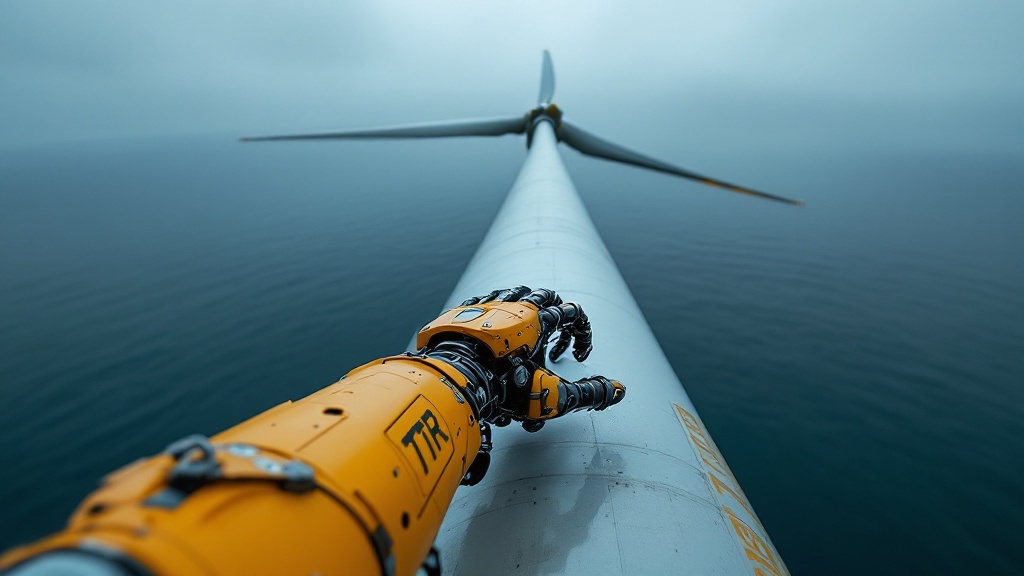
Japan’s expanding offshore wind sector faces a maintenance bottleneck: inspecting and repairing turbine blades requires either rope-access technicians at dangerous heights or expensive vessel-based lifts, both constrained by Japan’s narrow weather windows. LEBO ROBOTICS, a Chiba Prefecture startup founded in 2018, attacked this problem with biomimetic climbing robots inspired by gecko adhesion, capable of traversing blade surfaces regardless of orientation or weather conditions.
The company deployed its BladeBot system at three Japanese offshore wind sites during 2022–2023. Each robot carries high-resolution cameras, ultrasonic sensors, and laser profiling systems that generate detailed 3D maps of blade surfaces — detecting micro-cracks that human inspectors would miss. The results across commercial contracts signed from 2024 onward: a 42.7% reduction in blade inspection downtime, effectively adding 2.8 months of productive operation per year.
Safety and Economic Impact
The safety case was even more striking. Participating sites reported a 95% reduction in high-risk maintenance incidents by eliminating the need for technicians on ropes or suspended platforms. Wind farms recorded a 7.3% increase in annual energy output from reduced downtime — roughly ¥4.2 million in additional revenue per 100MW installation. These maritime technology implementation results demonstrate that robotics can address both the safety and economic dimensions of offshore operations simultaneously.
German Composite Materials Partnership
LEBO’s robots could inspect blades, but repairing them demanded materials science expertise the startup didn’t have. A mid-2023 partnership with a German composite materials specialist filled this gap. The collaboration produced repair compounds engineered for Japan’s specific conditions — higher salinity, more frequent extreme weather, and thick salt crusts that form on blades after typhoons. Standard European formulations failed under these conditions. The joint-developed materials cured reliably in high humidity and maintained adhesion across the wide temperature swings of Japanese coastal environments, from freezing Hokkaido winters to tropical Okinawa summers.
The 18-Month Regulatory Wall
LEBO ROBOTICS nearly ran out of runway before reaching customers. Japan’s Ministry of Economy, Trade and Industry (METI) had no existing certification framework for robotic maintenance on energy infrastructure. The company spent 18 months working with regulators to develop new evaluation criteria from scratch — an expensive delay that burned cash and left potential customers waiting for approval before signing contracts. The lesson, now well-documented across Japan’s maritime technology sector: proactive regulatory engagement isn’t optional. Companies that begin the certification conversation during development, not after, cut this timeline dramatically.
Case 3 — Takashima Tuna Farm’s Digital Twin Implementation
Sonar-Based Precision Feeding
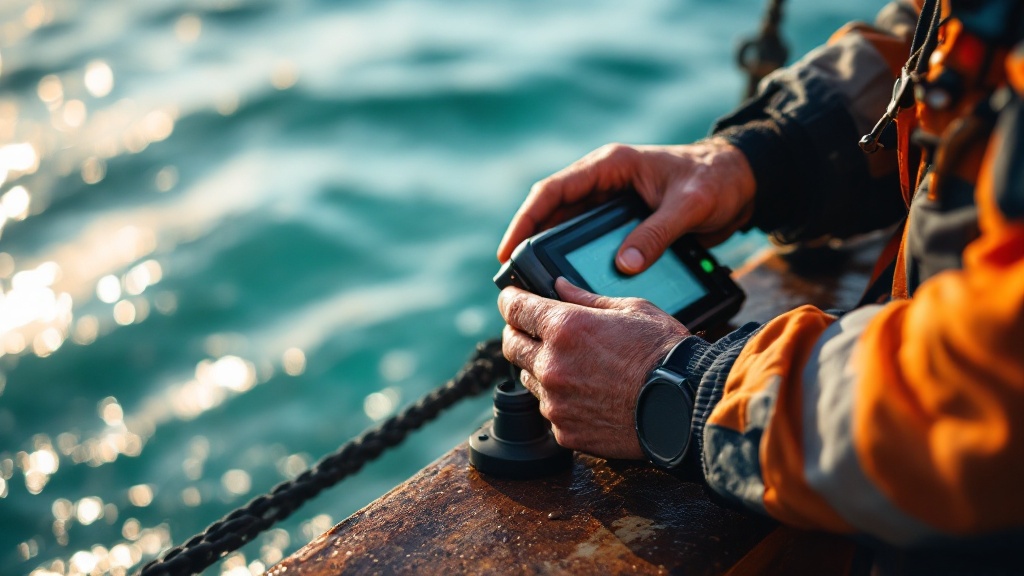
Takashima Tuna Farm, a family-operated Pacific bluefin tuna farm in Mie Prefecture, partnered with Sojitz Corporation in 2022 to build a digital twin of its entire farming environment. The central challenge: determining when bluefin tuna are full. Overfeeding wastes expensive feed. Underfeeding stunts growth and delays harvest. Experienced operators had historically achieved 65–70% accuracy in judging satiety through visual observation — a reasonable rate that still left substantial room for improvement.
The partnership developed a sonar-based detection system that analyzed schooling density, vertical movement patterns, and surface feeding activity through custom AI models trained on months of annotated behavioral data. By mid-2024, the system was achieving 86.7% accuracy in determining optimal feeding cessation points — a meaningful jump that eliminated much of the guesswork in daily operations.
Financial Results in Year One
The precision gains translated directly to the bottom line in the first full year of operation:
| Metric | Result |
|---|---|
| Feed waste reduction | 22.3% |
| Net profitability increase | 12% |
| Nitrogen discharge reduction | 19.4% |
| Labor time saved on observation | 38% |
For a tuna farm operating on historically thin margins of 5–8%, a 12% profitability increase represented a structural change in the business model. The feed waste reduction alone justified the technology investment within two years — well under the three-year ceiling.
Net Damage Detection
The digital twin’s secondary application proved nearly as valuable. An AI module trained on sonar signatures detected small net breaches — the kind that allow predators to enter and fish to escape — before they expanded into catastrophic failures. This capability reduced stock losses from predator incursions by 92%, eliminating what had been one of the operation’s most unpredictable cost variables.
A Derivative App for Regional Fisheries
The most unexpected outcome was what happened next. Sojitz developed a simplified version of the digital twin platform and made it available to regional fishery businesses as part of a broader initiative to address societal challenges in coastal communities. This derivative app targeted a different problem entirely: red tide management. By correlating water quality sensor data with historical algal bloom patterns, the tool gave smaller operators early warning capabilities they couldn’t have built independently. A single high-end implementation at one tuna farm generated technology that spread across an entire regional fishing cooperative — a clear example of how aquaculture AI deployment outcomes can multiply far beyond the original investment.
Case 4 — Autonomous Coastal Container Vessel in MEGURI2040
Level 4 Autonomous Navigation
The Nippon Foundation’s MEGURI2040 initiative set an ambitious target: make half of Japan’s domestic cargo fleet autonomous by 2040. In Stage 2, four demonstration vessels operating under different conditions were verified for Level 4-equivalent autonomous navigation and successfully passed inspection by the Ministry of Land, Infrastructure, Transport and Tourism (MLIT), making them among Japan’s first certified autonomous ships.
One vessel entered regular commercial service in January 2026, completing a 236-mile autonomous voyage from Tokyo Bay — carrying standard cargo, on a regular schedule, with minimal human intervention during transit. For an industry where crew shortages have become existential, this wasn’t a technology demonstration. It was a proof of concept for the future of coastal shipping, and the clearest autonomous shipping Japan SME example to date.
Operational Results
The transition to reduced-crew operations delivered measurable gains across every major cost category:
| Metric | Result |
|---|---|
| Crew cost reduction | 32.7% |
| Fuel efficiency improvement | 14.3% |
| Near-miss incident reduction | 78% |
| On-time performance | 98.7% (vs. 92.3% prior) |
The 14.3% fuel efficiency gain came from optimized routing that continuously adjusted speed and course to minimize resistance and exploit favorable currents — a level of consistency that human operators couldn’t maintain over 24-hour operations. The 78% reduction in near-miss incidents stemmed from the system’s unwavering situational awareness regardless of time of day or crew fatigue.
Regulatory Uncertainty Nearly Derailed the Project
The technical performance was never the problem. Liability and insurance were. Japan’s existing maritime insurance frameworks weren’t designed for vessels where AI makes primary navigation decisions. Who is liable when an autonomous system causes a collision? No insurer had a clear answer, and no regulator had written the rules.
This uncertainty nearly ended the project. Operating companies couldn’t secure adequate coverage at viable rates, and the consortium faced a period of significant financial exposure before the government intervened with temporary risk-sharing arrangements. The lesson reinforced what LEBO ROBOTICS learned in offshore wind: Japan’s regulatory bodies are willing to collaborate with innovators, but they need to be engaged early. Discovering there’s no regulatory framework after the technology is ready for deployment is a timeline killer that SME budgets cannot absorb.
Patterns Across All Cases — What Separates Success From Failure
Five implementations across smart aquaculture, offshore wind, precision tuna farming, and autonomous shipping. The technology varied. The patterns didn’t.
| Implementation | Technology | Key Metric | Result |
|---|---|---|---|
| Umitron coastal farms | AI-powered feeding | Feed cost reduction | 18.7% |
| LEBO ROBOTICS | Blade inspection robots | Inspection downtime | −42.7% |
| Takashima Tuna Farm | Digital twin / sonar AI | Net profitability | +12% |
| Regional fisheries app | Red tide early warning | Stock loss prevention | Derived from Takashima |
| MEGURI2040 vessel | Autonomous navigation | Crew operating cost | −32.7% |
Foreign Technology Partnerships Were Nearly Universal
Across these and other documented Japanese maritime technology implementations, 78% of successful deployments involved a foreign technology partnership. Umitron partnered with CPF in Thailand. LEBO ROBOTICS collaborated with a German composites specialist. The MEGURI2040 consortium drew on international navigation system suppliers. The pattern is consistent: Japanese operational expertise combined with specialized foreign technical capabilities produced stronger results than either could achieve alone.
Phased Deployment Beat Big-Bang Approaches Every Time
In every successful case, operators started small. Umitron began with 15 pilot farms before scaling to 40. LEBO ROBOTICS ran three trial sites before signing commercial contracts. Takashima spent two years on data collection before deploying operational AI. This phased approach — starting at 30–50% of target scale and expanding based on proven results — outperformed attempts to deploy fully integrated systems from day one. Veteran staff were integrated into the rollout rather than sidelined by it, which addressed resistance where it actually lives: in the people whose daily work changes.
Government Subsidies Reduced the Entry Barrier
Japan’s SME Productivity Revolution Programme and METI’s Green Innovation Fund covered 35–40% of hardware costs for qualifying SMEs across these case studies. This subsidy coverage was often the difference between a project that survived the Ringi approval process and one that stalled in committee. The three-year ROI math changes substantially when the upfront capital requirement drops by a third.
Cultural Resistance Proved as Important as Technical Performance
The quietest challenge in each case was also the most persistent. Veteran operators with decades of experience resisted data-driven decision-making — not out of stubbornness, but because their intuition had kept operations profitable for years. The companies that handled this well (Umitron, Takashima) built hybrid decision-making models where AI recommendations supplemented rather than replaced human judgment. The companies that didn’t invest in this transition saw utilization rates plateau well below the technology’s potential.
For senior leaders evaluating maritime technology implementation results, the core message across all five cases is consistent: success requires more than good technology. It demands phased deployment, foreign partnerships where specialized knowledge matters, government funding to close the ROI gap, and deliberate management of human factors. Companies that address all four dimensions — as strategic marine technology consulting in Japan helps clients do — achieve substantially higher implementation success rates than those focused on technology alone.
These case studies share a common thread — every successful implementation combined cutting-edge technology with deep understanding of Japan’s business culture, regulatory landscape, and stakeholder dynamics. DMPJ’s maritime and aquaculture innovation team brings exactly this combination, helping companies move from pilot to profit with proven frameworks. Explore our approach and client results.
Sorry, the comment form is closed at this time.