

29 May Japan Government Funding for Maritime and Aquaculture Innovation: A Complete 2025–2026 Guide
Overview of Japan’s Multi-Agency Funding Landscape
Japan has assembled one of the most comprehensive public funding ecosystems for ocean-related innovation anywhere in the world. Five key agencies channel capital into the sector: the Ministry of Agriculture, Forestry and Fisheries (MAFF) and its Fisheries Agency finance aquaculture modernization and fisheries loans; the Ministry of Land, Infrastructure, Transport and Tourism (MLIT) drives zero-emission shipbuilding and port decarbonization; the Ministry of Economy, Trade and Industry (METI) together with the New Energy and Industrial Technology Development Organization (NEDO) fund deep-tech R&D and green transformation projects; and prefectural governments operate dozens of targeted local programs that fill gaps in national coverage.
When you combine NEDO’s ¥2 trillion Green Innovation Fund with Fisheries Agency loan programs, MLIT’s shipbuilding subsidies, METI startup grants, and prefectural schemes, total available funding exceeds ¥2.5 trillion. For a decision-maker evaluating whether to commit budget to a maritime innovation project in Japan, the money is there. The challenge is knowing which programs match your project, when to apply, and how to structure your entity to qualify.
A persistent misconception is that Japan government subsidies for aquaculture innovation and maritime technology grants are reserved for Japanese-owned firms. In practice, many programs explicitly welcome foreign-affiliated applicants that meet localization criteria—typically a registered legal entity in Japan, a partnership with a domestic fisheries cooperative or shipbuilder, and a commitment to local employment. METI’s Direct Investment Promotion subsidy was designed specifically to attract foreign companies, covering up to 50% of eligible establishment costs.
The sections below walk through every major program across the five agencies, with specific funding ceilings, subsidy rates, eligibility rules, and application windows current through 2026.
MAFF and Fisheries Agency Programs for Aquaculture
The Fisheries Agency, operating under MAFF, runs Japan’s most directly relevant programs for aquaculture innovators. Four stand out for their scale, accessibility, and fit with technology-driven projects.
Fisheries Competitiveness Enhancement Emergency Project
The Fisheries Competitiveness Enhancement Emergency Project (水産業競争力強化緊急事業) is effectively a Japan fisheries modernization loan program that offers zero-interest financing for vessel upgrades, processing equipment, and cold-chain improvements. Loans run up to ¥500 million per applicant with repayment terms of up to 15 years. The program is structured in three components: local government subsidies for infrastructure (Component ①), vessel and equipment modernization loans (Component ②), and processing and distribution improvements (Component ③). SMEs receive subsidy rates of up to 50%, while larger firms are capped at 33%. Applications follow a rolling quarterly cycle.
Market-Oriented Aquaculture Demonstration Project
This grant program funds demonstration projects that validate new breeding techniques, feed formulations, and harvesting methods with a direct path to commercial sales. Maximum funding is ¥30 million per project at a two-thirds subsidy rate. Applicants must show either an established buyer relationship or letters of intent—pure research without market demand does not qualify. The annual application window typically opens in October and closes in late November. Consortia that pair private companies with fishing cooperatives and research institutions are strongly preferred.
Institutional Credit Scheme for Coastal Fisheries
For smaller operators, the Institutional Credit Scheme provides long-term, ultra-low-interest financing at 0.1–0.3% with terms of up to 15 years and grace periods of two to three years before repayment begins. Vessel construction loans cap at ¥200 million; equipment and gear loans cap at ¥50 million. The scheme targets coastal fisheries operators, with priority given to applicants under 40. Foreign residents with established legal residency and membership in a designated fishing cooperative may apply.
Revenue Insurance Program
MAFF’s Revenue Insurance Program covers income shortfalls from natural disasters, disease outbreaks, drops in sales price, and exchange rate fluctuations that erode export revenue. Premium subsidies range from 50% to 70% depending on the coverage level selected, with higher subsidies available for smaller operations. Since 2019, aquaculture operations have been explicitly included, making this a practical risk-reduction tool for any company scaling a new production technology.
| Program | Type | Max Amount | Rate / Interest | Term | Cycle |
|---|---|---|---|---|---|
| Fisheries Competitiveness Enhancement | Loan | ¥500M | Effectively 0% | Up to 15 yrs | Rolling (quarterly) |
| Market-Oriented Aquaculture Demonstration | Grant | ¥30M | ⅔ subsidy | Project-based | Annual (Oct–Nov) |
| Institutional Credit for Coastal Fisheries | Loan | ¥200M | 0.1–0.3% | Up to 15 yrs | Continuous |
| Revenue Insurance | Insurance | Varies | 50–70% premium subsidy | Annual | Annual enrollment |
MLIT Zero-Emission Shipbuilding and Maritime Decarbonization
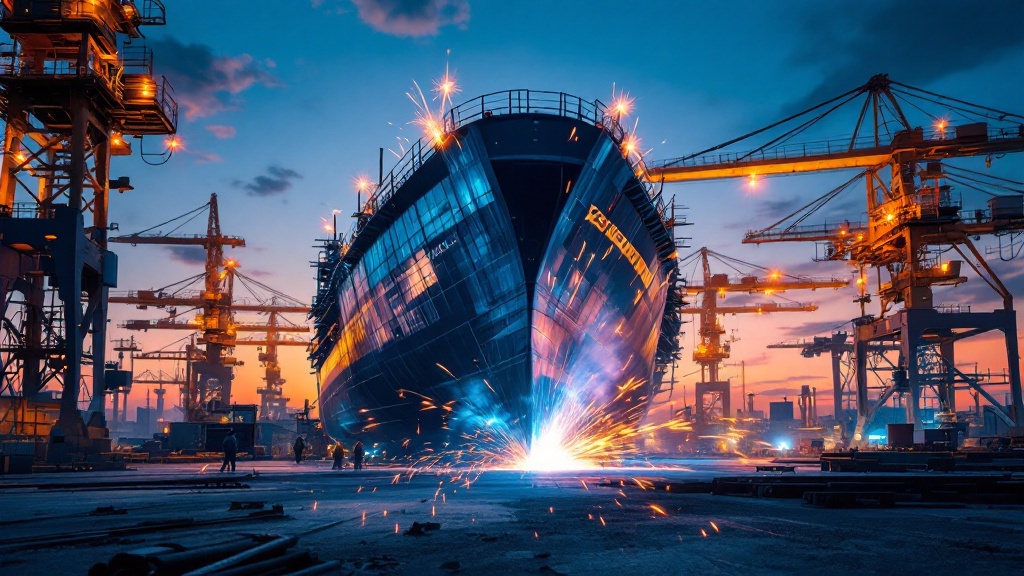
MLIT controls the largest single-project funding amounts in the maritime innovation space and is driving Japan’s response to the International Maritime Organization’s net-zero-by-2050 target.
Zero Emission Shipbuilding Program
The Zero Emission Shipbuilding Program offers up to ¥6.5 billion per project—¥500 million available in the first fiscal year—to support production facilities for hydrogen-, ammonia-, LNG-, methanol-, and battery-powered vessels. Subsidy rates are capped at one-third for large firms and one-half for SMEs, making this one of the most generous METI and MLIT zero-emission shipbuilding subsidy pathways available. Eligible expenses cover manufacturing facilities for next-generation marine engines, fuel supply systems, and outfitting platforms. The second application round closed in May 2025 and drew 37 proposals totaling approximately ¥180 billion in requested funding. The next round is expected to open in late 2026.
Carbon Tax Creating Urgency
Japan’s proposed carbon tax of $56 per tonne of CO2 targets the shipping industry directly and is expected to take effect during fiscal year 2026. Anticipated revenue of ¥300 billion annually will be partially reinvested in maritime decarbonization programs. Early adopters of zero-emission technologies stand to benefit from reduced tax rates under the proposed framework—effectively rewarding companies that have already taken advantage of current subsidy programs.
Maritime Cluster Development Program
MLIT’s Maritime Cluster Development Program supports the buildout of hydrogen and ammonia refueling infrastructure at strategic ports, covering up to 40% of capital costs. The program targets approximately three large-scale clusters in metropolitan areas (Chiba, Yokohama, and Kobe are leading candidates) and five medium-scale clusters leveraging existing industrial sites. Projects must involve consortia of port authorities, energy companies, and shipping operators. Foreign-affiliated companies are encouraged to participate and may hold majority ownership of infrastructure projects, provided they meet safety standards and demonstrate clear benefits to Japan’s maritime sector.
METI/NEDO Deep-Tech and Green Innovation Funds
METI and NEDO operate the largest innovation-funding apparatus in the Japanese government, and several programs have direct maritime and aquaculture applications.
Green Innovation Fund
The Green Innovation Fund is a ¥2 trillion allocation—expanded to approximately ¥2.8 trillion through supplementary budgets—that provides continuous support for up to 10 years, spanning R&D, demonstration, and commercial deployment. The NEDO Green Innovation Fund covers maritime applications including ammonia-fueled engine development, hydrogen storage for vessels, and marine biomass biofuels. Unlike most grants that expire after a few years, this fund is designed to carry a project from laboratory to market in a single continuous engagement. Twenty-one priority areas have been designated, with maritime decarbonization receiving significant emphasis.
Deep-Tech Startups Support Program
NEDO’s Deep-Tech Startups Support Program offers a three-phase funding ladder specifically designed for capital-intensive, long-development-cycle technologies—exactly the profile of most maritime innovations.
| Phase | Name | Max Funding | Duration | NEDO Contribution | Co-investment Required |
|---|---|---|---|---|---|
| STS | Startup Technology Support | ¥500M | Up to 4 years | Up to ⅔ of eligible costs | VC/CVC ≥ ⅓ of costs |
| PCA | Product Commercialization Acceleration | ¥1B | Up to 4 years | Up to ⅔ of eligible costs | VC/CVC ≥ ⅓ of costs |
| DMP | Demonstration for Market Penetration | ¥2.5B | Up to 4 years | Up to ½ of eligible costs | VC or bank loans ≥ ⅓ of costs |
A company developing an ammonia-fueled marine engine could enter at STS with a ¥500 million grant, scale through PCA to ¥1 billion for prototype testing, and reach DMP at ¥2.5 billion for commercial demonstration—all within a single program framework. The total cap across all phases is ¥3 billion per project.
Contracts for Difference for Ammonia Fuel
Under Japan’s Green Transformation scheme, METI has earmarked $51 billion for hydrogen and ammonia investments over the coming decade. The Contracts for Difference (CfD) mechanism subsidizes the price gap between conventional bunker fuel and low-emission ammonia, making ammonia fuel imports economically viable for shipping operators during the transition period. The first CfD awards were announced in early 2025, including support for the Blue Point ammonia project in Louisiana. Imports must commence by 2030, setting a clear timeline for any company considering this pathway.
Direct Investment Promotion Subsidy
Foreign companies establishing operations in Japan can access METI’s Direct Investment Promotion subsidy, which covers up to 50% of eligible costs for SMEs and up to one-third for larger firms, with a ceiling of ¥20 million per project. Eligible expenses include equipment acquisition, facility construction, and workforce training. The program is administered through JETRO on a continuous application basis and has seen a 65% increase in maritime technology applications during 2025. For foreign-affiliated companies exploring maritime technology grants in Japan for 2025 and beyond, this is often the most accessible entry point.
Prefectural Programs and Tax Incentives
National programs set the ceiling, but prefectural programs often determine whether smaller innovators can actually reach it. Several prefectures have developed particularly strong support for marine industry projects.
Osaka Fisheries Promotion Project Subsidy
The Osaka Prefecture Fisheries Promotion Project Subsidy offers up to ¥50 million per project for initiatives that enhance the value and marketability of locally produced seafood. The program covers product development, processing technology, and marketing channels, with a quarterly application cycle (February, May, August, November). Foreign-affiliated companies with a registered presence in Osaka are eligible.
Shizuoka Prefecture’s Tiered Loan System
Shizuoka’s fisheries loan system is among Japan’s most borrower-friendly, with interest rates as low as 0.05% for coastal fisheries operators. Modernization loans cover vessel upgrades and processing equipment at 0.15–0.45% with terms up to 15 years. The system operates through the Eastern Japan Fisheries Credit Association with dedicated consultation offices in Shimoda, Yaizu, and Hamamatsu.
SME Investment Promotion Tax System
The SME Investment Promotion Tax System grants a 30% bonus depreciation allowance for investments in zero-emission vessel technologies, including ammonia-fueled engines, advanced monitoring systems, and energy-efficient propulsion. This accelerated write-off operates on top of standard depreciation schedules, reducing the effective tax burden on qualifying capital expenditures by 10–12 percentage points. The benefit is available to all registered fishing enterprises and maritime SMEs, with a lower qualifying threshold of ¥500,000 for small enterprises versus ¥1 million for larger firms.
Go-Tech R&D Grants
METI’s Go-Tech program (formerly Sapoin) provides grants of up to ¥300 million per project at a 50% subsidy rate for SME-university collaborations focused on technology commercialization. Projects must demonstrate a clear pathway to commercial viability within five years. Maritime and aquaculture applications accounted for 18% of Kanto region proposals in 2025, with higher-than-average commercialization success rates. Annual application windows open in April and close in June via the e-Rad electronic system.
How to Navigate the Application Process

Common Eligibility Pitfalls for Foreign-Affiliated Applicants
The single most frequent disqualification for foreign-affiliated companies is applying as a standalone entity without a domestic partner. Most MAFF and Fisheries Agency programs require partnership with a local fishing cooperative (漁業協同組合). MLIT’s shipbuilding programs require a domestic shipyard collaboration. Structuring these partnerships before filing—rather than scrambling to add one after a reviewer flags the gap—is essential. DMPJ’s maritime innovation consulting team regularly helps international companies navigate these partnership requirements.
A second pitfall is underestimating the localization commitment reviewers expect. Agencies look for evidence that the project will generate Japanese employment, strengthen domestic supply chains, and transfer knowledge to local operators. Applications that frame Japan purely as a market to sell into, rather than a base to build from, face steep odds.
Quarterly vs. Annual Application Cycles
Program timing varies significantly across agencies. MAFF’s Fisheries Competitiveness Enhancement Project accepts applications on a rolling quarterly basis; the Market-Oriented Aquaculture Demonstration Project opens once per year in October. NEDO’s Deep-Tech program operates on periodic calls announced on the NEDO website. MLIT’s Zero Emission Shipbuilding Program opens approximately once every 12–18 months. Building a 12-month application calendar aligned to your project timeline is a practical first step.
Why Bundling Multiple Funding Sources Matters
Japan’s funding landscape rewards applicants who layer programs strategically. A company building a land-based recirculating aquaculture system might combine a Fisheries Competitiveness Enhancement loan for infrastructure, a Go-Tech grant for the university-partnered R&D component, a prefectural subsidy for local market development, and the Revenue Insurance Program to protect against biological risk during the ramp-up period. According to OECD analysis of Japan’s SME support programs, companies that systematically bundled multiple funding sources achieved implementation success rates 68% higher than those relying on a single program. The complexity of assembling these packages is precisely why strategic support for marine industry projects in Japan is so valuable—each program has its own documentation standards, reporting requirements, and review criteria, and misalignment between them can stall a project for months.
Securing the right government funding can cut your maritime innovation project costs by 30–50%, but Japan’s multi-agency landscape is notoriously complex to navigate alone. DMPJ’s maritime and aquaculture innovation team helps international and Japanese companies identify eligible programs, structure compliant applications, and build the domestic partnerships that funding agencies require. Visit our service page to start the conversation.
Sorry, the comment form is closed at this time.