


19 Jun How to Choose a Retail Experience Design Partner for Japan: A Buyer’s Evaluation Guide
Why Vendor Selection Is High-Stakes in This Category
Retail experience design is not a commodity service. The quality gap between a partner who understands your brand, your audience, and the nuances of the Japanese market and one who simply delivers a floor plan is enormous. Unlike standardized marketing deliverables, an experiential store environment touches architecture, technology integration, sensory design, data analytics, and local compliance simultaneously. A misstep in any one of those layers compounds across the others.
The financial exposure is real. A mid-range retail experience redesign in Japan typically runs ¥8–20 million ($55,000–$140,000) for a 1,000–1,500 square-foot space, with comprehensive transformations reaching ¥30–100 million or more. Add the 9-to-18 months most mid-sized companies spend from initial problem recognition to project kick-off, and a poor vendor choice can easily waste a full product cycle’s worth of time and capital before anyone realizes the engagement has gone sideways.
Japan’s retail services market makes the comparison harder, not easier. The landscape is highly fragmented across boutique architectural studios, digital signage vendors, event production houses, and data analytics firms—each strong in one dimension but rarely integrated across all of them. Without a structured evaluation framework, decision-makers default to referrals and gut feel, which frequently leads to capability mismatches that only surface mid-project.
The 8 Evaluation Criteria That Matter Most
When building your retail experience design vendor selection criteria, these eight factors reliably separate partners who deliver measurable results from those who deliver polished pitch decks.
1. Bilingual Capability and Cross-Cultural Project Management
If your team operates in English and your customers shop in Japanese, your design partner must function fluently in both worlds—not just linguistically but operationally. Cross-cultural project management means translating brand guidelines developed in New York or London into spatial concepts that resonate with Japanese aesthetic expectations, and doing so without the meaning loss that plagues translation-only workflows.
2. Integration Breadth — Design Plus Technology Plus Data Plus Operations
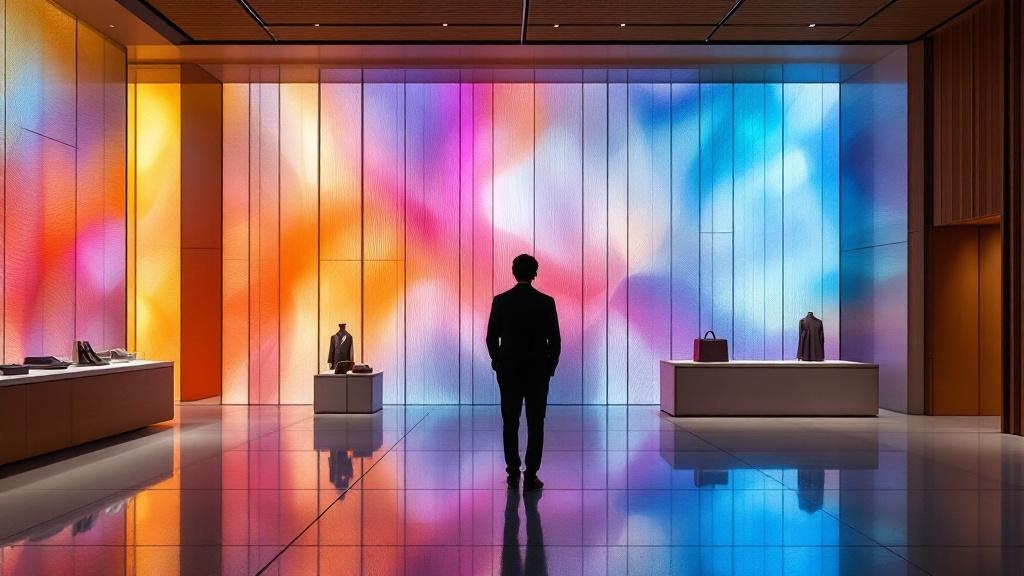
The global experiential retail market is expanding at 14.9% annually, driven by the convergence of physical design, digital systems, and real-time analytics. A vendor who only handles interiors will leave you coordinating technology vendors, data platforms, and operational consultants yourself. Look for partners who can architect the full stack—from material selection to sensor placement to post-launch KPI dashboards.
3. Japan-Specific Portfolio With Relevant Industry Experience
Ask for case studies from your vertical. A firm that has designed luxury flagship stores may not understand the traffic patterns and margin dynamics of a 500-square-foot pop-up. Japan-specific work matters because local building codes, permit processes, landlord relationships, and consumer behavioral norms differ substantially from other markets. Research shows that strategic digital touchpoint placement can increase dwell time by up to 45%—but only when calibrated to how Japanese consumers actually move through retail spaces.
4. Flexible Engagement Models — Pilot to Full-Service
Budget-constrained mid-market companies benefit from vendors offering structured pilot programs before committing to full buildouts. A pilot engagement—typically ¥1–3 million over 3–4 months—lets you validate the partner’s methodology with real data before scaling investment.
5. Local Vendor Network (Construction, Permits, Technology Partners)
Japan’s construction and permitting ecosystem rewards established relationships. A partner with a proven network of contractors, electricians, signage fabricators, and municipal contacts will execute faster and avoid the cost overruns that plague firms coordinating through intermediaries.
6. Data and Measurement Methodology
If a vendor cannot explain how they will measure success before the project starts, they cannot optimize after it launches. Research from Gensler confirms that positive customer experience correlates more strongly with long-term loyalty than satisfaction measured at individual transactions. Your partner should define baseline metrics, measurement tools, and reporting cadences during the proposal stage.
7. Post-Launch Support and Optimization Capability
A store redesign is not a one-time deliverable. Consumer behavior shifts, technology evolves, and seasonal patterns demand ongoing adjustment. KPMG research on Japanese retail technology adoption found that 54% of retailers recognize omnichannel capabilities as strategic imperatives—capabilities that require continuous optimization, not a single implementation.
8. Pricing Transparency and Budget Respect
Mid-market projects live or die on budget discipline. Insist on itemized proposals that separate design fees, technology costs, construction estimates, and ongoing support. The table below shows typical cost ranges by project scope to help you benchmark proposals.
| Project Scope | Typical Investment (¥) | Timeline | What’s Included |
|---|---|---|---|
| Strategic assessment only | ¥0.5–1.5M | 4–6 weeks | Audit, opportunity map, phased roadmap |
| Focused aesthetic refresh | ¥2–5M | 8–16 weeks | Visual merchandising, lighting, layout optimization |
| Mid-range experience redesign | ¥8–20M | 18–30 weeks | Design + foundational tech integration + process redesign |
| Comprehensive transformation | ¥30–100M+ | 6–12 months | Full design, advanced tech, analytics, multi-location rollout |
Domestic Japanese Firms vs. International Agencies — Trade-Offs
Local Firms
Japanese boutique design firms bring deep cultural fluency, established vendor relationships, and pricing flexibility calibrated to the domestic mid-market. They understand *omotenashi*, seasonal rhythm, and the spatial expectations of Japanese consumers at an intuitive level. Their weakness tends to be limited exposure to global retail innovation and advanced omnichannel technology stacks.
International Firms
Global agencies bring proven methodologies, cross-market case studies, and technology leadership—particularly in AI-driven personalization and immersive digital experiences. KATE TOKYO’s AI-powered makeup customization flagship in Shibuya, launched in 2024, illustrates how international best practices can create standout retail moments. The trade-off: higher overhead, less flexibility on small engagements, and potential gaps in local execution.
Hybrid Approach
The most effective model for mid-market buyers often combines local execution oversight with international strategic input. A bilingual partner based in Japan who maintains global design awareness eliminates the coordination tax of managing two separate firms while ensuring cultural coherence. When your brand guidelines originate overseas but your customers shop in Shibuya, bilingual capability stops being a nice-to-have and becomes the deciding factor. To explore DMPJ’s retail experience design capabilities is to see this hybrid model in practice.
Red Flags That Should Disqualify a Vendor
Not every warning sign is subtle. These should end the conversation:
- No Japan-specific case studies or only work for mega-corporations. If every reference is a global luxury conglomerate, the firm likely cannot operate within mid-market budgets or timelines.
- Cannot articulate how design decisions connect to business metrics. Aesthetic talent without commercial accountability produces beautiful stores that underperform. Multi-sensory retail environments can boost brand recall by up to 70%—but only if the design partner tracks and reports on those outcomes.
- Rigid all-or-nothing packaging with no pilot option. Comprehensive bundled proposals that start at ¥30M with no modular entry point signal a firm optimized for enterprise clients, not mid-market partnerships.
- No data or analytics capability in the proposal. If the word “measurement” does not appear until the appendix, expect a project that delivers interiors, not results.
- Inability to communicate in your working language. Misalignment between your team’s operating language and the vendor’s reporting language creates compounding errors that surface during construction—when change orders are expensive.
Questions to Ask in Your First Consultation
Your initial meeting with a potential partner is an audition, not a sales call. These five questions will reveal more about a firm’s capabilities than any portfolio deck.
“How do you measure success after a retail redesign?” The answer should include specific KPIs—foot traffic, dwell time, conversion rate, average transaction value, social media engagement—with a clear methodology for baselining and attribution. Vague answers about “brand elevation” without numbers are a warning sign. Industry data shows that well-executed retail redesigns generate 15–30% improvements in sales per square foot within 6–12 months.
“What does your pilot program look like, and what does it cost?” A mature partner will describe a structured 3–4 month engagement with defined deliverables, a measurement framework, and a clear decision gate for proceeding to full implementation.
“How do you handle the integration between physical design and digital systems?” Japan’s omnichannel retail market is growing at 11.5% annually, reaching an estimated $546 million in 2025. Any partner who treats physical design and digital infrastructure as separate workstreams will create integration problems that surface after construction.
“Can you share a case study of a brand similar to ours in size and industry?” This question eliminates firms that only serve enterprise clients. Recent examples like Onitsuka Tiger’s Ginza Red Concept Store—a three-floor experiential flagship integrating retail, customization services, and a café—demonstrate what focused brand-aligned design looks like. You want to hear about projects at your scale.
“What is your approach to balancing Japanese aesthetics with our global brand guidelines?” The right partner will describe a collaborative process for translating brand DNA into culturally resonant spatial design, not a one-directional application of either local taste or global templates. Japanese consumers prioritize quality, authenticity, and storytelling in retail environments—your partner must demonstrate they can deliver on all three without compromising brand coherence.
A Practical Scoring Matrix You Can Use Today

Structured evaluation eliminates the subjective drift that derails vendor selection. The matrix below weights each of the eight criteria and provides a scoring framework you can adapt to your specific situation.
Weighted Scoring Template
| Criterion | Weight | Score (1–5) | Weighted Score |
|---|---|---|---|
| Bilingual capability & cross-cultural PM | 15% | ___ | ___ |
| Integration breadth (design + tech + data + ops) | 20% | ___ | ___ |
| Japan-specific portfolio & industry relevance | 15% | ___ | ___ |
| Flexible engagement models (pilot available) | 10% | ___ | ___ |
| Local vendor network | 10% | ___ | ___ |
| Data & measurement methodology | 15% | ___ | ___ |
| Post-launch support & optimization | 10% | ___ | ___ |
| Pricing transparency & budget respect | 5% | ___ | ___ |
| **Total** | **100%** | **___** |
How to Weight Criteria Based on Your Situation
The default weights above suit a foreign brand entering Japan for the first time. Adjust them based on context:
- If you already have a Japan team: reduce bilingual capability weight, increase integration breadth.
- If budget is your primary constraint: increase pricing transparency and flexible engagement weights.
- If you are testing a new retail concept: increase flexible engagement and data methodology weights; decrease local vendor network.
- If you operate multiple locations: increase post-launch support weight significantly.
Minimum Acceptable Scores and Deal-Breaker Thresholds
Set a minimum total weighted score of 3.5 out of 5.0 to proceed to final negotiations. Any single criterion scoring below 2.0 should trigger a disqualification conversation unless compensated by exceptional strength elsewhere. Integration breadth and data methodology—the two highest-weighted criteria—should each score at least 3.0 individually, as weaknesses in these areas create the most costly downstream problems.
Timeline Expectations — From First Contact to Project Kick-Off
Realistic timelines prevent both rushed decisions and analysis paralysis.
| Phase | Duration | Key Activities |
|---|---|---|
| Initial research & shortlisting | 2–4 weeks | Identify 3–5 candidates, review portfolios, check references |
| First consultations | 2–3 weeks | Ask the five key questions, assess cultural fit |
| Proposal review & scoring | 2–3 weeks | Apply scoring matrix, compare proposals, negotiate scope |
| Pilot engagement (if applicable) | 10–16 weeks | Execute pilot, measure baseline metrics, evaluate results |
| Full project kick-off | 2–4 weeks post-decision | Finalize contracts, mobilize teams, begin design development |
For a hire store design firm Japan checklist, expect the total evaluation process to take 8–12 weeks from first research to vendor commitment—or 20–28 weeks if you run a pilot before committing to full implementation. Building this timeline into your planning prevents the compressed evaluation cycles that lead to poor partner selection.
Make Your Decision With Confidence
You now have a clear framework for evaluating retail experience design partners. If you are looking for a bilingual agency that combines Japanese aesthetic expertise with advanced digital integration and data-driven optimization—all at mid-market pricing with flexible pilot options—DMPJ checks every box on this list. Visit DMPJ’s customized retail experience design page to review capabilities, see relevant work, and schedule a no-obligation strategy consultation with their Tokyo-based team.
Sorry, the comment form is closed at this time.