

19 Jun In-House vs. Agency: Who Should Design Your Retail Experience in Japan?
The Build-or-Buy Decision for Retail Experience Design
Every company expanding into physical retail in Japan eventually confronts the same question: should we build an internal retail design capability or hire a retail experience design consultant? Unlike outsourcing a logo refresh or commissioning a product video, this decision involves a cross-disciplinary skill set that few single hires can cover—spatial design, digital integration, data analytics, cultural fluency, vendor management, and construction oversight all intersect within a single project.
The build vs buy retail store experience decision is fundamentally different from other marketing outsourcing choices for one key reason: the experiential retail market is evolving at 14.9% compound annual growth, driven by immersive technology, omnichannel integration, and shifting consumer expectations. What qualified as cutting-edge store design two years ago now reads as standard. The knowledge required to stay competitive in this space changes faster than most internal teams can adapt.
For small-to-mid-sized companies, frequency of need further shapes the optimal model. A brand launching one flagship store and two pop-ups over three years faces a very different calculus than a multi-location operator running continuous A/B tests on layout and digital touchpoints. The former needs precision and speed for high-stakes moments; the latter needs sustained internal capability. Understanding where your company sits on this spectrum is the first step toward a sound decision.
True Cost of an In-House Retail Design Capability
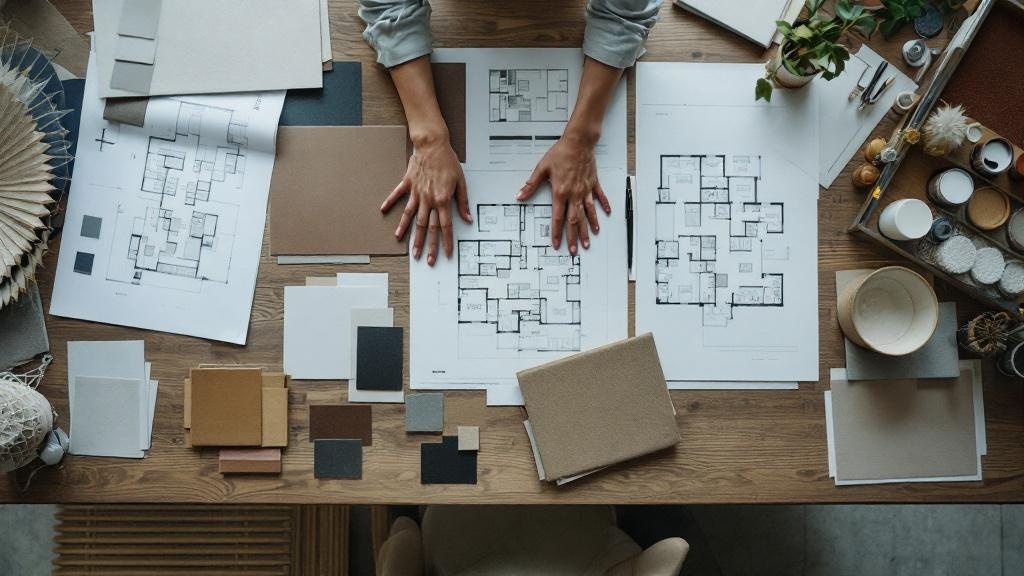
The appeal of an in-house team is clear—total control, deep brand knowledge, and no external fees. But the true cost of building retail design capability internally in Tokyo goes well beyond base salaries.
Fully Loaded Personnel Costs
A credible in-house retail experience design function in Japan requires at minimum three specialists: a spatial/interior designer, a digital experience strategist, and a project manager with construction oversight experience. Each specialist commands ¥5–8M+ annually in fully loaded compensation (salary, benefits, bonuses, and social insurance) in the Tokyo market. A team of three puts baseline personnel costs at ¥15–24M per year before producing a single deliverable.
| Role | Annual Fully Loaded Cost (Tokyo) | Key Skills |
|---|---|---|
| Senior Spatial Designer | ¥6–9M | Layout, materials, lighting, brand aesthetics |
| Digital Experience Strategist | ¥5–8M | AR/VR, analytics, omnichannel integration |
| Project Manager (Retail Construction) | ¥5–7M | Vendor coordination, permitting, timeline control |
| **Minimum Team Total** | **¥16–24M/year** | — |
Hidden Costs
Research on in-house operations suggests that hidden costs push actual expenses 25–40% beyond base salaries when accounting for software licenses (3D rendering, analytics platforms, project management tools), ongoing training, recruitment and retention expenses, management overhead, and dedicated workspace in premium Tokyo office districts.
The Expertise Obsolescence Problem
Japan’s smart retail technology market is projected to grow from $2.4 billion in 2024 to over $26.5 billion by 2033. The technologies your team masters today—specific AR platforms, particular analytics stacks, current sensor hardware—may be obsolete within 18 months. Continuous retraining is expensive, and institutional inertia makes it difficult for small teams to abandon approaches they’ve invested in learning. This creates a structural disadvantage: in-house teams risk defaulting to familiar methods while the market moves forward.
What a Specialized Agency Brings to the Table
When evaluating the retail design agency or internal team question, the agency advantage extends beyond cost efficiency into several structural capabilities that are difficult or impossible to replicate internally at SME scale.
Cross-Client Learning and Continuously Updated Best Practices
A specialized retail experience design agency works across dozens of projects annually—luxury flagships, pop-up activations, technology showrooms, fashion boutiques. Each project generates learnings about what converts browsers to buyers in specific Japanese retail contexts. This cross-pollination of insights, refined continuously against real performance data, produces a knowledge base no single-brand team can match. Research from KPMG’s technology consumer survey confirms that only 28% of Japanese retailers have implemented advanced personalization—agencies that have executed it multiple times carry institutional knowledge that dramatically compresses implementation timelines for new clients.
Access to Vendor Networks and Construction Partners
Japan’s retail construction and technology vendor landscape is relationship-driven and opaque to outsiders. Agencies maintain established networks of fixture manufacturers, digital signage providers, lighting specialists, and general contractors who reliably deliver quality work on schedule. For companies entering Japan without existing vendor relationships, building this network independently can add 6–12 months to project timelines.
Scalability
A competent agency can deploy the same quality of work for one flagship store or scale a proven concept across twenty locations with operational efficiency. Internal teams, constrained by headcount, cannot flex capacity without lengthy hiring cycles. This matters especially for brands planning phased rollouts across Japanese regions.
Bilingual and Cross-Cultural Capability
For international brands entering Japan or Japanese brands expanding overseas, the ability to bridge headquarters strategy with local execution in both languages is not a nice-to-have—it is operational infrastructure. Miscommunication between an English-speaking HQ creative team and Japanese construction partners has derailed more projects than budget shortfalls. According to CBRE’s Japan retail market data, prime retail rents in Ginza and Omotesando hit record highs in 2024, meaning project delays from communication failures carry enormous financial consequences.
When In-House Makes Strategic Sense
The in-house vs agency retail design Japan question doesn’t have a universal answer. There are legitimate scenarios where building internal capability delivers superior outcomes.
Multi-Location Continuous Optimization
Brands operating 10+ locations in Japan that require ongoing layout testing, seasonal display rotations, and continuous data-driven adjustments benefit from having design capability embedded in daily operations. When changes happen weekly rather than quarterly, the transaction cost of external engagement becomes prohibitive.
Existing Architecture or Interior Design Teams
Companies that already employ architects or interior designers for other business functions (hospitality groups, real estate developers, or retailers with adjacent design needs) can extend those teams into retail experience work with incremental rather than full-cost investment. The marginal cost of adding retail specialization to an existing design team is far lower than building from zero.
Hybrid Models: Internal Brand Guardians Plus External Specialists
The most sophisticated approach for growing brands combines a lean internal team (typically 1–2 people focused on brand standards and vendor coordination) with external specialist agencies engaged for specific projects. This hybrid model maintains brand consistency while accessing external expertise, updated best practices, and scalable execution capacity when needed. Research shows 61% of consumers now highly value in-store experiences—a figure up 21% since 2023—making continuous attention to retail experience a strategic priority regardless of organizational model.
When Outsourcing Is the Clear Winner

For many companies evaluating whether to outsource store design in Japan, the pros clearly outweigh the cons in these specific situations:
Market Entry Without a Local Team
A brand entering Japan with no local employees, no vendor relationships, and limited cultural context gains nothing from attempting to build internal capability before its first store opens. The learning curve is too steep and the stakes too high. A Japan-specialist agency compresses what would be 12–18 months of internal capability building into a 3–4 month execution timeline.
Infrequent but High-Stakes Projects
Flagship launches, seasonal pop-ups, and one-time brand activations don’t justify permanent staff. Research on retail design implementation shows that strategic digital touchpoint placement can increase dwell time by 45% and boost average purchase values by 25–30%—but only when executed with current best practices. An agency that has implemented similar projects recently delivers these outcomes more reliably than a team assembled ad hoc.
Bilingual Project Management
When headquarters operates in English (or another language) and execution happens in Japanese, bilingual project management isn’t translation—it’s cultural mediation. Concepts like spatial hierarchy, customer flow expectations, and material quality standards differ between markets. A bilingual agency navigates these differences without requiring either side to compromise.
Budget Ranges for Agency Engagement
| Engagement Type | Typical Investment | Scope |
|---|---|---|
| Diagnostic assessment | ¥1–2M | Current state analysis, opportunity identification, roadmap |
| Pilot project | ¥2–5M | Single high-impact touchpoint redesign with measurement |
| Mid-range redesign | ¥8–15M | Full store aesthetic, layout, and foundational digital integration |
| Comprehensive transformation | ¥15–20M+ | Design, advanced technology, operations, multi-location rollout |
These ranges contrast favorably with the ¥24–32M annual cost of maintaining even a minimal three-person in-house team—especially for companies that need retail experience design services once every 2–3 years rather than continuously.
A Decision Framework for Your Situation
Rather than relying on general advice, use this structured framework to determine whether to build internal capability or hire a retail experience design consultant for your specific context.
Five Questions to Determine Your Optimal Model
- How frequently will you need retail design work? If more than 4 significant projects per year, in-house may be justified. If 1–2 projects, outsourcing wins on cost.
- Do you have existing design staff who could extend into retail? If yes, a hybrid model with supplemental agency support is likely optimal.
- Are you entering a new market or operating in a familiar one? New market entry strongly favors agency engagement for cultural fluency and vendor access.
- What is your acceptable time-to-delivery? Building a team takes 6–12 months. Agencies can begin executing within weeks.
- Is bilingual/cross-cultural capability a requirement? If HQ and execution sites operate in different languages, agency bilingual capability is difficult to replicate internally at a reasonable cost.
Risk-Reward Comparison
| Factor | In-House | Agency |
|---|---|---|
| Cost predictability | Fixed (high baseline) | Variable (pay per project) |
| Speed to first project | 6–12 months (hiring + onboarding) | 4–8 weeks |
| Brand knowledge depth | Deep (over time) | Moderate (requires onboarding) |
| Technology currency | Decays without investment | Updated across client engagements |
| Scalability | Limited by headcount | Flexes with project scope |
| Vendor network (Japan) | Must be built | Pre-established |
| Cultural fluency risk | Low if team is local | Low if agency is Japan-specialist |
| Total cost (1 project/year) | ¥24–32M | ¥2–20M |
Structuring a Pilot Engagement
If you’ve decided to test an agency relationship before committing to a comprehensive project, structure the pilot to generate maximum learning:
Scope it tightly. Choose a single store or a defined section of a flagship. A focused pilot in the ¥2–5M range produces actionable data without requiring full-project commitment.
Establish baseline metrics first. Measure current foot traffic, dwell time, conversion rate, and average transaction value before work begins. Without a baseline, you cannot calculate return on investment—and research confirms that well-executed retail design improvements generate 15–30% sales-per-square-foot improvements within 6–12 months.
Define success criteria in advance. Agree with the agency on what “success” looks like before the project starts. This eliminates post-hoc rationalization and builds mutual accountability.
Include a decision gate. Structure the pilot with a formal review point at 90 days post-implementation. At this gate, evaluate measured outcomes against baseline, assess working relationship quality, and decide whether to expand scope.
The global experiential retail market is projected to reach $543 billion by 2035, growing at 15.2% annually. Brands that delay investment in retail experience design—whether in-house or outsourced—risk falling behind competitors who are actively investing in how their stores feel, not just what they sell. Multi-sensory retail environments can improve brand recall by up to 70% and boost customer loyalty by 40% compared to brands without systematic sensory strategies. The question isn’t whether to invest, but how to structure that investment for your specific situation.
For brands that need specialized expertise without the overhead of a permanent team, DMPJ offers flexible engagement models—from focused diagnostic assessments to full-service retail experience redesigns. Explore DMPJ’s end-to-end retail design consulting to see how a bilingual, Japan-specialist agency can deliver flagship-quality results at mid-market budgets.
Sorry, the comment form is closed at this time.