

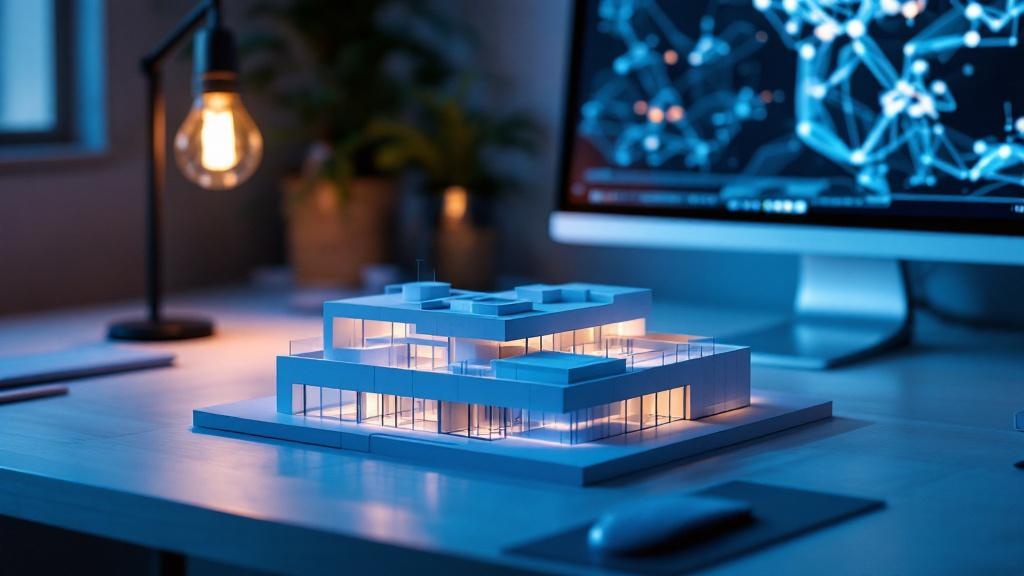
18 May In-House vs. Outsourced Architectural Visualization: A Cost and Capability Comparison for SMEs
The True Cost of Building an In-House Visualization Team
The question of whether to build or buy architectural visualization capability is, at its core, a financial one. Most founders and marketing directors at small-to-mid-sized firms underestimate the total annual outlay required to keep even a single visualization specialist productive. Before evaluating outsourcing alternatives, it pays to understand exactly what an in-house operation costs — not just the salary line, but the full picture.
Salary Benchmarks: Beyond the Base Number
A median 3D visualization specialist in a mature market commands roughly $95,000 in base salary. That number, however, represents only the starting point. When you layer in employer-side payroll taxes, health benefits, paid leave, ongoing training, recruiting costs, and the inevitable expense of turnover, the true compensation cost lands in the range of 130–160% of that base figure. In practical terms, a $95,000 hire becomes a $123,500–$152,000 annual commitment before the employee touches a single project file.
For a small firm, this isn’t just an expense — it’s a structural bet. During slow quarters, that cost persists. If the specialist leaves, replacement cycles in a competitive talent market can stretch months, during which project timelines slip and client relationships strain.
Software Stack Costs
Professional architectural visualization demands a stack of licensed tools, each carrying its own annual cost:
| Software | Annual Cost | Notes |
|---|---|---|
| V-Ray Solo | [$540/yr](https://www.myarchitectai.com/blog/vray-pricing) | Single-app rendering; multi-app Premium is $718–$1,150/yr |
| Twinmotion | [$445/yr](https://resources.imaginit.com/building-solutions-blog/update-on-twinmotion-pricing) | Free for firms under $1M revenue; paid tier required for cloud features |
| 3ds Max | ~$2,300/yr | Industry standard for complex scene modeling |
| Render node licenses (V-Ray) | ~$82/month per node | 10 nodes adds ~$9,840/yr |
A single-artist setup using V-Ray, 3ds Max, and a couple of supporting tools easily reaches $3,000–$5,000 per year in software alone. Once you add render node licenses for heavier workloads, that figure can triple.
Hardware Investment
Rendering is computationally brutal. A workstation capable of handling production-grade 3D scenes — a high-end GPU, 64GB+ RAM, fast NVMe storage — runs $5,000–$8,000. That gets one person working. If you need parallel rendering capacity, a modest 10-node render farm requires $28,000–$68,000 in upfront hardware plus $4,800–$10,000 per year in electricity costs for power and cooling.
Cloud rendering services (starting as low as $38/month for platforms like D5 Render) have reduced the need for on-premises farms, but firms producing high volumes of photorealistic stills or animation still find themselves investing in local infrastructure for speed and control.
Minimum Viable Annual Spend
Adding up the components for a one-person in-house visualization team:
| Cost Category | Low Estimate | High Estimate |
|---|---|---|
| Salary + hidden costs (130–160% of $95K) | $123,500 | $152,000 |
| Software licenses | $3,000 | $5,000 |
| Workstation (amortized over 3 years) | $1,700 | $2,700 |
| Overhead (office space, IT support, management) | $7,000 | $10,000 |
| **Total** | **~$135,000** | **~$170,000** |
That’s the floor — one person, one workstation, no render farm. The moment you need animation capability, VR output, or faster turnaround through parallel rendering, costs escalate sharply toward $300,000+ annually.
The Outsourcing Alternative: What You Actually Pay
Outsourcing architectural visualization flips the cost structure from fixed to variable. Instead of carrying year-round personnel and infrastructure, you pay for deliverables — and only when you need them.
Per-Image Pricing
The standard unit of purchase in the outsourced visualization market is the single rendered image. Pricing varies significantly based on complexity, artistic quality, and vendor positioning:
| Project Type | Price Range Per Image | Key Variables |
|---|---|---|
| Residential exterior (standard) | $200–$500 | Building complexity, landscaping detail |
| Residential interior | $300–$700 | Material accuracy, lighting complexity |
| Commercial / hospitality | $700–$1,500 | Scale, custom fixtures, photorealism level |
| Large-scale / aerial / bird’s-eye | $1,000–$2,000+ | Urban context, environmental integration |
Volume discounts are common. A firm ordering 10–20 images for a single development project can typically negotiate 15–30% reductions from list pricing, particularly with studios structured for batch production.
In the Japanese domestic market, photorealistic CG rendering for residential projects clusters around ¥50,000–¥150,000 ($330–$1,000) per cut, with commercial and large-scale work reaching ¥200,000–¥300,000+ — broadly consistent with international benchmarks.
Per-Project Flat Rates
For campaign-scale work — a complete marketing package covering multiple angles, an animation walkthrough, print-ready stills, and interactive elements — vendors increasingly offer per-project pricing. These flat rates eliminate the uncertainty of per-image ordering when total scope is well-defined. A comprehensive visualization package for a mid-sized residential development might run $8,000–$25,000 depending on deliverable count and format diversity, compared to the $135,000+ minimum for a year of in-house capacity.
Cloud Rendering for Light Internal Use
Not every visualization need warrants a vendor engagement. For quick conceptual renders, internal reviews, or early-stage design exploration, cloud-based tools like D5 Render at $38/month or Twinmotion’s free tier (for firms under $1M revenue) let teams produce serviceable output without the overhead of professional rendering infrastructure. These tools don’t replace a specialized studio for client-facing deliverables, but they fill the gap for day-to-day design communication.
Total Cost Comparison
For firms producing fewer than 400 render-hours per month — which covers the vast majority of SMEs — outsourcing typically costs 40–60% less than maintaining equivalent in-house capacity. The savings compound when you factor in the elimination of hiring risk, training overhead, software license management, and hardware depreciation.
A firm spending $60,000–$80,000 annually on outsourced visualization gets access to a range of specialists, formats, and production scales that a $150,000 in-house hire simply cannot replicate alone.
Quality, Control, and Turnaround Trade-Offs
Cost is only one dimension of the build-vs-buy decision. Quality control, creative ownership, and responsiveness matter just as much — and the trade-offs here are genuinely nuanced.
The In-House Advantage
An embedded visualization specialist develops deep familiarity with your brand language, preferred materials, and design philosophy. They can iterate in real time during design meetings, produce quick study renders without a formal brief, and maintain version consistency across long-running projects without the overhead of onboarding a new vendor for each engagement.
There’s no briefing lag. No back-and-forth over material specifications. No waiting for a vendor’s revision queue. For firms where visualization is tightly integrated into the design process rather than treated as a marketing output, this immediacy has real value.
The Outsource Advantage
What outsourcing sacrifices in immediacy, it gains in breadth. A specialized visualization partner maintains teams with diverse expertise — drone imaging, VR walkthrough production, cinematic real estate video, photorealistic still rendering — that no single hire can match. Studios operating at scale run structured QA workflows with multi-stage quality checks covering geometry validation, lighting accuracy, material fidelity, and compositing standards.
Outsourcing also provides elastic capacity. During a product launch or sales season, you can scale rendering volume dramatically without hiring. During quiet months, you spend nothing. This flexibility is particularly valuable for real estate developers whose project pipelines are inherently cyclical.
The Hybrid Model
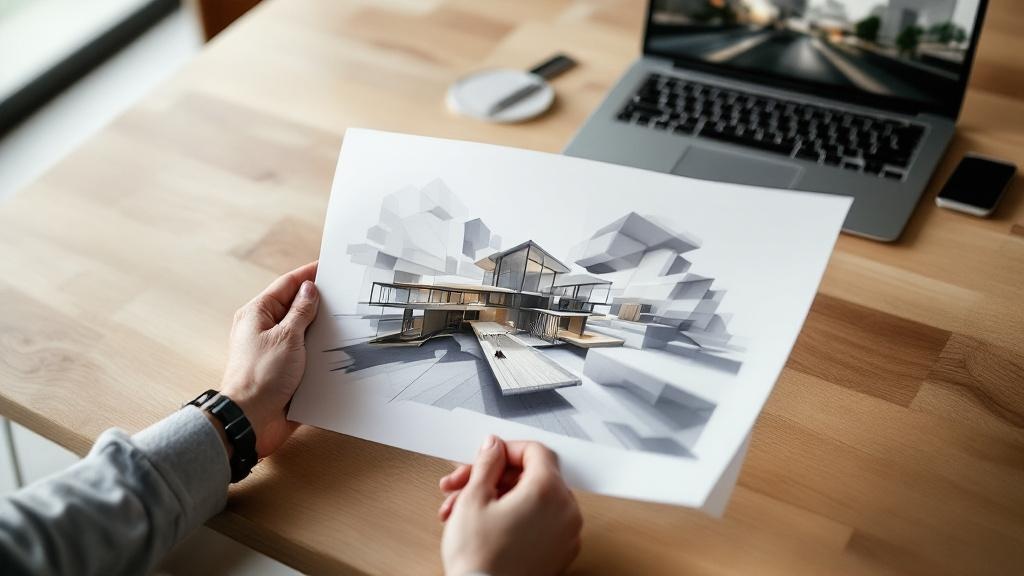
Many firms find their sweet spot in a hybrid approach: use a lightweight internal tool like Twinmotion’s free tier for early-stage concept visualization and internal presentations, then outsource to a specialized visualization partner like DMPJ for client-facing deliverables that demand photorealistic quality, animation, or multi-format output.
This model captures the immediacy of internal tooling for day-to-day design work while accessing professional-grade capability for the moments that matter commercially.
When In-House Makes Sense (and When It Doesn’t)
The in-house vs. outsource decision isn’t binary — it depends on where your firm sits across four key dimensions.
In-House Is Justified When…
Building an internal team makes economic and strategic sense when your firm consistently generates 400+ monthly render hours and visualization is central to your competitive positioning. At that volume, the fixed costs of an in-house operation distribute across enough output to approach (and eventually beat) per-unit outsourcing costs. If your firm’s value proposition depends on proprietary visual style, rapid design iteration, or tight integration between modeling and rendering workflows, the control benefits of in-house capability may outweigh the cost premium.
Outsourcing Is Recommended When…
For firms with variable project flow, outsourcing is nearly always the better choice. If your rendering needs swing from 50 hours one month to 300 the next, maintaining staff to cover peak demand means paying for idle capacity during troughs. Outsourcing is also the clear winner when you need multi-format deliverables — still renders, animation walkthroughs, VR experiences, and drone-integrated footage — that would require hiring multiple specialists internally.
Specialized deliverables like VR tours, cinematic video production, and aerial drone imaging carry their own skill and equipment requirements that are impractical for most SMEs to maintain in-house.
The Decision Matrix
| Factor | Favors In-House | Favors Outsourcing |
|---|---|---|
| **Monthly render volume** | 400+ hours, consistent | Variable or under 400 hours |
| **Format diversity** | Single format (stills only) | Multiple formats (stills, video, VR, drone) |
| **Strategic criticality** | Visualization is core differentiator | Visualization supports marketing/sales |
| **Budget structure** | Can absorb $135K+ fixed annual cost | Prefers variable, project-based spending |
If your firm checks three or more boxes in the outsourcing column, building an internal team is likely to create cost drag without proportional capability gain.
How Japanese SMEs Are Navigating This Decision
The build-vs-buy calculation plays out differently in Japan than in Western markets, shaped by distinctive cultural, structural, and regulatory factors.
Training System Inefficiency as a Barrier
Research on digital adoption barriers in Japan’s construction sector has consistently identified training system inefficiency as the most critical obstacle preventing technology adoption. Japanese SMEs frequently lack structured training programs for specialized visualization tools, relying instead on informal mentorship and on-the-job learning. When a firm tries to bring rendering capability in-house, the onboarding period for a new visualization specialist — learning company-specific standards, software configurations, and client expectations — can stretch far longer than in markets with more formalized training infrastructure.
This makes the effective cost of hiring even higher than the salary benchmarks suggest. A visualization artist who takes six months to reach full productivity in a Japanese organizational context represents a significant gap in the cost-benefit calculation.
Conservative Change Culture Favoring Incremental Outsourcing
Japanese business culture emphasizes stability, long-term relationships, and incremental change over disruptive transformation. For most Japanese SMEs, the practical path isn’t a sudden leap from zero visualization capability to a fully staffed in-house team. It’s a gradual progression: start with outsourced project work, develop internal familiarity with visualization processes and quality standards, and only bring capability in-house once the business case is proven through sustained demand and strategic necessity.
This incremental approach aligns well with the hybrid model described above — internal tools for concepts, outsourced production for client-facing work — and explains why outsourcing remains the dominant model for architectural visualization among Japanese firms outside the top-tier developers.
The Bilingual Complexity Layer
For firms operating in Japan’s cross-border real estate market — and this is a growing segment, with foreign investment in Japanese real estate reaching ¥939.7 billion in 2024 — visualization vendor selection carries an additional requirement. The vendor must bridge Japanese precision standards with international client expectations. Japanese architectural culture demands meticulous accuracy in dimensional representation and material specification. International buyers and investors expect marketing-grade visual storytelling and emotional resonance.
Few domestic Japanese visualization studios operate bilingually. Few international studios understand Japanese architectural standards. This gap creates an opportunity for bilingual visualization partners who can deliver technically precise, aesthetically compelling output for projects targeting both Japanese and international audiences — exactly the positioning that DMPJ’s architectural visualization services are built around.
Making the Right Call for Your Firm
The data points in one direction for most small and mid-sized firms: outsourcing architectural visualization delivers better cost efficiency, broader capability access, and greater operational flexibility than building in-house. The exceptions are real — firms with 400+ consistent monthly render hours and a strategic dependency on proprietary visual identity have a legitimate case for internal teams. But for the majority of SMEs, especially those navigating Japan’s cross-border real estate market, the build-vs-buy answer is buy — and invest the savings in the projects themselves.
For small and mid-sized firms that need professional-grade visualization without the overhead of a full in-house team, DMPJ provides an outsourced partner model covering 3D rendering, virtual tours, drone imaging, and cinematic video. Explore our architectural and real estate visualization services to see how we scale with your project needs.
Sorry, the comment form is closed at this time.