

07 Jun 5 Japanese Fashion SMEs That Turned Sustainability Into a Growth Engine
# 5 Japanese Fashion SMEs That Turned Sustainability Into a Growth Engine
Japan’s sustainable fashion market is growing at nearly double the rate of the conventional apparel sector. But for decision-makers at small and mid-sized companies, market projections mean nothing without proof that sustainability actually works at their scale.
The five SMEs profiled here aren’t conglomerates with billion-yen R&D budgets. They’re lean companies — some less than three years old — that treated sustainability not as a cost center but as their core growth lever. From a plant-based fiber startup achieving 147% revenue growth to a clothing-swap venture expanding sevenfold across two cities, these Japanese sustainable fashion brand success stories share a common thread: measurable business results driven by environmental conviction.
Japan’s government is accelerating this shift. The Environment Ministry’s 2026 action plan targets a 25% reduction in household clothing waste by 2030, and over 1,000 textile companies have already declared sustainability commitments. For companies evaluating whether to invest in sustainable fashion initiatives, these five case studies offer the proof-of-concept evidence that boardroom presentations demand.
KAPOK JAPAN: From Zero to 147% Revenue Growth With a Plant-Based Fiber
When KAPOK JAPAN launched in 2020, the founders identified a gap most incumbents had overlooked: conventional down insulation relied on animal-derived materials with significant ethical and environmental baggage, yet no plant-based alternative had cracked the performance barrier. The company developed a proprietary process for kapok fiber — sourced from the seed pods of kapok trees that grow wild across Indonesia — as a sustainable down alternative offering comparable warmth at a fraction of the environmental cost.
What distinguishes KAPOK JAPAN from many eco-startups is how they structured their supply chain. Rather than purchasing kapok through commodity intermediaries, the company established direct partnerships with Indonesian harvesting communities, ensuring fair compensation and creating economic incentives for forest preservation rather than clearance. This supply chain design reduced sourcing costs by cutting out middlemen while generating a compelling provenance story that Japanese consumers found genuinely credible.
The results speak for themselves. KAPOK JAPAN achieved 147% year-over-year revenue growth and a 92% customer retention rate — a figure that points to product quality rather than novelty-driven trial purchases. Their flagship brand, KAPOK KNOT, expanded to 12 product categories from jackets to room wear. Customers kept buying because kapok fiber delivered superior comfort — lighter weight and better moisture management than synthetic alternatives — paired with verifiable environmental credentials.
The global kapok fiber market is projected to grow from USD 762.8 million in 2024 to USD 1.2 billion by 2033, validating KAPOK JAPAN’s bet that plant-based insulation would shift from niche curiosity to mainstream material. For SMEs evaluating sustainable textile innovation, this case demonstrates that a differentiated material can simultaneously solve an environmental problem and create a defensible market position.
MURON by MORITO: Recycled Fishing Nets on the Paris Fashion Week Runway
MORITO CO., LTD. has been making textiles since 1841 — a nearly two-century track record that makes their pivot to recycled marine materials all the more striking. Through their MURON initiative, the company developed a process to transform discarded fishing nets collected from Japanese coastal communities into high-quality textile fibers, simultaneously addressing ocean plastic pollution and creating a novel material with genuine performance characteristics.
The strategic masterstroke was in how MURON positioned the material. Rather than marketing it as a niche eco-product, MORITO pursued partnerships with internationally recognized brands that would validate the fiber’s quality credentials. Helly Hansen adopted MURON fibers for its H2O PROJECT® spring/summer 2025 product line, while avant-garde label ANREALAGE featured MURON-based fabrics at Paris Fashion Week — a runway that has no tolerance for compromised material quality.
These high-profile collaborations generated 89% export revenue growth and contributed to MORITO posting all-time highs in net sales, operating profit, and ordinary profit for the second consecutive fiscal year. The environmental impact is equally concrete: MURON diverts approximately 3.7 metric tons of marine plastic waste monthly while generating record profits.
For small fashion companies evaluating circular fashion strategies, MURON’s model illustrates a critical lesson: recycled materials gain market traction fastest when validated by credible brand partners rather than marketed solely on environmental merit.
9-jour.: Traditional Dyeing Meets Modern Denim for Global Appeal
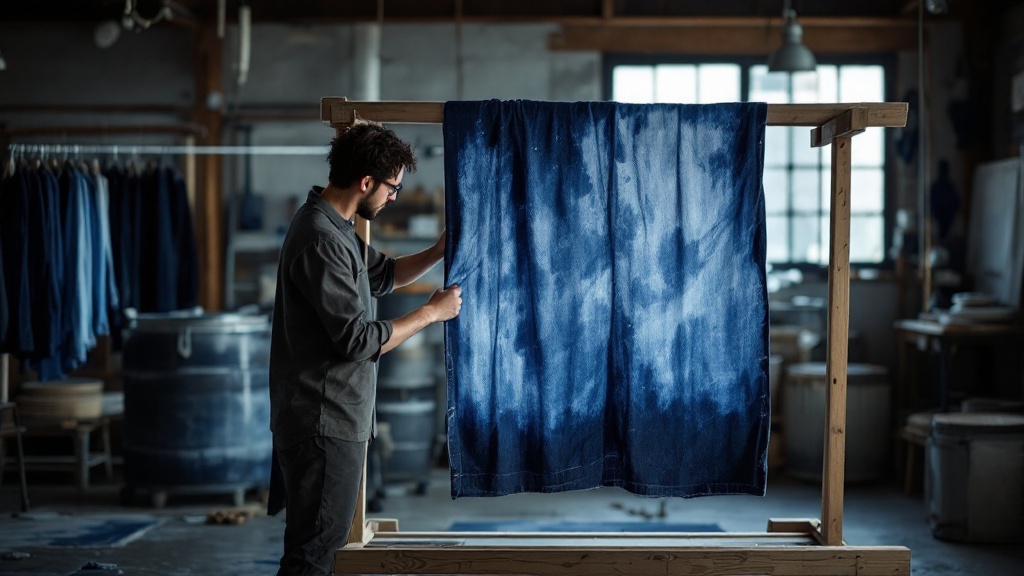
Founded in 2023, 9-jour. is the youngest company in this group — and arguably the one with the most audacious growth trajectory. This Japanese denim brand, operated by Denobo Structure LTD., reached 827 million yen in revenue in under three years by combining traditional Japanese plant-based dyeing techniques with contemporary design.
Every garment in the 9-jour. lineup is produced entirely within Japan, using botanical dyes derived from local plant sources rather than synthetic chemicals. But what makes this eco-friendly fashion business growth example particularly instructive is the transparency infrastructure behind it. Each product carries a QR code linking customers to detailed information about the specific artisans involved in production, the exact plant-based dyes used, and the environmental impact metrics of the item. This isn’t vague “we care about the planet” messaging — it’s verifiable, item-level data that Japanese consumers increasingly demand.
The company has built a production network of 27 small-scale textile artisans across Japan, deliberately preserving endangered craft techniques like traditional indigo and botanical dyeing methods that are at risk of disappearing as artisan populations age. This network provides 9-jour. with a supply chain moat that fast-fashion competitors cannot replicate, and has driven 43% export growth as international buyers seek authentic Japanese craftsmanship paired with legitimate sustainability credentials.
For companies considering sustainable fashion consulting by DMPJ, 9-jour. illustrates how Japan’s craft heritage can be transformed into a global competitive advantage when paired with modern transparency tools and strategic export positioning.
Energy Closet: Zero-Waste Clothing Swaps Reaching 12,000 Participants
Not every sustainable fashion success story involves high-tech materials or export ambitions. Energy Closet built its business on the deceptively simple concept of clothing swaps — monthly pop-up barter events where participants exchange unwanted garments — and scaled it into a genuine circular fashion case study for small business in Japan.
The model works because Energy Closet solved the problem that defeats most swap initiatives: what happens to items nobody wants. At their events, 85% of swapped items find new homes immediately. The remaining items enter a two-track system: wearable garments are upcycled by partner designers into one-of-a-kind pieces, while genuinely unusable items are converted into a fiber-soil material called TUTT, used in urban gardening projects. The result is a closed-loop system with zero waste leaving the process.
This comprehensive approach to circularity resonated powerfully with participants. Energy Closet attracted over 12,000 unique participants and achieved 215% revenue growth while expanding from a single location to seven venues across Tokyo and Osaka. Revenue comes from event participation fees, a subscription service offering priority access to upcycled collections, and partnerships with brands seeking to demonstrate circular commitments.
Spiber: Brewed Protein Fiber Attracting 40+ Brand Partners Worldwide
Spiber occupies a unique position among these case studies as a biotechnology company that has fundamentally reimagined what textile fibers can be. The company produces Brewed Protein™ fiber — a cashmere-like material created through fermentation of plant sugars by engineered microorganisms — achieving a combination of luxury hand-feel and environmental performance that conventional materials cannot match.
The environmental credentials are genuinely exceptional. Brewed Protein™ fiber demonstrates 98% biodegradability in marine environments, directly addressing the microfiber pollution crisis that makes synthetic textiles one of the largest sources of ocean plastic. Unlike recycled polyester, which still sheds microplastics during washing, Spiber’s fiber breaks down completely in natural environments without leaving persistent residues.
Spiber translated this technological edge into commercial traction by pursuing an aggressive partnership strategy. Over 40 brands worldwide now work with Brewed Protein™ fiber across more than 200 commercial products. New Zealand’s Untouched World launched an entire Spring/Summer 2025 collection featuring the material, while multiple Japanese and international labels have incorporated it into premium product lines. This broad adoption drove 112% revenue growth between 2023 and 2025.
For decision-makers evaluating material innovation as a growth strategy, Spiber demonstrates that genuinely breakthrough sustainability science can command premium pricing and attract partnership interest that accelerates growth far beyond what marketing alone could achieve.
Common Patterns: What These Success Stories Share
Despite operating in different segments — from biotech to barter events — these five companies share structural characteristics that explain their success and offer transferable lessons for other SMEs considering sustainable fashion initiatives.
Deep Integration With Japanese Cultural Values
None of these companies treated sustainability as an imported Western framework to be bolted onto existing operations. KAPOK JAPAN connected their supply chain design to fair-trade principles that resonate with Japanese consumers’ expectations for ethical sourcing. 9-jour. embedded their sustainability story within the preservation of traditional Japanese craft techniques. Energy Closet tapped into the deeply held concept of *mottainai* — the Japanese spirit of waste avoidance — to normalize clothing swaps as culturally appropriate behavior rather than a concession. The companies that succeeded framed sustainability as an expression of values their customers already held.
Transparency Through Verifiable Metrics
Every company in this group provides specific, checkable numbers rather than vague claims. 9-jour.’s QR-coded artisan profiles, MURON’s monthly tonnage of marine waste diverted, Spiber’s biodegradability data, KAPOK JAPAN’s customer retention rates — these are the kinds of concrete metrics that build trust with Japanese consumers who increasingly verify sustainability claims through multiple sources before purchasing.
Strategic Partnerships Amplifying Impact and Credibility
MURON gained global credibility through Helly Hansen and ANREALAGE. Spiber scaled through 40+ brand partnerships. 9-jour. built a network of 27 artisans. In every case, strategic partnerships served as both credibility validators and distribution multipliers. For SMEs without the marketing budgets of large brands, partnerships are the most capital-efficient path to market trust.
| Company | Founded | Core Innovation | Revenue Impact | Sustainability Metric | Partnership Strategy |
|---|---|---|---|---|---|
| KAPOK JAPAN | 2020 | Kapok fiber insulation | 147% revenue growth | 92% customer retention | Direct Indonesian community sourcing |
| MURON by MORITO | 1841 | Recycled fishing net fiber | Record profits (2 consecutive years) | 3.7 tons marine waste diverted/month | Helly Hansen, ANREALAGE |
| 9-jour. | 2023 | Plant-based denim dyeing | ¥827M in <3 years | 27 artisan craft techniques preserved | Network of traditional artisans |
| Energy Closet | — | Zero-waste clothing swaps | 215% revenue growth | 85% swap success rate, zero waste | Upcycling designer partnerships |
| Spiber | 2007 | Brewed Protein™ fiber | 112% growth (2023–2025) | 98% marine biodegradability | 40+ brands, 200+ products |
These five case studies demonstrate that sustainable fashion drives real business growth in Japan — but each company had to navigate complex certification landscapes, supply chain restructuring, and consumer communication challenges unique to the Japanese market. DMPJ’s sustainable fashion initiatives are built to help companies like yours replicate these results, drawing on our deep network of ethical fashion innovators and sustainable textile experts. Discover how we can help you build your own sustainability-powered growth story.
Sorry, the comment form is closed at this time.