


39 Biotechnology and Life Sciences | DMPJ
Japan’s biotechnology market reached $87 billion in 2023 and is projected to grow at a 17.1% CAGR through 2030, potentially reaching $263 billion — making it one of the fastest-growing biotech markets in Asia-Pacific. At Daisho Media Partners Japan (DMPJ), we support global biotechnology and life sciences organizations in navigating this rapidly expanding ecosystem. From facilitating R&D partnerships with world-class institutions like RIKEN and the University of Tokyo, to guiding regulatory submissions through the PMDA — now the fastest major drug approval agency globally at a median 332 days — our tailored services accelerate innovation, foster collaborations, and ensure compliance in one of the world’s most advanced biotech markets.
Explore Our Blog
Data-Driven Insights for Global Biotech Leaders
Explore in-depth analysis of Japan’s $87B biotech market, PMDA vs. FDA regulatory comparisons, R&D partnership strategies with Japanese universities, technology transfer and IP licensing guides, and practical budgeting frameworks for market entry — all grounded in the latest industry data.
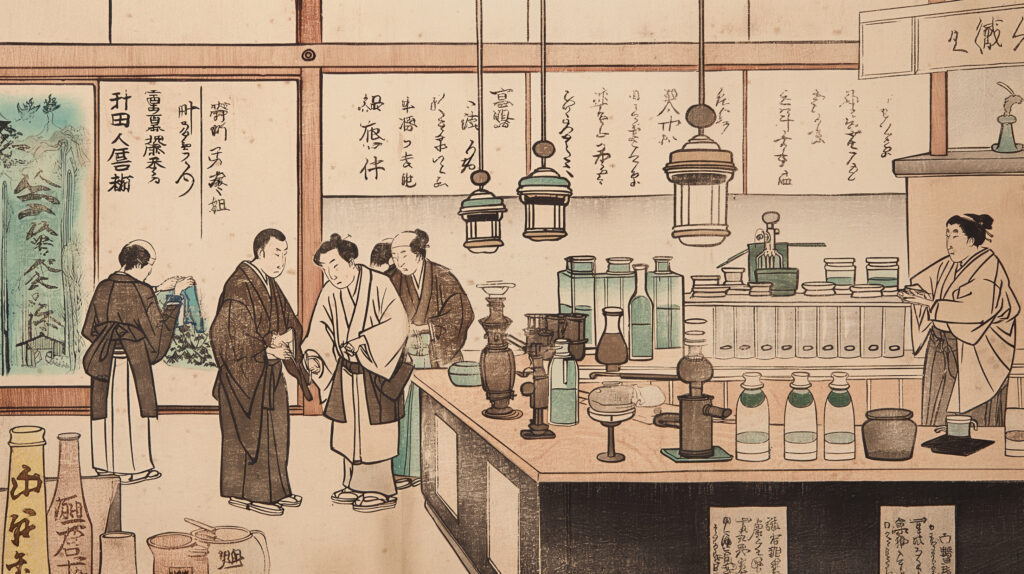
Our Service Offerings
R&D Collaboration Support
-
-
Fostering Breakthrough Innovations
-
Facilitating partnerships with RIKEN, the University of Tokyo, Kyoto University, AIST, and other leading institutions backed by Japan’s ¥150 trillion annual R&D investment.
-
Support for clinical trials and PMDA regulatory approvals — including SAKIGAKE designation with its six-month target review timeline.
-
Access to cutting-edge biotech facilities in regenerative medicine, cell therapy (23.2% CAGR), and AI-driven drug discovery.
-
-
Market Entry for Biotech Firms
-
-
Establishing Your Presence in Japan
-
Market analysis and competitive landscape studies across a pharmaceutical market valued at ¥11.49 trillion in FY2024.
-
Regulatory strategy leveraging Japan’s December 2023 guideline change that eliminated most bridging study requirements for foreign sponsors.
-
Localized branding and KOL engagement strategies for Japanese physicians, payers, and institutional stakeholders.
-
-
Technology Transfer and Licensing
-
-
Bridging Global and Local Innovations
-
Negotiation of licensing agreements through Japan’s TLO ecosystem, including Todai TLO, Kyoto University TLO, and iPS Academia Japan.
-
Support for intellectual property protection under Japan’s national university corporation framework, with typical upfront licensing fees of $50K–$500K and 2–5% running royalties.
-
Facilitation of joint research, sponsored research, and co-development partnerships aligned with Japan’s ¥53.3 trillion biomanufacturing target by 2030.
-
-
Biotech Media and Content Creation
-
-
Showcasing Your Scientific Impact
-
Production of educational videos, scientific visualizations, and bilingual content for global and Japanese audiences.
-
Content for investor pitches, AMED grant applications, and stakeholder engagement — backed by market intelligence and data storytelling.
-
Coverage of biotech conferences, LINK-J events, and industry forums across Japan’s life sciences ecosystem.
-
-
Talent Acquisition and Training
-
-
Building Your Biotech Workforce
-
Recruitment of specialized researchers and scientists through networks spanning JSPS ($1.6B annual budget), AMED, and Japan’s leading academic institutions.
-
Cultural and industry-specific training for global teams navigating Japan’s consensus-driven business culture and relationship-first engagement norms.
-
Collaboration with universities and LINK-J for talent pipelines in regenerative medicine, peptide therapeutics, and bioinformatics.
-
-
Regulatory Strategy and PMDA Navigation
-
-
Accelerating Your Path to Approval
-
End-to-end PMDA submission management — from pre-application consultation to approval — leveraging Japan’s 332-day median review, the fastest of any major agency.
-
SAKIGAKE designation assessment and application support, with six-month target reviews and premium pricing eligibility.
-
Expedited pathway navigation including Conditional Early Approval, Regenerative Medicine Fast-Track, and the new SaMD six-month review channel.
-
-
Japan’s Biotech Market by the Numbers
$87B → $263B
Biotech Market Growth
Japan’s biotechnology market is projected to grow at a 17.1% CAGR from $87 billion in 2023 to $263 billion by 2030 — one of the fastest growth trajectories in the Asia-Pacific region.
332 Days
Fastest Major Drug Approval
The PMDA achieved the shortest median approval time of any major regulatory agency in 2023 — one day faster than the FDA (333 days) and 121 days faster than the EMA (453 days), with the most predictable review timelines globally.
¥150 Trillion
Annual R&D Investment
Japan commits approximately ¥150 trillion annually to R&D — ¥30 trillion from government sources including JSPS ($1.6B) and AMED (¥130B) — creating deep pools of potential research partners and co-development opportunities.
23.2% CAGR
Cell Therapy Growth
Japan’s cell therapy segment is growing at a 23.2% CAGR through 2030, anchored by Kyoto University’s Nobel Prize-winning iPSC research and the world’s first dedicated regulatory framework for regenerative medicine.
29.3%
Population Aged 65+
With 36.25 million people aged 65 and over, Japan’s aging population is a powerful market catalyst — driving a “longevity economy” projected to reach ¥115 trillion ($780 billion) by 2040 across healthcare, nursing care, and lifestyle industries.
¥53.3 Trillion
Biomanufacturing Target by 2030
Japan’s national Bio-Strategy sets an ambitious target for Japanese enterprises to capture ¥53.3 trillion in biomanufacturing market share by 2030, backed by AMED’s $2.3 billion Double Match Up grant program offering 2-to-1 funding matches.
Why Choose DMPJ for Biotechnology and Life Sciences?
-
Deep Sector Expertise: We bring specialized knowledge of Japan’s biotech and life sciences landscape — from the PMDA’s expedited pathways (SAKIGAKE, Conditional Early Approval, Regenerative Medicine Fast-Track) to the intricacies of university IP frameworks and TLO licensing. Our team stays ahead of regulatory shifts, including the landmark December 2023 guideline that eliminated most bridging study requirements for foreign sponsors.
-
Tailored Solutions: Every engagement is customized to your therapeutic area, company stage, and strategic objectives. Whether you are a seed-stage startup needing a $30K–$80K feasibility assessment or an established firm pursuing a full PMDA submission at $225K–$250K in review fees, we design phased investment plans with clear go/no-go milestones that manage risk at every step.
-
Robust Network: Active relationships with Japan’s leading research institutions — RIKEN, the University of Tokyo, Kyoto University, AIST, NIMS — as well as AMED funding bodies, LINK-J innovation hubs, and JETRO investment facilitation programs. We make introductions that matter this quarter, not connections from five years ago.
-
Bilingual Cultural Fluency: True bilingual capability means conducting PMDA consultations in Japanese, negotiating licensing terms with TLOs at native precision, and briefing your global board in fluent English — without losing technical accuracy or cultural context. In a market where trust and consensus drive every decision, cultural mediation is not optional.
-
Proven Impact: We help global biotech innovators turn Japan’s structural advantages — the world’s fastest regulatory approvals, premium pricing for novel therapies, R&D tax credits covering up to 50% of eligible expenses, and 10-year orphan drug exclusivity — into measurable commercial outcomes. Our clients typically reach break-even within 3–5 years of market entry.
Our Approach
01 Research and Discovery
Deep analysis of Japan's biotech ecosystem — mapping growth segments from cell therapy (23.2% CAGR) to digital health, identifying the right institutional partners, and benchmarking against your competitive landscape.
02 Strategic Planning
Developing phased R&D and market entry strategies with clear budgets and milestones — from feasibility assessment ($30K–$80K) through PMDA submission and commercial launch, tailored to your therapeutic area and company stage.
03 Collaboration Facilitation
Connecting global firms with Japanese partners through active networks at RIKEN, the University of Tokyo, Kyoto University, LINK-J, and AMED — structuring joint research, sponsored research, and licensing agreements for mutual success.
04 Regulatory Navigation
Guiding submissions through the PMDA's 332-day median review pathway — including SAKIGAKE designation, Conditional Early Approval, and the new SaMD fast-track — while ensuring compliance with Japan's evolving regulatory framework.
05 Ongoing Support
Providing continuous consultation from post-approval pharmacovigilance and NHI pricing negotiation to KOL engagement, market expansion, and long-term partnership management across Japan's life sciences landscape.

Industries We Serve
Pharmaceuticals
Medical Devices
Academic Research
Healthcare Providers
Biotech Startups
Frequently Asked Questions
How fast is PMDA approval compared to the FDA and EMA?
In 2023, the PMDA posted a median approval time of 332 days — one day faster than the FDA (333 days) and 121 days faster than the EMA (453 days). For orphan medicines, the gap is even wider: PMDA’s median was 265 days versus the FDA’s 332. Japan also offers the most predictable review timelines, with an interquartile range of just 83 days compared to the FDA’s 170 days.
What is the SAKIGAKE designation and who qualifies?
SAKIGAKE is Japan’s expedited review pathway offering a six-month target review with a dedicated PMDA concierge manager, rolling pre-application review, and premium pricing eligibility. Products must have a novel mechanism of action, target a serious condition with high unmet need, and commit to first-in-Japan development. The pre-application consultation package costs approximately $90,000 USD.
Do foreign companies still need Japanese bridging studies?
In most cases, no. A landmark December 2023 MHLW guideline eliminated the blanket requirement for separate Japanese Phase 1 studies before multi-regional clinical trials. This reform shortens timelines by an estimated 6–12 months and reduces development costs by $2–5 million for most foreign sponsors, directly addressing Japan’s historic “drug loss” problem.
How much does it cost to enter Japan’s biotech market?
A typical phased entry starts with a feasibility assessment at $30,000–$80,000, followed by partner identification ($50,000–$120,000), and regulatory submission ($200,000–$500,000). PMDA review fees for a full NDA total approximately $225,000–$250,000 — substantially lower than the FDA’s $3M+ PDUFA application fee. We design phased investment plans to manage risk at every step.
Can foreign companies partner with Japanese research institutions?
Absolutely. Japan’s research ecosystem — including RIKEN, the University of Tokyo, Kyoto University, AIST, and NIMS — actively welcomes foreign partnerships through joint research, sponsored research, and co-development agreements. Japan’s TLO (Technology Licensing Organization) system provides structured pathways for IP licensing, with typical upfront fees of $50,000–$500,000 and running royalties of 2–5%.
What government incentives support foreign biotech firms in Japan?
Japan offers R&D tax credits covering up to 50% of eligible expenses for strategic technologies including biotechnology. AMED’s Double Match Up program provides 2-to-1 government funding matches for biopharma startups (up to $44.5M per pipeline). Additional incentives include 10-year orphan drug exclusivity, premium pricing for SAKIGAKE-designated products, and conditional early approval pathways for regenerative medicine.
Latest Insights on Biotechnology Life Sciences

Japan’s Biotech Market in 2026: Why Global Life…
Japan’s $87B biotech market is projected to hit $263B by 2030. Explore growth segments, government i

How Foreign Biotech Firms Are Building R&D Part…
Learn how foreign biotech firms build R&D partnerships with RIKEN, University of Tokyo, and Kyoto Un

PMDA vs. FDA vs. EMA: A Biotech Company’s Guide…
Compare PMDA, FDA, and EMA approval timelines for biotech. Learn why Japan leads in review speed and

How to Choose a Japan Market Entry Partner for …
Learn seven proven criteria for selecting a Japan biotech market entry partner. Compare consulting m

A Step-by-Step Guide to Technology Transfer and…
Practical guide to licensing biotech patents from Japanese universities. Learn IP frameworks, TLO pr

Budgeting for Japan Biotech Market Entry: Costs…
Concrete cost ranges, timelines, and ROI benchmarks for entering Japan’s biotech market. PMDA fees,
Our Projects
Sorry, no posts matched your criteria.
Japan’s $87 billion biotech market is growing at 17.1% annually — with the world’s fastest regulatory approvals, premium pricing for innovation, and ¥150 trillion in annual R&D investment. Partner with DMPJ to turn this opportunity into your competitive advantage.
Get in Touch
CONTACT US