


29 May Telemedicine vs. Community Health Outreach in Japan: Which Model Fits Your Organization?
Two Approaches to the Same Problem
Japan’s healthcare system faces a widening access gap. Rural depopulation, physician shortages outside major cities, and a population where over 29 percent are aged 65 or older have pushed organizations to look beyond the traditional clinic visit. Two broad models have emerged: telemedicine—encompassing remote consultations, e-prescriptions, and remote patient monitoring—and community health outreach, which brings care directly to people through mobile clinics, public health campaigns, and home visits.
For SME leaders weighing telemedicine vs community health outreach in Japan, the choice may seem like a technology-versus-boots-on-the-ground debate. In practice, though, the boundary is blurring. The 2024 medical fee revision formally recognized care models that combine remote physician oversight with on-site nursing support, and a growing number of organizations now run both channels in parallel. Understanding what each model delivers—and where it falls short—is the starting point for any sound investment decision.
The State of Telemedicine in Japan After the 2024 Fee Revision
Adoption remains low despite regulatory progress
Japan’s telemedicine infrastructure grew substantially during the pandemic, yet nationwide penetration is still modest. A prefectural-level study found that only 15.6 percent of clinics offer telemedicine, with rates ranging from 3.4 percent to 39.2 percent depending on location. On the demand side, patient utilization hovers around five percent of the adult population—a figure corroborated by a separate survey reporting 4.7 percent uptake among adults aged 18–79. For context, the OECD average for teleconsultations as a share of all doctor visits stood at roughly 13 percent in 2023, with leaders like Denmark and Sweden exceeding 25 percent.
New reimbursement codes change the economics
The Reiwa 6 (2024) fee revision moved telemedicine from an emergency workaround to a permanently reimbursable service category. Key changes include 253 points for an initial tele-consultation (versus 291 for in-person), parity at 76 points for follow-ups, and a new Remote Collaborative Medical Examination Fee of 900 points for specialist consultations conducted remotely alongside a local provider. Supplemental add-ons—such as the Home Medical Care DX Information Utilization Add-on (10 points) and the Remote Electronic Prescription Add-on (10 points)—further incentivize integrated digital workflows.
The rural adoption paradox
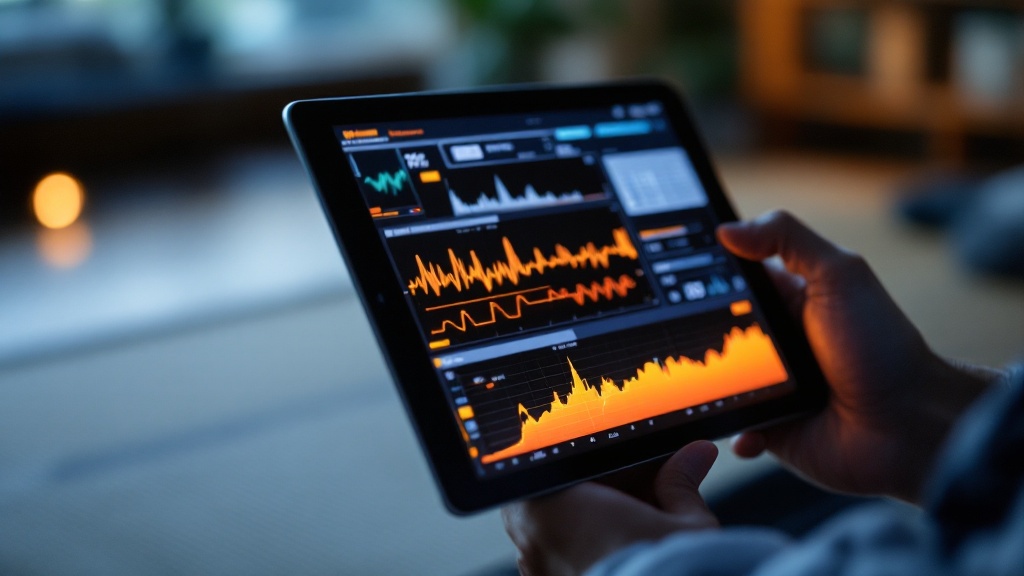
Statistically, less densely populated prefectures show higher rates of clinics offering telemedicine (r = −0.31, p < 0.05). But availability alone does not guarantee reliable service. A nationwide survey of rural facilities found that 34 percent of non-adopting clinics cited hardware preparation as the primary barrier, followed by financial constraints at 22.4 percent. Broadband gaps in mountainous and island communities further limit real-time video quality—precisely where the remote patient monitoring Japan adoption rate should be highest.
Community Health Outreach on the Ground
Mobile healthcare units in depopulating prefectures

Where connectivity falters, physical presence fills the gap. Programs deploying mobile healthcare units into Japan’s underserved areas equip vans and buses with portable diagnostic equipment—blood-pressure monitors, portable ultrasound, point-of-care blood analyzers—and bring them directly to communities that have lost their local clinic. These units are especially active in Tohoku and Shikoku, regions where the land area classified as “medically underserved” is projected to grow by roughly 30 percent between 2020 and 2050 even as resident populations shrink.
Free screenings and vaccination campaigns as trust builders
Community outreach earns credibility through actions that cost the participant nothing. Free cancer screenings at community centers, seasonal influenza vaccination drives at temples and schools, and metabolic-syndrome check-ups at factory cafeterias lower the barrier to first contact. For organizations targeting dispersed or skeptical populations—foreign workers unfamiliar with Japan’s insurance system, elderly residents distrustful of technology—these face-to-face touchpoints generate a level of trust that a video call rarely matches.
The D-to-P-with-N model
The 2024 fee revision formally recognized the Doctor-to-Patient-with-Nurse (D-to-P-with-N) framework, in which a nurse is physically present with the patient while a physician joins remotely. This model was assigned its own reimbursement pathway and is increasingly used in home-visit nursing, remote island clinics, and elder-care facilities. It blends the trust of in-person contact with the scalability of telemedicine—an early signal that regulators see hybrid models as the future.
Head-to-Head Comparison for SME Decision-Makers
When evaluating digital health solutions for rural Japan, decision-makers need a clear view of costs, reach, and regulatory burden. The table below summarizes the core trade-offs.
| Dimension | Telemedicine | Community Outreach |
|---|---|---|
| **Initial setup cost** | ¥500K–¥2M (platform, hardware, integration) | ¥300K–¥1.5M per event (vehicle, staff, equipment rental) |
| **Ongoing cost model** | Monthly SaaS fees + per-consultation reimbursement | Per-event or per-campaign budget |
| **Geographic reach** | Anywhere with stable broadband | Limited by driving distance and logistics |
| **Scalability** | High—add users without adding infrastructure | Low—each new location requires physical deployment |
| **Best-fit demographics** | Working-age adults comfortable with smartphones | Elderly, foreign workers, populations with low digital literacy |
| **Regulatory burden** | MHLW telemedicine guidelines, APPI compliance, encryption standards | Event permits, medical-waste handling, nurse/physician staffing ratios |
| **Data collection** | Continuous (wearables, patient portals) | Episodic (event-day records) |
| **Reimbursement** | 253 pts (initial), 76 pts (follow-up), 900 pts (remote collaborative) | Varies; many screening events funded by municipal budgets or CSR |
Cost structure
A mid-sized telemedicine deployment—platform license, tablets for satellite offices, staff training—typically runs ¥500K to ¥2M upfront, plus ¥50K–¥150K per month in ongoing fees. Community outreach events, by contrast, carry per-event costs that vary widely depending on scale: a single-day screening at a factory might cost ¥300K, while a multi-site mobile clinic campaign over a quarter could exceed ¥5M. Telemedicine favors predictable, subscription-style budgeting; outreach favors campaign-style spending tied to specific outcomes.
Scalability and geographic reach
Telemedicine scales horizontally—once the platform is live, adding a new user in Hokkaido costs the same as one in Osaka. Community outreach scales linearly: every new site demands a vehicle, staff, and local coordination. For organizations with dispersed factory sites or branch offices across multiple prefectures, telemedicine often wins on reach per yen. But for concentrated, hard-to-reach populations—think a fishing village with no LTE coverage—outreach may be the only viable option.
Patient demographics
Age is the clearest dividing line. Survey data shows that adults aged 60 and older without prior telemedicine experience consistently prefer face-to-face care, regardless of how frequently they visit a doctor. Younger, digitally literate employees accept—and often prefer—the convenience of a video consultation that saves a half-day of travel. Organizations with a predominantly senior workforce or those serving elderly community members should weigh this preference heavily.
Regulatory and data-privacy requirements
Telemedicine platforms must comply with MHLW’s technical guidelines (720p minimum video, end-to-end encryption, five-year audit trails) and Japan’s Act on the Protection of Personal Information (APPI). Community outreach carries its own compliance load: on-site staffing ratios, informed-consent protocols for screenings, and medical-waste disposal rules. Neither model is regulatory-light, but the compliance costs differ in kind—telemedicine demands ongoing cybersecurity investment, while outreach demands event-level operational compliance.
When a Hybrid Strategy Wins
Combining remote monitoring with periodic check-ups
The strongest outcomes emerge when remote patient monitoring handles the steady state and community visits handle the inflection points. A patient with Type 2 diabetes, for example, can transmit daily glucose readings through a connected device and receive medication adjustments via tele-consultation. Every quarter, a mobile screening unit or workplace health event provides the blood draw, retinal scan, and foot exam that no camera can replace. Research covering Japan’s national health insurance claims found that expanded telemedicine use was associated with a 1.0 percent relative decrease in total health expenditure (p = 0.006) without adverse effects on outcomes—savings that help fund the community-visit component.
Case pattern: a manufacturing SME with dispersed factory sites
Consider a mid-sized manufacturer with four plants spread across Niigata, Gunma, and Nagano prefectures. A telemedicine platform connects all sites to an occupational-health physician in Tokyo for routine consultations and mental-health check-ins. Twice a year, a mobile health unit visits each plant for comprehensive physicals, cancer screenings, and metabolic-syndrome evaluations. The D-to-P-with-N model lets on-site nurses handle day-to-day triage while a remote doctor oversees clinical decisions. This blended approach covers both the digital comfort of younger line workers and the in-person preference of veteran employees—without requiring a full-time physician at each location.
Key metrics to track when running both models
Running parallel channels demands a unified measurement framework. Focus on these indicators:
- Utilization rate per channel — What share of eligible employees or community members actually use each service? A telemedicine platform with 8 percent utilization and a screening event with 60 percent turnout tells you where to double down.
- Time-to-care — How many days elapse between symptom onset and first consultation? Telemedicine should compress this for routine issues; outreach should compress it for populations who would otherwise never seek care.
- Follow-through rate — Of patients flagged during a community screening, how many complete their follow-up through the telemedicine channel? This handoff is where most hybrid programs leak value.
- Cost per completed care episode — Combine telemedicine subscription costs and outreach event costs into a single per-patient figure. Compare against the cost of traditional clinic visits plus employee travel time.
Japan’s digital health market is expected to reach $6.15 billion in 2024 with 7.29 percent annual growth, while the telemedicine segment alone is projected to grow at 19.5 percent CAGR through 2033. The economic tailwinds favor organizations that build hybrid infrastructure now rather than retro-fitting it later. For guidance on structuring a program that spans both digital and in-person channels, DMPJ’s digital and community healthcare solutions offer a practical starting framework.
Making the Right Call for Your Organization
Choosing between telemedicine and community outreach—or blending both—depends on your workforce geography, patient demographics, and budget. A Tokyo-based tech company with young, mobile employees will extract more value from a telemedicine-first strategy. A food processor with aging workers at rural plants will need community outreach as the anchor, supplemented by remote monitoring for chronic-condition management. Most organizations in between will benefit from a hybrid model that uses each channel where it performs best.
DMPJ specializes in designing hybrid healthcare accessibility programs that combine digital solutions with hands-on community engagement. Visit our Healthcare Accessibility Programs page to discuss which model fits your situation.
Sorry, the comment form is closed at this time.