

25 Jun Navigating Japan’s AgTech Regulations: Drones, Pesticides, JAS, and Data Privacy
Japan’s agricultural technology market is projected to reach USD 4.46 billion by 2034, driven by an aging farming population and severe labor shortages that make technological solutions a matter of national food security. For foreign AgTech companies, the commercial opportunity is clear. What’s far less clear is the regulatory path to reach it.
Japan’s agtech regulatory requirements span multiple government agencies, evolving aviation laws, pesticide regimes with no international shortcuts, organic certification standards with their own logic, and data privacy rules still being written. Companies that treat compliance as an afterthought discover — often painfully — that Japan’s regulatory environment can delay product launches by years and consume budgets that were meant for sales and marketing.
This guide maps the specific regulatory hurdles facing agricultural technology products entering Japan, from drone certification to farm data handling, and outlines a practical compliance roadmap for foreign companies planning their market entry.
Why Japan’s AgTech Regulatory Landscape Catches Foreign Companies Off Guard

Multi-Agency Oversight with Overlapping Jurisdictions
Unlike markets where a single agricultural ministry governs most farm technology approvals, Japan distributes regulatory authority across multiple agencies. The Ministry of Agriculture, Forestry and Fisheries (MAFF) oversees pesticide registration, organic certification, and agricultural data policy. The Ministry of Land, Infrastructure, Transport and Tourism (MLIT) controls drone aviation law. The Ministry of Health, Labour and Welfare (MHLW) manages food safety standards and maximum residue limits. For products that touch multiple categories — say, a drone-based precision spraying system — companies must satisfy requirements from all three ministries simultaneously.
This multi-agency structure creates overlapping compliance requirements that Japan’s own agricultural cooperatives have struggled to navigate, let alone foreign entrants unfamiliar with Japanese administrative processes. Each agency maintains its own application procedures, review timelines, and documentation standards, typically requiring Japanese-language submissions.
| Agency | Jurisdiction | Key AgTech Requirements |
|---|---|---|
| **MAFF** | Agriculture, organic standards, farm data | Pesticide registration, JAS certification, Agricultural Data Organization Act compliance |
| **MLIT** | Aviation, transportation | Drone registration, operator certification, flight permissions |
| **MHLW** | Health, food safety | Maximum Residue Limits (MRLs), food additive standards, safety assessments |
| **MIC** | Telecommunications | Radio frequency allocation for IoT devices, data transmission standards |
Regulations That Moved Fast Between 2020 and 2026
Japan’s agricultural regulatory framework has not stood still. Drone aviation rules were substantially revised in 2022 with mandatory registration for aircraft over 100 grams. MAFF issued guidelines for genome-edited feed and feed additives in March 2020, creating new compliance layers that didn’t exist when many companies began their Japan market-entry planning. The 2022 Agricultural Data Organization Act introduced strict data collection and consent protocols that reshaped how farm analytics platforms must operate. Companies relying on regulatory intelligence from even two or three years ago may find their assumptions outdated.
The Nileworks Warning
The costs of regulatory compliance in Japan’s agricultural drone sector are not theoretical. Nileworks, once Japan’s leading agricultural drone technology company, was dissolved in November 2025 after its shareholders — including Sumitomo Corporation — concluded that sustaining the necessary training, maintenance, and regulatory compliance infrastructure across Japan’s diverse agricultural regions was commercially unsustainable. Nileworks’ development resources were transferred to NTT e-Drone Technology, and Sumitomo subsequently launched a new marketing collaboration specifically designed to build the support frameworks that Nileworks could not maintain alone. For foreign companies evaluating Japan entry, this case is a sobering reminder that technical excellence alone does not guarantee regulatory survival.
Agricultural Drone Regulations: Aviation Law Meets Farming Reality
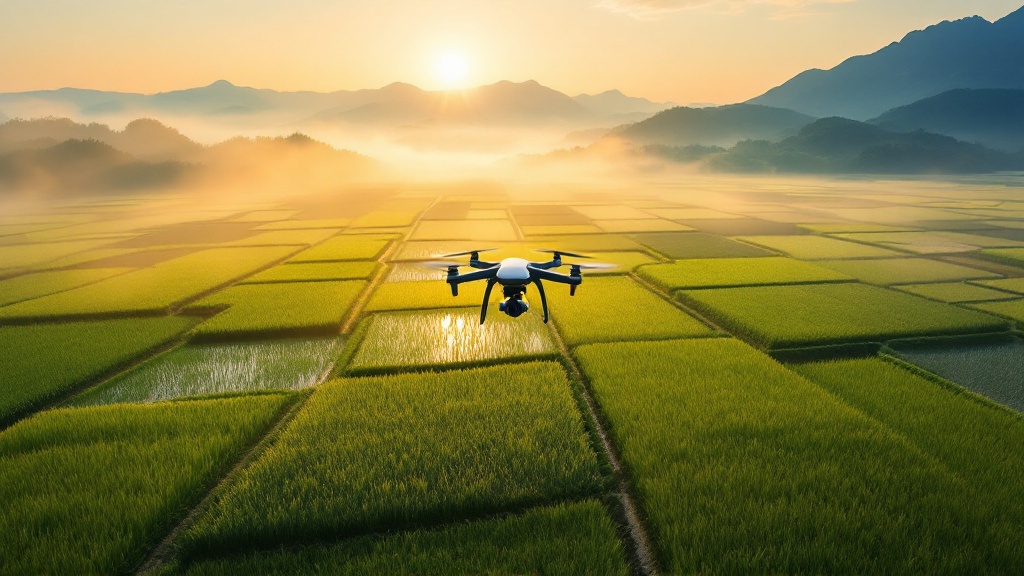
Japan agricultural drone regulations have evolved into one of the most detailed frameworks in the world, reflecting both the technology’s potential and the government’s caution about unmanned aircraft operating near populated areas and food crops.
Registration and Operator Certification
Since the 2022 revision of the Aircraft Act, all drones weighing over 100 grams must be registered with MLIT. Commercial agricultural operations require operator certification, with different certification levels depending on the complexity of the operation. Crop monitoring flights carry lighter requirements than pesticide application, which demands specialized training and testing. Japan’s drone market reached USD 1.8 billion in 2024, indicating strong adoption — but every unit in commercial agricultural use had to clear these certification gates first.
Pesticide Aerial Application: Label-Level Compliance
Aerial pesticide application in Japan requires compliance not just with aviation regulations but with the specific label directions of each pesticide product. If a product label does not explicitly authorize aerial application — or restricts it to certain aircraft types — drone spraying is prohibited for that product-crop combination. This creates a matrix of permissible operations that varies by chemical, crop, and region, requiring close coordination between drone operators and pesticide manufacturers.
2024 Autonomous Operations Expansion
The 2024 regulatory guidelines expanded the conditions under which autonomous drone operations are permitted, enabling beyond-visual-line-of-sight flights under specific certified conditions. These expanded permissions require sophisticated safety systems including obstacle detection and geofencing, effectively raising the technical bar for compliant equipment.
How DJI Navigated the System
DJI Agriculture offers a case study in effective regulatory navigation. Rather than attempting direct market entry, DJI signed a cooperative agreement with Syngenta Japan to jointly develop safe spraying technical standards and education courses for multi-rotor agricultural drones. By partnering with an established agricultural company that already had relationships with MAFF and JA cooperatives, DJI could develop compliant application protocols validated against specific pesticide labels — a process that would have taken far longer without a local partner.
Pesticide Registration and Precision Application Rules
Foreign AgTech companies developing precision application technology face Japan’s pesticide registration system, which operates independently from — and often more stringently than — international frameworks.
A 3–5 Year Registration Timeline
New pesticide registration in Japan typically requires three to five years of Japan-specific toxicological and environmental studies. Industry estimates suggest these studies must follow Japanese protocols that differ in key respects from OECD guidelines, meaning data generated for US EPA or EU registration often cannot be directly transferred. Companies planning to introduce new crop protection chemistries alongside their precision application hardware should factor this timeline into their earliest market-entry planning.
Maximum Residue Limits Stricter Than Codex
Japan maintains a positive list system for pesticide residues with Maximum Residue Limits that are frequently stricter than international Codex Alimentarius standards. For precision application technology, this means the margin for error in spray accuracy is tighter in Japan than in most other markets. Equipment must deliver exceptional accuracy to ensure treated crops remain within Japan’s MRL thresholds.
Precision Technology Must Match Label Directions
Any precision application system — drone, ground robot, or variable-rate sprayer — must validate that its output conforms to the specific directions on the registered pesticide label, including application rates, concentrations, and methods. This is not a blanket approval process; each technology-pesticide-crop combination may require separate validation.
Variable Buffer Zones
Buffer zone requirements between treated areas and sensitive zones (waterways, residential areas, neighboring crops) vary by crop type, pesticide formulation, and local environmental conditions. Precision technology that dynamically adjusts buffer zones based on real-time conditions represents a compliance advantage, but the system must be validated for each regulatory context in which it operates.
JAS Certification for AgTech in Organic Production
The Japanese Agricultural Standard (JAS) certification system governs organic production and is administered through MAFF-accredited certification bodies across Japan. For AgTech products used in organic farming systems, JAS compliance adds a distinct set of requirements beyond conventional agricultural regulations.
Prohibited Substance Compliance
Technologies deployed in JAS-certified organic systems must demonstrate that they do not introduce prohibited substances into the production process. This includes materials used in sensor housings, drone components that contact crops, and any inputs applied through precision systems. The prohibited substance list is maintained by MAFF and does not mirror lists used by USDA Organic or EU organic programs.
A 6–12 Month Certification Process
The JAS certification process involves application submission, document review, on-site inspection, and final certification decision, with timelines typically ranging from six to twelve months depending on the complexity of the operation and completeness of documentation. For AgTech companies whose equipment will be used across multiple organic operations, each use case may require separate assessment.
International Equivalence Arrangements
Japan maintains equivalence arrangements with the United States, Canada, and Switzerland that simplify — but do not eliminate — organic certification requirements for operators from these countries. Products certified under USDA Organic or Canada Organic may qualify for streamlined JAS recognition, but additional documentation and verification steps are still required. Companies from countries without equivalence agreements face the full certification process.
Genome-Edited Product Guidelines
MAFF’s March 2020 guidelines for genome-edited feed and feed additives created new compliance layers for AgTech companies working with advanced breeding technologies. Developers must inform the government about genome-edited products prior to market introduction, and Japan’s approach to classifying these products differs from both US and EU frameworks. Companies deploying precision breeding or gene-editing tools need to verify whether their specific technology triggers these notification requirements.
Agricultural Data Handling and Privacy Requirements
Japan farm data privacy rules represent an increasingly important — and still evolving — regulatory dimension for AgTech companies, particularly those offering cloud-based analytics platforms or IoT sensor networks.
The Agricultural Data Organization Act
Japan’s 2022 Agricultural Data Organization Act established formal protocols for collecting, storing, and sharing agricultural data. The Act requires explicit farmer consent for data collection, defines data security standards for agricultural information systems, and establishes governance frameworks for agricultural data organizations. These requirements apply to any entity collecting farm data in Japan, regardless of where that entity is headquartered.
Different from GDPR, Different from US Frameworks
Japan’s agricultural data standards share some principles with GDPR but diverge in important ways, particularly around agricultural-specific consent requirements and data portability expectations. The framework also differs from US agricultural data governance, which relies more heavily on voluntary best practices than statutory requirements. Foreign analytics platforms designed for GDPR or US compliance typically require architecture modifications to meet Japanese standards — not just translation of privacy policies, but structural changes to data flows, storage locations, and consent mechanisms.
An Evolving Regulatory Frontier
Farmer consent protocols and data ownership questions remain active areas of regulatory development. Industry participants report that interpretations can vary between prefectures, and the relationship between agricultural data governance and Japan’s broader Act on Protection of Personal Information (APPI) continues to be clarified through administrative guidance. Companies building platforms for the Japanese market should design their data architecture with regulatory flexibility in mind — the rules that apply at launch may shift within the first year of operation.
A Practical Compliance Roadmap for Foreign AgTech Companies
Understanding individual regulations is necessary but insufficient. Success in Japan requires a coordinated compliance strategy that accounts for the interdependencies between regulatory domains and the realities of the Japanese business calendar.
Start 12–18 Months Before Commercial Launch
Regulatory engagement in Japan cannot begin at the same time as commercial preparation. Companies should initiate conversations with relevant agencies and potential certification bodies at least 12–18 months before their target launch date. This timeline accounts for documentation preparation, agency review cycles, and the seasonal nature of agricultural field testing that may limit validation windows to specific growing seasons.
Partner with Established Japanese Entities
The most consistently successful foreign AgTech companies in Japan share a common strategy: they enter through partnerships with Japanese organizations that have existing regulatory relationships. As Japan’s agrifoodtech ecosystem matures — the country’s share of Asian agrifoodtech investment jumped to 13% in 2025 from 6.1% in 2024 — the number of potential partners with both technical understanding and regulatory expertise is growing. DJI’s partnership with Syngenta Japan and Sumitomo Corporation’s active role in agricultural drone market development demonstrate the model. DMPJ’s regulatory guidance for AgTech products provides exactly this kind of partnership bridge for companies that lack existing Japanese institutional relationships.
Budget 20–30% of Market-Entry Costs for Compliance
Industry experience suggests that foreign AgTech companies should allocate 20–30% of their total Japan market-entry budget to compliance and localization activities. This includes regulatory application fees, Japan-specific testing, Japanese-language documentation, legal counsel, and the ongoing compliance monitoring that Japan’s evolving regulatory environment demands.
| Compliance Category | Estimated Timeline | Budget Share |
|---|---|---|
| Drone certification (MLIT + MAFF) | 6–12 months | 5–8% of entry budget |
| Pesticide registration (new active ingredients) | 3–5 years | 8–12% of entry budget |
| JAS organic certification | 6–12 months | 3–5% of entry budget |
| Data privacy architecture compliance | 3–6 months | 2–4% of entry budget |
| Legal, translation, ongoing monitoring | Continuous | 4–6% of entry budget |
Leverage Government Subsidies
Japan’s smart agriculture subsidy programs cover certified AgTech solutions at rates of 50–70%, significantly reducing the cost barrier for Japanese farm operators adopting foreign technology. However, qualifying for these programs requires that your technology meets specific certification standards and is often easier to navigate through agricultural technology market entry support from DMPJ or similar entities with subsidy application experience. The Japanese government’s economic stimulus package allocates substantial resources to agricultural structural transformation, and positioning your technology as subsidy-eligible can be the difference between a product Japanese farmers can afford and one they cannot.
Japan’s regulatory environment rewards preparation and penalizes assumptions. DMPJ’s agricultural technology team provides end-to-end regulatory guidance — from drone certification to JAS compliance — so your technology reaches Japanese farms without costly delays. Learn more about our AgTech regulatory support services.
Sorry, the comment form is closed at this time.