


15 Jun How to Fund Your Urban Renewal Project in Japan: Government Subsidies, Tax Incentives, and Financing Options for 2025–2026
Japan is channeling unprecedented public funding into urban transformation. For decision-makers planning an urban renewal project in Japan — whether you are a domestic developer, a foreign company entering the market, or a municipality seeking private partners — understanding the full landscape of subsidies, tax breaks, and financing structures is no longer optional. It is the difference between a project that stalls at the proposal stage and one that breaks ground.
This guide maps the funding mechanisms available in fiscal years 2025 and 2026, from national GX (Green Transformation) budgets to municipal preservation grants, with eligibility criteria, budget figures, and application timelines drawn directly from government sources.
Japan’s Record FY2026 Budget and What It Means for Urban Renewal
Japan’s Cabinet approved a record JPY 122.31 trillion draft budget for FY2026 — approximately US$780 billion — with green transition and smart city investment receiving the largest increases in a decade. For anyone evaluating a Japan urban renewal government subsidy in 2025 or 2026, this budget signals clear political commitment.
METI alone earmarked JPY 605 billion (US$3.8 billion) for GX and renewable energy initiatives, covering everything from hydrogen price-gap subsidies to factory-level energy efficiency upgrades. The flagship GX strategic regions program commits JPY 2.1 trillion (US$13.4 billion) over five years to subsidize corporate investment in factories and data centers that run entirely on nuclear or renewable power, with JPY 40 billion allocated for FY2026 alone.
The Ministry of the Environment boosted funding for rare metal recycling to JPY 37.9 billion — about 1.6 times the previous year — targeting recovery from discarded electronics to strengthen domestic supply chains. It also earmarked JPY 900 million for data center cooling technology demonstrations, a direct response to rising emissions from the digital infrastructure that underpins smart city operations.
These numbers matter because many urban renewal funding streams — from smart city pilot grants to green building subsidies — draw directly from these top-line allocations.
Smart City and IoT Infrastructure Funding
Smart city funding in Japan is structured around government incentives at both the national and municipal level, with clear entry points for companies at every scale.
Expanded Municipal Designations
MLIT added two new districts to its smart city funding program for FY2025: Koto Ward (Tokyo) and Numazu City (Shizuoka Prefecture). Koto Ward is investigating advanced urban technologies for a dense metropolitan environment, while Numazu is focused on mobility solutions for a community facing population decline and aging. These designations carry direct funding for pilot projects and infrastructure deployment.
At the national level, the government’s 100-smart-city initiative carries an estimated allocation of approximately USD 8.5 billion, targeting completion by end of 2025. The overall Japan smart cities market was valued at USD 63.15 billion in 2024, projected to reach USD 143.80 billion by 2030 at a 14.7% CAGR.
Tax Incentives for Technology Investment
Two recent tax measures are particularly relevant for companies investing in smart city infrastructure:
- Innovation box regime: Beginning April 2025, 30% of qualifying income from AI technology researched and developed in Japan can be claimed as deductible expenses through March 2032.
- “Super” tax measure: The 2025 Tax Reform introduced 50% special depreciation or a 5% tax credit for investments in machinery and equipment of JPY 1 billion or more in designated industries.
Application Timing
Smart city proposals to MLIT typically follow the Japanese fiscal calendar: calls for proposals open in September–October, with submission deadlines in December–January, and funding decisions finalized before the April fiscal year start. Smaller technology-specific grants may accept rolling applications.
Green Building and Low-Carbon Incentives

Japan’s green building incentive landscape operates through a layered system of certifications, each carrying distinct financial benefits.
CASBEE Certification
The Comprehensive Assessment System for Built Environment Efficiency (CASBEE) is Japan’s primary green building standard, evaluating energy efficiency, resource use, outdoor environment, and indoor environment. While not mandatory nationwide, many municipalities — including Osaka and Yokohama — require CASBEE reporting for buildings above 2,000 m². Certified projects can access density bonuses, expedited permitting, and direct municipal subsidies depending on the jurisdiction.
ZEH/ZEB Pathway and the GX ZEH Redefinition
The June 2022 revisions to the Building Energy Conservation Act set a target for all new buildings to achieve ZEH/ZEB-level energy performance by 2030, with average building stock reaching that standard by 2050. In September 2025, METI redefined ZEH and ZEH-M as “GX ZEH” and “GX ZEH-M”, raising the required primary energy reduction thresholds from the current 20–25% to a new uniform standard. This takes effect in April 2027, giving developers a clear planning horizon.
Direct Subsidies and Financing
The FY2026 budget channels significant funds into green construction:
| Program | Budget | Administering Body | Focus |
|---|---|---|---|
| Deep energy efficiency improvements | JPY 84 billion | METI | Factory and facility retrofits |
| Perovskite solar cell mass production | JPY 49.7 billion | METI | Building-integrated photovoltaics |
| Offshore wind surveys | JPY 12.2 billion | METI | Renewable energy for urban grids |
| Hydrogen price-gap subsidies | JPY 36.3 billion | METI | Clean fuel infrastructure |
| CCUS technologies | JPY 2.6 billion | MOE | Carbon capture and utilization |
The Development Bank of Japan (DBJ) Green Building certification unlocks preferential loan rates, offering below-market financing for projects that demonstrate lifecycle environmental performance. This is particularly valuable for commercial developers seeking to lower the cost of capital on certified projects.
Historic and Cultural District Preservation Funding
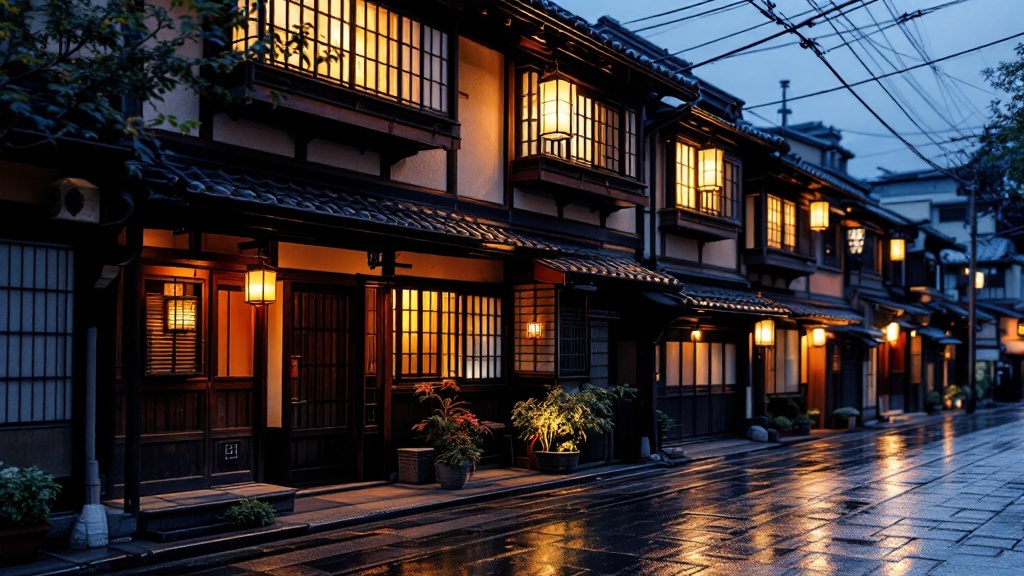
Cultural preservation in Japan carries dedicated funding streams that are often underused by private developers and foreign-affiliated companies.
Agency for Cultural Affairs Subsidies
The Agency for Cultural Affairs administers subsidies covering 50–70% of eligible restoration costs for designated National Treasures and Important Cultural Properties. These subsidies support not only structural restoration but also environmental controls, security upgrades, and accessibility improvements for protected buildings.
Preservation Districts for Groups of Traditional Buildings
Municipalities can designate Preservation Districts containing concentrations of traditional architecture. Once designated, property owners within these districts qualify for direct subsidies covering facade enhancement, disaster prevention facilities, and restoration using certified traditional techniques. The Japan Council for Preservation Districts coordinates knowledge exchange and documentation across participating municipalities.
Tax Benefits
Historic buildings in preservation districts can earn variable tax reductions on fixed asset taxes and city planning taxes. Additional breaks apply for transfers of culturally designated properties to promote public ownership and preservation. These less visible incentives can materially improve the economics of adaptive-reuse projects.
The corporate hometown tax (furusato nozei) allows companies filing blue-form corporate tax returns to direct donations to approved regional plans and claim credits against multiple tax categories, with many municipalities channeling these funds specifically toward preservation projects.
Application Timeline
Major restoration subsidies follow an autumn submission cycle, with decisions typically by year-end for funding in the following fiscal year starting April. Pre-application consultations with the Agency for Cultural Affairs are available and strongly recommended.
Affordable Housing and PPP Programs
UR Housing
The UR Housing program, administered by the Urban Renaissance Agency, provides a distinctive model: no guarantor, no key money, no agent fees. Eligibility uses income-based screening tied to rent levels. Foreign residents qualify with a valid residence card (visa term of at least one year) and standard income documentation. UR’s approach has made it a key reference point for affordable housing subsidy programs in Japan.
Japan Housing Finance Agency — Flat 35
The Flat 35 program offers fixed-rate mortgage financing for up to 35 years, with enhanced terms for energy-efficient construction. Properties meeting ZEH or higher standards receive reduced interest rates during the initial fixed period, creating a direct financial incentive for sustainable residential development.
Public-Private Partnership Frameworks
MLIT’s PPP frameworks for urban development provide structured pathways for private capital to participate in affordable housing projects. These frameworks define risk allocation, revenue sharing, and performance metrics, though implementation timelines remain a challenge — industry data indicates nearly 80% of ongoing urban redevelopment projects are experiencing delays averaging 2.7 years.
Regional revitalization subsidies often bundle housing with preservation and economic development components, creating funding opportunities for projects that serve multiple public policy goals simultaneously.
SME and Foreign Company-Specific Programs
Several programs specifically target smaller firms and foreign entrants — an important consideration for companies evaluating Japan urban development public private partnership funding opportunities.
| Program | Budget / Scale | Eligibility | Application Window |
|---|---|---|---|
| [SME Productivity Revolution](https://www.oecd.org/en/publications/sme-technology-adoption-in-the-united-kingdom_cecfb794-en/japan-s-sme-productivity-revolution-programme_4b64c40d-en.html) | JPY 340 billion (FY25/26) | Registered SMEs | Quarterly rolling |
| [J-Startup Program](https://globaldeal.io/blog/japan-startup-programs) | Varies (METI) | Foreign tech companies | Biannual (spring/autumn) |
| Deep-Tech Startups Support (DTSU) | Varies (JST) | Tech startups, incl. foreign | Open until 2027 |
| Social Economic Zones | Location-specific incentives | Companies in designated zones | Ongoing |
| Startup Visa Program | N/A (immigration) | Foreign entrepreneurs | Year-round |
The SME Productivity Revolution Programme, with its JPY 340 billion supplementary budget, supports equipment investment, digital transformation, and workforce training through quarterly application cycles — making it accessible to companies that cannot align with annual budget deadlines.
Social Economic Zones across Japan implement location-specific deregulation, subsidies, and tax incentives. The Tokyo One-Stop Business Establishment Center and similar municipal offices provide guided support for foreign-affiliated companies establishing operations.
Eligibility Requirements
Most programs require a Japanese subsidiary or registered branch office. Local content requirements and certified compliance with Japanese standards apply to subsidy-funded projects. Foreign-affiliated companies should budget 3–6 months for subsidiary establishment and program registration before their first application cycle.
How to Structure Your Funding Stack
The most successful urban renewal projects in Japan do not rely on a single funding source. They layer national subsidies, municipal co-funding, and private capital into a structured financing stack.
Combining Sources
A typical structure targets 30–40% from national subsidies (e.g., METI GX grants, Agency for Cultural Affairs restoration subsidies), 10–20% from municipal co-funding (density bonuses, local development subsidies), and the remainder from private capital — often enhanced by DBJ green loans or Flat 35 financing for residential components.
Sequencing Across Fiscal Cycles
Because different programs operate on different timelines — MLIT smart city proposals in autumn, Cultural Affairs grants by year-end, SME programme quarterly — projects that sequence applications across multiple fiscal year cycles can access cumulative funding that single-cycle approaches miss.
Common Pitfalls
Subsidy renegotiation delays are the leading cause of project stalls. When material costs escalate or project scope changes, the multi-layered approval process for subsidy revisions can add 12–18 months. Mid-project cost escalation has affected roughly 70% of active urban redevelopment projects, with costs rising approximately 20% above initial projections.
The Role of a Local Partner
Navigating multi-source financing across national ministries, municipal offices, and private lenders requires deep familiarity with Japanese administrative processes, application conventions, and relationship networks. This is where working with a consulting partner that understands both the incentive landscape and the cultural context makes a measurable difference. DMPJ’s expertise in Japan’s urban development incentive programs helps clients identify the right combination of programs, structure competitive applications, and coordinate timelines across multiple funding sources.
Next Steps
Securing the right funding mix can make the difference between a stalled proposal and a launched project. DMPJ’s team has deep experience navigating Japan’s complex incentive landscape — from national GX subsidies to municipal preservation grants. We help clients identify eligible programs, structure competitive applications, and align project timelines with fiscal year cycles. Visit our Urban Renewal and Community Development page to start building your funding strategy with expert guidance.
Sorry, the comment form is closed at this time.