


13 Jun How Mid-Sized Japanese Fashion Brands Are Winning in Global Markets
Why Mid-Sized Brands — Not Giants — Are Defining Japan’s Fashion Export Story
When conversations turn to Japanese fashion brands and international expansion, one name surfaces immediately: UNIQLO. According to Interbrand’s Best Global Brands ranking, UNIQLO debuted at 47th with a brand value of $17.7 billion — the only Japanese fashion name on the list. Impressive, certainly. But for a Japanese fashion company generating between $2 million and $50 million in annual revenue, the UNIQLO playbook is about as useful as a Formula 1 pit crew manual is to someone changing a tire in their driveway. The infrastructure, supply chain scale, and advertising budgets that propelled Fast Retailing’s global footprint simply cannot be replicated by mid-sized operations.
What mid-size Japanese designer brands pursuing global success actually possess is something UNIQLO deliberately traded away: concentrated cultural authenticity. A nimble brand rooted in artisanal craft traditions, Japanese streetwear subcultures, or a singular design philosophy can tell a story that resonates on a deeply personal level with international buyers. Corporate giants flatten their identity to serve mass markets. Smaller brands can sharpen theirs — and that sharpness is precisely what sophisticated global consumers are seeking.
The market timing reinforces this opportunity. Asia-Pacific now commands 41% of global apparel market share as of 2025, making it the world’s largest regional fashion market. Japan’s domestic apparel market reached ¥8.5 trillion in 2024, yet growth has decelerated to just 1.7% year-over-year. Meanwhile, the Japanese apparel industry faces structural challenges including labor shortages and domestic production shrinking to less than 2% of total market volume. For ambitious mid-sized brands, the math is clear: sustainable growth increasingly means looking outward — and doing so with a brand identity strong enough to cut through noise in foreign markets.
Streetwear and Contemporary Designer Brands That Broke Through
The most instructive examples of Japanese streetwear brands going global are not the ones that spent the most on advertising. They are the ones that invested most deliberately in brand positioning before they invested in distribution.
Sacai: Collaboration as Market Entry
Chitose Abe’s Sacai has become a case study in using strategic collaborations to bridge Tokyo credibility with global visibility. Rather than building expensive standalone retail networks, Sacai leveraged partnerships with Nike, Jean Paul Gaultier, and Carhartt WIP to reach entirely new consumer segments. The Sacai x Nike LDWaffle collaboration generated enormous secondary-market demand, introducing the brand to sneaker enthusiasts who had never encountered Japanese contemporary design. Simultaneously, Sacai’s consistent presence at Paris Fashion Week since 2011 maintained credibility within the high-fashion establishment. The model: earn attention through collaboration, earn respect through the runway.
Ambush: From Jewelry to High Fashion Through Celebrity Networks
Yoon Ahn’s Ambush demonstrates how a brand can cross category boundaries when celebrity partnerships are managed strategically. What began as a jewelry label evolved into a full fashion house after Yoon was appointed Dior’s jewelry designer in 2018 — a move that immediately elevated Ambush’s profile across the luxury ecosystem. Endorsements from figures like A$AP Rocky and Rihanna, combined with product collaborations with Nike and Beats by Dre, created organic demand without the traditional fashion advertising model. The critical insight: Yoon did not chase celebrity placements. She built creative relationships that made the partnerships feel authentic rather than transactional.
Kapital: Limited Distribution as Deliberate Strategy
Okayama-based Kapital operates on a fundamentally different model. Rather than pursuing broad distribution, the brand maintains tight control over where its products appear — a handful of select retailers globally, its own stores in Japan, and no major marketplace presence. This scarcity is not accidental; it is the brand strategy. Kapital’s cult following among fashion enthusiasts has been built through word-of-mouth, editorial features, and the simple fact that acquiring the product requires effort. For a brand rooted in Japanese denim craftsmanship and artisanal indigo-dyeing techniques, limited availability reinforces the narrative of quality over volume.
| Brand | Core Strategy | Target Markets | Key Partnerships | Distribution Model |
|---|---|---|---|---|
| Sacai | Collaboration-led visibility | Europe, North America | Nike, Jean Paul Gaultier, Dior | Wholesale + select retail |
| Ambush | Celebrity-driven crossover | Global (US, Europe, Asia) | Dior, Nike, Beats by Dre | Wholesale + direct-to-consumer |
| Kapital | Scarcity-driven cult positioning | US, Europe (selective) | Minimal by design | Own stores + limited stockists |
Outdoor and Lifestyle Brands Building Community-Driven Global Presence
Snow Peak: Selling an Experience, Not Just Equipment
Snow Peak’s international expansion offers the clearest lesson in how lifestyle positioning — not just product quality — enables premium pricing abroad. The Niigata-based brand opened flagship stores in Portland and New York and expanded into the UK market, but its real differentiator was experiential. Snow Peak’s “Snow Peak Way” camping events invited customers to use the products in communal outdoor settings, transforming buyers into community members. In the US, the brand partnered with local outdoor communities to host gatherings that blended Japanese outdoor philosophy with American camping culture, creating a shared experience that no product catalog could replicate.
The commercial result was significant: Snow Peak commands price premiums that pure equipment brands cannot justify. A titanium camping mug is not expensive because of the titanium — it is expensive because it represents membership in a lifestyle community rooted in Japanese craft and outdoor philosophy. By the time customers enter a Snow Peak store, they are already emotionally invested in what the brand represents.
What Fashion Brands Can Learn from Lifestyle Categories
Snow Peak’s approach is directly transferable to fashion. Brands that position themselves within a lifestyle — rather than simply as a clothing label — create emotional attachment that survives seasonal trend cycles. When a brand represents a way of living rather than a collection of garments, customer retention increases and price sensitivity decreases. Japanese brands have a natural advantage here: the deep integration of aesthetics into daily life in Japan — from food presentation to architecture to the rituals of tea ceremony — provides authentic source material for lifestyle narratives that resonate internationally. The lesson is not to imitate Snow Peak’s camping events. It is to identify the cultural lifestyle your brand authentically represents and build your international presence around that identity before scaling product distribution.
Sustainable and Ethical Fashion as an Expansion Vector
A Market Growing at 25% Annually
Japan’s sustainable fashion sector has emerged as one of the fastest-growing segments in the entire apparel industry. The market was valued at $257 million in 2024 and is projected to reach $1.93 billion by 2033 — a compound annual growth rate of 25.24%. That growth rate outpaces Japan’s broader fashion e-commerce market and dwarfs the overall domestic apparel market’s single-digit expansion.
Where Sustainability Meets Craftsmanship
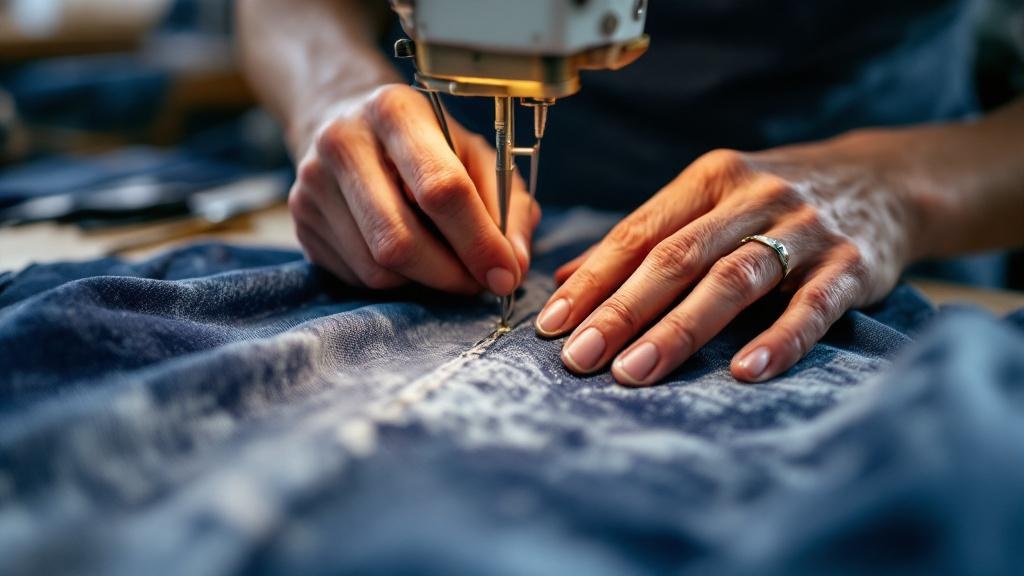
For Japanese brands, sustainability is not a trend to adopt — it is a story that already exists. Japan’s long traditions of *mottainai* (avoiding waste), *sashiko* (visible mending), and artisanal textile production predate the contemporary sustainability movement by centuries. Brands that frame their environmental practices as a continuation of these traditions, rather than a marketing pivot, achieve credibility that Western brands launching sustainability lines from scratch cannot match.
Social media influencers are accelerating this shift, with both Japanese and international opinion leaders highlighting brands that combine authentic craftsmanship with sustainable production. The recycled materials segment currently leads market share, while rental and resale models show the highest growth rate — signaling a fundamental shift in how consumers relate to fashion ownership.
Emerging Ethical Brands Gaining International Traction
Brands like Kuon, which transforms vintage Japanese textiles into contemporary menswear using traditional *boro* patchwork techniques, exemplify values-led positioning that resonates internationally. Mame Kurogouchi, led by designer Maiko Kurogouchi, incorporates Japanese textile heritage into modern womenswear in ways that have earned both critical recognition and a growing international retail footprint. These brands are not marketing sustainability as a feature. They are building it into their identity at the foundation — which is precisely why international buyers and media respond to them with genuine interest rather than skepticism.
What These Brands Did Differently — and What Struggled
The Common Success Pattern: Narrative Before Distribution

Every brand in this analysis — Sacai, Ambush, Kapital, Snow Peak, Kuon — shares one strategic throughline: they invested in brand narrative before they invested in distribution scale. Sacai built a decade of Paris Fashion Week credibility before pursuing broad wholesale. Kapital maintained deliberate scarcity rather than rushing to fill demand. Snow Peak opened community experiences before opening stores.
This sequence contradicts the instinct of many Japanese fashion companies, which tend to prioritize e-commerce marketplace presence — platforms like Amazon Japan and ZOZOTOWN — as a first step toward international visibility. Japan’s fashion e-commerce market is growing rapidly at a 15.2% CAGR, creating understandable temptation to prioritize digital distribution above all else.
The Failure Mode: Marketplace Before Positioning
But marketplace-first strategies without brand positioning groundwork consistently underperform. As McKinsey’s State of Fashion research has documented, brands that rush onto global e-commerce platforms without differentiated positioning compete solely on price and discovery algorithms — a contest where mid-sized brands lose to both larger competitors with advertising budgets and lower-cost alternatives from other regions. Japanese brands can rarely compete on production cost. They must compete on brand.
The Critical Role of Bilingual PR and Media Networks
International visibility for Japanese brands depends heavily on bilingual media networks that can translate brand narratives for global audiences without flattening the cultural specificity that makes them compelling. Japanese fashion media — Vogue Japan, WWD Japan, Fashionsnap — operates within a distinct editorial ecosystem from English-language fashion press like Business of Fashion or Highsnobiety. Brands that maintain coherent narratives across both ecosystems build stronger international recognition than those running parallel, disconnected campaigns. This is where fashion and lifestyle branding for Japanese brands expanding overseas creates compounding value: bridging these media worlds requires cultural fluency that generic agencies cannot provide.
| Factor | What Worked | What Didn’t |
|---|---|---|
| Distribution timing | Built narrative first, scaled distribution second | Rushed onto marketplaces without differentiation |
| Collaboration strategy | Selective partnerships aligned with brand identity | Volume-driven licensing that diluted perception |
| Market entry scope | Focused on one or two markets initially | Simultaneous multi-market launches |
| PR approach | Bilingual media networks with coherent cross-market narrative | Separate domestic/international campaigns without alignment |
| Pricing strategy | Premium positioning supported by craft story | Mid-market pricing competing against established global players |
Applying These Lessons to Your Own Brand’s Global Strategy
Match Your Expansion Timeline to the Right Branding Investment Sequence
A Japan fashion brand overseas expansion strategy is not a single decision — it is a sequence of investments that must happen in the right order. Branding investment for mid-sized fashion companies typically ranges from $15,000 to $75,000 for comprehensive strategy and identity work, with ongoing PR retainers adding $5,000 to $15,000 monthly. The brands that succeed treat this as a phase-one investment, not an afterthought funded with leftover budget after marketplace fees and production costs.
Government support can offset a meaningful share of this investment. The Cool Japan Fund evaluates opportunities based on purpose, profitability, and knock-on effect — and has actively invested in fashion and textile companies pursuing international markets. JETRO’s Global Startup Acceleration Program provides free mentorship and investor access to over 100 Japanese companies annually. The JFW NEXT BRAND AWARD offers ¥3 million in prize money plus professional support for emerging designers with global ambitions. These programs exist specifically to reduce the financial barrier for brands ready to invest in strategic positioning.
Why a Japan-Specialist Branding Partner Compounds Early Momentum
The brands profiled in this article did not expand in isolation. Behind Sacai’s Paris debut was a network of showrooms, press contacts, and buyer relationships. Behind Snow Peak’s US expansion was careful market research and community-building strategy. For brands without those pre-existing networks, working with a partner who understands both Japanese fashion culture and international market dynamics — like DMPJ’s global fashion branding expertise — can compress the timeline from years to months. A Japan-specialist branding partner provides not just strategy but operational connections: media introductions, trade show positioning at events like Fashion World Tokyo attracting 27,000+ visitors, and cross-cultural storytelling that maintains brand authenticity while adapting for international audiences.
Start with a Focused Market Entry
Every successful case study in this article began with a focused market entry. Sacai chose Paris. Snow Peak chose the American Pacific Northwest. Kapital chose a handful of stockists in New York and London. None attempted simultaneous multi-market launches.
For a mid-sized Japanese brand, a focused entry into one market allows concentrated resource allocation, deeper relationship building with local media and retail partners, and the ability to learn and iterate before committing to broader expansion. The temptation to “go global” everywhere at once is strong — and consistently punished. Start where your brand story has the strongest natural resonance, build proof of concept, then expand deliberately from a position of demonstrated success rather than speculative ambition.
The brands that succeed internationally invest in strategic branding before they invest in distribution. If you’re a Japanese fashion or lifestyle brand planning your global move, discover how DMPJ’s fashion and lifestyle branding services provide the market insights, media networks, and cross-cultural storytelling that turn promising products into recognized global brands.
Sorry, the comment form is closed at this time.