


27 Apr A Foreign Company’s Guide to Media Production Regulations in Japan
Why Japan’s Regulatory Landscape Trips Up Even Experienced International Producers
Japan ranks among the world’s most attractive filming locations—distinctive architecture, cooperative local governments, and a deep talent pool. Yet foreign producers consistently underestimate the operational complexity lurking beneath the surface. The country’s regulatory framework for media production is not merely a set of bureaucratic checkboxes. It is a decentralized, relationship-driven system where community consensus carries as much weight as formal permits.
Each ward, neighborhood police station, and prefectural office makes independent approval decisions. Permits that would flow through a single film commission in Los Angeles or London require parallel negotiations across multiple stakeholders in Tokyo. A production coordination guide notes that even the first scout or location coordinator to make contact with local residents must continue all subsequent negotiations—no hand-offs between representatives are permitted, because relationship continuity is considered essential to securing cooperation.
The consequences of missteps extend beyond a single project. A poorly managed street closure, a noise complaint left unresolved, or a permit submission that bypasses proper stakeholder consultation can damage your organization’s reputation with local authorities for years. Future projects in the same jurisdiction inherit the goodwill—or the distrust—that earlier productions created. This makes understanding Japan’s film production legal requirements not just a compliance exercise, but a strategic investment in long-term market access.
Filming Permits — A Municipality-by-Municipality Process
Independent Decisions at Every Level
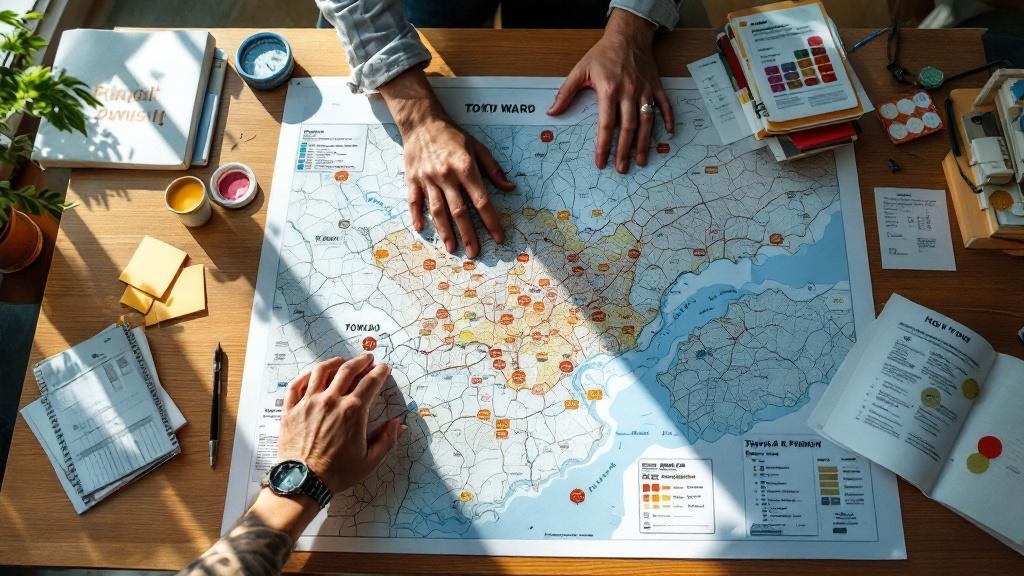
Unlike centralized permit systems common in the UK or Australia, Japan’s filming permit process operates at the hyperlocal level. Each ward or neighborhood police station makes its own determination. Obtaining permission to film at three locations across two Tokyo wards means navigating three separate approval tracks, each with its own timeline, stakeholder concerns, and documentation requirements.
Standard documentation across virtually all locations includes proof of public liability insurance ($1–3 million USD depending on activity scope), detailed shooting schedules, comprehensive equipment lists, and security plans proportional to the production’s footprint.
Timeline Expectations by Location Type
| Location Type | Minimum Lead Time | Recommended Lead Time |
|---|---|---|
| Standard street filming | 1–2 weeks | 3–4 weeks |
| Government buildings | 3–4 weeks | 6–8 weeks |
| Heritage sites / major landmarks | 6+ weeks | 3+ months |
| Street closures (urban) | 2–6 months | 6+ months |
| Drone filming | 10 business days | 3–4 weeks |
Peak season filming during summer or major holidays adds two to three weeks to all timelines due to increased permit application volume. Productions requiring street closures in congested areas face the longest timelines—one industry account documents a six-month coordination process for a shoot in Tokyo’s Akasaka district, involving approval from local police and nearly 300 individual residences and businesses.
Drone Filming: A Separate Regulatory Track
Drone operations require aviation authority approval independent of any location permit. Urban drone filming faces additional restrictions near airports, government buildings, and crowded areas. Local airspace clearance from the relevant municipal authority is also required. These parallel approvals mean drone sequences demand the longest advance planning of any standard production element.
The March 2025 Location Filming Handbook
The Japanese government’s revised Location Filming Handbook, issued in March 2025, introduced meaningful improvements for cross-jurisdictional productions. When both road use permits and road occupation permits are required, applications can now be accepted together through local government rather than requiring separate submissions. For filming spanning multiple police jurisdictions within the same prefecture, a single police station chief’s approval may suffice rather than requiring separate approvals from each jurisdiction. These changes represent Japan’s clearest signal yet that it wants to reduce friction for location filming while preserving community protections.
Work Visas for Foreign Crew and Talent
Entertainment Visa Categories
The Entertainment Visa (興行ビザ) is the primary immigration pathway for foreign talent and certain crew members engaged in compensated entertainment and creative production in Japan. Since August 2023, it is divided into distinct categories:
| Category | Covers | Key Requirements |
|---|---|---|
| Category 1 | Live performance (theater, music, dance) | Host with 3+ years managing foreign entertainers; 5+ full-time staff |
| Category 2 | Professional sports, competitions | Compensation ≥ Japanese performers in similar roles |
| Category 3 | Film/TV production, commercial photography, recording | 2+ years relevant education AND 2+ years professional experience |
For all categories where daily compensation is below ¥5,000,000, the hosting organization must meet substantial facility and staffing requirements—including a manager with at least three years’ experience managing foreign entertainers and a minimum of five full-time employees.
Certificate of Eligibility: Start 3–4 Months Early
The immigration process begins when the hosting organization submits a Certificate of Eligibility (COE) application. Processing typically takes one to three months. The COE remains valid for only ninety days from issuance—if entry is not made within that period, the entire process restarts. Industry practice recommends initiating the visa process three to four months before the first shoot day.
The Short-Term Business Visa Trap
Short-term business visas are insufficient for compensated creative work. Actors, models, voice performers, and other talent receiving compensation require Entertainment Visas regardless of stay duration. Using the wrong visa category risks entry denial at the border and production delays far exceeding the cost of proper processing. This is one of the most common compliance failures among foreign productions unfamiliar with Japan’s strict category boundaries.
October 2025 Business Manager Visa Tightening
Amendments effective October 2025 raised the Business Manager visa capital investment threshold from ¥5 million to ¥30 million, added career history requirements (three or more years as business manager, or Master’s/Doctorate credentials), and imposed new personnel obligations including employment of at least one Japanese national. For complex international co-productions requiring substantial Japan-based management infrastructure, these changes affect how production management roles are classified—potentially requiring foreign producers to restructure their Japan-side operations.
Copyright and IP Ownership — Japan Is Not Like the West
The Producer-Copyright Model Under Article 29
Under Japan’s Copyright Act, the author of a cinematographic work is the person making creative contributions to its overall shaping—directors, cinematographers, art directors, and similar roles. However, Article 29 establishes a critical transfer mechanism: if the author agrees to participate in the production, copyright in the cinematographic work belongs to the producer. This producer-copyright model appears superficially similar to Western work-for-hire doctrines, but it operates through different legal logic and carries different limitations.
The Production Committee Model
Many Japanese productions—particularly in film, anime, and television—use the production committee (制作委員会) structure where multiple stakeholders hold fractional copyright interests. A single work may have its rights fragmented across a broadcaster, a publisher, a music label, a talent agency, and a distribution company. For foreign producers entering co-production agreements, this fragmentation demands granular deal structures specifying territorial licensing, exclusivity, revenue sharing, and compliance obligations across both Japanese law and the co-production partner’s home jurisdiction.
Author Moral Rights Are Inalienable
Even when copyright ownership transfers to producers, authors retain moral rights (著作者人格権) that cannot be transferred, waived, or contractually overridden. These include the right of attribution and the right to prevent alteration that would damage the author’s honor or reputation. A contract clause purporting to waive moral rights—common in Anglo-American production agreements—is unenforceable in Japan. Foreign producers must design their contracts around this reality rather than attempting to override it.
Performer Neighboring Rights
Audiovisual performers hold separate neighboring rights including the exclusive right to record their performances and make them available for public transmission. These rights are distinct from copyright ownership and include their own inalienable moral rights—attribution and integrity protections that persist regardless of any contractual arrangement. The distinction between a performer’s neighboring rights and a producer’s copyright ownership is a frequent source of confusion for foreign companies accustomed to simpler rights consolidation models.
Advertising Compliance — What You Cannot Say or Show
The Dual Enforcement Structure
Japan’s advertising regulation operates through two parallel enforcement mechanisms. The Consumer Affairs Agency enforces the Act against Unjustifiable Premiums and Misleading Representations (AUPMR), with authority to issue cease-and-desist orders and administrative fines of 3% of affected sales (up to three years of revenue, minimum threshold ¥50 million annual sales). Separately, the Japan Advertising Review Organization (JARO) handles industry self-regulation through consumer and competitor complaints, making recommendations for modification or discontinuation of questionable advertising.
Pharmaceutical Advertising: A Hard Prohibition
Pharmaceutical advertising regulations in Japan are among the world’s strictest. Prescription drugs and professional-use medical devices cannot be advertised to the general public at all—such advertising may target only healthcare professionals. Violations carry criminal penalties: imprisonment up to two years or fines up to ¥2 million. Administrative surcharges of 4.5% of product sales during the unlawful advertising period add additional deterrence. Foreign brands entering the Japanese health and wellness space must understand this is not a matter of careful wording—it is a categorical prohibition.
Comparative Advertising: Technically Legal, Practically Restricted
Comparative advertising occupies a grey zone. It is not explicitly prohibited for most product categories, but the AUPMR guidelines restrict comparisons using unproven facts, emphasis on unimportant differences, or arbitrary product selection. Culturally, comparative advertising is disfavored—Japanese consumers and business partners often perceive it as aggressive or disrespectful. Foreign brands accustomed to direct competitor comparisons in Western markets should expect to redesign their advertising approach for Japan.
Online Advertising: Consent and Data Requirements
Email and fax advertising require opt-in consent under the Act on Specified Commercial Transactions. Advertisers must retain consent records for at least three years. Japan’s APPI framework treats cookies as Personally Referable Information, meaning cookie-based targeting requires proper notification of collection purposes and user consent mechanisms. Cross-border data transfers face additional restrictions requiring either consent or adequate protection measures in the recipient country.
Talent Image Rights and Privacy Protections
Right of Publicity: Real but Unpredictable
Japan recognizes the right of publicity through judicial precedent rather than statute. Names, likenesses, and signatures receive protection under tort law, with enforcement available through injunctions, damages, and collection of infringing goods. Because it is judge-made law rather than codified statute, outcomes can be difficult to predict—particularly in novel fact patterns involving digital media, social platforms, or AI-generated likenesses.
Management Agencies Do Not Automatically Own Talent Rights
A 2010 Tokyo District Court ruling established that talent management agencies do not automatically own the right of publicity of performers under contract. Explicit contractual language clearly transferring publicity rights from performer to agency is required. Foreign producers cannot assume that signing a deal with a talent agency grants unrestricted use of the performer’s image—separate rights clearance with the individual performer may be necessary.
APPI Obligations for Production Personnel
The APPI applies to personal information of performers, extras, and crew—including contact details, images in behind-the-scenes footage, and financial data for payments. Breach notification to the Personal Information Protection Commission is mandatory when incidents could harm individual rights, with thresholds including sensitive data leakage, financially harmful unauthorized use, or incidents involving more than 1,000 data subjects.
Recent Regulatory Changes Worth Tracking (2024–2025)
Location Production Incentive: 50% Cash Rebate up to ¥1 Billion
Japan has extended its location production incentive into 2026 with expanded application periods. The program offers a 50% cash rebate on eligible expenses, capped at ¥1 billion per production. Qualifying criteria include either ¥500 million or more in direct production costs in Japan, or total production costs exceeding ¥1 billion with at least ¥200 million spent in Japan, or distribution in ten or more territories with ¥200 million minimum Japan spend. Ten productions received support in 2024 including “The Smashing Machine” starring Dwayne Johnson.
Only Japanese production companies can apply, requiring foreign producers to partner with local entities—making the selection of a Japanese production partner a decision with direct financial implications beyond operational convenience.
AI and Copyright: Japan’s Permissive Framework
Japan’s approach to AI and copyrighted material is substantially more permissive than the EU or UK. Article 30-4 of the Copyright Act permits ingestion of copyrighted works for AI training—including commercial purposes—without requiring consent. The exception applies only when the output is designed to creatively express the sentiments of ingested copyrighted works. For production companies exploring AI-assisted workflows in pre-visualization, editing, or content analysis, Japan’s regulatory environment is currently among the most accommodating globally.
Internet Freedom and Illegal Streaming Enforcement
Japan maintains robust internet freedom with a 2024 score of 78/100 from Freedom House. However, enforcement against illegal streaming has intensified. Research by the Japan Commercial Broadcasters Association identified approximately ¥3.2 billion in advertising revenue losses within a single month from unauthorized uploads of Japanese TV content to YouTube, Facebook, TikTok, and X. For foreign producers distributing content through Japanese channels, robust anti-piracy provisions in distribution agreements have become operationally essential rather than merely contractual boilerplate.
Bringing It All Together
Japan’s regulatory environment rewards preparation, penalizes assumptions, and favors producers who invest in local expertise before committing capital. The permit timelines, visa categories, IP ownership structures, and advertising restrictions outlined above represent interconnected systems—a visa delay cascades into a permit expiration, which triggers a location fee renegotiation, which pushes delivery past a broadcast window. Understanding these dependencies holistically, rather than as isolated compliance items, is what separates productions that run smoothly from those that hemorrhage budget on avoidable delays.
For foreign companies evaluating Japan as a production market, the regulatory landscape is not a barrier—it is navigable terrain that demands the right guide. To navigate Japan’s production regulations with DMPJ, organizations gain a partner with decade-long experience translating regulatory complexity into operational clarity.
Japan’s regulatory environment is navigable—but not without a guide who knows the terrain. DMPJ’s Production Consulting Service includes dedicated risk assessment and compliance support, helping foreign companies secure permits, visas, and legal clearances without costly delays. Learn more about how DMPJ can keep your production on the right side of Japan’s regulations.
Sorry, the comment form is closed at this time.