


22 Jun EV Market Entry in Japan: Opportunities in Electric Vehicles, Hydrogen, and Charging Infrastructure
Japan’s government has mandated that 100 percent of new vehicle sales must be electrified by 2035. Battery electric vehicles currently account for less than 3 percent of new car sales. That gap between ambition and adoption is where the opportunity lives — for EV manufacturers, charging infrastructure providers, hydrogen technology companies, and the component suppliers that serve them all.
This article maps the specific Japan EV market entry opportunities in 2026: where subsidies flow, where infrastructure is weakest, and where foreign companies are already gaining ground faster than domestic incumbents.
Japan’s Electrification Paradox: Ambitious Targets, Cautious Adoption
Japan’s 2035 electrification mandate covers a broad definition — battery electric vehicles (BEVs), fuel cell electric vehicles (FCEVs), plug-in hybrids (PHEVs), and conventional hybrids all qualify. That broad scope explains why the target coexists with a BEV market share that remains under 3 percent as of early 2026.
Hybrid vehicles dominate. According to U.S. International Trade Administration data, hybrids accounted for 54.8 percent of new passenger car sales in 2024. This reflects consumer pragmatism — not anti-EV sentiment. Japanese buyers prize fuel efficiency, and the existing refueling infrastructure heavily favors hybrids. Range anxiety, limited charging options outside urban centers, and apartment-dwelling lifestyles where home charging is impossible all suppress BEV demand.
The more revealing trend is who is selling EVs in Japan. In the first half of 2025, foreign EV sales rose 20.23 percent year-on-year to 39,797 units, while Toyota — Japan’s largest automaker — grew its EV sales by just 6.13 percent to 23,901 units. Import brands are outpacing domestics in the segment that Japan’s own government has targeted for growth. For foreign companies evaluating whether selling electric vehicles in the Japan market is viable, that data point alone should sharpen the business case.
Subsidy Landscape: How to Maximize Government Incentives
Japan’s clean energy vehicle subsidies represent one of the most generous incentive structures in Asia. Understanding how to qualify — and how to design products that maximize subsidy eligibility — is a material advantage for foreign OEMs.
Current Subsidy Tiers
The Clean Energy Vehicle (CEV) subsidy program, administered by the Next Generation Vehicle Promotion Center, offers the following rates for 2025:
| Vehicle Type | Max Subsidy | Notes |
|---|---|---|
| Battery Electric Vehicle (BEV) | ¥900,000 (~$6,120) | Highest tier; requires meeting range and efficiency thresholds |
| Kei-class BEV | ¥574,000 (~$3,900) | Specific to Japan’s kei vehicle classification |
| Plug-in Hybrid (PHEV) | ¥550,000 (~$3,740) | Must meet minimum EV-only range |
| Fuel Cell Vehicle (FCV) | ¥900,000 (~$6,120) | Same ceiling as BEV |
These figures have risen substantially — the BEV maximum was ¥400,000 as recently as 2020, meaning subsidy values have more than doubled in five years.
Eco-Car Tax Reduction and V2H Bonuses
Beyond direct purchase subsidies, the Eco-Car Tax Reduction program lowers acquisition and weight taxes based on environmental performance. Vehicles that meet advanced efficiency thresholds receive near-total tax exemptions during the initial registration period.
The more strategically important design lever is V2H (Vehicle-to-Home) capability. Vehicles equipped with a 1500W AC100V onboard outlet or bidirectional charging capabilities unlock higher subsidy tiers. For foreign OEMs, this has a direct product implication: building V2H and external power supply features into Japan-bound models isn’t just a nice-to-have — it directly increases the subsidy check that offsets your sticker price.
Municipal-Level Incentives
Japan’s clean energy vehicle subsidies extend well beyond the national program. In 2024 alone, 146 local government applications were submitted for regional EV promotion programs, offering additional purchase subsidies, charging infrastructure grants, and fleet conversion incentives that stack on top of national programs. Navigating this patchwork of prefectural and municipal incentives is one area where DMPJ’s sustainable mobility consulting for Japan provides direct value to foreign entrants unfamiliar with local government structures.
Charging Infrastructure: The ¥300,000-Port Challenge
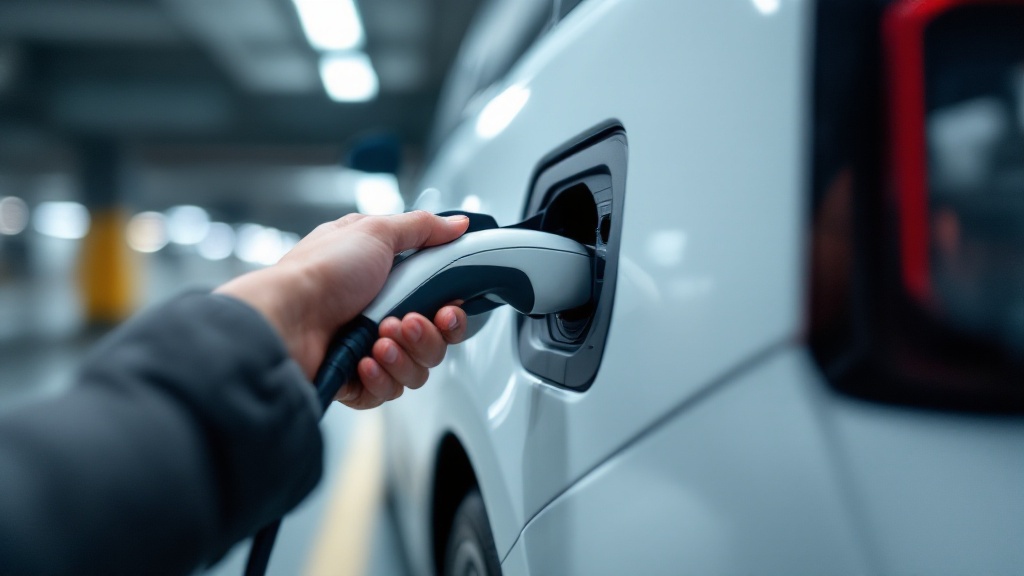
Electric vehicle charging infrastructure in Japan remains the single largest barrier to mass BEV adoption — and, consequently, one of the largest market opportunities.
The Current Deficit
As of 2024, Japan had only 9,237 rapid charging stations — roughly one-third the number of gas stations nationwide. For a country with 78.7 million registered vehicles, this ratio is far below what mass BEV adoption would require.
Recognizing the gap, the Japanese government doubled its installation target in October 2023 — from 150,000 to 300,000 charging ports by 2030. That target implies installing roughly 50,000 new ports per year, a pace that far exceeds historical deployment rates and signals massive infrastructure investment ahead.
CHAdeMO and Compatibility
Japan’s rapid charging network runs predominantly on the CHAdeMO protocol, a standard developed domestically that differs from the CCS (Combined Charging System) common in Europe and the NACS standard gaining traction in North America. Foreign EVs entering Japan must support CHAdeMO compatibility — or risk being locked out of the existing rapid charging network entirely. While global standards are gradually converging, any company serious about selling EVs in Japan needs CHAdeMO support as a baseline.
The Urban-Rural Gap
Charging density in Tokyo, Osaka, and Nagoya is adequate for daily commuting. Outside major metro areas, coverage drops sharply. This urban-rural gap creates a localized consulting opportunity: foreign infrastructure companies that can identify underserved corridors, partner with local property owners, and navigate municipal permitting processes have a clear path to market. Fleet operators serving rural logistics routes face the same gap and represent an additional customer segment.
Hydrogen and Fuel Cell Vehicles: Japan’s Differentiated Bet

While most markets have shifted attention almost entirely to battery electric vehicles, Japan maintains a parallel investment in hydrogen mobility that represents a distinct market opportunity.
The Japan hydrogen fuel cell vehicle market was valued at $440 million in 2024 and is projected to reach $2.6 billion by 2035, growing at a 17.66 percent CAGR. That growth rate outpaces the broader automotive market by a wide margin.
Toyota’s Mirai and Hyundai’s NEXO — recently showcased as part of Hyundai’s Japan re-entry strategy — currently define the passenger FCV segment. But the real opportunity for foreign companies isn’t in building complete hydrogen vehicles. It’s in the supply chain: fuel cell stacks, hydrogen storage systems, refueling station components, and the industrial hydrogen production and distribution infrastructure that Japan’s government hydrogen strategy is actively funding.
Japan has positioned itself as a global leader in hydrogen mobility, and that strategic commitment translates into sustained public investment, favorable regulatory treatment, and a domestic ecosystem actively seeking international technology partners and suppliers.
Kei EVs: The Overlooked Entry Point for Foreign Companies
Japan’s kei vehicle classification — compact cars meeting strict size and engine displacement limits — accounts for roughly 37 percent of all new vehicle registrations. When the Nissan Sakura and Mitsubishi eK X EV launched in 2022, they became the first kei EVs to win Japan Car of the Year in the award’s 43-year history. The signal was clear: Japanese consumers want electric kei cars.
Why Kei Classification Matters
Kei vehicles enjoy lower road taxes, reduced insurance premiums, and exemptions from the parking space certificate requirement in many rural areas. These regulatory advantages make kei EVs substantially cheaper to own than standard BEVs, compounding the effect of the ¥574,000 national subsidy.
For foreign companies, this doesn’t necessarily mean building a complete kei EV. The dimensional constraints (maximum 3.4m length, 1.48m width) and the established domestic competition from Nissan, Mitsubishi, and Suzuki make full-vehicle entry challenging. The more accessible play is in the supply chain: battery modules sized for kei platforms, compact motor systems, thermal management components, and lightweight materials that help manufacturers meet the strict weight limits while maximizing range. Foreign component and technology companies can enter Japan’s EV market through these kei-specific supply chains without taking on the risk and cost of whole-vehicle homologation.
Case Study: BYD’s Japan Playbook
BYD’s performance in Japan provides the clearest template for how a foreign EV company can gain traction in a market historically resistant to imports.
In 2024, BYD achieved a 54 percent sales increase in Japan, surpassing Toyota’s EV sales in the domestic market. For context, non-Japanese brands account for only about 5 percent of total new vehicle sales in Japan — making BYD’s EV-specific outperformance against the country’s largest automaker remarkable.
Product-Subsidy Alignment
BYD’s Japan lineup was deliberately engineered to qualify for maximum available subsidies. The Dolphin and Atto 3 both meet the CEV subsidy thresholds, and BYD’s pricing strategy positions these vehicles at price points where subsidy offsets make them directly competitive with domestic kei EVs on total cost of ownership.
Distribution and Marketing
Rather than attempting to build a traditional dealer network — an expensive and relationship-dependent process in Japan — BYD partnered with existing Japanese distribution companies to establish showrooms in high-traffic urban locations. The company’s marketing emphasized digital channels and social media over traditional automotive advertising, targeting younger, tech-forward Japanese consumers who are more receptive to foreign EV brands.
The lesson for other foreign entrants: align your product specifications to Japan’s subsidy structure, price to compete on total cost of ownership after incentives, and use capital-efficient distribution models rather than replicating the traditional dealer approach.
Where Foreign Companies Fit in the EV Value Chain
Selling complete vehicles is only one way into Japan’s electrification market. For many foreign companies, the larger opportunities sit upstream and downstream in the value chain.
| Segment | Market Opportunity | Key Japan Requirements | Entry Complexity |
|---|---|---|---|
| Battery technology and BaaS | Global BaaS market [projected at $500B by 2030](https://www.fortunebusinessinsights.com/jp/%E3%82%B5%E3%83%BC%E3%83%93%E3%82%B9%E3%81%A8%E3%81%97%E3%81%A6%E3%81%AE%E3%83%90%E3%83%83%E3%83%86%E3%83%AA%E3%83%BC%E5%B8%82%E5%A0%B4-105795) | JIS standards compliance, recycling obligations | Medium |
| Charging hardware and software | 300,000-port target by 2030 | CHAdeMO compatibility, METI certification | Medium-High |
| Fleet electrification consulting | Municipal and logistics fleet conversion | Local government relationships, Japanese-language ops | Medium |
| Smart grid and V2G integration | Growing V2H/V2G regulatory support | Grid interconnection standards, utility partnerships | High |
Battery Technology and BaaS
Battery-as-a-Service models — where consumers lease battery packs rather than purchasing them — reduce EV sticker prices and address consumer anxiety about battery degradation. Japan’s Ministry of Economy, Trade and Industry has begun supporting battery circular economy initiatives, creating openings for foreign companies with advanced battery management, recycling, or second-life battery systems.
Charging Hardware and Software
The gap between 9,237 current rapid chargers and the 300,000-port target represents a hardware and software procurement wave that no single domestic supplier can fill. Foreign charging equipment manufacturers that support CHAdeMO and can demonstrate interoperability with Japanese grid standards are positioned to compete for a share of this build-out. Software platforms for charger network management, dynamic pricing, and user authentication represent parallel opportunities.
Fleet Electrification
Municipal bus fleets, last-mile delivery operators, and corporate vehicle pools all face pressure to electrify under Japan’s carbon neutrality commitments. Consulting firms that can model total cost of ownership, identify applicable subsidies across national and municipal programs, and manage procurement for fleet conversions serve a growing market segment.
Smart Grid and V2G
Japan’s emphasis on V2H capability — reflected in the subsidy structure’s preference for vehicles with bidirectional charging — signals a broader interest in vehicle-to-grid integration. As Japan’s energy grid faces increasing strain from the phase-out of nuclear capacity and growth in renewable generation, EVs as distributed energy storage assets become strategically important. Foreign companies with V2G technology, grid management software, or energy aggregation platforms are entering a market with strong policy tailwinds.
For companies evaluating any of these entry points, Daisho Media Partners’ EV infrastructure and market entry services offer the regulatory navigation, subsidy optimization, and local market intelligence that turn opportunity assessments into executable go-to-market plans.
Japan’s EV transition is accelerating — but the rules, subsidies, and consumer expectations differ sharply from every other market. DMPJ’s Automotive and Mobility Solutions team helps EV companies, charging infrastructure providers, and clean-energy startups navigate Japan’s regulatory landscape, maximize available subsidies, and build localized go-to-market strategies. Explore the full service offering to see how DMPJ can position your EV business for Japan.
Sorry, the comment form is closed at this time.