

20 Jun Digital Archiving and 3D Scanning for Japanese Heritage Sites: 5 Projects That Show What’s Possible
Why Digital Preservation Has Become Essential for Japanese Heritage
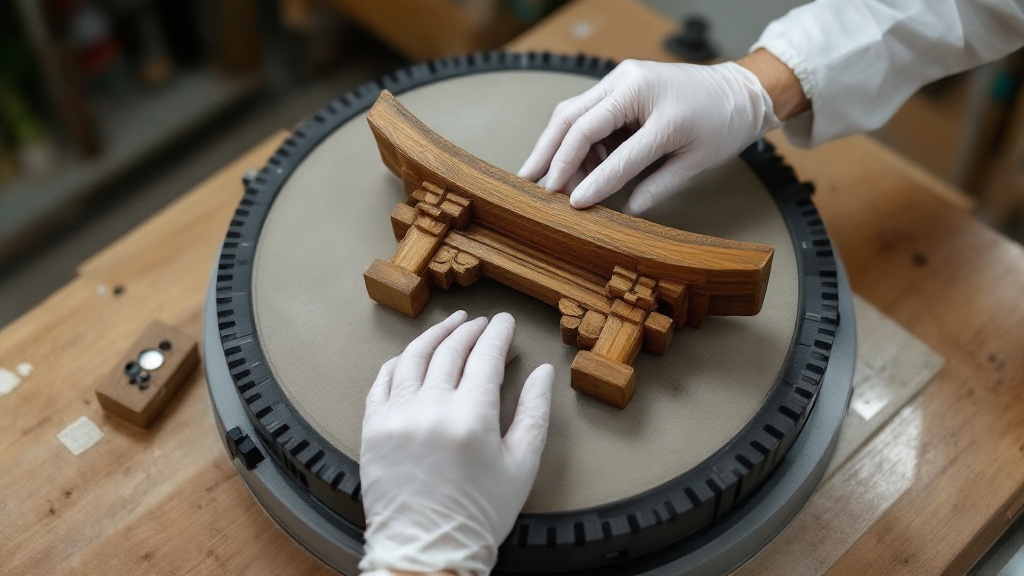
Japan’s 2023 amendment to the Museum Act formally recognized digital archiving as a core museum function—a legislative milestone that converted what had been a discretionary experiment into an institutional mandate. For the first time, museums across the country gained explicit legal backing, and crucially, budget justification, to invest in high-fidelity digital documentation of their collections.
The timing was not accidental. Japan faces a convergence of threats that make comprehensive documentation urgent. The average age of master artisans in many traditional crafts now exceeds 65, with some disciplines down to a handful of active practitioners. Earthquake risk compounds the challenge: the 2024 Noto Peninsula event damaged cultural properties across four prefectures, underscoring how quickly centuries of heritage can be compromised. Add climate-driven deterioration from increased humidity and stronger typhoons, and the case for preemptive digital capture becomes difficult to ignore.
What makes these projects worth studying is the dual return they deliver. A digital archive isn’t just insurance against physical loss—it’s a platform for expanded engagement. Interactive 3D displays draw visitors deeper into collections. Virtual access lets researchers on other continents study artifacts without handling fragile originals. And as the projects below demonstrate, the data itself can generate revenue and inform disaster response in ways that purely physical preservation cannot.
The five initiatives that follow span ceramics, shrine sculpture, temple architecture, traditional metalwork, and structural engineering. Each was led or driven by a mid-sized organization. Each came in at a budget achievable without national mega-project funding. And each produced measurable outcomes that decision-makers evaluating 3D scanning for Japanese cultural heritage projects can benchmark against.
Case Study 1 — Aichi Museum of Ceramics and the Sarutou Kiln Collection
The Aichi Museum of Ceramics houses one of Japan’s three great ancient kiln traditions, with pottery dating from the 12th to 14th centuries. Curators faced a persistent problem: traditional glass-case displays prevented visitors from examining the reverse sides and structural details that reveal how Sarutou potters achieved their distinctive organic forms. Photography couldn’t capture the full dimensionality. Handling the pieces was out of the question.
The museum deployed an EinScan Pro 2X multifunctional 3D scanner to capture more than 40 significant pieces with sub-millimeter accuracy. Each ceramic required 4–8 hours of scanning, carefully calibrated for different surface reflectivities—glazed versus unglazed, matte versus metallic. The resulting models preserved not just geometry but the nuanced color gradients essential to appreciating Sarutou kiln aesthetics.
The investment paid off quickly. Interactive 3D displays accessed via smartphone QR codes produced a 37% increase in visitor dwell time with the ceramic collection. More than a quarter of visitors over 65 reported the digital interface actually made the ceramics more accessible to them—an unexpected benefit that expanded the museum’s audience. But the most striking result was financial: a 3D-printed souvenir program generated ¥1.8 million in additional revenue within six months, delivering a 25% return on the project’s ¥7.2 million total budget. When a minor earthquake in 2024 caused microfractures in two pieces, the high-resolution baseline data allowed conservators to monitor minute structural changes with a precision that pre-digital methods could not match.
Case Study 2 — Chichibu Shrine’s Connecting Dragon Digital Replication
The Connecting Dragon (*Tsunagi no Ryū*) at Chichibu Shrine is an Edo-period polychrome sculpture attributed to the legendary artisan Hidari Jingorō. Positioned at the heart of a 2,100-year-old shrine, the piece serves a spiritual as well as aesthetic function—making its preservation a matter of both cultural and religious priority. Weather-induced fading had been gradually eroding the vivid painted surfaces that define the dragon’s visual impact.
Using an Artec Eva handheld scanner, the preservation team captured 1.2 billion data points across 18 scanning sessions conducted over six weeks. Timing was critical: sessions were scheduled during early morning hours and overcast days to avoid problematic reflections from metallic paint elements. The resulting dataset captured surface details as small as 0.3 millimeters while preserving exact color values of the original Edo-period pigments.
The digital record’s utility proved immediate. A full-color 3D-printed replica, produced using Mimaki Engineering technology, traveled to six schools and cultural centers, reaching over 3,500 students who would not otherwise have access to the shrine’s sacred spaces. Students interacting with the physical replica alongside the digital model showed markedly higher comprehension of traditional sculpting techniques compared to groups using photographs alone.
Then came the unplanned test. When typhoon damage struck the shrine complex, conservators used the digital baseline to guide precision restoration of affected elements—matching millimeter-level measurements to the pre-damage record rather than relying on photographs and memory. What had been conceived as a documentation exercise in virtual preservation of a Japan shrine artifact became a disaster-response asset.
Case Study 3 — Yoshisho Architects’ Temple Digital Twin Initiative
When architect Sotaro Yoshikawa of Yoshisho Architects began scanning Japan’s wooden temple buildings, he identified a problem that most digital preservation projects ignore: what happens when future generations can’t open the files? Formats become obsolete, software gets discontinued, and hardware changes. A PDF from 2005 is already harder to render faithfully than its creators assumed. What about a point cloud from 2025 in 2125?
Yoshikawa’s answer was a dual-strategy approach applied to Eiheiji Temple’s Hatto Hall, a Zen Buddhist structure whose sophisticated earthquake-resistant joinery has allowed it to survive centuries of seismic activity. His team used Trimble X7, X9, and X12 laser scanners to capture 2.1 billion scan points, documenting not just visible structure but subtle wear patterns and repair histories embedded in the wood.
The innovation came in what happened next. Alongside the digital twin, Yoshisho developed “fishprint” physical blueprints on archival rice paper—translating complex 3D data into parallel-projection drawings using a medium with a proven lifespan of centuries. If every digital format fails, a carpenter can still read the paper. This solution to the digital obsolescence problem has drawn attention from preservation organizations internationally.
The project also demonstrated clear economic impact. Eiheiji Temple reported a 28% increase in preservation-focused tourism during 2024, generating approximately ¥8.7 million in additional revenue reinvested in ongoing maintenance. This digital twin cultural property case study has since been cited as a model for preserving wooden heritage structures in seismically active regions—proving that the approach scales beyond a single building to an entire philosophy of documentation.
Case Study 4 — LIGHTz AI Knowledge Capture for Nambu Ironware
The previous three projects captured physical objects. This one captured something harder to digitize: the decision-making process inside an artisan’s mind.
Nambu ironware—the centuries-old cast-iron tradition from Iwate Prefecture, designated an Important Intangible Cultural Property—depends on sensory judgments that master craftsmen struggle to articulate. When does molten metal have the right viscosity for pouring? What does the surface texture tell you about cooling rate? These are skills acquired through decades of apprenticeship, and Japan’s aging artisan population means much of this knowledge risks disappearing within a generation.
LIGHTz, a Tokyo-based technology SME, deployed a multi-modal capture system combining high-resolution video with specialized sensors measuring temperature, pressure, and sound frequencies at critical forging stages. Over 300 hours of production footage across 15 pieces were correlated with detailed cognitive interviews. Custom machine learning algorithms then mapped the relationship between observable conditions and the artisan’s subsequent actions—transforming tacit knowledge into structured, transferable data.
The results redefined what digital archiving can mean for intangible heritage. The AI system achieved 87% accuracy in predicting appropriate artisan actions under varying conditions. Apprentices using the digital guidance system reached 91% accuracy in critical casting decisions, compared to 63% without it—effectively compressing years of learning into months. And in a sign that the project addressed a genuine cultural need, the Nambu Ironware Cooperative reported a 22% increase in apprenticeship applications after the project was publicly unveiled. Young people who might have dismissed traditional ironwork as inaccessible saw, for the first time, a structured pathway into the craft.
Case Study 5 — Kyōōgokoku-ji Temple Pagoda Interactive Archive
The five-story pagoda at Kyōōgokoku-ji Temple (Tō-ji) in Kyoto embodies one of Japan’s most sophisticated engineering achievements: the *shinpō* (heart pillar) system that allows wooden structures to survive earthquakes by swaying rather than resisting. For centuries, engineers have studied these pagodas to understand how pre-modern builders achieved seismic resilience that modern construction sometimes struggles to match.
This project moved beyond static 3D documentation to create a physics-based simulation framework that models the pagoda’s dynamic response to seismic forces. The team combined high-resolution laser scanning with motion-capture sensors installed throughout the structure, generating a dataset that captured not just geometry but the building’s actual behavior under stress. Custom algorithms translated this data into an interactive model that allows researchers to visualize energy dissipation through the pagoda’s interlocking joinery in real time.
The simulation proved its value sooner than expected. During the 2024 Noto Peninsula earthquake, conservators used the model to identify structural stress points and prioritize stabilization, reducing post-earthquake assessment time by 40% compared to conventional inspection methods. Faster assessment meant faster intervention, limiting secondary damage from delayed repairs.
The project’s reach extended into contemporary practice. Thirteen architecture firms have since incorporated structural insights from the pagoda’s behavior into modern earthquake-resistant designs—a striking example of how virtual preservation of Japan’s temples and shrines can unlock value far beyond the heritage sector. Traditional engineering principles, captured digitally, are now informing buildings that will protect lives in future earthquakes.
What These Projects Reveal About Choosing the Right Approach
Budget Reality
The five projects ranged from ¥6.1 million to ¥14.5 million—a band that sits within reach for mid-sized heritage organizations, municipal governments, and cultural foundations willing to pursue strategic funding partnerships. None required national mega-project budgets. Each secured financing through a mix of institutional resources, prefectural grants, and technology partner contributions.
| Project | Primary Technology | Budget | Timeline | Key Measurable Outcome |
|---|---|---|---|---|
| Aichi Museum — Sarutou Kiln | EinScan Pro 2X 3D scanner | ¥7.2M | 10 months | 37% dwell-time increase; 25% ROI via 3D souvenirs |
| Chichibu Shrine — Connecting Dragon | Artec Eva handheld scanner | ¥10.8M | 24 months | 3,500 students reached; precision typhoon restoration |
| Yoshisho Architects — Eiheiji Temple | Trimble X7 / X9 / X12 lasers | ¥14.5M | 36 months | 28% tourism increase; ¥8.7M added revenue |
| LIGHTz — Nambu Ironware | AI + multi-modal sensors | ¥6.1M | 26 months | 91% vs 63% apprentice accuracy; 22% more applicants |
| Kyōōgokoku-ji — Pagoda | Physics-based simulation | ¥9.8M | 28 months | 40% faster post-earthquake structural assessment |
Community Engagement and Cultural Sensitivity
The projects that produced the strongest engagement outcomes—Aichi Museum’s 37% dwell-time increase, Chichibu Shrine’s school outreach program, LIGHTz’s 22% rise in apprenticeship interest—shared a common trait: they were designed around community needs rather than technological capability. Scanning accuracy and data volume matter, but they are table stakes. What separates a digital archive that gathers dust from one that transforms institutional outcomes is whether the project was conceived with specific audiences and use cases in mind from day one.
Cultural sensitivity proved equally critical. At Chichibu Shrine, scanning sessions were scheduled around religious activities and validated by shrine authorities. At Eiheiji Temple, master carpenters cross-checked digital models against the lived tradition of temple construction. At LIGHTz, the capture process began with cognitive interviews rather than sensor deployment—acknowledging that the artisans themselves are the primary knowledge holders. These accommodations added time and complexity, but they ensured institutional buy-in and produced richer, more authentic data. Research confirms that heritage institutions citing cultural alignment as a factor in technology adoption achieve significantly better outcomes than those prioritizing technical specifications alone.
The Gap Most Providers Don’t Fill
Reviewing Japan’s cultural heritage preservation market reveals a structural blind spot. Traditional restoration specialists offer deep craftsmanship but limited digital capability. Digital archiving firms deliver technical sophistication but often lack cultural context. Tourism consultancies can market heritage assets but rarely understand preservation constraints. And across nearly all providers, one capability is conspicuously absent: bilingual expertise to present Japanese heritage to global audiences.
This matters because the value of digital preservation compounds when the archive reaches international researchers, UNESCO advisory bodies, foreign museums, and global media. A 3D model of Sarutou kiln pottery or a physics simulation of pagoda behavior has applications far beyond domestic audiences—but only if it can be presented in both Japanese and English with genuine cultural authority. Japan’s heritage tourism market is projected to grow at 6.7% CAGR through 2033, and much of that growth will come from international visitors seeking authentic engagement with cultural assets. The intersection of deep cultural understanding, digital innovation, and international communication is precisely where Daisho Media Partners Japan’s innovative digital preservation approach creates value for heritage organizations seeking to amplify their impact beyond Japan’s borders.
These five projects demonstrate that digital heritage preservation is no longer experimental — it delivers measurable results in visitor engagement, knowledge transfer, and disaster resilience. If you’re considering a digital preservation initiative for Japanese cultural assets and need a partner who combines technical innovation with deep cultural understanding and international communication expertise, explore DMPJ’s Cultural Heritage Preservation services to see how we can bring your project to life.
Sorry, the comment form is closed at this time.