
14 Jun The Complete Guide to Hosting Corporate Events in Japan as a Foreign Company
Japan offers foreign companies something few other markets in Asia can match: world-class infrastructure, deeply rooted business etiquette, and a government apparatus that actively courts international events. But the same qualities that make Japan an exceptional host country — the precision, the consensus-driven culture, the meticulous regulatory framework — can trip up organizers who assume they can transplant a Western-style event plan without adaptation.
This guide walks you through everything you need to know about hosting corporate events in Japan, from market fundamentals and planning timelines to cultural protocols and the regulatory pitfalls that catch foreign companies off guard.
Why Japan Is a Premier Destination for International Business Events
Japan’s event industry has not just recovered from the pandemic — it has surpassed its former peak. The Japan Association of Convention Halls (JACE) reported that the total event-related industry reached 9.797 trillion yen in 2024, recovering to approximately 109% of pre-pandemic 2019 levels. And this is only the beginning of a longer growth curve. According to Grand View Research, the Japan MICE market generated $23.45 billion in revenue in 2024 and is projected to reach $43.12 billion by 2030 — effectively doubling in six years.
Tokyo, Osaka, and Kyoto anchor this growth as Asia-Pacific conference hubs. JNTO data shows Japan hosted 1,702 international conferences in 2024, attracting 1.24 million participants — 159,000 of them from outside Japan. Science, technology, and medical fields dominate, but business and trade conferences are growing steadily as international visitor numbers break annual records.
Behind these numbers is substantial government support infrastructure. The Japan National Tourism Organization (JNTO), regional Destination Management Organizations (DMOs), and municipal convention bureaus all work to attract and support international events, offering subsidies, bid assistance, and logistical coordination. For foreign companies evaluating event management in Japan, this institutional ecosystem can be a powerful ally — if you know how to engage it.
Types of Corporate Events Foreign Companies Host in Japan
Foreign companies run a wide range of events in Japan, each with distinct logistical demands and audience expectations. Understanding which category your event falls into determines your planning requirements, budget structure, and the type of local support you need.
| Event Type | Typical Scale | Key Planning Considerations |
|---|---|---|
| Corporate conferences and annual meetings | 100–1,000 attendees | Venue hierarchy, AV setup, simultaneous interpretation |
| Trade shows and exhibition participation | Booth-based, 500–10,000+ visitors | Booth fire-retardancy compliance, customs for imported materials |
| Product launches and press events | 50–300 attendees | Media relations, bilingual MC, live streaming |
| International sporting events and cultural exhibitions | 1,000–50,000+ attendees | Regulatory compliance, multi-stakeholder coordination, safety protocols |
| Private celebrations and incentive travel events | 20–200 attendees | Cultural programming, regional venue sourcing, dietary accommodations |
The conferences segment alone accounts for roughly 41% of MICE market revenues, making it the single largest category. But trade shows and exhibitions carry their own complexity — Japan’s exhibition market operates under strict fire safety and booth construction regulations that differ significantly from European or North American conventions. Even experienced international exhibitors often find that assumptions about acceptable materials, booth heights, and load-in procedures do not transfer cleanly to Japanese venues.
The Japan Event Planning Timeline: Why You Need 6–12 Months
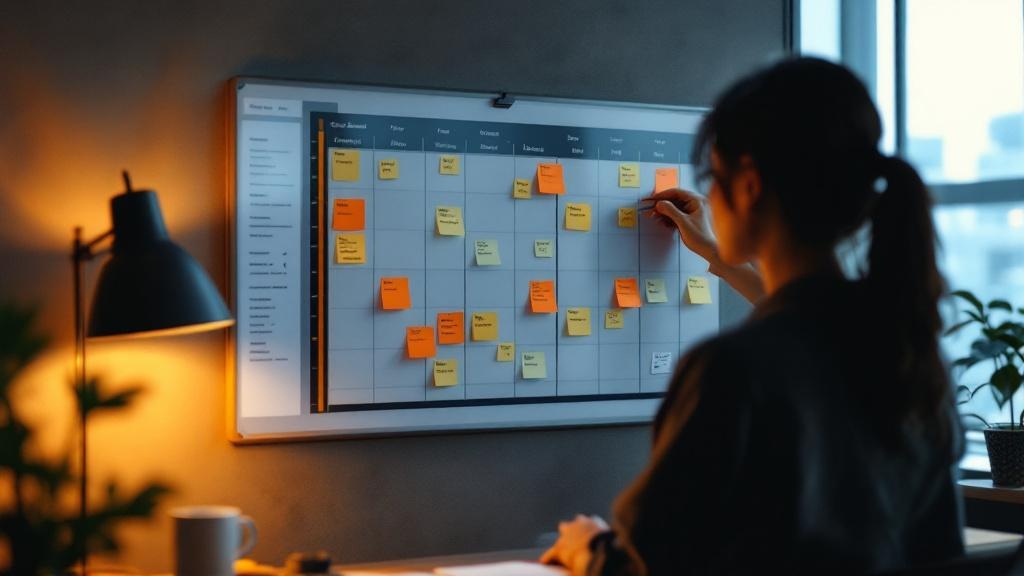
If there is one principle that defines how to organize a business conference in Japan, it is this: start early. The standard recommendation for major corporate events is six to twelve months of lead time, and that estimate is not conservative.
Venue Booking and Seasonal Peaks
Popular conference venues in Tokyo, Osaka, and Kyoto fill up months in advance, particularly during peak seasons. Cherry blossom season (late March through mid-April) and the autumn conference window (October and November) create intense competition for space, hotels, and transportation. Most Japanese venue operators will not accept reservations more than six months ahead, which means foreign organizers need to begin venue consultations and secure tentative agreements well before the formal booking window opens.
The Nemawashi Process
Japanese decision-making runs on *nemawashi* — the practice of building consensus through informal, one-on-one consultations before any formal meeting takes place. Where a Western organization might present a proposal, debate it, and vote in a single session, Japanese counterparts typically circulate ideas through individual conversations, gather feedback, adjust proposals, and only present the final version when agreement is essentially already secured.
For foreign event organizers, this has practical consequences. Venue contracts, vendor agreements, government approvals, and stakeholder sign-offs all move through nemawashi channels, adding weeks to every decision. Expecting a venue manager or municipal government office to respond with a binding “yes” or “no” in a single meeting is unrealistic. Build this consultation cycle into your timeline from the outset.
Immigration and Visa Timelines
If you plan to bring foreign staff to Japan for event setup, technical operations, or management, visa logistics alone can consume months. Japan’s Certificate of Eligibility (COE), issued by regional immigration offices, certifies that a foreign national meets landing conditions — but processing typically takes one to three months. After the COE is approved, the subsequent visa application at a Japanese embassy takes an additional five business days or more.
For specialized roles like professional performers or athletes, the Entertainer visa imposes additional requirements on the hosting organization, including minimum staff counts and facility standards. Initiating visa applications three to four months before the event date is the minimum safe margin.
Working with Local Partners: DMOs, DMCs, and Bilingual Agencies
Attempting to organize a corporate event in Japan without qualified local partners is a recipe for delays, compliance gaps, and communication breakdowns. Japan’s event ecosystem includes several distinct partner types, each serving a different function.
DMOs as Strategic Coordinators
Japan’s registered Destination Management Organizations operate as strategic “control towers” for regional event and tourism coordination. They maintain relationships with local government offices, convention bureaus, and tourism boards, and can facilitate introductions, bid support, and regulatory guidance. Engaging the relevant DMO early gives foreign organizers access to institutional knowledge that would take years to develop independently.
DMCs for On-the-Ground Logistics
Destination Management Companies handle the operational layer of MICE events — registration management, venue setup, audiovisual arrangements, interpreter coordination, networking receptions, and excursion programs. For inbound events, DMCs bridge the language, culture, and regulatory gaps that can derail foreign-led projects.
Why Bilingual Partners Are Non-Negotiable
The gap between “our venue contact speaks some English” and “our agency operates natively in both languages” is where foreign-led events succeed or fail. Bilingual partners do not simply translate — they interpret cultural context, catch misunderstandings before they become problems, and navigate indirect Japanese communication styles that can leave foreign organizers unsure whether they have received agreement or a polite refusal. For companies seeking end-to-end event management in Japan, a bilingual agency that combines deep local venue knowledge with international production standards eliminates the most common source of execution risk.
Cultural Essentials Every Foreign Organizer Should Know
Japan’s business culture operates on conventions that are rarely stated explicitly but are always noticed when broken. For event planning, four areas deserve particular attention.
Hierarchical Seating: Kamiza and Shimoza
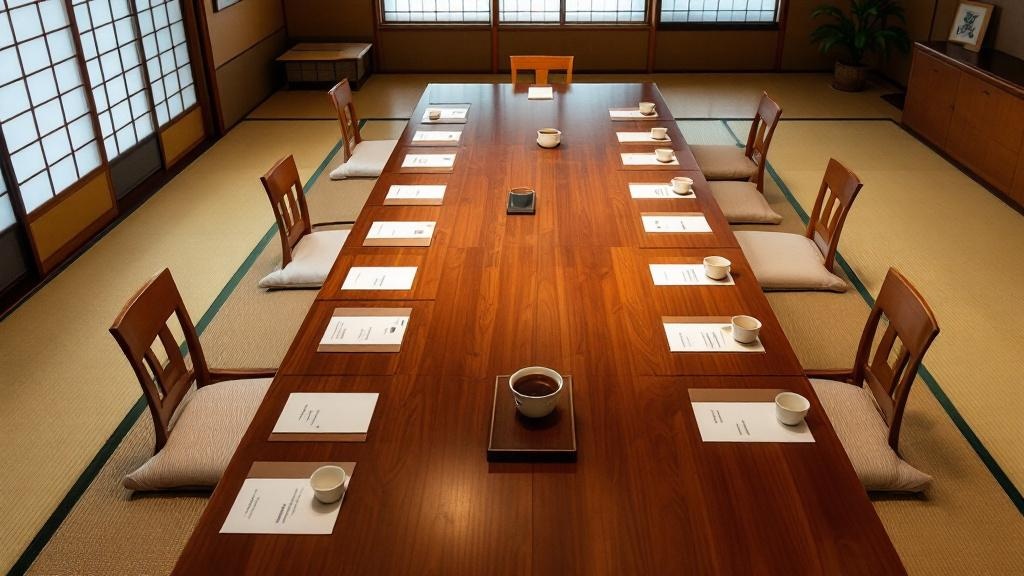
Japanese meeting rooms follow a seating hierarchy rooted in feudal tradition. The *kamiza* (upper seat) — positioned farthest from the door — is reserved for the most senior person or the guest of honor. The *shimoza* (lower seat), closest to the entrance, is for the most junior attendees. This hierarchy applies to conference tables, banquet layouts, panel seating, and even elevator positioning.
For event organizers, the implication is straightforward: room setups and seating charts must account for rank. Placing a senior Japanese executive near the door or behind a pillar is not an oversight — it is an insult. Confirm attendee titles and organizational hierarchy before finalizing any seating arrangement.
Business Card Exchange Protocol
The exchange of *meishi* (business cards) is not a formality in Japan — it is a ritual with specific choreography. Cards are presented and received with both hands, text facing the recipient, accompanied by a slight bow. The most senior person initiates the exchange. Received cards are studied briefly and placed on the table in front of you during the meeting — never written on, folded, or pocketed casually.
For networking sessions at corporate events, ensure that all foreign attendees carry bilingual business cards (English on one side, Japanese on the other) and understand the basic protocol before the event begins.
The 5-Minute-Prior-Action Standard
Japanese punctuality operates on a principle called *go-fun mae koudou* — the “5-minute prior action” standard. Arriving at a meeting or event at the scheduled time means you are already late. The expectation is to arrive five to fifteen minutes early, settled and prepared before the official start. For formal business appointments, arriving ten to fifteen minutes ahead is considered standard professional courtesy. Build this expectation into staff briefings and event-day schedules.
Indirect Communication and Subtle Cues
Japanese business communication tends toward the indirect and contextual. A response of “that might be difficult” typically means no. Silence after a proposal is not awkward — it signals consideration. Overt disagreement is rare in group settings, so pushback usually arrives through private channels after the meeting. Foreign organizers should pay close attention to body language, hesitations, and what is left unsaid. A Japanese counterpart who says “we will consider it” without specifying a timeline or next step is likely declining.
Common Mistakes Foreign Companies Make — and How to Avoid Them
Even well-resourced companies stumble when they apply home-market assumptions to Japan’s event landscape. Four mistakes recur with particular frequency.
Underestimating Documentation and Pre-Approval Cycles
Japanese venues and government offices require detailed advance documentation for nearly every aspect of event execution — floor plans, electrical loads, safety protocols, attendee counts, catering arrangements. These are not rubber-stamp formalities. Fire department inspections occur during both construction and exhibition periods, and violations can result in halted construction or forced dismantling. Start the documentation process months ahead and treat each approval as an iterative cycle rather than a one-time submission.
Assuming Venues Will Accommodate Last-Minute Changes
In many Western markets, event teams routinely adjust layouts, add equipment, or shift schedules on the day of the event. Japanese venues generally do not permit this. Load-in time slots are defined to the minute, and technical plans approved in advance are expected to be followed precisely. Requesting a last-minute change to room configuration or AV setup is likely to be declined — not out of inflexibility, but because the venue has already coordinated its staff, safety systems, and logistics around the approved plan.
Neglecting Fire-Retardancy Requirements for Imported Materials
All exhibit and display materials brought into Japan — banners, booth panels, curtains, carpeting — must meet Japanese fire-retardancy standards and carry visible flame-retardant certification labels. Materials that are acceptable in the United States or Europe may not pass Japanese inspection. Specific materials including styrofoam, untreated nylon, and artificial flowers are outright prohibited. If you are importing exhibition materials, use the ATA Carnet system for temporary admission and confirm fire-retardancy compliance before shipping.
Skipping Bilingual Interpretation for Government and Vendor Coordination
Foreign companies sometimes assume English will suffice for vendor meetings, government filings, and venue negotiations. In practice, critical coordination with fire departments, municipal permit offices, and local vendors occurs almost exclusively in Japanese. Skipping professional interpretation at these touchpoints does not just slow things down — it creates compliance risk. Misunderstanding a fire safety requirement or a venue restriction because of a language gap can result in failed inspections, delayed approvals, or forced last-minute redesigns. Engaging a partner that provides professional event support for Japan-based events with native bilingual capability is the single most effective way to prevent communication-driven failures.
Ready to Plan Your Event in Japan?
If you’re planning your first — or next — corporate event in Japan, the learning curve doesn’t have to slow you down. DMPJ’s Event Management & Technical Support team combines deep knowledge of Japanese venues, regulations, and culture with international production standards, so you can focus on your business goals while we handle everything on the ground. Visit our service page to learn how we can bring your event vision to life.
Sorry, the comment form is closed at this time.