
25 Jun Your AgTech Japan Playbook: A Step-by-Step Market Entry Guide for 2026
Japan’s smart agriculture market is projected to grow from USD 1.4 billion to USD 4.5 billion by 2034, fueled by a farming crisis that no amount of tradition can solve: over 80% of farmers are past 70, and the country imports more than 60% of its food. For AgTech companies with proven technology, that gap is an invitation. But the companies that succeed here don’t simply ship product to Japan — they rebuild their go-to-market strategy from the ground up.
This guide walks you through a practical, 18-month agricultural technology Japan go-to-market strategy — the same phased approach that foreign innovators from Israel, China, and the U.S. have used to gain real traction in one of Asia’s most demanding markets.
Phase 1: Market Validation (Months 1–3)
Identify your target segment
Japan’s AgTech demand isn’t monolithic. Your first task is to determine which of five key segments your technology actually serves: agribusinesses seeking labor-saving automation, technology providers building platforms for the domestic market, research institutions like NARO pursuing next-generation solutions, food supply chains requiring traceability, or sustainable farming operations working toward Japan’s goal of 1 million organic hectares by 2050. Each segment has different buyers, budgets, and decision timelines. Pick one to lead with.
Assess technology fit for Japan’s farm structure
Forget the 500-hectare fields of Iowa. The average Japanese farm is roughly 1.5 hectares — fragmented, often terraced, and shaped by decades of family-scale cultivation. Your hardware must work in tight spaces, on steep terrain, and across the specific crop varieties grown here (short-grain rice, Japanese strawberries, mikan citrus). If your product was designed for broadacre commodity farming, expect a six-month adaptation cycle before you can even demo it credibly.
Map the competitive landscape
Japan has 12 or more domestic AgTech players already serving this market, each with deep local relationships. Before you position, you need to know them.
| Company | Core Technology | Primary Segment |
|---|---|---|
| Seraku | IoT platform (Midori Cloud) — sensors, records, analytics | Broad crop monitoring |
| Optim | AI pinpoint pesticide spraying via drones | Rice & soybean precision inputs |
| Farm Note | Livestock and dairy DX platform | Dairy farmers |
| Sagri | Satellite data + AI for farmland analysis | Land management / municipalities |
| inaho | AI-powered harvesting robots | Corporate farms, asparagus |
| TOWING | High-performance soil in 30 days | Sustainable / carbon farming |
| Kisui | Autonomous AI field robot “Adam” | General field operations |
Identify where your solution fills a genuine gap rather than competing head-on with entrenched domestic players. Foreign companies that have succeeded — Taranis in precision analytics, DJI in drone spraying — did so by bringing capabilities that didn’t yet exist locally.
Phase 2: Partner and Channel Strategy (Months 3–6)
Choose your entry model
The three proven pathways into Japan’s AgTech market each come with distinct trade-offs:
| Entry Model | Example | Advantage | Risk |
|---|---|---|---|
| **Trading company investment** | [Taranis → Sumitomo Corp.](https://www.sumitomocorp.com/en/jp/news/release/2018/group/10950) | Instant access to nationwide distribution, JA relationships, regulatory expertise | Loss of equity and strategic control |
| **OEM acquisition** | [Bloomfield Robotics → Kubota](https://www.kubota.com/news/2024/20240911.html) | Deep integration with Japan’s machinery ecosystem | Technology absorbed into acquirer’s brand |
| **JA cooperative partnership** | [DJI → Syngenta Japan](https://ag.dji.com/newsroom/dji-ag-news-en-cooperative) | Direct channel to farming communities via trusted intermediary | Slow consensus-driven decision cycles |
Japan’s share of Asian agrifoodtech investment jumped to 13% in 2025 — up from 6.1% the year before — so there’s strong appetite from Japanese strategic investors. The question is which structure preserves enough independence for your long-term goals.
Engage bilingual market entry consultants
JA cooperatives control the majority of Japan’s agricultural distribution and financing, and introductions don’t happen cold. You need bilingual advisors who understand both the technology and the relationship protocols — people who can run a credible *nemawashi* (consensus-building) process with JA branch managers while accurately representing your technical capabilities. This is where you partner with DMPJ for your AgTech Japan launch: bridging the gap between your innovation and Japan’s institutional buyers.
Establish a local legal entity
Subsidy eligibility is a dealbreaker. Japan’s fiscal year 7 supplementary budget allocated JPY 15.6 billion for agricultural support services and JPY 8.9 billion for technology development. Your customers can’t access those funds unless you operate through a Japanese entity or a formally registered agency agreement. Don’t treat this as optional paperwork — it’s the difference between a ¥10 million sale and a ¥5 million sale.
Phase 3: Technology Localization (Months 4–8)
Adapt hardware for Japanese conditions
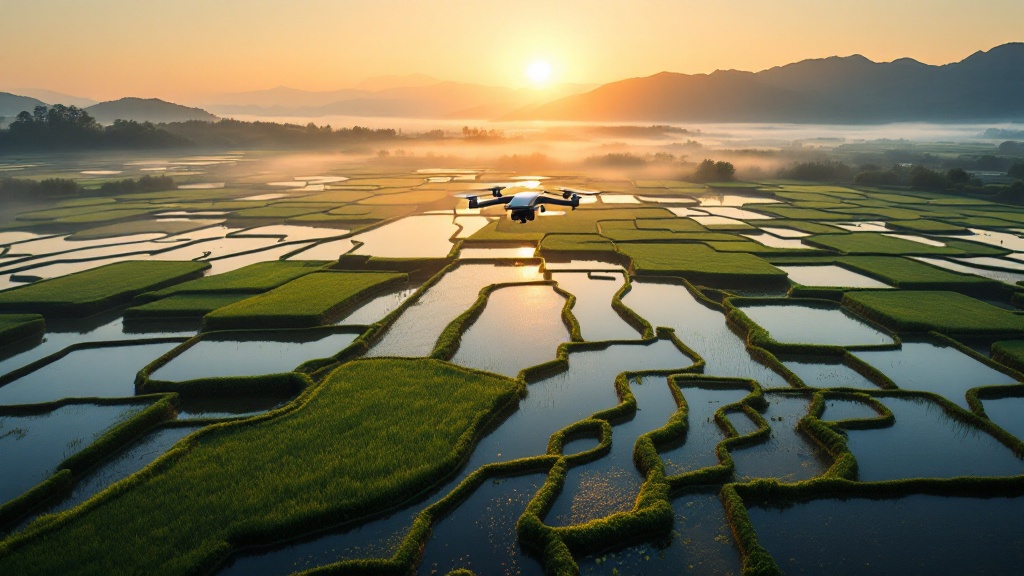
Japan’s fields are small, irregular, and often on slopes. Drones need shorter flight paths and more frequent landings. Ground robots need tighter turning radii. Sensors must tolerate the country’s humid subtropical climate without degrading. The precision agriculture market here reached USD 602 million in 2025 specifically because solutions were adapted, not imported wholesale.
Build a complete Japanese-language experience
This goes far beyond UI translation. You need full Japanese documentation, agricultural-specific terminology (not machine-translated), and Japanese-language customer support staffed by people who understand farming. Misinterpreted automated alerts have killed adoption for foreign vendors whose systems felt “rude” or incomprehensible to elderly operators.
Begin regulatory submissions early
Depending on your product, you may face drone aviation certification (coordinated between MLIT and MAFF), pesticide label validation for any chemical-application technology, or JAS compliance for organic-adjacent solutions. The dissolution of domestic drone company Nileworks in late 2025 — despite strong technology — underscored how regulatory and support infrastructure demands can overwhelm even well-funded companies. Start submissions in Phase 3 so approvals land before your pilot season.
Phase 4: Pilot Deployment and Proof Points (Months 6–12)
Run demonstration farms synchronized with growing seasons
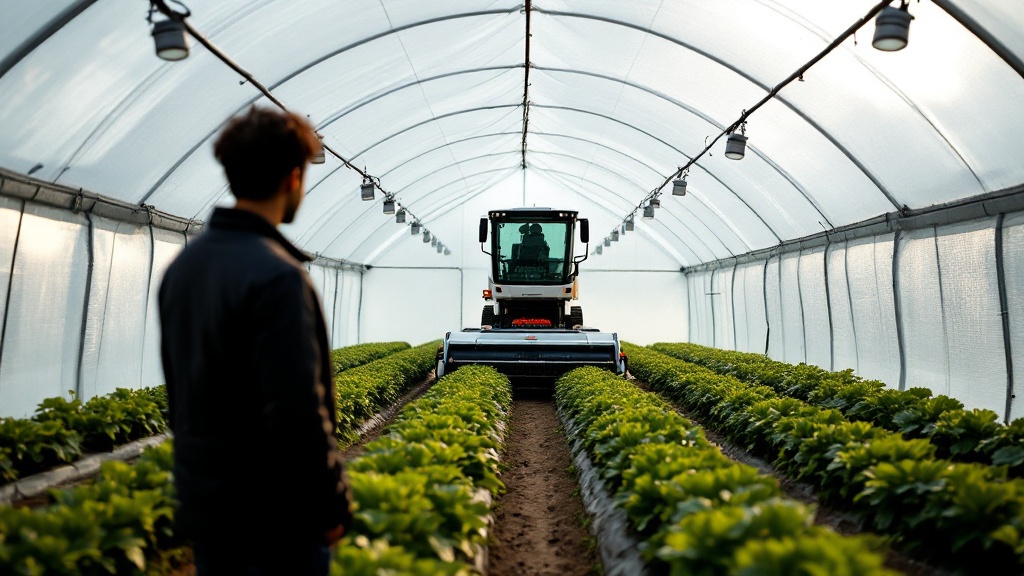
Deploy across 2–3 prefectures chosen for crop relevance and JA receptivity. Hokkaido for broadacre rice, Niigata for premium rice varieties, Nagano or Aomori for tree fruit — match your technology’s strength to the prefecture’s agricultural profile. Time your deployments to the planting calendar: a drone demo that misses transplanting season sits idle for a full year.
Collect Japan-specific ROI data
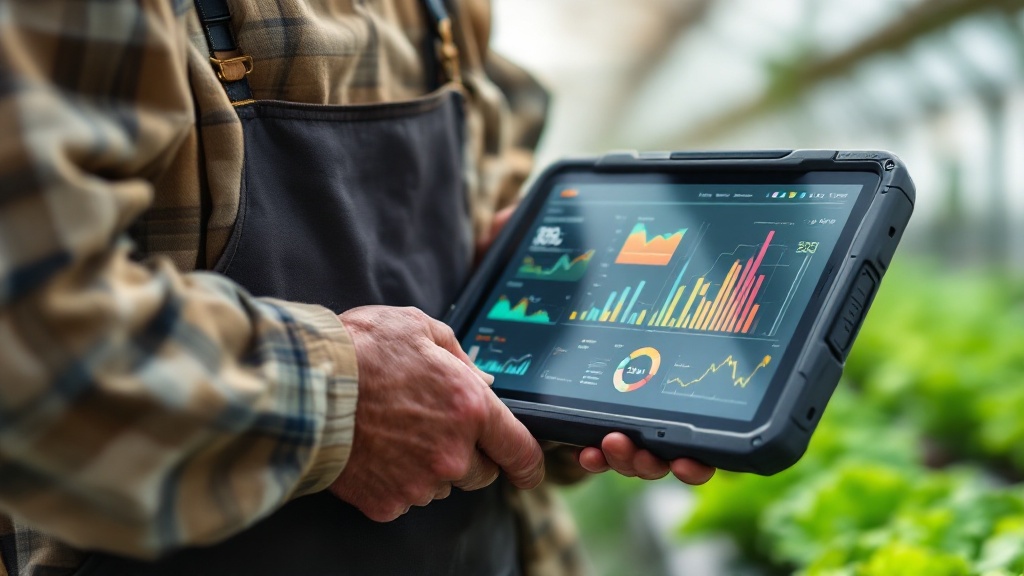
Generic global benchmarks don’t persuade here. You need data from Japanese fields, measured in yen, validated over a Japanese growing season. International studies show precision agriculture delivers roughly 5% yield increases, 8% fertilizer savings, and 9% herbicide reduction, but Japanese buyers will trust those numbers only when replicated on local soil. NARO’s NoshoNavi1000 program demonstrated 87% labor time reduction and 30% rice production increases — your pilots need to produce similarly concrete, locally verified results.
Build relationships with regional JA branches
This is not a checkbox exercise. Regional JA branch managers need to see you at their facilities, during their harvest festivals, through their typhoon season. On-site presence and seasonal support build the trust that determines whether your technology gets endorsed to the 1.5 million farming households those branches serve.
Phase 5: Commercial Launch and Scaling (Months 12–18)
Structure pricing for subsidy eligibility
The mainstream Japanese farmer evaluates AgTech purchases against government subsidy thresholds. Structure your core offering within the JPY 5 million ceiling to qualify for programs that cover 50–70% of implementation costs. Solutions priced above this threshold face dramatically slower adoption unless they target corporate farming operations with larger capital budgets.
Establish training infrastructure
Partner with JA to set up regional training centers or certified trainer programs. Japanese buyers rank vendor reliability and after-sales support above price — a reality confirmed across every segment. Consider a “train the trainer” model where JA extension officers become certified instructors for your platform, scaling education without scaling headcount.
Develop a seasonal support calendar
Japan’s agricultural calendar dictates everything. Rice transplanting in May–June, typhoon monitoring July–September, harvest October–November — your support team must be proactive during these windows, not reactive. Build a 12-month support calendar aligned with regional crop cycles and staff accordingly. The SVG Ventures–Kagome partnership allocated $50 million specifically for agritech ventures that understand this seasonal discipline.
Common Pitfalls and How to Avoid Them
Do not attempt direct-to-farmer sales without JA endorsement. JA cooperatives are not just distributors — they are the institutional trust layer for Japan’s farming communities. Bypassing them signals arrogance and cuts you off from the financing and logistics infrastructure that most farmers depend on.
Do not assume Western ROI timelines. Japanese farms require 12–18 month proof cycles, not the 6-month pilots common in the U.S. Risk-averse farming communities need to see results across a full growing season — and often two — before committing to adoption.
Do not underinvest in after-sales support. Industry surveys consistently indicate that 75% of Japanese agricultural buyers rank vendor reliability above price. The Nileworks case demonstrated that even technically excellent drone technology fails without sustainable nationwide support infrastructure. Budget for ongoing field support as a core line item, not an afterthought.
Do not ignore the generational dynamic. In many Japanese farming families, younger heirs champion technology — they attend the demos, they read the specs, they push for adoption. But elders hold budget authority and final say. Your sales process must address both audiences: technical credibility for the younger generation, risk mitigation and trust signals for the decision-makers.
Your AgTech Japan Market Entry Checklist
Use this as your agtech Japan market entry checklist before committing resources:
- [ ] Target segment identified from Japan’s five key agricultural verticals
- [ ] Technology assessed for small-scale, fragmented-field compatibility
- [ ] Competitive mapping completed against 12+ domestic players
- [ ] Entry model selected (trading company, OEM, or JA partnership)
- [ ] Bilingual market entry advisor engaged
- [ ] Japanese legal entity or agency agreement established
- [ ] Hardware adapted for Japanese field sizes and climate
- [ ] Full Japanese-language UI, docs, and support operational
- [ ] Regulatory submissions filed (drone, pesticide, or JAS as applicable)
- [ ] Pilot farms secured in 2–3 prefectures, synced to growing season
- [ ] Japan-specific ROI data collected and documented in JPY
- [ ] Pricing structured within JPY 5M subsidy-eligible threshold
- [ ] Seasonal support calendar built and staffed
Launching AgTech in Japan is a 12–18 month journey that rewards preparation and local expertise. DMPJ has guided global agricultural technology innovators through every phase — from market validation to JA partnerships to commercial scaling. Visit our agricultural technology services page to schedule a strategy session and start your Japan AgTech journey with DMPJ.
Sorry, the comment form is closed at this time.