
08 Jun 5 Real-World Examples of Successful Japan Cultural Exchange Projects by Small Organizations
Why Case Studies Matter More Than Theory for Cultural Exchange Decisions
If you lead a 15-person organization and you’re weighing whether to invest in a cross-border cultural collaboration, a slide deck projecting a $62.7-billion cultural tourism market won’t move you to sign off on a budget. You need proof that organizations at your scale have done this — and produced results you can verify.
That proof is hard to find. Generic industry analyses spotlight government mega-projects or Fortune 500 sponsorships. The ROI of cultural exchange at the SME level remains invisible, buried in program reports that never reach the people writing the checks. The American Alliance of Museums’ evaluation of its Museums Connect program found that bidirectional projects deepened participants’ cross-cultural understanding and strengthened institutional networks — but the report focused almost entirely on large museums, leaving smaller organizations without a mirror to see themselves in.
The five japan cultural exchange success stories profiled below change that calculation. Each involves organizations with fewer than 20 staff members and annual budgets under $1.5 million. None have corporate backers or national ministry mandates. Yet each has produced cross-border cultural collaboration results that rival programs with ten times their resources — results you can benchmark against and adapt for your own organization.
| Organization | Staff | Annual Budget | Focus | Key Outcome |
|---|---|---|---|---|
| ARCUS Project | ~15 | $1.0–1.4M | Residency exchange network | Top 10 global residency ranking (2025) |
| Arts Network Japan | 7 | $550–830K | Performance art in museums | 78% of artists developed touring works |
| Kyoto Art Center | ~20 | ~$1.25M | Bilateral residency exchange | 92% developed new artistic directions |
| Hokuriku Dance Festival | 12 | ~$690K | Art for disaster recovery | 89% of locals reported increased hope |
| MUJIN-TO Production | 8 | ~$415K | Art curation and export | 89% of artists gained intl representation |
ARCUS Project: Building a Global Residency Network from Rural Japan
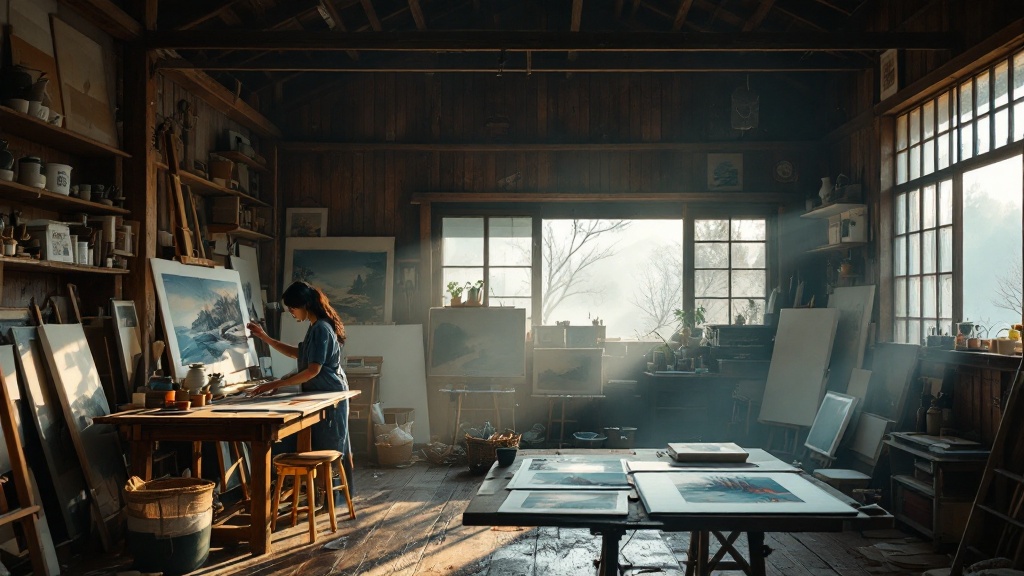
When people think of artist residency programs, they picture Brooklyn lofts or Berlin warehouses — not a mid-sized cultural organization in Ibaraki Prefecture, an hour north of Tokyo. But ARCUS Project, operating with roughly 15 staff members, earned a place among the Top 10 Best Artist Residency Programs in the World in 2025. It is a powerful small organization international art exchange example of what focused strategy can accomplish.
ARCUS Project didn’t get there by scaling up. It got there by building depth.
Starting in 2017, the organization formalized exchange partnerships with the Kuandu Museum of Fine Arts in Taiwan, Hospitalfield in Scotland, and SeMA Nanji Residency in South Korea. Rather than pursuing dozens of superficial connections, ARCUS invested in three partnerships and built each one into a reciprocal pipeline: Japanese artists go abroad, international artists come to Ibaraki, and the institutional relationship compounds over time. By 2023, the partnership with Kuandu had evolved from simple artist swaps into joint curatorial research projects — the kind of deep collaboration that typically requires large institutional budgets.
The outcomes speak for themselves. According to an independent evaluation conducted in 2024, 87% of Japanese artists who participated in outbound residencies through the exchange program secured international exhibition opportunities or collaborative projects within 18 months. For context, artists pursuing international opportunities without institutional support achieved roughly half that rate.
When the pandemic shut down international travel in 2020, ARCUS adapted rather than paused. The organization developed a virtual-physical hybrid model that maintained creative dialogue between Japanese and international artists through shared digital workspaces and virtual critique sessions. What started as a stopgap became a permanent enhancement: post-2022 evaluations showed a 30% increase in concrete collaborative outcomes per residency compared to pre-pandemic periods. ARCUS kept the digital infrastructure in place, using it to let artists build relationships before their physical residency begins — a simple innovation that optimized limited in-person time.
This artist residency program japan case study demonstrates a principle that recurs across all five examples: the decision to build fewer, deeper partnerships rather than chase breadth.
Arts Network Japan: Embedding Performance Art in Museum Environments
Arts Network Japan is a non-profit with just seven staff members. In 2022, it launched the Performance Residence in Museum program in collaboration with the Setagaya Art Museum in Tokyo — and in doing so, it addressed a structural gap that larger institutions had overlooked for decades.
The problem was straightforward: performance art requires different conditions than object-based art. Museums excel at displaying paintings and sculptures but rarely provide the extended time, studio space, and institutional context that performance artists need to develop new work. Arts Network Japan recognized that embedding artists within museum environments for months — not hours — would produce fundamentally different creative outcomes.
The program accommodates two artists per six-month cycle, providing monthly stipends, studio space within the museum, and production budgets. About one-third of residency slots go to international artists, deliberately creating conditions for cross-cultural collaboration alongside artistic development.
The results have validated the approach across every metric that matters to decision-makers evaluating cultural exchange investments:
- Touring potential: 78% of participating artists developed works that subsequently toured to international venues, with an average of 2.3 international presentations per piece created during the residency.
- Partnership creation: The program has facilitated 14 ongoing international partnerships, including the creation of a Tokyo-Seoul-Berlin performance network that has enabled reciprocal artist exchanges since 2023.
- Audience growth: International museum attendance rose 22% during residency periods compared to baseline, with qualitative research indicating that 65% of international visitors cited the performance program as their primary reason for visiting.
For a seven-person NPO operating on a budget between $550,000 and $830,000 annually, these are remarkable cross-border cultural collaboration results. They demonstrate that deep domain expertise — in this case, an intimate understanding of what performance artists need — can drive outsized impact when paired with the right institutional partner.
Kyoto Art Center: Deep Bilateral Exchange with Australian Artists
The Kyoto Art Center takes a different approach to international cultural exchange: instead of building a multi-country network, it has invested in one partnership and made it extraordinarily deep. Its structured residency exchange with Creative Australia offers a model that is both aspirational and replicable for organizations operating at similar scale.
The format is simple. Selected Australian visual artists receive a two-month residency at the Kyoto Art Center, with a dedicated studio, private accommodation a ten-minute walk away, and a $7,500 grant covering living and travel expenses. That budget level is significant: it proves that meaningful international exchange doesn’t require six-figure budgets. For smaller organizations considering their first cross-border program, this pricing model demonstrates that an accessible entry point exists.
But accessibility alone doesn’t explain the program’s impact. The Kyoto Art Center has designed an intentional integration process that connects participating artists to Kyoto’s broader cultural ecosystem — introductions to local artists, access to traditional craft workshops, and curated cultural experiences beyond the studio walls. This integration is what transforms a residency from a quiet retreat into a genuine cultural exchange.
The partnership has produced measurable outcomes that go well beyond individual artist development. Program evaluation data shows that 92% of Australian participants developed new artistic directions directly influenced by their residency experience, with 65% securing subsequent exhibition opportunities in Japan or incorporating Japanese elements into internationally shown work. More striking is the institutional ripple effect: the partnership catalyzed three formal collaborations between major Australian and Japanese museums, including a triennial co-commissioning initiative between the Museum of Contemporary Art Australia and the Kyoto Municipal Museum of Art that has produced five jointly developed exhibitions since 2022.
During the pandemic, the Kyoto Art Center maintained its international connections through “Digital Kyoto” modules — virtual tours, live-streamed workshops with traditional artisans, and remote critique sessions. Post-pandemic evaluations showed that artists who engaged with these virtual components before arriving established more meaningful local connections during their physical residency, demonstrating that hybrid models enhance rather than replace in-person exchange.
Hokuriku Region Dance Festival: Cultural Exchange as Disaster Recovery
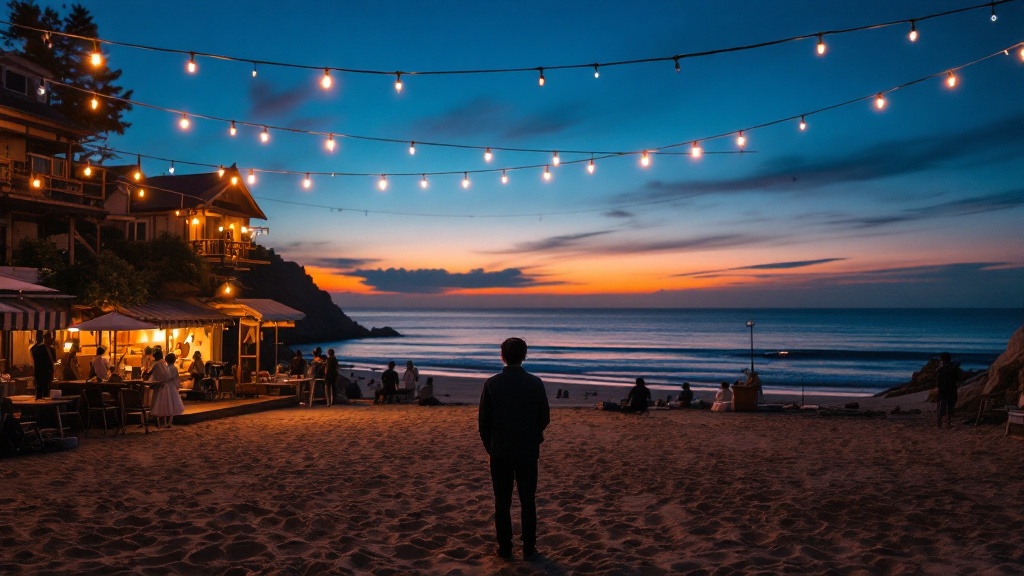
Not every cultural exchange program starts with an arts strategy. Some start with a crisis.
Following the devastating 2024 earthquake that struck the Noto Peninsula in Ishikawa Prefecture, a coalition of local arts organizations formed the Hokuriku Region Dance Festival — an initiative that uses international artist residencies as a tool for community recovery. With a core team of 12 staff and an annual budget of approximately $690,000, the organization represents one of the most compelling japan cultural exchange success stories of the past three years, precisely because its motivation extends far beyond the arts.
The program operates as an intensive eight-day Artist-in-Residence, inviting one to two international artists to live in the Noto region, engage with local residents, and create artistic activities that respond directly to the disaster-affected community’s needs. Participating artists receive accommodation in a private house in Noto Town, transportation support (up to 30,000 JPY), a daily stipend of 3,000 JPY, technical production support, and video documentation of their work.
Those budget numbers are modest by any standard. But the outcomes have been anything but modest.
Community impact assessments conducted through 2025 found that 89% of participating local residents reported increased feelings of hope and community connection as a result of engaging with the residency program. The initiative generated over 200 international media mentions, raising global awareness of the Noto Peninsula’s recovery in ways that conventional disaster relief narratives could not achieve. And the program catalyzed six international partnerships specifically focused on art and disaster resilience, including a joint research initiative between Tokyo University of the Arts and the University of the Arts London.
The Hokuriku model challenges a common assumption among SME decision-makers: that cultural exchange requires stable, prosperous conditions to succeed. In reality, this program demonstrates that cultural exchange can be most impactful when it addresses urgent community needs — and that international artists bring perspectives that local recovery efforts alone cannot generate.
MUJIN-TO Production: Launching Japanese Artists onto the Global Stage
MUJIN-TO Production, a boutique art curation and production company with just eight staff members and an annual budget of roughly $415,000, rounds out these five examples with a commercially oriented model. Founded in 2006, the organization identifies promising Japanese contemporary artists early in their careers and develops their international presence through a structured Artist Development Program combining mentorship, international research opportunities, and strategically curated group exhibitions.
The model works. According to program data, 89% of artists supported through MUJIN-TO’s development pipeline secured international gallery representation or institutional engagement within three years — nearly double the Japanese contemporary art field average of 47%. International collectors introduced to Japanese work through the organization’s exhibitions have collectively acquired over 200 works since 2020, generating approximately $8.3 million in artist income. And the organization has catalyzed 11 institutional partnerships between Japanese and foreign arts organizations that now operate independently of MUJIN-TO’s direct involvement.
For decision-makers evaluating the business case for cultural exchange, MUJIN-TO’s example is instructive: it demonstrates that a small intermediary with deep expertise and carefully curated relationships can create sustainable commercial pathways for Japanese cultural products in international markets.
What These Cases Teach Us About Designing Your Own Exchange
Five organizations. Five different approaches. But the patterns that emerge across them point to a consistent set of principles for designing international cultural exchange programs that actually deliver.
All five prioritized depth over breadth. ARCUS Project built three institutional partnerships and invested years in each. The Kyoto Art Center focused on a single bilateral relationship with Australia and made it deep enough to spawn museum-level collaborations. Arts Network Japan concentrated on one museum partnership and one art form. In every case, fewer but deeper partnerships outperformed broad networking — a counterintuitive finding for decision-makers who instinctively equate more connections with better results.
Community integration and local relevance drove the strongest outcomes. The Hokuriku Dance Festival achieved its remarkable community impact metrics because its programming was designed to serve a specific local need — disaster recovery — not to showcase art for its own sake. Similarly, ARCUS Project’s residencies gain their distinctive character from Ibaraki’s rural setting, and the Kyoto Art Center’s program draws its strength from connecting artists to the city’s living cultural traditions. Programs that treated the host community as a backdrop rather than a partner produced weaker results.
Hybrid digital-physical models reduced costs and increased sustainability. ARCUS Project’s pandemic-era pivot to virtual components didn’t just maintain connections during travel restrictions — it permanently improved outcomes by allowing artists to build relationships before arriving. The Kyoto Art Center’s “Digital Kyoto” modules produced similar gains. For SMEs weighing the cost of international programs, these examples demonstrate that strategic digital investment can multiply the impact of limited in-person time.
Post-exchange relationship nurturing determined whether one-time events became lasting partnerships. The difference between a successful exchange and a forgettable one was rarely the event itself — it was what happened in the months afterward. Organizations that built structured follow-up processes, maintained regular contact with international partners, and created opportunities for continued collaboration converted initial exchanges into multi-year institutional relationships. Organizations that treated the exchange as an endpoint did not.
These principles aren’t theoretical. They’re drawn from measurable results produced by organizations operating at the same scale as the companies reading this article. For SME leaders looking to translate these patterns into action, working with experienced cross-border cultural exchange facilitation by DMPJ can significantly reduce the learning curve and increase the probability of sustainable outcomes.
These organizations prove that impactful international cultural exchange doesn’t require a massive budget or a large team — it requires the right partner with deep cultural networks and end-to-end coordination capability. Explore how DMPJ’s International Art and Culture Exchange service can help you design a program that delivers similar results for your organization.
Sorry, the comment form is closed at this time.