

30 May Care Robots vs Smart Home Tech vs AI Monitoring: Which Elderly Care Technology Fits Your Organization?
Three Technology Categories Reshaping Elderly Care
Japan’s elderly care technology landscape has consolidated into three distinct investment categories: care robots, smart home and assistive technologies, and AI-powered monitoring systems. Each addresses a fundamentally different dimension of the care challenge—physical strain, independent living, and clinical risk management—and the differences between them are not just technical but strategic.
The numbers reflect serious market momentum. Japan’s elder care assistive robots market generated $276.5 million in 2025 and is projected to reach $871.3 million by 2033 at a 15.3% CAGR. The broader elderly care digital transformation market—covering monitoring systems, care management software, and electronic billing—reached ¥54.576 billion in fiscal 2024. Meanwhile, Japan’s smart home market is on track to triple from ¥432 billion to ¥1.344 trillion by 2030.
But market size alone does not guide procurement decisions. Choosing the right technology category matters more than selecting the right vendor within a category. A facility serving residents with complex mobility needs will extract far more value from transfer robots than from smart locks. A home care agency supporting independent-living seniors will find smart environmental sensors more practical than a ¥5 million robotic unit.
Organizations routinely make the opposite mistake. Industry surveys show that while 63.1% of facilities cite cost as the primary adoption barrier, the second most significant barrier is mismatch between selected technology and actual care needs. Adopting technology without first matching it to your care model wastes budget and erodes staff confidence in future innovation efforts.
Care Robots: Strengths, Limitations, and Ideal Use Cases
Transfer Robots and Caregiver Injury Reduction
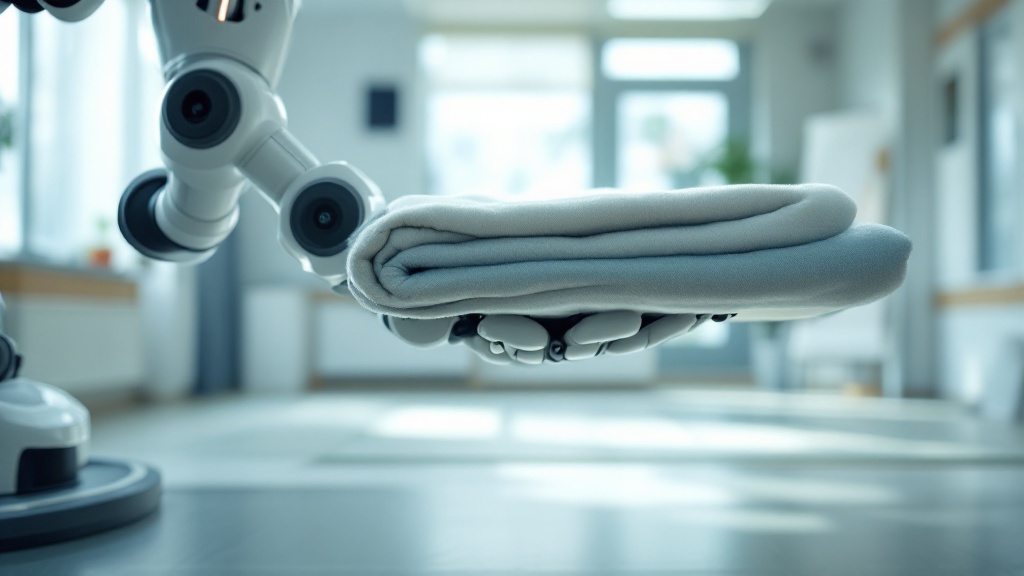
Transfer robots have built the strongest evidence base in care robotics. Time-motion analysis of Japanese nursing facilities found that wearable transfer-support robots were used in over 70% of transits for direct care, concentrated on the highest-burden tasks: moving residents between beds and wheelchairs, and toileting assistance. Both study facilities confirmed intensive use during tasks that place the greatest strain on caregivers’ lower backs—the leading driver of musculoskeletal injuries and a major contributor to workforce attrition in long-term care.
The sustained use of these devices has direct implications for staff retention. Lower back pain is the most common occupational injury among care workers, and reducing its incidence addresses one of the most persistent causes of turnover in an industry already facing severe workforce shortages.
Mobility and Social Companion Robots
Mobility robots serve a different function, supporting patient independence during bathing and movement. These devices shift the model from caregiver-dependent transfers to assisted self-mobility, preserving resident autonomy while reducing physical demands on staff.
Social companion robots target yet another problem: cognitive stimulation and loneliness reduction. Research shows that social assistive robots can promote social connection, increase medication compliance, and support independence for individuals with mild cognitive impairment or early-stage dementia. While clinical evidence for strong therapeutic claims remains mixed, these robots deliver measurable engagement benefits in facilities where resident isolation is a concern.
Cost and ROI
Care robots typically cost ¥3–5 million per unit (~$20,000–$33,000 USD), placing them at the highest price point of the three technology categories. However, ROI depends heavily on how the technology is deployed. A comparative analysis of rehabilitation robotics found that facilities using one-therapist-to-multiple-patient supervision models achieved 18–30% cost savings over conventional therapy. Facilities that maintained traditional 1:1 staffing ratios with the same robots generated 105% additional costs. The technology is identical—the deployment model determines whether it saves money or burns it.
Limitations
The primary constraint is not the robot itself but the organizational integration around it. Facility size, staffing structure, and management attitudes significantly influence whether robot adoption succeeds. Without structured staff training and deliberate workflow redesign, even well-chosen robots become expensive equipment gathering dust in storage rooms.
Smart Home and Assistive Technology: Strengths, Limitations, and Ideal Use Cases
Core Technologies for Aging in Place
Smart home technologies for elderly populations include voice-activated assistants, smart locks, environmental sensors, and integrated monitoring platforms designed to support seniors’ safety, connectivity, and comfort in their own homes. These systems address practical daily challenges: medication reminders through voice commands, automated stove shut-offs, door sensors alerting family members to unusual activity patterns, and wearable health monitors tracking vital signs continuously.
The technologies are not individually groundbreaking, but their combined deployment creates layered safety nets that enable older adults to remain in their homes longer—a priority for both residents and the healthcare system.
Market Growth
Japan’s smart home market is expanding rapidly, driven by demographic urgency and growing consumer acceptance.
The market reached ¥432 billion in fiscal 2019 and is projected to grow toward ¥1.344 trillion by 2030—a threefold expansion driven by aging demographics and improved device usability.
Quality-of-Life Improvements
A pilot study evaluating smart home technology for community-dwelling older adults found statistically significant improvement in overall quality of life, particularly in the domains of “future security” and “achieving in life.” While direct clinical outcome evidence remains nascent, these psychological and social benefits—reduced anxiety about safety, greater sense of control over daily life—address critical dimensions of well-being that standard medical metrics often miss.
Ideal Setting and Limitations
Smart home technologies are best suited for community-dwelling elderly populations and home care settings where the primary goal is maintaining independence. With 22% of Japanese women and 15% of men over sixty-five now living alone—and those figures projected to reach 25% and 21% by 2040—the addressable population is large and growing.
The primary limitation is digital literacy. Many elderly Japanese users have limited familiarity with technology interfaces. Successful deployments require voice-first design, simplified controls, and family or caregiver involvement during onboarding. Organizations considering these solutions should evaluate not just the technology but the user support model required to make adoption stick.
AI-Powered Monitoring Systems: Strengths, Limitations, and Ideal Use Cases
Fall Detection
AI-powered fall detection has produced some of the most compelling safety data in elderly care. A large quasi-experimental study comparing traditional patient care systems with integrated IoT monitoring found that bedside fall incidence dropped from 1.2% to 0.1%—an 88% reduction in fall likelihood. The system detected an average of 13.5 potential falls per day with zero false alarms, while the traditional system issued approximately 11 bed-exit alarms daily, four of which were false. Eliminating false alarms directly addresses alarm fatigue—a documented phenomenon where staff begin ignoring alerts because most are spurious, inadvertently compromising safety.
Systematic reviews of fall-detection devices confirm strong analytical performance, with trunk-centered wearable sensors achieving median sensitivities around 97.5% and specificities near 96.9% in controlled settings. Real-world deployment among frail elderly populations requires careful validation, but the technology’s directional accuracy is well established.
AI Clinical Decision Support

AI-powered clinical decision support systems (CDSS) have demonstrated a 49.2% reduction in medication error rates (3.47 vs. 6.83 per 1,000 patient-days) and a 47.2% reduction in adverse drug events. The estimated return on investment was 489% over 12 months. Length of stay was significantly shorter in the CDSS group (7.1 vs. 7.8 days), and 30-day readmissions dropped from 13.7% to 11.2%. For facilities managing residents on complex medication regimens, these numbers represent both a safety improvement and a financial case that is difficult to argue against.
Predictive Analytics
Beyond reactive detection, AI monitoring increasingly incorporates predictive capabilities—identifying subtle behavioral or physiological patterns that precede acute events like falls, delirium, or cardiac decompensation. These systems enable early intervention by flagging residents whose data trends toward deterioration before clinical symptoms become visible, shifting the care model from responsive to preventive.
Ideal Setting and Limitations
AI monitoring delivers the strongest results in facilities managing complex, multi-morbidity populations where early detection directly prevents hospitalizations and reduces mortality risk.
The limitation is infrastructure. Effective AI monitoring requires robust data systems and serious cybersecurity measures. Japan’s pharmaceutical and medical device regulator now mandates documented threat modeling, encryption, and vulnerability management for connected health devices. Facilities without adequate IT infrastructure face significant upfront investment before the monitoring system itself can even be deployed.
Head-to-Head Comparison: Cost, ROI, Implementation Complexity, and Staff Impact
Comparison Matrix
| Factor | Care Robots | Smart Home Tech | AI Monitoring |
|---|---|---|---|
| **Typical investment** | ¥3–5M per unit (~$20K–$33K) | Varies by scope; per-home systems from ~¥500K | System-dependent; facility-wide from ¥2M+ |
| **Documented ROI** | 18–30% savings (multi-patient supervision model) | BCR of 1.63 (tele-homecare model) | Up to 489% over 12 months (CDSS) |
| **Staff impact** | Physical burden ↓; supports 70%+ of high-burden transits | Workflow efficiency ↑; remote monitoring reduces visit frequency | Cognitive load ↓; zero false alarms eliminates alarm fatigue |
| **Key outcome** | Caregiver injury reduction; resident mobility | QoL improvement in security and independence | 88% fall reduction; 49% medication error reduction |
| **Complexity** | High — staff training and workflow redesign required | Low to moderate | Moderate to high — data infrastructure prerequisite |
| **Best fit** | Nursing homes, rehabilitation facilities | Home care, community-dwelling seniors | Complex-care and multi-morbidity facilities |
Matching Technology to Organizational Context
The right choice depends on three factors: facility type, care model, and resident population. A 50-bed nursing home with high-acuity residents and frequent transfers will see faster payback from care robots than from smart home sensors. A home care agency managing 200 independent-living clients will extract more value from scalable smart home monitoring than from unit-priced robotic equipment. A facility serving residents with complex medication regimens and high fall risk should prioritize AI monitoring, where a single system can address multiple clinical safety concerns simultaneously.
Approaching this as a best elderly care technology comparison rather than a simple procurement exercise changes the outcome. Organizations that evaluate at the category level first—then select vendors within the chosen category—consistently report higher satisfaction and faster payback than those who begin with vendor demos and work backward to justify the purchase.
The Case for Combining Categories
The most effective facilities do not choose one category exclusively. They combine two or more strategically. A nursing home might deploy transfer robots for physical care, AI monitoring for fall and medication safety, and smart home elements in resident rooms to support independence. The evidence supports this approach: facilities combining monitoring robots with other care technologies showed improved staffing levels and reduced turnover simultaneously—effects that single-category deployments rarely achieve alone.
When to Combine Technologies: The Integration Advantage
Monitoring Robots and Workforce Stability
A landmark study of Japanese nursing homes found that monitoring robots showed the strongest association with improved staffing and retention among all robot types studied. Doubling the number of monitoring robots correlated with a 3% increase in caregiver staffing—equivalent to approximately 1.2 additional caregivers per facility. The effect was strongest for non-regular workers, the precise workforce segment with the highest turnover rates. Robot adoption complemented rather than replaced human workers: a 10% increase in robots was associated with a 0.24% increase in total employment and a decrease in restraint use and pressure ulcers, indicating improved care quality alongside workforce gains.
Smart Home Sensors Feeding AI Platforms
Individual smart home sensors generate limited value in isolation. A door sensor tells you someone left; a sleep tracker tells you they slept poorly. But when sensor data feeds into an AI analytics platform, the combined system enables holistic care coordination: correlating sleep patterns, mobility data, medication adherence, and environmental conditions to flag deterioration that no single data stream would reveal. This integration transforms discrete signals into actionable clinical intelligence.
Government Incentives Favor Integration
Japan’s Ministry of Economy, Trade and Industry has expanded priority fields for robot technology in long-term care from 13 to 16 categories, adding functional exercise support, eating and nutrition management, and dementia care support. Government subsidy programs increasingly favor integrated technology deployments that address multiple priority areas simultaneously, creating direct financial incentives for the combined approach.
The Cross-Domain Expertise Gap
Integration requires expertise that most single-category vendors do not possess. A robotics manufacturer rarely understands AI monitoring architecture. A smart home integrator may have no experience with nursing facility workflows. This gap is why organizations benefit from working with consultancies such as Daisho Media Partners’ elderly care technology consulting that span smart home systems, AI monitoring, and care robotics within a single advisory framework. Without cross-domain capability, integration efforts often produce expensive but disconnected technology islands that fail to deliver compounding benefits.
Choosing the right elderly care technology is not just a procurement decision—it shapes care outcomes, staff retention, and long-term financial sustainability. DMPJ combines expertise across smart home systems, AI monitoring, and care robotics to help organizations select, integrate, and optimize the right technology mix. Compare your options with confidence—visit DMPJ’s Elderly Care Innovation page to learn how our integrated consulting approach eliminates the guesswork.
Sorry, the comment form is closed at this time.