

29 May Solar, Wind, or Storage? Choosing the Right Renewable Energy Sector to Enter in Japan
Why Sector Selection Matters More in Japan Than Elsewhere
Japan’s renewable energy market is not one market — it is several, each governed by different economics, timelines, and competitive dynamics. Renewable energy sources now account for 26.7% of Japan’s total electricity generation, up from 25.7% in 2023, and the government has set a target of 36–38% by 2030. To close that gap, METI published ambitious 2035 capacity targets: 75–100 GW for solar, 40–45 GW for onshore wind, 18 GW for offshore wind, and 29 GW for hydro. The government has backed these targets with 20 trillion yen in GX transition bonds over 10 years.
Yet the path to capturing that opportunity differs radically by technology. Japan’s regional grid constraints mean that some areas have effectively reached saturation for solar while remaining wide open for wind or storage. FIT and FIP pricing varies by technology — utility-scale solar now earns roughly 8–9 yen/kWh, while offshore wind and geothermal command significantly higher rates. Permitting timelines range from months for rooftop solar to three to five years for offshore wind, which directly affects how long your capital stays locked up before generating returns.
Your existing capabilities — whether in engineering, software, manufacturing, or project finance — further narrow the viable segments. A company with EPC experience will find a very different fit than one with battery chemistry IP. The decision about which sector to enter is not merely tactical; in Japan, it is a strategic gating decision that determines your regulatory burden, partnership requirements, and competitive positioning for years to come.
Solar PV: Low Barrier, High Competition
Established Infrastructure, Declining Margins
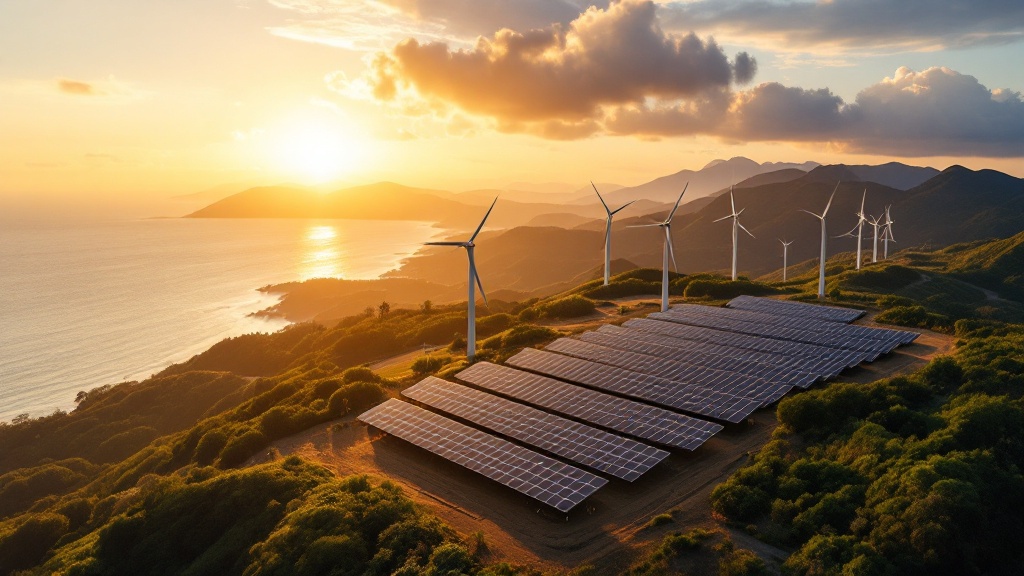
Solar remains the most accessible entry point into Japan’s renewable energy market. The country’s installed solar capacity reached 94.25 GW in 2025 and is projected to grow to 110.11 GW by 2031 at a CAGR of 2.63%. Established supply chains, proven permitting pathways, and declining installation costs — rooftop solar dropped to 213,000 yen/kW in 2025, a 10% decline from the previous year — make solar the lowest-friction option for market entry.
The trade-off is margin pressure. FIT rates for utility-scale solar (250 kW and above) have fallen to around 8.9 yen/kWh, a steep decline from the 40 yen/kWh that launched the market in 2012. Japan added only 2.5 GW of new solar capacity in 2024, underperforming against a global backdrop where annual installations are approaching 500 GW. The easy sites are taken, and grid curtailment is a growing reality in several regions.
Where Growth Is Shifting
The highest-value opportunities have moved away from utility-scale ground-mount projects toward corporate PPAs, self-consumption models, and building-integrated PV. Tokyo’s mandate requiring solar installation on new residential buildings — effective April 2025 — signals where regulatory momentum is heading. Floating solar and agrivoltaics address Japan’s acute land scarcity and represent differentiated niches where competition is thinner and margins are more defensible.
Best fit: Companies with established solar technology, EPC capability, or corporate energy management expertise. If you can offer more than commodity panels — particularly integrated solutions that pair generation with storage or demand management — there is still room to compete.
Offshore Wind: High Potential, Patient Capital Required
Government Backing Meets Regulatory Complexity
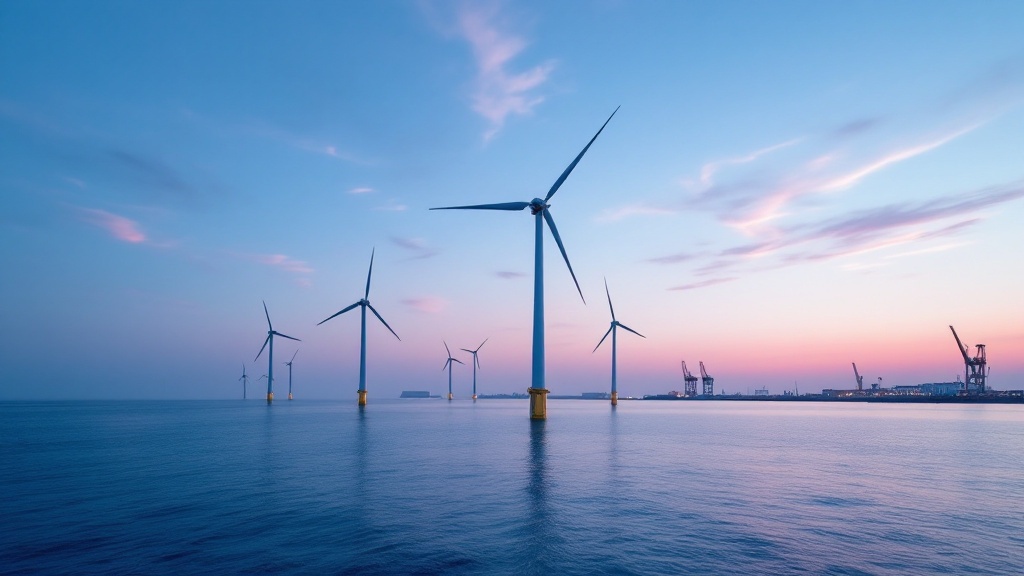
Offshore wind is where Japan has placed its largest strategic bet. The government’s target of 18 GW of offshore wind by 2035 is backed by dedicated auction rounds and a regulatory framework under the Renewable Energy Maritime Utilization Act. As of 2024, project formation has reached 5.1 GW, with BESS auctions and third-round offshore wind site designations progressing through 2026.
The challenge is patience. Environmental assessments and fisheries negotiations routinely extend project timelines to three to five years. Japan’s onshore wind capacity reached 5,849.4 MW by the end of 2024 — a 12.8% increase over 2023, with 703.3 MW of new installations setting a single-year record. But offshore development moves at a fundamentally different pace.
Consortium Model Is Standard
Foreign developers rarely go it alone. The standard entry model is a consortium pairing international offshore engineering credentials with Japanese trading companies and utilities. RWE, for example, secured an offshore wind project in Niigata Prefecture through a consortium with Mitsui & Co. and Osaka Gas. This structure provides local regulatory navigation, community relationships, and grid access that foreign companies typically cannot replicate independently.
Floating offshore wind adds another dimension. Japan’s first commercial floating offshore wind farm began operation in January 2026 off Nagasaki Prefecture — eight turbines generating 16,800 kW. Floating technology addresses Japan’s deep coastal waters where fixed-bottom installations are impractical, and it is still at the early commercial stage. First-mover advantage is available, but technology risk is correspondingly higher.
Best fit: Companies with offshore engineering credentials and tolerance for long development cycles. If your capital can stay patient through multi-year permitting, the japan offshore wind vs solar power ROI comparison increasingly favors wind at scale.
Hydropower: Niche Modernization, Not Greenfield
Japan’s large-scale hydro capacity is essentially fully built out. The opportunity lies not in greenfield development but in two specific niches: small and micro hydro installations, and the modernization of existing pumped-storage infrastructure.
The small-scale hydro market is growing, but it is constrained by complex water rights that span multiple agencies and multi-layered permitting requirements. Projects must navigate river administration law, fishery rights, and environmental regulations simultaneously — a process that demands deep local expertise and relationships.
The more significant opportunity may be in pumped-storage hydro. Japan has approximately 25 GW of installed pumped-storage capacity, and these facilities are being modernized to serve as grid-balancing assets for the growing share of variable renewables. As solar and wind generation increases, the value of flexible storage rises with it. The government’s 2035 target of 29 GW for hydro reflects this modernization trajectory rather than new dam construction.
Best fit: Companies with small-hydro turbine technology, pumped-storage engineering expertise, or grid-balancing software. This is a specialized segment where deep technical credentials matter more than capital scale.
Energy Storage: The Segment Everyone Needs
Solving Japan’s Core Grid Challenge
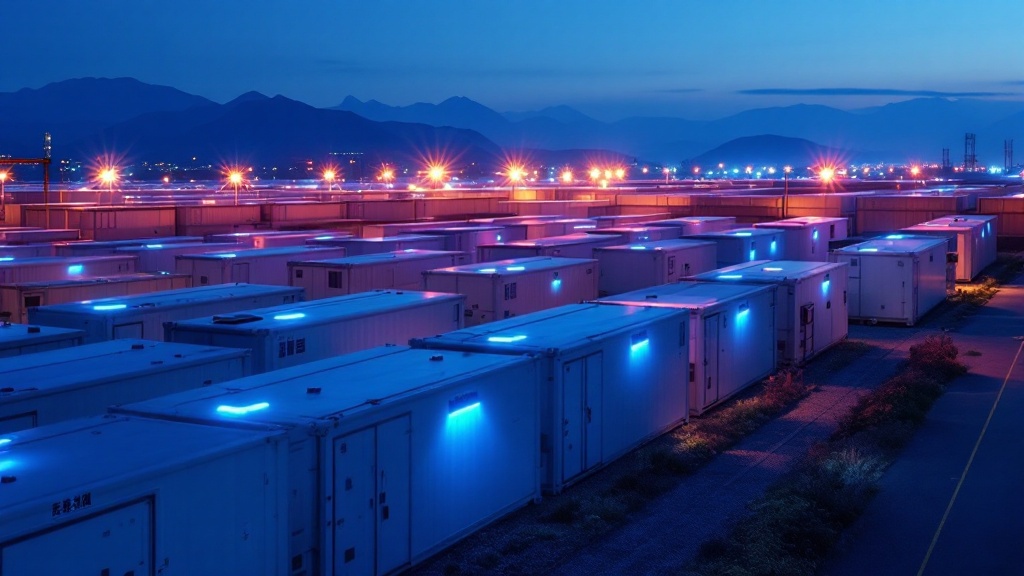
Storage directly addresses Japan’s most pressing infrastructure bottleneck: the mismatch between variable renewable generation and inflexible grid capacity. With grid constraints identified as a key barrier to further renewable deployment, every gigawatt of new solar or wind capacity strengthens the case for co-located or grid-scale storage.
Japan’s energy storage system market stood at 15.1 GW in 2024 and is projected to reach 29.4 GW by 2033 — a CAGR of 7.32%, making it the fastest-growing segment in the renewable energy ecosystem. Current installed battery capacity sits at approximately 2.0 GW / 5.1 GWh, with government BESS auctions accelerating deployment: 1.1 GW secured in the first round, 1.3 GW in the second, and a third round underway.
Cost Trajectory and Emerging Plays
Battery costs remain a constraint at roughly ¥200,000/kWh, but the trend is downward and government procurement is creating a floor of demand. Virtual power plant (VPP) frameworks are opening new revenue streams for aggregated distributed storage, allowing smaller installations to participate in grid services markets.
Solid-state batteries and second-life EV battery repurposing represent emerging differentiation plays. Japan’s automotive industry generates a growing supply of retired EV batteries, and companies that can grade, recondition, and redeploy these units into stationary storage applications are positioning themselves in a segment with strong structural tailwinds.
Best fit: Companies with advanced battery chemistry, battery management system (BMS) software, or energy management AI. For those evaluating an energy storage market Japan entry strategy, the combination of government procurement, declining costs, and mandatory grid-balancing needs creates a compelling near-term opportunity.
Decision Framework: Matching Your Profile to Japan’s Needs
Choosing the best renewable energy sector to invest in Japan requires matching your company’s capabilities and capital profile against each segment’s specific demands. The following comparison captures the key trade-offs in a japan renewable energy technology comparison for investors:
| Factor | Solar PV | Offshore Wind | Hydropower | Energy Storage |
|---|---|---|---|---|
| **Typical entry capital** | ¥50M–500M | ¥5B–50B+ | ¥100M–2B | ¥200M–5B |
| **Development timeline** | 6–18 months | 3–5+ years | 2–4 years | 12–24 months |
| **Competition intensity** | High | Moderate (consortium) | Low | Moderate, growing |
| **FIT/FIP rate range** | 8–16 yen/kWh | 20–36 yen/kWh | 20–34 yen/kWh | Revenue via grid services |
| **Partnership model** | EPC / corporate PPA | Consortium with sogo shosha | Local govt / utility JV | Grid operator / utility |
| **Grid constraint risk** | High in saturated regions | Lower (dedicated marine grid) | Low | Mitigates others’ risk |
Regional Mapping
Not every technology works everywhere. Solar deployment is most constrained in central Honshu, where grid capacity in the Chubu and Shikoku utility areas is approaching limits. Offshore wind development concentrates along the Sea of Japan coast — Akita, Niigata, and Nagasaki prefectures lead in site designations. Small hydro potential is strongest in mountainous prefectures with established irrigation infrastructure. Storage is needed everywhere, but the highest-value deployments cluster in regions with heavy renewable penetration and active curtailment.
Risk-Return Profiles
The solar vs wind energy investment japan comparison comes down to time horizon and risk appetite. Solar offers lower risk and faster returns but increasingly compressed margins. Offshore wind offers higher upside but demands patient capital and consortium participation. Hydro modernization sits in between — moderate returns with specialized technical requirements. Storage occupies a unique position as both a standalone investment and an enabler that improves the economics of every other segment.
Validating Your Choice
Before committing capital, a focused feasibility study should test your sector choice against three questions: Does your technology or capability map onto a genuine gap in the Japanese market? Can you secure the right local partner for your target segment? And does the regulatory timeline align with your investment horizon? Working with tailored renewable energy consulting in Japan can compress the time it takes to answer these questions — and prevent costly misalignment between your capabilities and the segment you choose.
Making the Right Call
Each renewable energy segment in Japan presents a distinct combination of opportunity, competition, and complexity. DMPJ helps foreign companies identify the sector that best matches their capabilities and build a market entry strategy around it — from feasibility studies and site assessments to regulatory mapping and partner introductions. Discover how DMPJ’s tailored renewable energy consulting can guide you into the right segment of Japan’s clean energy market.
Sorry, the comment form is closed at this time.