


27 Jun Japan Government Grants and Funding for Sustainable Food SMEs: The Complete 2025–2026 Directory
Japan’s government is spending billions on food innovation, and most foreign SMEs have no idea the money exists. Between MAFF’s targeted agriculture subsidies, METI’s decade-long R&D commitments, and JETRO’s export promotion infrastructure, the funding landscape for sustainable food businesses has never been deeper. This directory maps every major program available in 2025–2026, with specific figures, eligibility requirements, and strategic context so you can match your project to the right funding source.
Why Government Funding Is the Hidden Accelerator for Food Innovation in Japan
In November 2025, Japan formally declared FoodTech a national strategic priority field on par with AI and quantum computing. That designation unlocked a cascade of funding, regulatory fast-tracks, and research infrastructure access that did not exist even two years earlier. For SMEs working in sustainable agriculture, alternative proteins, or food-tech R&D, this shift represents a structural change in how Japan allocates public resources.
Government backing in Japan does more than fill your bank account. A MAFF or METI endorsement functions as a credibility signal that accelerates private investment, opens doors with distribution partners, and smooths international expansion. Japanese venture capital and corporate investors treat government-funded companies as pre-qualified, significantly reducing due diligence timelines and perceived risk.
The scale of commitment is substantial. MAFF’s supplementary budget allocated ¥818 billion ($5.5 billion) across three priorities: ¥211 billion for food security structural reform, ¥253 billion for export promotion, and ¥100 billion for inflation mitigation. These are not theoretical allocations—they flow directly into grant programs, subsidized loans, and tax incentives accessible to qualified SMEs.
SMEs that align with these national priorities access not just capital but regulatory fast-tracks, shared research infrastructure at national labs, and government-facilitated matchmaking with distribution partners and institutional buyers. The funding is the entry point; the ecosystem it connects you to is the real accelerator.
MAFF Programs: Agriculture, Food Security, and Alternative Proteins
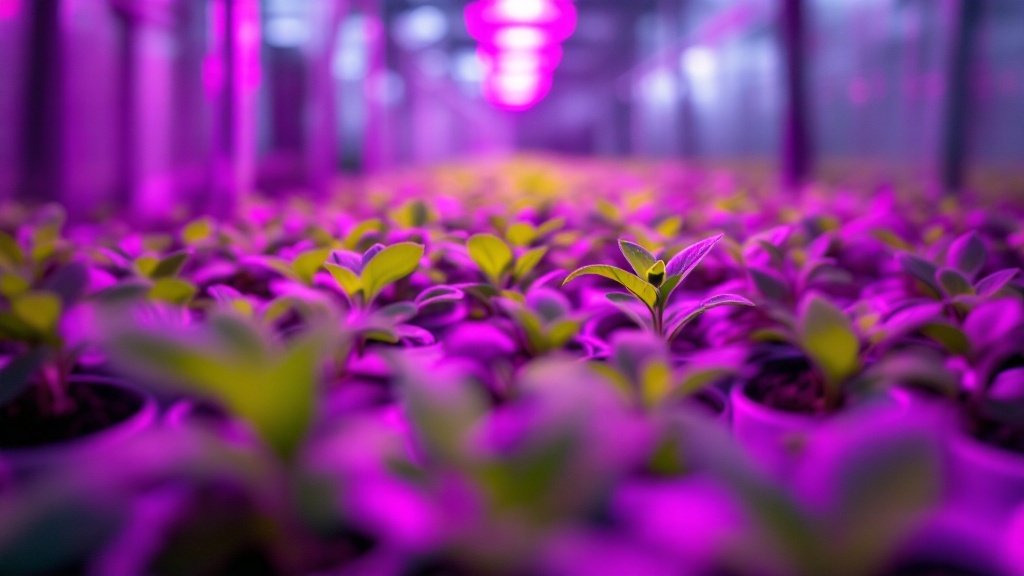
Small and Medium-Sized Enterprises Innovation Promotion Fund
MAFF’s flagship SME program awarded ¥26 billion ($209 million) across 25 projects in its latest round, with individual grants ranging from several hundred million yen to ¥1.87 billion per project. Two alternative protein startups received targeted MAFF subsidies: Umami United secured ¥917 million ($6.5 million) for plant-based egg technology, and IntegriCulture received ¥1.87 billion ($13.1 million) for cultivated meat production system demonstration. These are not token research grants—they fund commercial-scale infrastructure buildout.
Eligibility centers on SMEs proposing innovative approaches to food production, alternative proteins, or supply chain sustainability. The evaluation committee prioritizes projects demonstrating clear commercialization pathways alongside technical innovation, meaning your application must show market viability, not just scientific novelty.
Organic Farming Transition Support
Japan has set a target of 1 million hectares of organic farmland—roughly 25% of total agricultural land—by 2050. To reach that goal, MAFF provides subsidies covering the costs of converting from conventional to organic farming methods. This includes direct payments during the multi-year transition period when yields typically decline, equipment subsidies for organic-compatible machinery, and technical assistance through regional agricultural extension offices.
Food Export Expansion Act Support
Under the Act on Facilitating the Export of Agriculture, Forestry, Fisheries and Food Products, MAFF offers a package of low-interest loans, tax incentives, and direct support payments for companies building export capabilities. These mechanisms target SMEs developing production systems that meet international food safety and quality certifications required by destination markets.
Agricultural Technology Adoption Subsidies
MAFF provides partial cost coverage for implementing smart agriculture, precision farming, and sustainable production systems. Eligible technologies include AI-driven crop monitoring, automated harvesting equipment, IoT-enabled soil management systems, and resource-efficient greenhouse controls. The subsidies typically cover 30–50% of implementation costs, with higher rates for projects in designated priority regions.
METI and NEDO Programs: Green Innovation and Food-Tech R&D
Green Innovation Fund
METI’s Green Innovation Fund is the single largest pool of R&D funding available to food-tech companies in Japan, with a total allocation of ¥2 trillion administered through NEDO. Food, agriculture, forestry, and fisheries is designated as one of 14 priority fields, making this a direct funding pathway for Japan SME funding in food technology R&D.
The scale is exceptional. Projects average ¥20 billion or more in funding, with continuous government support for up to 10 years—a commitment horizon virtually unmatched by any other public funding mechanism globally. This long-term structure is designed specifically for technologies requiring sustained development before reaching commercial viability, making it ideal for alternative protein production systems, next-generation agricultural biotechnology, and sustainable food processing innovations.
Eligibility requires companies to commit to ambitious 2030 decarbonization targets and demonstrate innovative R&D elements that the government considers worthy of public commissioning. Application requirements include submitting a long-term business strategy and vision document, committing to regular progress reporting through working group attendance, and providing management sheets showing initiative status. The fund enforces accountability through project cancellation provisions for underperformance and performance-based incentive payments that increase funding for projects exceeding their targets.
| Program | Agency | Funding Scale | Key Eligibility | Support Duration |
|---|---|---|---|---|
| SME Innovation Promotion Fund | MAFF | ¥26B total; up to ¥1.87B/project | SMEs in food production, alt proteins, supply chain sustainability | Project-based |
| Organic Farming Transition Support | MAFF | Varies by conversion area | Farms converting to organic methods | Multi-year transition |
| Food Export Expansion Act | MAFF | Low-interest loans + tax incentives | Export-focused food companies | Ongoing |
| Ag-Tech Adoption Subsidies | MAFF | 30–50% of implementation costs | Farms/food enterprises adopting smart agriculture | Project-based |
| Green Innovation Fund | METI / NEDO | ¥2T total; avg ¥20B+/project | Companies with 2030 decarbonization commitments | Up to 10 years |
| SME Productivity Revolution | METI / SME Agency | Partial technology adoption subsidies | Agricultural and food processing SMEs | Project-based |
| 10,000 New Exporters Program | METI / SME Agency / JETRO | Advisory services + subsidy access | New-to-export businesses | Ongoing |
SME Productivity Revolution Programme
Separately from the Green Innovation Fund, METI operates the SME Productivity Revolution Programme specifically targeting technology adoption subsidies for agricultural and food processing SMEs. This program addresses the productivity gap between large corporations and smaller enterprises by covering substantial portions of technology acquisition costs, providing technical consulting for implementation, and offering training support to build internal capabilities. For food processing SMEs specifically, eligible technologies include automated quality control systems, energy-efficient production equipment, and digital supply chain management tools.
JETRO and Export Promotion Programs

JAPAN’S FOOD Export Fair
The JAPAN’S FOOD Export Fair, co-organized by JETRO and MAFF at Tokyo Big Sight, serves as the primary matchmaking platform connecting Japanese food producers with international buyers. The event includes structured pre-event matchmaking with qualified overseas importers, distributors, and retail buyers, ensuring that participating SMEs meet with pre-screened counterparts whose procurement needs align with their product offerings. For SMEs with limited international trade experience, the JETRO food export support program in Japan provides end-to-end guidance from booth preparation through post-event follow-up.
Business Networking and Technology Partnerships
Beyond trade fairs, JETRO facilitates ongoing business networking between Japanese SME clusters and overseas industry partners for exports and technology partnerships. This includes organized delegation programs, reverse trade missions where international buyers visit Japanese production facilities, and sector-specific networking events that connect food-tech companies with potential commercial partners in target markets. SVG Ventures recently partnered with JETRO to launch HARVEST HORIZONS, a dedicated program propelling Japanese agri-food tech startups into global markets through structured mentoring and investor introductions.
10,000 New Exporters Support Program
The 10,000 New Exporters Support Program is jointly administered by METI, the SME Agency, and JETRO in cooperation with chambers of commerce nationwide. Registered businesses receive advisory support for formulating export business plans, access to the Manufacturing Subsidy and Small Business support programs, and introductions to JETRO’s network of overseas offices providing on-the-ground market intelligence, regulatory navigation assistance, and partner introductions in key destination markets.
Sustainable Packaging and Waste Reduction Incentives
Kansai Green Innovation Cluster
Regional R&D support for sustainable packaging technologies is available through initiatives like the Kansai Green Innovation Cluster, which provides funding for collaborative research between companies and academic institutions developing next-generation food packaging solutions. Eligible projects include biodegradable material development, recyclable packaging systems for food applications, and packaging designs that extend shelf life while reducing material usage.
Resource Circulation Act Compliance Support
In February 2025, Japan’s Cabinet approved amendments to the Resource Circulation Act requiring companies to submit plans and reports regarding their use of recycled resources. Compliance support programs assist food companies in meeting these mandatory reporting requirements while identifying cost-effective pathways to increase recycled content in packaging. Companies that provide 5 metric tons or more of plastic products annually face specific reduction mandates, creating both compliance obligations and innovation opportunities.
Food Recycling Law and Cross-Ministry Coordination
Under Japan’s Food Recycling Law, the government supports waste prevention, reduction, and circular economy approaches targeting significant reduction by 2030. Japan’s Ministry of Environment and METI have jointly set a goal of increasing recycled plastics usage to 1 million tons by 2030, with corresponding support programs for companies developing and adopting recycled-content food packaging solutions. This cross-ministry coordination creates multiple entry points for sustainable packaging innovators to access funding through either environmental or industrial policy channels.
How to Maximize Your Chances of Securing Funding
Align Your Narrative with National Priorities
Every successful grant application tells a story that maps directly to government strategic objectives. In 2025–2026, those objectives are food security, carbon neutrality by 2050, and export competitiveness. Frame your project around how it addresses Japan’s 38% food self-sufficiency rate, reduces agricultural carbon emissions, or strengthens supply chain resilience—not just how it benefits your company.
Demonstrate a Clear Commercialization Pathway
Japanese government evaluators prioritize scalable business models over pure research. Your application must show a credible path from funded R&D to market revenue, including realistic timelines, identified customer segments, and defensible unit economics. Projects that end with a research report score lower than those ending with a commercial product or service launch.
Build Consortium Applications
Projects involving university partnerships, industry collaborations, and cross-sector alliances consistently score higher in Japanese grant evaluations. The Green Innovation Fund explicitly encourages participation by small and medium-sized venture companies alongside research institutions. Forming a consortium before applying demonstrates the collaborative approach Japanese funding bodies expect and provides the technical credibility that smaller companies may lack on their own.
Engage Bilingual Advisors Early
Program documentation, evaluation criteria, and review processes operate primarily in Japanese. Even programs that accept English-language inquiries conduct substantive evaluation in Japanese, and review committee members expect proposals formatted according to Japanese government conventions. DMPJ’s food innovation and security consulting bridges this gap by helping foreign SMEs navigate the linguistic and cultural dimensions of Japanese grant applications, from initial program identification through proposal development and post-award compliance.
Start Small, Then Scale
Rather than targeting flagship programs like the Green Innovation Fund immediately, consider building a track record with smaller, more accessible programs first. The SME Productivity Revolution Programme and JETRO’s export support services have lower entry barriers and shorter decision timelines. A demonstrated track record of delivering results with Japanese government funding significantly strengthens subsequent applications for larger, more competitive programs.
Navigating Japan’s complex funding landscape requires more than filling out forms—it requires strategic alignment between your innovation and national priorities, presented in language and formats that Japanese evaluators expect. DMPJ helps food SMEs identify the right programs, craft compelling applications, and position their projects for maximum funding impact. Work with DMPJ to align your food innovation project with available grants and turn government support into your competitive edge.
Sorry, the comment form is closed at this time.