
27 Jun The Complete Playbook for Entering Japan’s Sustainable Food and Alternative Protein Market
Why Japan Is Both the Hardest and Most Rewarding Food Market to Enter
Japan is the world’s third-largest economy, and its consumers routinely pay premium prices for quality, safety, and sustainability credentials that would be considered niche selling points elsewhere. The domestic alternative protein market alone reached 1,239 billion yen in 2024, and the food safety products and testing sector is projected to hit USD 4.89 billion by 2033. For foreign food brands, a successful Japan launch doesn’t just open one market — it validates quality for broader Asian expansion into Korea, Taiwan, and Southeast Asia.
But the barriers are real. Japan’s Consumer Affairs Agency expanded mandatory allergen declarations to 29 items effective April 2026, and the Ministry of Health, Labour and Welfare enforced a new positive list system for food contact materials starting June 2025. Regulatory complexity isn’t the only challenge. Japan’s business culture runs on consensus-based purchasing, long-term trust, and relationship depth that can frustrate founders accustomed to transactional efficiency. Initial meetings are about rapport, not revenue.
The reward for patience is a market where sustainability credentials command genuine price premiums, repeat purchase rates among loyal customers can exceed 89%, and a single well-placed product in a respected restaurant can cascade into national retail distribution. Understanding how to enter Japan’s sustainable food market requires a precise, step-by-step approach — and that’s exactly what this guide delivers.
Step 1: Regulatory Readiness — Certifications and Compliance Before You Ship
Regulatory clearance is the foundation of any Japan food market entry strategy for foreign companies. Skip this step or underestimate it, and your product sits in a bonded warehouse while competitors move.
JAS Organic Certification
If your product makes any organic claim in Japan, you need JAS (Japanese Agricultural Standard) certification. The US-Japan Organic Equivalence Arrangement, updated in January 2026, allows USDA-certified organic products into Japan without separate JAS certification — but with strict conditions. The arrangement covers plant-based and livestock products yet contains specific stipulations around sulfite use in wine and transition-to-organic documentation. EU equivalence arrangements carry their own nuances. Never assume your home-market organic certification transfers cleanly.
Food Labeling Compliance

Japan’s labeling requirements go beyond translation. The April 2026 amendment added cashew as a mandatory allergen declaration, bringing the total to 29 items. Nutritional labeling must follow Japan’s specific format, and all consumer-facing text must be in Japanese. A bilingual regulatory team familiar with both your home-market standards and Japanese requirements isn’t optional — it’s table stakes.
HACCP and Food Contact Materials
HACCP implementation has been legally required for all food businesses in Japan since 2021, with interpretation specific to Japan’s regulatory framework. Meanwhile, the positive list system for synthetic polymer packaging — finalized in November 2023 with enforcement beginning June 2025 — means your packaging materials must be explicitly approved. The positive list contains 21 base materials and 827 approved additives, broadly aligned with EU plastics regulation but with Japan-specific differences that require verification.
Navigating the Compliance Maze
Firms like Intertek operate bilingual regulatory consulting teams fluent in both English and Japanese compliance frameworks, bridging the gap between foreign product specifications and Japanese requirements. This kind of specialist navigator can compress months of trial-and-error into structured compliance pathways.
| Regulatory Area | Key Requirement | Enforcement Date | Impact on Foreign Brands |
|---|---|---|---|
| Allergen labeling | 29 mandatory items (cashew added) | April 2026 | Reformulate labels before shipping |
| Food contact materials | Positive list for synthetic polymers | June 2025 | Verify all packaging materials against approved list |
| HACCP | Mandatory for all food businesses | Since June 2021 | Document compliance to Japanese interpretation |
| Organic claims | JAS certification or equivalence arrangement | Ongoing | Confirm home certification qualifies under bilateral terms |
| Nutritional labeling | Japanese-format panel in Japanese | Ongoing | Requires local formatting expertise |
Step 2: Distribution Strategy — Understanding Japan’s Multi-Layered Food Supply Chain
Japan’s distribution system doesn’t work like the US or Europe. Between your product and the consumer sit wholesalers, trading companies (sogo shosha), specialty importers, and retail chains — each with distinct decision authority and relationship expectations. Understanding this structure is central to any alternative protein market entry Japan guide.
The Restaurant Channel as Validation
The smartest foreign brands don’t start in retail. They place products with respected chefs first. A presence in high-end restaurants provides credibility that no marketing campaign can buy. When New Zealand seafood company Sealord entered Japan’s premium market, they secured placements in 38 high-end sushi restaurants across Tokyo and Osaka before approaching retail — and achieved 92% repeat purchase rates among those initial restaurant clients.
Trading Company Partnerships
Partnering with a sogo shosha like Marubeni or Mitsubishi provides supply chain infrastructure, local credibility, and market access that would take years to build independently. When plant-based meat company DAIZ secured Marubeni as an investor, the partnership delivered both stable soybean sourcing from South America and distribution channels across key Asian markets.
High-Visibility Entry Channels
Convenience stores (konbini) and department store food halls (depachika) offer exceptional visibility for premium products. Department store basement food floors in particular attract affluent, quality-conscious shoppers who actively seek new products and are willing to pay for sustainability credentials — a powerful combination for foreign brands with a genuine environmental story.
Step 3: Cultural Positioning — Translating Your Brand Story for Japanese Consumers
Your brand narrative must be rebuilt for Japan, not translated. This is where most foreign food brand launches in Japan go wrong.
Quality Over Activism
Japanese consumers evaluate sustainability through the lens of quality and craftsmanship, not environmental activism. Fonterra discovered this when entering Japan’s premium dairy segment: their low-carbon butter achieved 78% shelf placement in premium supermarkets only after they reframed sustainability messaging from “saving the planet” to demonstrating how environmental care enhances product quality.
Seasonal Awareness Matters
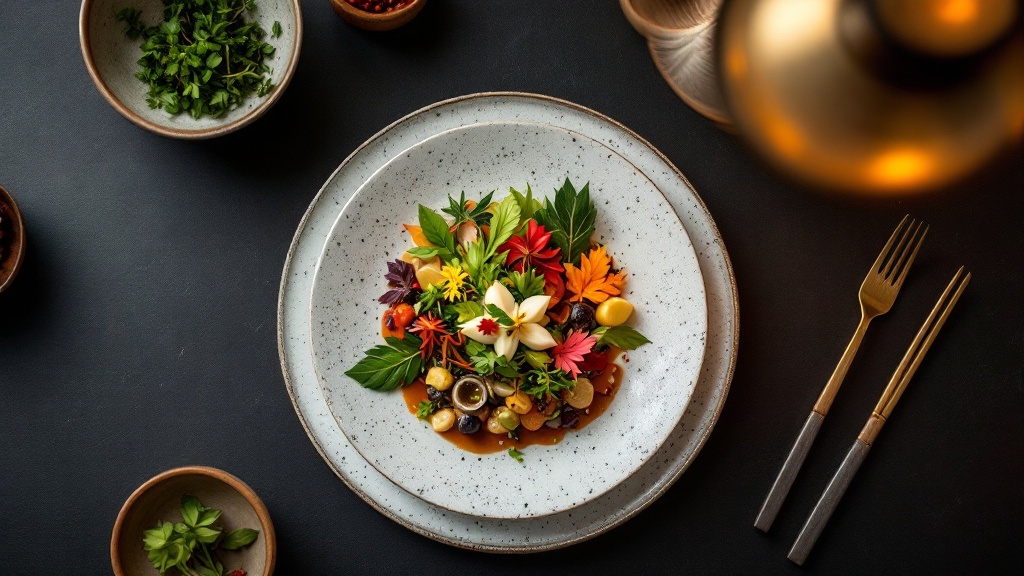
Products and campaigns aligned with Japan’s seasonal rhythms (shun) perform significantly better. Launching a summer product in winter, or ignoring the cultural weight of seasonal eating, reduces initial impact and signals cultural tone-deafness to distributors and consumers alike.
Packaging and Traceability
Minimalist, high-quality visual presentation signals trustworthiness in premium food categories. Meanwhile, QR-code traceability and transparent sourcing documentation are increasingly expected by both retailers and consumers. Japanese buyers want to verify claims through specific, measurable data — not marketing slogans.
Step 4: Partnership Architecture — Building Your Japan Support Team
No foreign company succeeds in Japan alone. The question is what kind of support you build around you.
Bilingual Local Partners
A bilingual local partner who understands regulatory frameworks, distribution dynamics, and communication nuances simultaneously is worth more than separate specialists in each area. This is where DMPJ’s Japan market entry support for food companies becomes relevant — a bilingual consulting team with deep expertise in Japan’s sustainable food sector can compress timelines and prevent costly missteps across regulatory, distribution, and brand positioning challenges.
Industry-Specific Expertise
General Japan market-entry firms lack the domain knowledge to navigate food-sector specifics like HACCP interpretation differences, seasonal menu positioning, or ingredient sourcing networks. Food sector expertise matters more than broad Japan knowledge when your product must satisfy both regulators and chefs.
JETRO and Government Resources
JETRO supports business networking, trade show participation, and market intelligence for qualified foreign companies. The annual “JAPAN’S FOOD” EXPORT FAIR, co-organized by JETRO and MAFF at Tokyo Big Sight, creates direct connections between foreign producers and Japanese buyers.
Next Kitchen Kobe
For food-tech startups, the Next Kitchen program in Kobe offers tailored mentoring for companies entering Japan. Participants achieve a 78% survival rate after 24 months — compared to a 42% industry average for foreign food companies entering Japan without specialized support. The program’s “Relationship Bridge” system matches each startup with a regulatory specialist, distribution expert, and culinary ambassador.
Step 5: Timeline and Budget — Realistic Expectations for Japan Market Entry
Unrealistic timelines kill more Japan market entries than bad products. Here’s what the data actually shows.
Budget Ranges
| Phase | Investment Range | What It Covers |
|---|---|---|
| Test market | $50,000 – $150,000 | Regulatory clearance, initial product adaptation, pilot restaurant placements |
| Committed market development | $200,000 – $750,000/year | Distribution partnerships, brand localization, trade show participation, ongoing compliance |
These figures assume you’re working with experienced partners. Without them, costs escalate through regulatory rework, failed distribution attempts, and brand positioning corrections.
Government Support Available
Japan’s government actively subsidizes foreign market entry in the food sector. MAFF allocated 253 billion yen ($1.7 billion) for export countermeasure funds that include import promotion components. JETRO offers matchmaking services and trade mission subsidies. Prefectural governments run their own incentive programs — Kobe’s food-tech cluster and Hokkaido’s agricultural innovation grants are particularly relevant for sustainable food companies. The Green Innovation Fund provides up to 10 years of continuous R&D support for companies committed to ambitious sustainability targets in food and agriculture.
Common Mistakes That Kill Japan Market Entry for Food Companies
Even well-funded companies with strong products fail in Japan when they make these errors.
Translating instead of culturally adapting. Western sustainability messaging built around environmental activism falls flat. Japanese consumers connect sustainability to craftsmanship, purity, and seasonal harmony. A survey found that while over 60% of Japanese consumers believe the country’s food security isn’t adequately achieved, only 20% can define what food security actually means. Your messaging must bridge that gap with culturally resonant language, not imported slogans.
Going direct to retail. Attempting direct retail distribution before building credibility through restaurant and distributor channels is a common and expensive mistake. Japan’s distribution hierarchy exists for a reason — retailers look to chefs and specialty importers as quality gatekeepers. Bypassing them doesn’t save time; it costs trust.
Underestimating relationship timelines. Initial meetings in Japan are about trust, not transactions. Companies that push for commitments in early conversations signal cultural incompetence and undermine their own positioning. Budget at minimum three to four relationship-building meetings before expecting substantive business discussions.
Ignoring seasonal dynamics. Launching products outside their natural seasonal context reduces initial impact and can permanently damage retailer willingness to carry the product. Japanese buyers remember a poorly timed launch, and second chances are rare.
The difference between the companies that survive and those that don’t usually isn’t product quality — it’s whether they invested in understanding Japan’s market on its own terms before committing capital.
Build Your Japan Strategy With the Right Partner
Entering Japan’s sustainable food market requires precision, patience, and a partner who understands both sides of the cultural equation. DMPJ has guided food companies through every step of this journey — from regulatory clearance to distribution partnerships to brand launches that resonate with Japanese consumers. Get DMPJ’s guidance on sustainable food market entry and start building your Japan strategy with a team that speaks both languages fluently.
Sorry, the comment form is closed at this time.