

20 Jun How to Choose a Cultural Heritage Preservation Partner in Japan: An Evaluation Guide for International Organizations
Selecting the right preservation partner in Japan is not a routine procurement decision. It is a choice that determines whether irreplaceable cultural assets survive intact for future generations — or suffer damage that no amount of money can reverse. This guide gives international organizations a concrete framework for evaluating Japan’s heritage conservation service providers, mapping the competitive landscape, and identifying the integrated capabilities that most projects actually require.
Why Partner Selection Matters More in Heritage Than in Most Industries
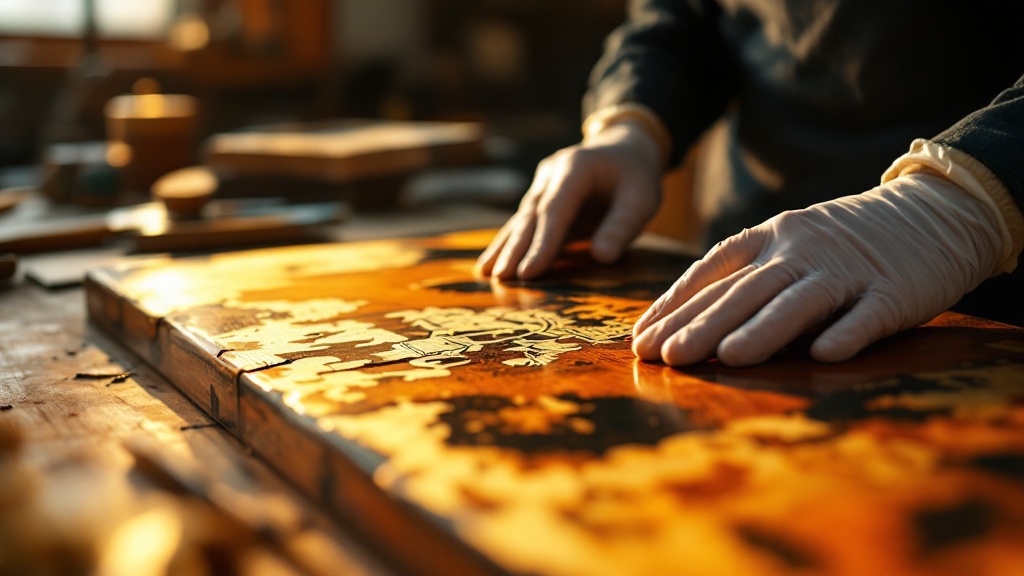
Heritage preservation is one of the few fields where a wrong decision is truly irreversible. A botched marketing campaign can be rerun. A flawed product can be recalled. But when a 600-year-old lacquer panel is improperly restored or a fragile textile archive is digitized with the wrong methodology, the damage is permanent. Ethical alignment between your organization and your preservation partner is not a nice-to-have — it is the baseline requirement.
This is especially critical in Japan, where preservation philosophy runs deeper than technique. Japan’s cultural property framework defines heritage assets as “invaluable national assets that have been created, fostered and passed on to the current generation” — assets considered essential for understanding Japanese history and forming the foundation for future cultural development. This philosophy emphasizes continuity of practice and transmission of knowledge across generations, a concept that diverges sharply from Western models that tend to prioritize the physical artifact in its current state. A partner who understands only the technical specifications of conservation without grasping these philosophical differences will produce work that is technically competent but culturally misaligned. For international organizations entering Japan’s heritage sector, this distinction between “correct” and “appropriate” preservation is often the difference between project success and expensive failure.
The financial stakes compound the philosophical ones. Research shows that 57% of heritage institutions cite budget constraints as their primary barrier to implementing preservation initiatives, with 46% identifying lack of technical expertise as a close second. When budgets are this tight, choosing the wrong partner doesn’t just waste money — it eliminates the chance to do the work at all. Japan’s Agency for Cultural Affairs allocated ¥106.2 billion ($689 million) to cultural property protection in fiscal year 2024, more than doubling its 2023 budget of ¥44.7 billion. This signals both growing opportunity and rising complexity. Organizations that select partners carelessly will find themselves outpaced by those who chose with precision.
The Japanese Heritage Preservation Competitive Landscape
Japan’s preservation market is segmented into five distinct provider categories. Understanding each category’s strengths and blind spots is the first step toward how to choose a heritage preservation company in Japan that fits your project requirements.
Traditional restoration specialists like Konishi Bijutsu Kogeisha represent the pinnacle of hands-on craft. Konishi is the only firm in Japan that maintains comprehensive decorative techniques spanning lacquer painting, coloring, and metal fittings for National Treasures and Important Cultural Properties. These specialists offer unmatched depth in physical restoration but operate almost exclusively within the domestic market, with minimal capacity for English-language communication or international project frameworks.
Planning consultancies such as Japan Cultural Heritage Consultancy and Soken Corporation specialize in regulatory navigation and conservation planning. Japan Cultural Heritage Consultancy holds accreditation from the Agency for Cultural Affairs for seismic capacity guidance on Important Cultural Properties — a credential that opens doors to government-funded projects. These firms excel at stakeholder coordination and compliance but rarely extend services beyond municipal and government clients.
Digital archiving providers including DNP’s cultural property division and J-DAC (Japan Digital Archives Center) lead in technical sophistication. DNP offers end-to-end digital archiving solutions, while J-DAC focuses on research resource sharing and academic access. Recent projects — including Shimizu Corporation’s collaboration with Eiheiji Temple to create digital twins using 3D point cloud surveying capturing billions of measurement points — demonstrate the sector’s technical ambition. Yet these providers typically treat digitization as a technical exercise, with limited cultural interpretation or international audience design.
Tourism-oriented promoters like MAHA Group position themselves as cultural destination marketing experts, offering branding and consulting that leverages heritage assets. Their strength is marketing capability and visitor experience design. The limitation: tourism promoters often lack substantive preservation knowledge, risking shallow cultural representations that prioritize visual appeal over authentic heritage engagement.
Emerging hybrid firms like Museum Media Labo are attempting to bridge traditional preservation with digital innovation, positioning themselves as information hubs for the museum sector. These firms show the most promise for integrated approaches but remain limited in international reach and bilingual capability.
| Provider Category | Example Firms | Core Strength | Primary Limitation |
|---|---|---|---|
| Traditional Restoration | Konishi Bijutsu Kogeisha | Deep craft expertise across multiple techniques | Domestic-only focus, no English capability |
| Planning Consultancy | Japan Cultural Heritage Consultancy, Soken Corp. | Regulatory navigation, Agency accreditation | Limited to municipal/government clients |
| Digital Archiving | DNP Cultural Division, J-DAC | Technical sophistication in scanning and archiving | Limited cultural interpretation for global audiences |
| Tourism Promotion | MAHA Group | Marketing capability, destination branding | Shallow preservation knowledge |
| Emerging Hybrid | Museum Media Labo | Bridging traditional and digital domains | Limited international reach |
Six Criteria for Evaluating a Heritage Preservation Partner

When performing a cultural heritage preservation partner evaluation, apply these six criteria to separate qualified partners from inadequate ones.
Cultural depth. Does the firm understand Japanese preservation philosophy — or just the technical requirements? Japan’s Agency for Cultural Affairs designates Selected Preservation Technologies that embody specific traditional knowledge systems critical to cultural property conservation. A partner without this philosophical grounding will approach projects with a restoration mindset that may conflict with Japan’s emphasis on continuity, minimal intervention, and knowledge transmission.
Digital capability. Can the firm implement cutting-edge archiving, 3D scanning, and virtual experiences? Following the 2023 amendment to Japan’s Museum Act — which formally recognized digital archiving as a core museum function — demand for advanced digitization has surged. Look for demonstrated experience with high-resolution imaging, point cloud surveying, and metadata management. Projects like the Chichibu Shrine 3D scanning initiative, which used Artec Eva scanners to create faithful digital replicas of Edo-period sculptures preserving every shade of the original, illustrate the current standard.
Bilingual communication. Can the firm present Japanese heritage authentically to international audiences? This goes beyond translation. It requires the ability to frame culturally specific concepts — like *wabi-sabi* aesthetics or the continuity-of-craft philosophy behind rebuilding Ise Shrine every 20 years — in terms that resonate globally without flattening their meaning.
Network reach. Does the firm have relationships with government agencies, heritage organizations, and international institutions? Japan’s preservation ecosystem is relationship-driven. JCIC-Heritage (Japan Consortium for International Cooperation on Cultural Heritage) demonstrates what effective network reach looks like: spanning domestic government partnerships and overseas conservation projects across multiple continents.
Ethical and sustainability commitment. Does the firm prioritize responsible preservation over commercial convenience? Japan’s evolving sustainable tourism management frameworks — including visitor redistribution strategies, climbing fee systems at Mount Fuji, and community consultation protocols — reflect a national shift toward balancing access with conservation. Your partner should demonstrate a similar commitment to ethical practice.
Track record. Can the firm show measurable outcomes from comparable projects? Ask for specific metrics: visitor engagement increases, research utilization rates, preservation milestone achievements, community participation levels. Firms like Yoshisho Architects, which created detailed digital twins of temple structures using Trimble scanners to capture over 2.1 billion data points — then translated that data into physical rice-paper blueprints readable for centuries — demonstrate the kind of documented, dual-format outcomes you should expect.
The Market Gap That International Organizations Should Know About
The Japan heritage conservation service provider comparison above reveals a structural gap that every international buyer should understand before selecting a partner.
Most traditional specialists — despite their extraordinary craft expertise — cannot communicate their work in English or frame it for global audiences. Firms like Konishi Bijutsu Kogeisha produce world-class restoration that remains invisible to international stakeholders who lack Japanese language capability.
Most digital providers deliver technically sophisticated archiving and scanning services but lack deep cultural understanding of what they’re preserving. They can digitize a 14th-century scroll with sub-millimeter accuracy, but their systems are not designed to interpret or contextualize that scroll for a foreign museum partnership or UNESCO nomination dossier.
Most tourism marketers can build compelling destination campaigns but lack the substantive heritage knowledge to ensure those campaigns accurately represent the cultural assets they promote.
The gap is clear: integrated bilingual partners who combine cultural depth with digital innovation — and who can operate fluently across Japanese and international contexts — are exceptionally rare. Japan’s heritage tourism market is projected to grow at 6.7% CAGR through 2033, with the overall market reaching over $50 billion. International organizations that will capture this growth are those that partner with firms capable of operating in both languages and both cultural frameworks simultaneously.
To see how Daisho Media Partners Japan compares against these provider categories — and to understand how an integrated bilingual approach differs from single-domain providers — review DMPJ’s service page for capability details and approach documentation.
Red Flags and Green Flags in the Selection Process
During due diligence, these signals quickly separate serious preservation partners from those who will waste your time and budget.
Red Flags
The vendor cannot articulate the difference between Japanese and Western preservation philosophies. If a potential partner describes preservation as purely technical — fixing, stabilizing, digitizing — without addressing the philosophical framework that governs Japan’s approach to cultural properties, they lack the foundation for effective work in this market. Japan’s 45 prefectures and 194 municipalities that have received national certification under the 2018 Act amendments linking heritage preservation with community development all operate within this philosophical framework. A partner unfamiliar with it is operating without context.
No demonstrated community engagement methodology for culturally sensitive projects. Heritage preservation in Japan is inseparable from community relationships. A vendor with no documented methodology for stakeholder engagement — particularly with temple and shrine organizations, local governments, and resident associations — will struggle to navigate the collaborative structures that Japanese preservation law now requires.
Green Flags
Accreditation or partnerships with the Agency for Cultural Affairs or recognized heritage organizations. Formal relationships with Japan’s cultural administration demonstrate both technical credibility and institutional trust. Japan Cultural Heritage Consultancy’s dual accreditation for seismic guidance and conservation supervision exemplifies the standard you should look for.
Bilingual case studies with measurable preservation and engagement outcomes. The ability to present documented results in both Japanese and English signals exactly the integrated capability that the market gap analysis identifies as rare. Look for specific metrics: visitor engagement rates, digital archive utilization, preservation milestones achieved, and community participation levels.
| Signal | What to Look For | Why It Matters |
|---|---|---|
| 🔴 No philosophy distinction | Vendor treats Japanese preservation as identical to Western methods | Cultural misalignment leads to rejected work and wasted budget |
| 🔴 No community methodology | No documented process for local stakeholder engagement | Projects stall without community buy-in; regulatory risk increases |
| 🟢 Agency accreditation | Formal recognition by the Agency for Cultural Affairs | Demonstrates institutional trust and technical credibility |
| 🟢 Bilingual case studies | Documented outcomes presented in both Japanese and English | Proves integrated capability across cultural contexts |
Finding the right heritage preservation partner in Japan means finding an organization that combines cultural depth with digital innovation, local networks with international communication capability, and ethical commitment with practical results. DMPJ was built to fill exactly this gap. Visit our Cultural Heritage Preservation service page to see our capabilities, case studies, and approach — and to schedule a conversation about your preservation needs.
Sorry, the comment form is closed at this time.