

20 Jun Cultural Heritage Preservation in Japan: What International Businesses Need to Know in 2025
Japan protects its cultural heritage more aggressively than virtually any other nation on earth. For international businesses — whether you’re a foreign firm entering the Japanese market or a Japanese company seeking global visibility — understanding this landscape is not optional. It’s a strategic imperative that affects where you can build, how your brand is perceived, and which multibillion-dollar market opportunities you can access. This japan cultural property protection overview lays out the regulatory framework, the emerging digital technologies reshaping conservation, and the business case for engaging authentically with a heritage ecosystem backed by ¥140 billion in government funding.
Why Japan Takes Cultural Heritage More Seriously Than Almost Any Other Country
In January 1949, a fire at the 1,300-year-old Horyu-ji Temple destroyed irreplaceable wall murals dating to the 7th century. The national shock was immediate and lasting. Within a year, Japan enacted the Law for the Protection of Cultural Properties (1950), establishing one of the world’s most comprehensive heritage protection frameworks. Over seven decades, this law has been amended and expanded to cover architectural treasures, intangible crafts, festival traditions, and cultural landscapes — creating a multi-layered system that governs how heritage is identified, designated, protected, and utilized.
The sheer scale of Japan’s designated heritage is staggering. The country protects 13,499 National Treasures and Important Cultural Properties spanning architecture, fine arts, and crafts, along with 14,376 Registered Tangible Cultural Properties — the vast majority of them historic buildings. Beyond these formally designated assets lie tens of thousands of undesignated cultural properties maintained by local communities, temples, and private owners across every prefecture.
What makes the current moment particularly significant is the government’s dramatic budget escalation. The Agency for Cultural Affairs’ budget surged from approximately ¥44.7 billion ($290 million) in fiscal year 2023 to ¥106.2 billion ($689 million) in 2024, with a budget request of ¥140 billion ($908 million) for fiscal year 2025. That represents more than a threefold increase in just two years — a signal that Japan now treats cultural heritage preservation not as a cost center but as a strategic national priority tied to disaster resilience, regional economic sustainability, and international soft power.
The Five Pillars of Japan’s Heritage Preservation Ecosystem
Japan’s approach to cultural heritage preservation is not monolithic. It operates across five interconnected domains, each with distinct stakeholders, regulatory frameworks, and business implications. Understanding these pillars is essential for any organization seeking to engage with the japan heritage preservation market in 2025 and beyond.
| Pillar | Focus Areas | Key Data Point |
|---|---|---|
| Historical Site Preservation | Temples, shrines, castles, seismic reinforcement | 250 high-risk slopes targeted for reinforcement by FY2030 |
| Traditional Craft & Art | Living National Treasures, apprenticeship programs | 165 applicants from 60 countries for 2025 paper conservation course |
| Digital Archiving | 3D scanning, digital twins, museum digitization | 2023 Museum Act amendment codified digital archiving as official function |
| Cultural Festivals & Events | Community-driven preservation through living practice | 23 elements on UNESCO Intangible Cultural Heritage lists |
| Policy & Advocacy | UNESCO inscription, sustainable tourism, municipal plans | 194 municipalities certified under 2018 Act amendments |
Historical Site Preservation
Japan maintains thousands of temples, shrines, castles, and historic structures, many built centuries ago using traditional timber-frame construction. In a country that experiences over 1,500 recorded earthquakes annually, seismic reinforcement has become an existential priority. The fiscal year 2025 budget includes specific quantitative targets: reinforcing approximately 250 high-risk slopes at cultural heritage sites by 2030 and completing seismic assessments and conservation measures for roughly 100 stone walls at historic sites by 2045. These are not aspirational goals — they represent a structured, budgeted program that will generate substantial demand for engineering, conservation, and project management services over the next two decades.
Traditional Craft and Art Preservation

Japan’s Living National Treasure system — officially the Holders of Important Intangible Cultural Properties — recognizes master practitioners who embody specific traditional arts. But the system faces an apprenticeship crisis. The number of certified specialists in traditional techniques has declined sharply over the past two decades, with the average age of remaining masters well above 65. Globally, interest in Japanese craft preservation techniques remains strong: the International Course on Conservation of Japanese Paper, administered by the National Research Institute for Cultural Properties, attracted 165 applicants from 60 countries for its 2025 session. The paradox — strong international demand alongside domestic succession failure — defines the current challenge.
Digital Archiving and Virtual Preservation
The 2023 amendment to Japan’s Museum Act formally recognized digital archiving as an official museum function, creating institutional mandates and dedicated funding pathways for digitization across the country’s cultural institutions. This legislative change transformed digital preservation from a discretionary, grant-dependent activity into a core operational requirement — catalyzing demand for specialized scanning, metadata management, and long-term digital storage services throughout the museum and heritage sector.
Cultural Festivals and Heritage Events
Community-driven preservation through living practice remains a cornerstone of Japan’s heritage ecosystem. Japan maintains 23 elements on UNESCO’s Intangible Cultural Heritage lists, including the recently inscribed traditional knowledge and skills of sake-making with koji mold (2024) and Furyu-odori ritual dances (2022). These living traditions sustain cultural knowledge through active community participation rather than museum display — and their continued vitality depends on economic ecosystems that support the practitioners and communities who maintain them.
Policy and Advocacy
Japan’s heritage policy apparatus encompasses UNESCO inscription campaigns, sustainable tourism legislation, and increasingly ambitious municipal heritage management plans. The government has identified 11 model regions for sustainable tourism development, implementing frameworks to balance visitor access with preservation needs at destinations from Kyoto’s temple complexes to the Kumano Kodo pilgrimage routes. Pending UNESCO nominations for 2025 — including Washi (traditional paper), traditional wooden architecture skills, and Yama/Hoko/Yatai float festivals — demonstrate Japan’s continued strategic use of international recognition to support domestic preservation goals.
Why This Matters If You’re Entering or Operating in Japan
Understanding why cultural heritage preservation matters for business in Japan goes beyond regulatory compliance. It shapes real estate decisions, brand positioning, and market access.
Heritage Regulations Affect Development and Operations
Foreign companies must understand heritage regulations before developing near cultural sites. Japan’s cultural property protection framework extends well beyond museums and monuments — it covers designated buffer zones, scenic landscapes, buried cultural properties, and even underground archaeological resources across urban and rural areas. Companies planning construction, infrastructure projects, or commercial developments near designated cultural properties face mandatory review processes overseen by the Agency for Cultural Affairs and local boards of education. The subsidy and oversight system that funds preservation also empowers authorities to restrict modifications to surrounding areas, potentially affecting project timelines and costs in ways that unfamiliar entrants rarely anticipate.
Heritage-Aligned CSR and ESG Deliver Competitive Advantage
Heritage-aligned CSR and ESG initiatives resonate strongly with Japanese consumers and institutional partners. In a market where corporate social responsibility is closely scrutinized by media and stakeholders, companies that demonstrate genuine engagement with cultural preservation — through sponsorship of restoration projects, traditional craft partnerships, or sustainable heritage tourism initiatives — gain meaningful differentiation. This is not superficial cause marketing: Japanese consumers and business partners can quickly distinguish authentic cultural engagement from performative alignment, and the reputational consequences of getting it wrong are significant.
Heritage Tourism Represents a Multibillion-Dollar Opportunity
Japan’s heritage tourism market was valued at approximately $31 billion in 2024, with a projected compound annual growth rate of 6.7% through 2033. This market extends well beyond visitor admissions to encompass cultural experiences, craft tourism, heritage hospitality, and specialized preservation services. Industry leaders are increasingly transforming cultural heritage into valuable economic assets through immersive experiences such as overnight stays at historic castle properties, guided artisan workshops, and premium cultural interpretation programs. For businesses that align authentically with preservation values, the commercial opportunity is substantial and growing. To navigate this landscape effectively, consider exploring DMPJ’s cultural heritage preservation services, which bridge deep cultural knowledge with international business strategy.
How Heritage Preservation Is Changing — Three Trends to Watch
Digital Twins and AI-Enabled Deterioration Detection
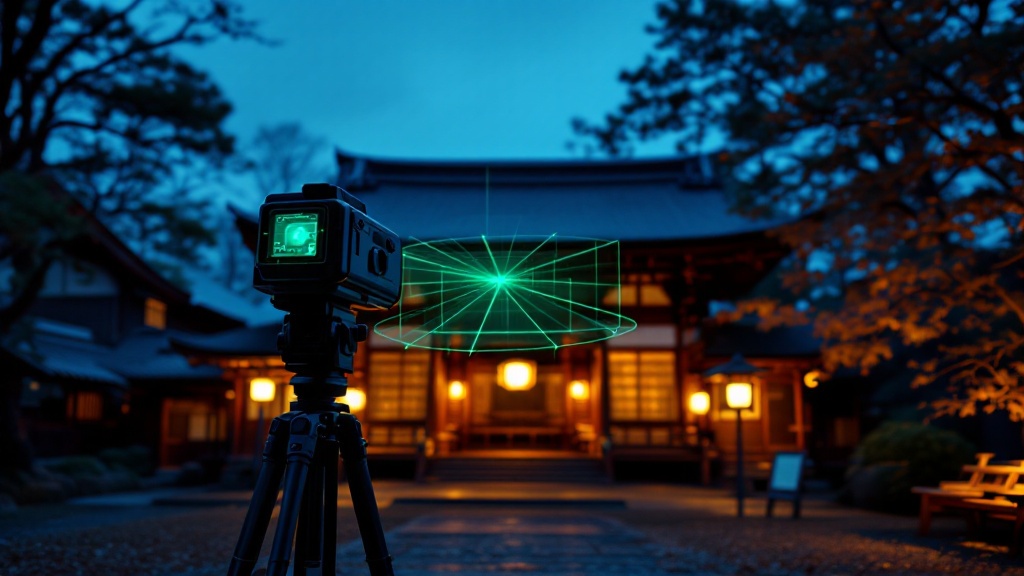
Digital twin technology is transforming how Japan documents and protects its most valuable cultural assets. Shimizu Corporation’s collaboration with Eiheiji Temple in Fukui Prefecture created digital twins of 19 temple buildings, including the main hall designated as an Important Cultural Property, using 3D point cloud surveying that captures millions of measurement points per second. Concurrently, AI-enabled deterioration detection systems are improving early identification of damage that might escape human observation — though 57% of heritage institutions still cite budget constraints as the primary adoption barrier. Broader applications of emerging technology in cultural heritage now include predictive analytics for conservation planning and virtual reconstruction of damaged or missing architectural elements.
From Passive Protection to Active Utilization
The 2018 amendments to the Act on Protection of Cultural Properties marked a philosophical pivot — from passive protection to active utilization. These amendments created certification mechanisms linking cultural heritage preservation directly to local economic development. As of March 2025, 45 prefectures and 194 municipalities have received national certification under these schemes, gaining access to special measures and delegated authorities for heritage management. This policy shift has opened entirely new categories of business opportunity: adaptive reuse of historic structures, heritage-based regional branding, community preservation planning, and cultural tourism product development that would have been legally or bureaucratically difficult under the previous framework.
Growing International Demand for Japanese Preservation Expertise
Japan’s preservation expertise is increasingly sought internationally, particularly across Asia. The Japan Center for International Cooperation in Conservation conducts cooperation projects across multiple continents, exporting Japan’s distinctive approaches to wooden structure conservation, disaster resilience, and intangible heritage safeguarding. Japan’s documented experience with cultural heritage disaster resilience has become a global reference point for countries facing similar seismic and climate risks. This internationalization of Japanese preservation knowledge creates two-directional market opportunities — for Japanese firms exporting expertise and for foreign organizations seeking to partner with Japanese specialists on projects worldwide.
Where International and Bilingual Expertise Fits In
The Language and Culture Gap
Most domestic preservation providers — from traditional restoration studios to heritage planning consultancies and digital archiving firms — operate exclusively in Japanese, with limited cross-cultural communication capability. Their expertise is deep but their reach is local. This creates a structural barrier for foreign companies seeking preservation services, UNESCO advocacy support, or heritage-aligned marketing strategies in the Japanese market.
Foreign Firms Need Bilingual Partners
Foreign firms entering Japan’s heritage space need partners who understand both Japanese preservation philosophy and international standards. The differences run deep: Japan’s approach to authenticity emphasizes continuity of practice and material over rigid physical preservation; intervention philosophy prioritizes minimal disruption and reversibility; and the relationship between tangible and intangible heritage is more integrated than in most Western models. A partner who can navigate both worldviews — translating not just language but cultural logic — is essential for any international organization seeking meaningful engagement.
DMPJ’s Positioning at the Intersection
Daisho Media Partners Japan operates at precisely this intersection: deep cultural knowledge of Japan’s heritage landscape combined with international networks and bilingual communication capability. Whether the challenge is producing multilingual content for a UNESCO nomination dossier, developing digital preservation strategies that serve both Japanese and global audiences, or building heritage-aligned CSR programs that resonate across cultures, this combination of expertise addresses the gap that most market participants leave unserved. Learn how DMPJ protects Japan’s cultural legacy through integrated preservation consulting, innovative digital archiving, and international advocacy services.
Japan’s cultural heritage preservation landscape is evolving rapidly — and the opportunities for businesses that engage authentically are significant. Whether you’re a foreign company entering Japan or a Japanese organization seeking global visibility for your heritage initiatives, Daisho Media Partners Japan offers the bilingual expertise, local networks, and innovative digital strategies to help you navigate this complex sector. Visit our Cultural Heritage Preservation service page to discover how DMPJ can help you protect and promote Japan’s invaluable cultural legacy.
Sorry, the comment form is closed at this time.