


18 Jun How to Launch an Eco-Tourism Business in Japan: A Step-by-Step Regulatory and Marketing Playbook
How to Launch an Eco-Tourism Business in Japan: A Step-by-Step Regulatory and Marketing Playbook
Japan’s eco-tourism sector has moved from niche to national priority. With government-backed sustainable tourism programs, record inbound visitor numbers, and growing demand for nature-based experiences, the opportunity for operators is real — but so is the regulatory complexity. This playbook walks you through every stage of launching a sustainable tourism business in Japan, from selecting the right license class to building the multilingual marketing engine that fills your bookings.
Before You Begin: Is Japan’s Eco-Tourism Market Right for Your Business?
Japan’s eco-tourism market reached USD 14.49 billion in 2025 and is expanding at a 10.9% CAGR. Inbound visitor numbers hit 42.7 million in 2025 — an 8.6-fold increase in spending levels compared to 2012. The government is actively channeling investment into regional tourism development, with the Japan Tourism Agency allocating approximately ¥960 million to support 46 regions in sustainable tourism initiatives between 2022 and 2024.
Before committing capital, assess your market fit. Are you targeting inbound international visitors seeking premium nature experiences? Domestic travelers looking for weekend eco-retreats? Or corporate programs needing verified sustainability credentials for ESG reporting? Each segment requires different licensing, pricing, and marketing approaches.
Capital requirements vary dramatically by license class — from as low as JPY 1 million for a Regional Limited license to JPY 30 million for a Class 1 Travel Business license. Your target market determines which license you need, and your license determines your minimum capital commitment.
Step 1 — Secure the Right Travel Business License

Japan’s travel industry licensing operates under four distinct classes, each with different capital thresholds, geographic scope, and operational permissions. Understanding which class fits your business model is the first critical decision.
| License Class | Capital Required | Security Deposit | Scope | Travel Supervisor |
|---|---|---|---|---|
| Class 1 (第1種) | ¥30 million | ¥70 million (or ¥14M bond via JATA) | Domestic + international package tours | General qualification |
| Class 2 (第2種) | ¥7 million | ¥11 million (or ¥2.2M bond) | Domestic package tours + international arrangements | General or Domestic |
| Class 3 (第3種) | ¥3 million | ¥3 million (or ¥600K bond) | Local area tours only | General, Domestic, or Regional |
| Regional Limited (地域限定) | ¥1 million | ¥150,000 (or ¥30K bond) | Municipal area + adjacent zones | General, Domestic, or Regional |
The October 2025 Reforms
Foreign entrepreneurs face significantly higher barriers since the October 2025 Business Manager Visa reforms. The new requirements include JPY 30 million in capital, at least one full-time Japanese resident employee, Japanese language proficiency at B2/JLPT N2 level, and professional verification of the business plan by a certified accountant or SME consultant. These reforms make local partnerships or consulting support nearly essential for international operators entering this market.
The Lower-Barrier Starting Point
If your model focuses on B2B inbound services — arranging ground logistics for overseas travel agencies rather than selling directly to consumers — consider the Travel Service Arrangement Business (旅行サービス手配業) registration. This “Land Operator” category requires no capital deposit and no security deposit, only a qualified manager. It allows you to build operational experience and revenue before upgrading to a full license.
Timeline and Personnel
Every travel business office must appoint a certified Travel Supervisor holding the appropriate qualification level for the license class. The complete application-to-operations timeline runs approximately four months, with the Japan Tourism Agency review alone requiring around two months for Class 1 applications.
Step 2 — Obtain National Park and Protected Area Permits
Japan’s 34 national parks hosted 9.88 million foreign visitors in 2025, with the Environment Ministry targeting 14 million annually by 2030. Operating commercial tourism activities within these parks requires navigating the Natural Parks Law zoning system.
The Zoning Framework
Under the Natural Parks Law, park areas are classified into zones with escalating restrictions:
- Special Protection Zone — strictest preservation; structures prohibited in principle
- Class I Special Zone — near-total preservation of current landscape
- Class II Special Zone — limited development for daily life and non-obstructive tourism facilities permitted
- Class III Special Zone — agriculture and forestry adjustments; broader facility allowances
- Ordinary Zone — advance notification required for large-scale activities
Permission Requirements
Commercial operations such as lodging, skiing grounds, and guided experiences within park boundaries require licenses from the Director General of the Environment Agency (national parks) or the prefectural governor (quasi-national parks). Licenses are issued according to the park’s visitor use scheme and the quality and management qualifications of the applicant.
Guide Certification: The Yakushima Standard
For nature guide operations, the Yakushima three-tier accreditation system represents the gold standard. Registered Guides need liability insurance, first aid certification, and guide seminars. Certified Guides must additionally hold specialized qualifications, demonstrate 200+ days of guiding experience over two years, pass a local knowledge test, and reside in the area. Official Certified Guides meet all previous requirements plus local taxpayer status. While not every region requires Yakushima-level credentials, expect guide certification standards to tighten nationally as adventure tourism scales.
Step 3 — Build Your Sustainability Credentials
Sustainability certification serves different purposes depending on your business type and target market. Choose your pathway strategically rather than pursuing certification for its own sake.
| Certification | Best For | Market Recognition | Estimated Cost | Timeline |
|---|---|---|---|---|
| [GSTC Tour Operator](https://www.gstc.org) | International procurement access, corporate clients | Highest international prestige | USD 8,000–15,000 | 6–12 months |
| [Green Key](https://www.greenkey.global/certification-process-2026-2031) (via JARTA) | Accommodation facilities | Strong in European markets | USD 3,000–8,000 | 4–6 months |
| [JSTS-D](https://www.gstc.org/japan-sustainable-tourism-standard-for-destinations-gstc-recognized-standard/) | Destination-level positioning | Domestic + Asian markets | USD 10,000–20,000 | 6–12 months |
| MOE Eco-Tourism Promotion | Municipal-level projects | Government funding eligibility | USD 2,000–5,000 | 6–18 months |
For tour operators targeting international B2B procurement channels, GSTC certification is the clearest signal. Tricolage became Japan’s first GSTC-certified tour operator in December 2022, demonstrating that the standard is achievable within the Japanese regulatory context.
For accommodation providers, the Green Key programme administered by JARTA offers Japanese-language audits and localized assessment criteria since April 2022, making it significantly more accessible than purely international certifications.
The Ministry of Environment’s eco-tourism promotion pathway suits operators working at the municipal level. Twenty-eight regions have already received certified Overall Concept recognition, which unlocks government support, preferential infrastructure investment, and coordinated destination marketing.
Budget USD 3,000–15,000 for initial certification depending on your selected pathway, with annual maintenance fees adding 10–20% of the initial cost each year.
Step 4 — Develop Community Partnerships and Local Supply Chains
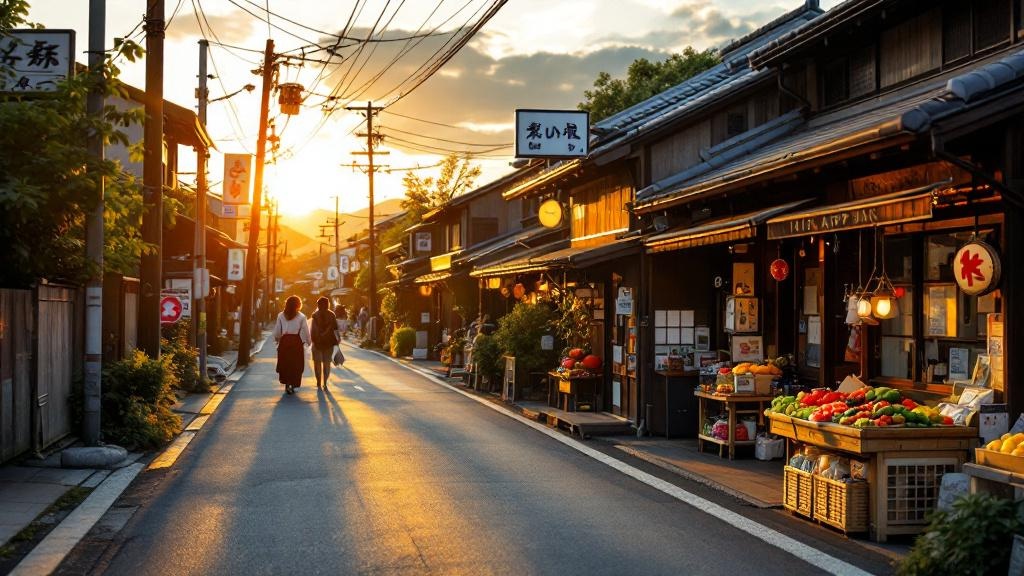
Eco-tourism in Japan succeeds or fails at the community level. The Ministry of Environment’s framework explicitly requires coordination among businesses, local residents, NPOs, and subject matter experts before certification is granted.
Start with Existing Structures
Engage municipal tourism boards and existing Destination Management Organizations before designing products. Japan’s sustainable tourism regions are coordinated through DMOs that control destination branding, visitor management, and supplier relationships. Approaching them as a partner rather than a competitor opens access to infrastructure, local guides, and marketing channels you cannot build independently.
Local Procurement and Economic Multipliers
Design your supply chain to maximize spending within host communities. Miyama Town in Kyoto achieves this by using local bus companies, locally-based guides, and community-operated lunch facilities for all tour products. This procurement model ensures tourism expenditure circulates locally rather than leaking to external suppliers.
Revenue-Sharing Models
Effective revenue-sharing builds trust and funds conservation simultaneously. Models range from per-participant conservation fees (Miyama charges ¥300 per trekker for forest preservation) to accommodation fees partially allocated to heritage maintenance. These mechanisms transform visitors into stakeholders in community preservation.
Network Access
Joining JARTA (Japan Alliance of Responsible Travel Agencies) or prefectural tourism associations provides network access, business matching opportunities, and collective credibility that individual operators struggle to build alone. JARTA membership also opens pathways to Green Key certification and international sustainability standard participation.
Step 5 — Go to Market with a Multilingual Digital Strategy
With licensing, permits, and certifications in place, the final step is building the marketing engine that connects your product to international demand.
International SEO
Target search markets in English, Chinese (simplified and traditional), Korean, and European languages. Foreign visitors to Japan increasingly research destinations through Google before booking, with search interest growing in regional destinations beyond Tokyo and Kyoto. Build dedicated landing pages for each language market, optimized for local search intent and booking behaviors.
Platform Optimization
Maintain active presence across Google Business Profile, Tripadvisor, and relevant OTA channels. For premium eco-tourism experiences, direct booking through your own multilingual website typically yields higher margins, but platform presence builds discovery and review volume essential for credibility.
Content Marketing
Position your sustainability credentials and authentic community stories as primary differentiators. International travelers increasingly select experiences based on verified environmental responsibility and genuine cultural engagement. Publish long-form content documenting conservation partnerships, community collaborations, and seasonal experiences that mass-market competitors cannot replicate.
Media and Influencer Strategy
Develop targeted outreach to international travel press and sustainability-focused influencers. Adventure travel and eco-tourism publications actively seek stories from Japan’s lesser-known regions. Coordinate press trips that demonstrate your community partnerships, guide expertise, and conservation outcomes — not just scenic photography.
For operators who want DMPJ’s end-to-end eco-tourism development support handling the multilingual marketing complexity, this is where bilingual consulting expertise translates directly to booking volume.
Common Mistakes to Avoid
Launching marketing before securing licensing and permits. Building an audience for an experience you cannot legally deliver creates liability exposure and reputational damage. Complete Step 1 and Step 2 before investing in demand generation.
Skipping community engagement. Operators who treat local partners as vendors rather than stakeholders face resistance from municipal tourism boards, exclusion from DMO marketing channels, and ultimately community opposition that can block permit renewals. The relationship-building phase is not optional.
Pursuing certification without market alignment. GSTC certification is wasted investment if your target customers are domestic weekend travelers who do not evaluate sustainability credentials. Green Key adds nothing if you do not operate accommodation. Match certification to the market segment that will actually value it in purchasing decisions.
Underestimating seasonal revenue volatility. Japan’s tourism demand concentrates heavily in cherry blossom season, summer, and autumn foliage viewing — roughly 55% of annual visitors arrive in these windows. Build financial models that account for off-peak months, and develop domestic market segments or corporate programs that buffer international seasonality.
Ready to Move Forward?
Launching an eco-tourism business in Japan involves navigating licensing, permits, certifications, community relationships, and international marketing simultaneously. DMPJ handles this complexity so you can focus on building the experience your guests will remember. Get started with DMPJ’s eco-tourism services to start planning your launch.
Sorry, the comment form is closed at this time.