

16 Jun In-House vs. Agency: Should You Outsource Your Japanese Food Brand’s Culinary Marketing?
Japan’s food market is at an inflection point. Restaurant reservations have climbed 279.6 percent since 2019, the culinary tourism segment is growing at over 20 percent annually, and inbound visitors are spending record sums on dining. For small and mid-sized food businesses — from single-location ramen shops to regional sake producers — this growth creates both opportunity and pressure. The pressure takes the form of a question every marketing lead and founder must eventually confront: should you build culinary marketing capability internally, or hire an external agency?
The answer depends on your audience, your budget, and the specific marketing challenge you face. This guide examines the trade-offs of in-house vs. agency food marketing in Japan, identifies the scenarios where each model works best, and offers a practical decision framework for choosing.
The Core Trade-Off: Control and Cost vs. Speed and Expertise
The Capability Gap Driving the Outsourcing Question
An estimated 70 percent of Japanese restaurants are failing to capture their proportional share of inbound tourism demand. Foreign visitors spent a combined 8.1 trillion yen in Japan during 2024, with dining accounting for roughly 21.9 percent of total consumption — approximately ¥50,000 per visitor. The gap is not about food quality. It is about marketing infrastructure: multilingual booking systems, international platform visibility, and content that connects with non-Japanese audiences.
This capability gap is what makes the outsourcing question urgent. When a restaurant lacks the staff, language skills, or digital expertise to reach international diners, the choice between building those capabilities in-house or hiring them externally defines its growth trajectory.
The Opportunity Cost Equation
For owner-operators — and most Japanese food SMEs are owner-operated — every hour spent on marketing is an hour not spent on food preparation, menu development, or guest experience. A chef coordinating Instagram posts, managing influencer outreach, and troubleshooting a Tabelog listing is a chef not refining their craft. The opportunity cost is real, and it compounds over time. Owner-operators who split their attention between the kitchen and a content calendar rarely excel at either.
Budget Constraints Shape the Options
Restaurant marketing budgets in Japan typically fall between 3 and 6 percent of revenue, with newer establishments sometimes stretching to 10 percent. For a restaurant generating ¥10 million monthly, that translates to ¥300,000–¥600,000 per month for all marketing activities — not just culinary promotion, but staff recruitment, local advertising, loyalty programs, and operational marketing. This constraint eliminates many options before the evaluation even begins, and it shapes every downstream decision about whether to outsource restaurant marketing in Japan or invest in building an internal team.
When In-House Marketing Makes Sense
Not every food business needs an agency. Building an internal marketing team makes strong strategic sense in several well-defined scenarios.
Restaurants with dedicated marketing staff and digital competency. If the business already employs someone with professional marketing training, social media fluency, and time specifically allocated to promotion, building on that foundation is typically more cost-effective than adding an external layer. The key qualifier is “dedicated” — a server who occasionally posts to Instagram does not constitute a marketing function.
Chains with scale to amortize a full-time bilingual hire. Multi-location restaurant groups generating ¥50 million or more monthly across locations can justify the cost of a dedicated bilingual marketer — typically ¥350,000–¥500,000 in monthly salary plus benefits. A single-location izakaya with ¥8 million in monthly revenue cannot absorb that fixed cost efficiently.
Businesses focused primarily on domestic repeat customers. When revenue depends on local regulars rather than tourists or new visitor acquisition, the marketing challenge is simpler. Cultural translation, multilingual content, and international platform optimization matter less when the audience lives within a 20-minute train ride. Social posting in Japanese, LINE messaging, and Tabelog profile management can often be handled without external support.
Long-term institutional knowledge and brand consistency. In-house teams accumulate deep understanding of what messaging resonates, which seasonal promotions work, and how regulars respond to menu changes. They carry context from season to season without the onboarding friction that comes with every new agency engagement. For brands that prioritize consistency above all else, this continuity has genuine value.
When an External Agency Is the Better Choice
The case for outsourcing restaurant marketing in Japan strengthens considerably when the business faces challenges that exceed internal capabilities.
Multilingual and Cross-Border Demands
Reaching non-Japanese-speaking audiences requires language skills, cultural fluency, and platform knowledge that most restaurant staff do not possess. Japan attracted 36.87 million foreign visitors in 2024, and those visitors are actively searching for dining experiences. Research shows that 65 percent of customers say visuals heavily influence where they choose to eat, and that visual content needs to resonate culturally with international audiences — not just be translated from Japanese. Specialized agencies bring multilingual content creation, international platform expertise, and cross-border industry networks from day one.
Seasonal Campaigns and Defined Projects
Seasonal campaigns, product launches, and market-entry initiatives have defined timelines that rarely justify a permanent hire. A three-month push to build awareness before cherry blossom season, or a targeted influencer campaign around a new menu launch, fits naturally into project-based agency engagement. Once the project ends, so does the cost.
Professional Production at Fractional Cost
Professional food photography sessions typically cost ¥75,000–¥375,000 per shoot. Platforms like GrubHub report that restaurants with professional photos receive 30–70 percent more online orders, and Deliveroo documents a 24 percent sales uplift from better photography alone. An agency spreads these production costs across multiple clients, giving each business access to professional photography, videography, and influencer networks at a fraction of the cost of building those capabilities internally.
The Specialization Advantage
When you weigh whether to hire a culinary branding agency or build an internal team, the question extends beyond general marketing skills. It is about whether the person understands why a regional ingredient origin story resonates differently than a standard product description, or how to position a family-run soba shop for Michelin-curious international visitors. Food-culture expertise of that depth — the ability to translate culinary heritage into compelling brand narratives — is something generalist marketing hires rarely possess. Specialized agencies stake their business on exactly this kind of knowledge.
The Hybrid Model: Best of Both Worlds
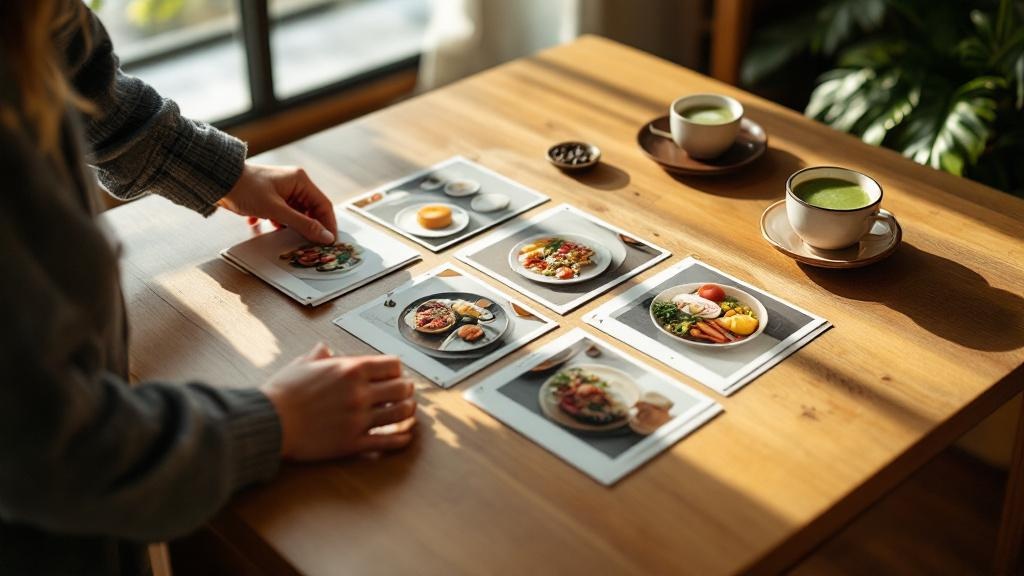
For many small restaurant businesses evaluating food marketing outsourcing, the answer does not have to be all-or-nothing. The hybrid model — internal staff handling daily operations while an agency provides specialized strategy and production — often delivers the best cost-to-capability ratio.
Dividing the Work
A designated internal staff member manages routine social media posting, responds to customer messages on LINE and Google, and keeps the Tabelog profile updated. The agency handles what the internal team cannot: strategic positioning, professional content production, influencer campaign coordination, and international-facing work. Each side plays to its strengths.
What It Costs
A realistic monthly budget for a hybrid arrangement breaks down roughly as follows:
| Component | Estimated Monthly Cost (¥) |
|---|---|
| Internal social media management (staff time) | 80,000–150,000 |
| Professional photography (amortized quarterly shoots) | 25,000–60,000 |
| Influencer campaign coordination | 50,000–100,000 |
| Agency strategy and specialized production | 100,000–200,000 |
| **Total hybrid budget** | **255,000–510,000** |
These figures are consistent with reported agency retainer rates in Japan and influencer pricing benchmarks for nano- and micro-tier food creators. The chart below puts all three models side by side:
The hybrid model offers the lowest entry point while still providing access to agency-grade capabilities for the work that matters most.
Structured Knowledge Transfer
The best agency relationships are designed to be partially self-liquidating. Agency teams document their processes, train internal staff on platform best practices, and gradually transfer repeatable tasks back to the client. Over 12–18 months, the agency’s scope narrows to genuinely specialized work — strategy, international campaigns, professional production — while the internal team’s capability expands to cover daily execution. This structured handoff builds lasting competency rather than permanent dependence.
Domestic Japanese Agency vs. International Provider

Once you decide to engage an external partner, you face a second question: a domestic Japanese agency, an international firm, or something in between?
Domestic Strengths
Japanese agencies bring irreplaceable local advantages. They understand Tabelog’s rating ecosystem — a platform serving 100 million monthly users — and know how to optimize listings, manage reviews, and maintain competitive scores. They hold relationships with Japanese food media, regional tourism boards, and local influencer networks built over years of engagement. And they communicate Japanese food culture with native credibility, an advantage that matters most when your primary audience is domestic.
International Strengths
International providers excel where domestic agencies typically fall short: managing campaigns on global platforms targeting English-, Mandarin-, or Thai-speaking audiences; producing multilingual content that goes beyond translation into genuine cultural adaptation; and reaching diaspora communities in cities like London, Sydney, and Los Angeles who represent a growing segment of Japanese food consumers worldwide.
The Bilingual, Bicultural Bridge
The most effective partners combine both skill sets. A bilingual culinary promotion agency like DMPJ maintains local credibility — deep Japanese food culture expertise, domestic media networks, Tabelog fluency — while delivering international reach through English-language content, global platform management, and cross-border industry connections. This bridging position eliminates the coordination overhead of managing two separate vendors for domestic and international work, and ensures that brand messaging stays consistent across languages and markets.
Decision Framework: Five Questions to Answer Before You Choose
Before committing to an in-house build, an agency retainer, or a hybrid model, work through these five questions. Your answers will point toward the right structure.
1. Do you need to reach non-Japanese-speaking audiences?
If inbound tourists or overseas consumers represent a meaningful revenue opportunity, you need multilingual capability. Japan’s culinary tourism market is projected to grow from $492 million to $1.84 billion by 2030, at a 20.7 percent compound annual growth rate. Businesses positioned to capture this growth need international marketing infrastructure — and that almost always means external support, whether full agency or hybrid.
2. Is your challenge operational or strategic?
Operational tasks — configuring a booking system, processing international payments, updating a platform listing — are implementable projects with clear endpoints. Strategic challenges — defining brand positioning, crafting a culinary narrative that differentiates you from 1.38 million other Japanese food establishments, deciding which international markets to pursue — require specialized thinking. Agencies add the most value on strategic work. Operational tasks can often be handled with a consultant or freelancer.
3. What is your realistic monthly budget?
| Monthly Budget | Recommended Model | What You Can Expect |
|---|---|---|
| Under ¥200,000 | In-house with selective freelance support | Basic social media, DIY photography, occasional influencer barter deals |
| ¥200,000–¥500,000 | Hybrid (internal staff + focused agency retainer) | Professional social strategy, quarterly photo shoots, targeted influencer campaigns |
| Above ¥500,000 | Full agency or comprehensive hybrid | Integrated strategy, multilingual content, international platform management, ongoing production |
4. Do you need a one-time project or an ongoing relationship?
A single deliverable — a new website, a photography package, a launch campaign — fits project-based pricing. Ongoing needs — monthly content creation, continuous influencer relationships, iterative brand development — call for a retainer that compounds results over time. Restaurants that invest in strategic social media efforts see an average 9.9 percent revenue lift, but that lift comes from sustained execution, not one-off projects.
5. How will you measure success?
Define your metrics before engaging anyone. Are you optimizing for bookings, revenue, social engagement, or brand awareness in a specific market? Japan’s influencer marketing market has grown to 102.1 billion yen annually, but spending without measurement produces spending, not results. Whether you choose in-house, agency, or hybrid, ensure the team reports against the specific outcomes — bookings, revenue, social metrics, or brand awareness — that matter to your business.
If you are weighing in-house capability against external expertise, consider what a specialized partner brings to the table. DMPJ combines deep Japanese food culture knowledge with bilingual execution and strategic industry connections — precisely the capabilities that are hardest to build internally. Explore DMPJ’s approach to gourmet and culinary promotion to see how DMPJ structures engagements for food businesses at every scale, from focused projects to ongoing retainers.
Sorry, the comment form is closed at this time.