

16 Jun What Is Culinary Promotion? A Primer for Food Businesses Entering or Expanding in Japan
What Is Culinary Promotion — and Why Should Food Businesses Care?
If you have ever searched for “what is culinary promotion for restaurants” and found mostly generic marketing advice, you are not alone. Culinary promotion is a specialized professional discipline that sits at the crossroads of brand strategy, cultural storytelling, food tourism, and experience design. Unlike a standard advertising campaign that pushes a product toward consumers, culinary promotion builds a narrative around food that attracts the right audiences, commands premium positioning, and creates durable brand equity.
The distinction is not academic. Japan welcomed 36.87 million inbound visitors in 2024, and those visitors spent roughly two trillion yen on dining alone — yet an estimated 70 percent of Japanese restaurants failed to capture any meaningful share of that demand. The gap between available opportunity and actual revenue is not a marketing problem in the conventional sense. It is a culinary promotion problem: a deficit of multilingual communication, cultural narrative, and experience design that no amount of conventional ad spend can fix.
This primer explains what culinary promotion involves as a professional service category, why Japan has become the global epicenter of demand, which food businesses benefit most, and what questions to ask before investing. Whether you run an independent restaurant, manage a regional food brand, or oversee tourism strategy for a destination, understanding this discipline is the first step toward capturing a market that is expanding at double-digit rates.
Defining Culinary Promotion: More Than Restaurant Advertising
Traditional food advertising focuses on short-term conversion: a seasonal menu push, a discount on a delivery platform, a sponsored social media post. Strategic culinary promotion does something fundamentally different. It combines cultural storytelling, brand positioning, and experience design into a coherent system that shapes how audiences perceive a food business over months and years.
The distinction matters because food businesses competing for international audiences face challenges that advertising alone cannot solve. A well-placed Instagram ad may generate clicks, but it will not explain why a fourth-generation soy sauce maker in Kagawa deserves a visitor’s attention, or how a Tokyo izakaya’s sourcing philosophy connects to a broader culinary tradition. That deeper work requires a different toolkit.
The Five Pillars of Modern Culinary Promotion
| Pillar | What It Covers | Why It Matters |
|---|---|---|
| **Culinary branding** | Brand identity, positioning, messaging, and visual systems | Establishes recognition and trust across markets |
| **Food tourism** | Destination marketing, food trails, experiential dining programs | Connects food businesses to tourism spending flows |
| **Visual storytelling** | Professional photography, videography, documentary content | Drives discovery — [65% of diners say visuals heavily influence where they eat](https://www.restroworks.com/blog/restaurant-social-media-statistics/) |
| **International collaboration** | Chef partnerships, cross-border trade shows, export marketing | Opens distribution channels and raises global profile |
| **Sustainable practices** | ESG-aligned sourcing communication, supply chain transparency | Builds loyalty with ethically conscious consumers |
These pillars did not emerge in a vacuum. The discipline coalesced as a distinct professional category alongside the global boom in food tourism and experiential dining. As travelers began choosing destinations based on culinary reputation, and as governments began measuring the economic impact of dining on tourism GDP, a gap opened between what generalist marketing agencies could deliver and what food businesses actually needed.
The rise of visual platforms accelerated this shift. Research shows that 84 percent of Gen Z actively try food they discover on social media. When dining decisions are made through screens, the businesses that invest in deliberate food culture marketing — not just ads — gain a structural advantage. Understanding this landscape is the first step toward grasping what culinary promotion for restaurants really means in practice.
Why Japan Is the Epicenter of Culinary Promotion Demand
Three forces make Japan the single most important market for culinary promotion services today: record-breaking inbound tourism, outsized dining expenditure, and unmatched cultural heritage credentials.
Tourism Scale and Trajectory
Japan’s 36.87 million inbound visitors in 2024 represented a 47.1 percent jump from the prior year, surpassing the pre-pandemic record of 31.88 million set in 2019. The Japanese government has set an explicit policy target of 60 million annual visitors and 15 trillion yen in consumption spending by 2030, signaling multi-year demand visibility for food businesses positioned to capture inbound spending.
Dining as an Economic Engine
Dining accounts for 21.9 percent of total inbound visitor spending — approximately two trillion yen annually. That share is unusually high compared to other major tourism markets, reflecting the degree to which food has become a primary travel motivation rather than an incidental expense. Japan’s culinary tourism market is projected to grow from USD 492 million in 2023 to USD 1.84 billion by 2030, a compound annual growth rate exceeding 20 percent.
Heritage as a Marketing Asset
UNESCO recognition of washoku (traditional Japanese cuisine) as Intangible Cultural Heritage in 2013, followed by the inscription of traditional sake brewing in December 2024, has given Japanese food businesses a credibility foundation that no advertising budget can replicate. These designations fuel global demand for authentic Japanese food narratives — the exact product that culinary promotion delivers. Japan’s Cultural Affairs Agency has expanded grant programs for food culture storytelling, creating additional institutional support for businesses pursuing this approach.
When food culture marketing in Japan is explained in full context, the picture is clear: no other market combines this scale of inbound demand, this depth of cultural heritage, and this level of government commitment to food-led tourism growth.
Who Needs Culinary Promotion — and Who Doesn’t
Target Segments
Culinary promotion is not for every food business. It delivers the most value for organizations facing specific capability gaps or market access challenges:
- Independent restaurants seeking inbound tourist traffic but lacking multilingual menus, international booking infrastructure, or digital visibility on platforms visitors actually use
- Regional food producers with compelling origin stories and artisanal products but no channel to reach international buyers or tourists
- F&B brands planning export into markets where Japanese food commands a premium — Japanese miso exports alone hit a record 23,497 tons in 2024, with the UK market growing 141 percent year-over-year
- Tourism operators designing food-centered itineraries that require restaurant coordination, cultural context, and experiential programming
- Sustainability-focused organizations building supply chain transparency narratives that resonate with ethically conscious consumers
When In-House Marketing Is Sufficient
If your food business serves a purely local Japanese clientele, operates in a single language, and has no plans for tourism integration or export, in-house marketing may be perfectly adequate. A capable staff member managing social media and local listings can handle the work. Professional culinary promotion fills gaps that appear when the audience crosses a language, cultural, or geographic boundary — precisely the situations where multilingual content, cross-border networks, and cultural storytelling become non-negotiable.
The 70% Gap
Despite record inbound tourism numbers, roughly 70 percent of Japanese restaurants fail to capture any meaningful share of inbound dining spending. The restaurants that do succeed share common traits: pre-trip booking integration with international platforms, multilingual service capability, and deliberate positioning within the digital ecosystems that foreign visitors use to discover dining options. Restaurant reservations across Japan have surged 279.6 percent since 2019, but that growth has not been evenly distributed. The businesses investing in culinary promotion services for Japan-focused food businesses are the ones capturing disproportionate share.
The Five Sub-Services That Make Up a Culinary Promotion Engagement
A comprehensive japanese food promotion services overview reveals that the discipline breaks into five distinct but interrelated sub-services. Most businesses do not need all five simultaneously — but understanding the full scope helps you identify where to start.
1. Culinary Branding and Digital Campaigns
This covers brand identity development, visual systems, positioning strategy, and digital campaign execution across platforms relevant to your target audience. It is the foundation: without a coherent brand, every other sub-service performs below potential.
2. Food Tourism and Gastronomic Experience Design
Experience design transforms a restaurant meal or a farm visit into a structured tourism product — bookable, repeatable, and optimized for visitor satisfaction and review generation. This sub-service includes food trail development, experiential dining programming, and coordination with regional tourism organizations.
3. Professional Food Photography, Videography, and Visual Storytelling
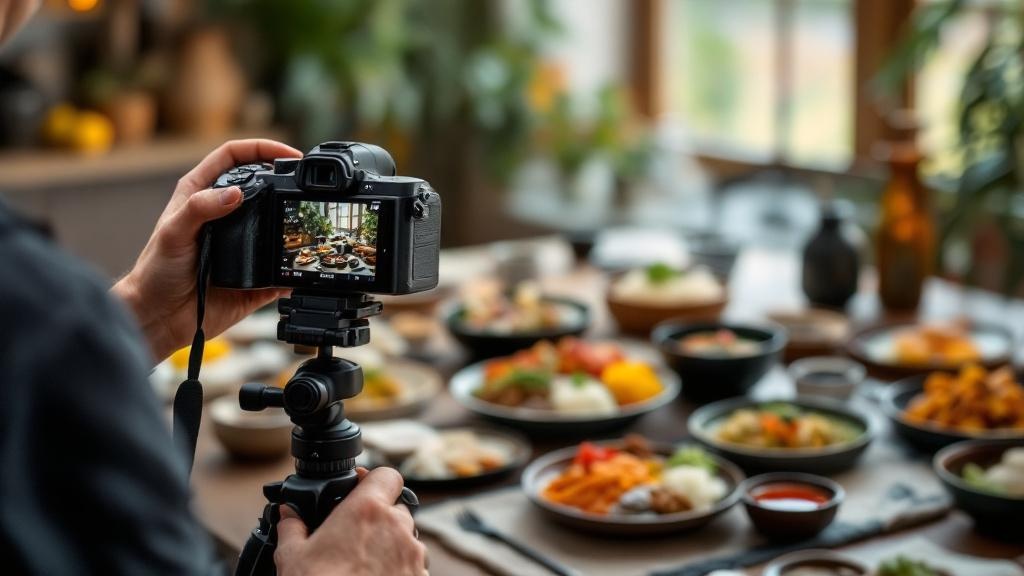
Visual content drives measurable commercial outcomes. Restaurants with professional food photography receive 30 to 70 percent more online orders on platforms like GrubHub compared to text-only listings. On Deliveroo, professional photos generate a 24 percent sales boost. This sub-service spans still photography, short-form video for social platforms, and documentary-style content such as chef profiles and ingredient origin stories.
4. International Chef Partnerships and Cross-Border Collaborations
Cross-border collaborations — guest chef residencies, trade show representation, co-branded events with international counterparts — open distribution channels and build credibility in target export markets. Japan’s influencer marketing market reached 102.1 billion yen in 2025, growing 19 percent year-over-year, and much of that growth is concentrated in food and lifestyle categories where chef-driven content outperforms generic brand advertising.
5. Sustainable Sourcing Communication and ESG-Aligned Food Marketing

Research into sustainable brand storytelling shows it predicts 45 percent of the variance in consumer purchase intentions, making it one of the single most powerful levers for food brands targeting ethically conscious consumers. This sub-service helps food businesses articulate sourcing practices, environmental commitments, and community impact in ways that translate directly into brand preference and willingness to pay.
| Sub-Service | Best For | Typical Starting Budget (Monthly) |
|---|---|---|
| Culinary branding & digital campaigns | All food businesses entering new markets | ¥300,000 – ¥800,000 |
| Food tourism & experience design | Restaurants, destinations, regional producers | ¥200,000 – ¥500,000 |
| Visual storytelling (photo & video) | Any business selling through visual platforms | ¥100,000 – ¥400,000 per project |
| International collaborations | Export-focused brands, premium restaurants | ¥500,000 – ¥2,000,000 per project |
| Sustainable sourcing communication | Producers with genuine ESG practices to share | ¥150,000 – ¥400,000 |
*Budget ranges based on industry analysis of mid-market culinary promotion service providers. Actual fees vary by scope and provider. Source: industry benchmarks.*
How Culinary Promotion Differs from General Marketing Agencies
Deep Food-Culture Expertise
A generalist creative agency can produce attractive food photography. What it typically cannot do is advise a Kyoto kaiseki restaurant on how to communicate the philosophical underpinnings of its seasonal menu to a French food journalist, or help a Niigata sake brewery craft tasting notes that resonate with Southeast Asian sommeliers. Culinary branding for food businesses demands subject matter knowledge that generalist agencies rarely possess. The nuance matters: a mispositioned dish description or a culturally tone-deaf campaign can damage credibility with the very audiences you are trying to reach.
Industry-Specific Networks
Culinary promotion specialists maintain networks that generalist agencies do not: relationships with chefs, food writers, tourism boards, trade show organizers, and international distribution partners. These networks are not built through a single campaign — they are accumulated over years of focused work in the food industry. For a food business evaluating partners, the question is not “can this agency make us look good?” but “can this agency get us in the room with the people who matter?”
Bilingual and Bicultural Fluency
For any food business operating across the Japan–international boundary, bilingual and bicultural fluency is a non-negotiable requirement. This means more than translation. It means understanding how Japanese concepts of hospitality, seasonality, and craftsmanship land with international audiences — and how international expectations around booking convenience, dietary transparency, and digital engagement map onto Japanese operational realities.
Getting Started: Questions to Ask Before You Invest
Self-Assessment Checklist
Before engaging any culinary promotion provider, assess your own readiness:
- Do you have multilingual menus or product descriptions? If not, this is often the single highest-return first investment.
- Can international customers book or purchase from you online? Reservation infrastructure and e-commerce capability are prerequisites, not outcomes, of culinary promotion.
- Do you have a food story worth telling? Heritage, sourcing philosophy, chef background, regional tradition — if there is no narrative, promotion has nothing to amplify.
- Is your team prepared to serve international visitors or partners? Operational readiness must match marketing ambition.
Start Small or Go Full Engagement?
Most small and mid-sized food businesses benefit from starting with a single sub-service — typically visual storytelling or culinary branding — before expanding into food tourism design or international collaboration. A focused initial engagement lets you evaluate a provider’s understanding of your business, measure early results, and build internal confidence before committing to a broader scope.
Set Realistic Timelines
Culinary promotion is not a quick-fix channel. Building a coherent brand narrative, establishing platform visibility, and generating inbound booking momentum typically requires three to six months of sustained effort before measurable results emerge. International collaboration and export-oriented campaigns may take six to twelve months. If a provider promises overnight transformation, treat that as a red flag. The businesses seeing the strongest returns are those that treat culinary promotion as an ongoing strategic function, not a one-time project.
For a deeper look at how these sub-services work in practice, explore DMPJ’s gourmet and culinary promotion offerings, which covers the full range from branding and food tourism design to visual storytelling and sustainable sourcing communication.
If you are beginning to explore how professional culinary promotion could strengthen your food business in Japan or internationally, DMPJ offers a full suite of services — from culinary branding and food tourism design to visual storytelling and sustainable sourcing communication. Visit DMPJ’s Gourmet and Culinary Promotion page to learn how their bilingual team helps food businesses connect with the audiences that matter most.
Sorry, the comment form is closed at this time.