

18 Feb How to Launch a Consumer Product in Japan: A Step-by-Step Playbook
Japan is the world’s third-largest consumer market, and foreign direct investment here hit record highs in 2024, with greenfield investment reaching 31.6 billion USD—the largest amount in over two decades. Yet most foreign product launches still stumble, not because the opportunity is overstated, but because the process is underestimated.
This consumer product launch playbook for Japan walks through how to launch a product in Japan step by step, across five overlapping phases that typically span 12 to 18 months. Whether you are assembling a Japan product launch checklist for foreign companies entering the market for the first time or refining a Japan market entry process timeline for your board, the framework below covers every critical milestone—grounded in 2025–2026 data and real case studies.
Phase 1: Market Research and Feasibility (Months 1–3)
Competitor Landscape Mapping
Before committing budget, map who already occupies your target shelf space and price tier. Japan’s consumer electronics market alone generated 108.5 billion USD in 2025, and its health and wellness food segment reached 25.4 billion USD the same year. Within these large markets, established domestic manufacturers hold positions backed by decades of consumer trust. Your audit should identify the top five to ten direct competitors, their pricing bands, distribution channels, and any gaps in positioning or segment coverage that create room for a foreign entrant.
Consumer Behavior Research
What do Japanese buyers in your category actually prioritize? The answer is rarely what headquarters assumes. Japanese consumers place exceptional weight on product quality, durability, and after-sales support—and their willingness to pay a premium for these attributes coexists with surprising price sensitivity at specific psychological thresholds. A formal consumer study should include structured interviews, focus groups with target demographics, and purchasing pattern analysis on Amazon Japan and Rakuten. Pay particular attention to packaging expectations: Japanese consumers read nutrition labels, ingredient lists, and usage instructions more thoroughly than their counterparts in most Western markets.
Regulatory Pre-Screening
Regulatory compliance is the most underestimated cost center in Japan market entry. Before committing budget, identify which certifications, import permits, and labeling requirements apply to your product. Food and cosmetics face particularly heavy oversight from the Consumer Affairs Agency and the Pharmaceuticals and Medical Devices Agency (PMDA), while electronics must comply with Japan’s technical standards and carry the PSE (Product Safety Electrical Appliance) mark. This pre-screening determines whether your product can enter Japan at all—and how much reformulation or relabeling the entry will cost.
The Go/No-Go Framework
At the end of Phase 1, run your findings through a decision framework built around three failure signals:
- Category saturation. Five or more established domestic alternatives already address the same consumer need at your target price point, with no clear differentiation opportunity.
- Regulatory impossibility. Required certifications or formulation changes would take longer than 12 months or consume more than 20% of your launch budget.
- Pricing misalignment. Your minimum viable retail price exceeds the category ceiling by more than 30%, and no premium positioning strategy credible to Japanese buyers can bridge the gap.
If two or more of these signals are present, reconsider the launch or fundamentally restructure your approach before proceeding.
Phase 2: Product Localization and Adaptation (Months 3–6)
Cultural Adaptation Beyond Translation
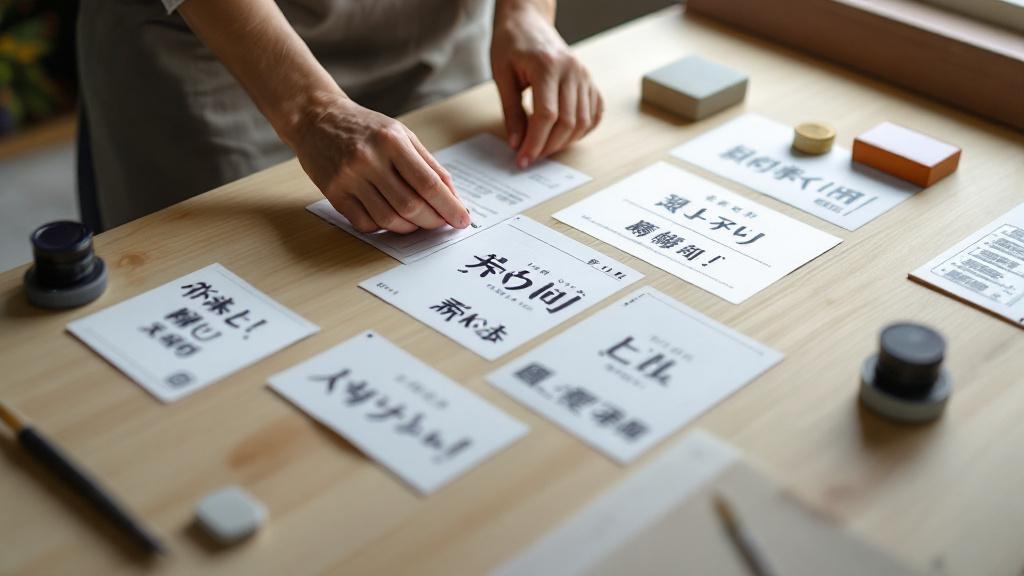
Product localization in Japan is not translation—it is transcreation. Packaging, branding, and design need to be rebuilt to match Japanese aesthetic sensibilities and information density expectations. Japanese consumers expect clean, sophisticated visual communication paired with extensive technical detail about ingredients, production methods, and performance. When Oatly entered Japan, it worked with local brand strategy firm Fabric to discover that its provocative, activist-style Western messaging would alienate Japanese buyers. The company repositioned entirely toward subtlety, functionality, and nutritional credibility—a fundamentally different brand identity for the same product. That is the level of adaptation the Japanese market demands.
Formulation and Specification Changes
Product specifications that succeed in your home market may require significant modification for Japan. This extends beyond obvious changes like voltage conversion (100V/50-60Hz) for electronics. Food and beverage products frequently need reformulated flavor profiles, adjusted sweetness or salt levels, and modified portion sizes. Sizing conventions in fashion differ from both US and EU standards. In health and wellness, Japan’s functional food segment commands 44% of the category, driven by a regulatory framework enabling qualified health claims on labels—but only when products meet specific ingredient and dosage thresholds that may differ substantially from home-market formulations.
Regulatory Submission and Certification Timeline
Plan for 8 to 16 weeks of regulatory processing time for food, cosmetics, and electronics certifications. This is calendar time, not effort time—agencies process applications on their own schedule regardless of your launch date. Food products require import notification under the Food Sanitation Act plus allergen labeling that follows Japan-specific protocols (Japan mandates disclosure of 28 allergens versus 14 in the EU). Cosmetics face notification or approval processes depending on whether they are classified as “cosmetics” or “quasi-drugs.” Electronics need PSE certification and potentially radio wave compliance testing. Build these windows into your project plan as hard constraints, not optimistic estimates.
Naming Strategy
A product name that works in English can fail in Japanese. Phonetic evaluation is essential: does the name contain sounds difficult for Japanese speakers to pronounce, or syllable combinations that carry unintended connotations? Trademark search through J-PlatPat (Japan’s industrial property database) is a legal necessity before you commit to packaging production. Beyond legal clearance, connotation testing with Japanese focus groups reveals whether a name communicates the intended brand attributes or accidentally signals something else. Some brands opt for katakana transliteration of their existing name; others develop entirely new Japanese-language names. The right approach depends on category norms and whether the brand’s foreign origin is a positioning asset or a liability.
Phase 3: Distribution Channel Setup (Months 4–8)
Choosing Your Channels
Japan’s distribution landscape offers several entry points, each with different economics and lead times.
| Channel Type | Examples | Best For | Lead Time to Shelf |
|---|---|---|---|
| E-commerce | Amazon Japan, Rakuten, TikTok Shop | Market testing, DTC brands | 1–3 months |
| Convenience stores | 7-Eleven, FamilyMart, Lawson | High-frequency consumables, beverages | 6–12 months |
| Department stores | Isetan, Takashimaya | Premium and luxury positioning | 4–8 months |
| Specialty retail | Loft, Don Quijote, drugstore chains | Lifestyle, beauty, health, gadgets | 3–6 months |
| B2B wholesale | Regional distributors | Broad multi-format retail coverage | 4–8 months |
Japan’s B2C e-commerce market for physical goods reached 15.2 trillion yen in 2024 with an e-commerce penetration rate of 9.78%. But offline retail still dominates the vast majority of consumer goods sales. Most successful foreign entrants use a hybrid model: e-commerce for initial market testing, followed by selective retail expansion based on early performance data.
The Food-Service-First Playbook
For food, beverage, and lifestyle products, consider the food-service-first model. Rather than pursuing immediate supermarket shelf space, Oatly began with strategic placement in premium cafés and coffee shops, generating brand awareness and consumer trial in aspirational settings before expanding to retail grocery. Food service represented roughly 35% of the company’s Japan revenue, functioning as a gateway to category awareness among consumers who might have dismissed an unfamiliar product if they encountered it first in a supermarket aisle. This sequenced approach—earn credibility through trusted venues, then let consumer demand pull products into mass retail—consistently outperforms the supply-push strategy of stocking shelves and hoping for discovery.
Finding and Vetting Local Distributors
A local distribution partner can compress your timeline by years. Beyond Meat entered Japan through a partnership with United Super Market Holdings, which operates over 500 retail outlets, gaining immediate access to mass-market distribution. When evaluating distributors, assess their category expertise, existing retail relationships, logistics capabilities, and willingness to invest in your brand. Red flags include distributors carrying too many competing products, demanding exclusivity without committing to minimum volumes, or lacking cold-chain infrastructure for temperature-sensitive goods. Japanese wholesalers are increasingly reinventing themselves to offer curated product assortments and marketing collaboration—look for partners who bring strategic value beyond warehousing and delivery. Typical contracts run 1–2 years with distributor margins of 15–35% depending on category.
Supply Chain Logistics
Import logistics involve customs duties (rates vary by product category and country of origin), JAS (Japanese Agricultural Standard) compliance for food products, cold-chain continuity for perishables, and last-mile delivery expectations that rank among the most exacting in the world. Japanese consumers expect delivery within 1–2 days for e-commerce orders and pristine packaging. Japan’s food and beverage distribution system traditionally involves importers, primary wholesalers, regional wholesalers, and retailers—a multi-layer structure that adds cost but provides quality assurance at each stage. Budget ¥2–5M for initial logistics setup including warehouse arrangements, customs brokerage, and distribution partner integration.
Phase 4: Marketing and Launch Campaign (Months 6–9)
Digital Strategy
Google holds approximately 82% of Japan’s search market share, making it the primary channel for capturing high-intent commercial queries. But Japan’s digital ecosystem extends well beyond Google. LINE and Yahoo Japan together reach roughly 94% of active smartphone users and are essential for awareness campaigns, particularly among consumers aged 35 and above. TikTok’s role in product discovery is accelerating fast: TikTok Shop launched in Japan in June 2025 and surpassed ¥15 billion in total sales within its first six months, establishing it as a legitimate commerce channel for younger demographics. A Japan digital strategy that ignores LINE and Yahoo is operating with half the playbook.
Influencer and PR
In Japan, authority figures outperform lifestyle influencers for most product categories. Consumers trust academic experts, industry professionals, and certified specialists over social media personalities when making purchase decisions—particularly for health, technology, and food products. When Oatly built its influencer program in Japan, it partnered with climate scientists and vegan chefs rather than lifestyle creators, reinforcing scientific credibility over aspirational lifestyle appeal. PR in Japan relies heavily on trade press coverage and media previews; earned media from respected industry publications carries more purchase influence than equivalent social media reach.
Launch Event Planning
Trade shows, pop-ups, and media previews serve distinct functions. Major trade shows—FOODEX for food and beverage, CEATEC for electronics, IFF for fashion—provide concentrated buyer and distributor access. Pop-up events in high-traffic areas like Tokyo’s Omotesando, Ginza, and Shibuya districts generate consumer trial and social media visibility. Media previews, where journalists and key opinion leaders experience products before public launch, remain essential for earning the press coverage that builds credibility with risk-averse Japanese consumers.
Budget Allocation Benchmarks
Total launch investment varies significantly by sector and ambition level. Industry estimates suggest the following ranges:
| Sector | Pilot / Market Test | Regional Launch | National Rollout |
|---|---|---|---|
| Technology & Electronics | ¥5–15M | ¥20–40M | ¥50–200M |
| Food & Beverage | ¥3–10M | ¥15–30M | ¥30–80M |
| Fashion & Lifestyle | ¥2–8M | ¥10–30M | ¥20–100M |
| Health & Wellness | ¥4–12M | ¥15–35M | ¥30–90M |
Marketing and campaign costs typically represent 25–40% of these totals, with the remainder covering product adaptation, regulatory compliance, distribution setup, and operational infrastructure. Japan’s digital advertising market is growing at 14.1% annually, so budget assumptions from even two years ago may underestimate current costs.
Phase 5: Post-Launch Monitoring and Optimization (Months 9–18)
Consumer Feedback Collection
Japanese consumers rarely complain publicly when dissatisfied with a product—they simply stop buying it. This cultural tendency means the absence of negative feedback is not evidence of product-market fit. Build proactive feedback channels: post-purchase email surveys (three questions maximum), LINE-based customer engagement, and monitoring of review platforms including Amazon reviews, Rakuten reviews, and @cosme for beauty and wellness products. Social listening across X (formerly Twitter, still the dominant short-form social platform in Japan) and Instagram provides early signals of sentiment shifts that sales data alone would miss.
Sales Data Analytics

Track three metrics during the post-launch window: sell-through rate (the percentage of stocked inventory actually sold), reorder frequency from retailers and distributors, and channel-level performance differences. A product might perform well on Amazon Japan but underperform in convenience stores, or vice versa. These disparities reveal whether your positioning, pricing, or packaging is optimized for each channel’s customer profile. Build weekly reporting rhythms during the first six months, shifting to biweekly as patterns stabilize.
Strategy Adjustments
Post-launch data will almost certainly require adjustments in three areas. Pricing tuning: Japanese consumers respond to ¥100–¥200 price movements at psychological thresholds (¥980 vs. ¥1,080 makes a measurable difference in convenience store categories). SKU rationalization: if you launched with six variants, you may find three account for 80% of sales, and the others fragment shelf presence and marketing spend. Channel expansion or contraction: double down on channels showing strong sell-through and consider exiting channels where performance does not justify the costs. This is where localized launch support from Daisho Media Partners becomes most valuable—interpreting Japanese market signals and converting them into concrete operational adjustments.
When to Escalate from Pilot to Full Rollout
The decision to scale from pilot to national rollout should be driven by three conditions: consistent sell-through above 60% across pilot channels for at least three consecutive months, positive reorder signals from distributors without promotional discounting, and customer acquisition costs trending downward as organic awareness builds. If these conditions are met within the first 9–12 months, you have product-market fit worth scaling. If not, revisit positioning, pricing, or channel strategy before committing additional capital. Scaling prematurely is one of the most common and expensive mistakes foreign companies make in Japan.
Common Timeline Pitfalls
Underestimating Regulatory Lead Times
Regulatory approval is the single biggest schedule killer in Japan market entry. Companies routinely budget 4–6 weeks for certifications that actually take 12–16 weeks, then scramble by compressing marketing preparation—the worst phase to shortchange. Build regulatory timelines with a 50% buffer, and start submissions as early in Phase 2 as possible. Waiting until your product is “finalized” before beginning regulatory paperwork guarantees a delayed launch.
Skipping the Pilot Phase
Headquarters impatience—often driven by quarterly reporting pressure—pushes teams to skip pilot testing and commit directly to national distribution. This is almost always a mistake. The pilot phase generates the data you need to optimize pricing, packaging, channel mix, and messaging before committing the much larger budget required for national rollout. Teams that skip pilot testing to satisfy HQ timelines end up spending more, not less, when they have to course-correct at scale.
Spreading Too Thin Across Channels
Launching simultaneously across e-commerce, convenience stores, department stores, and specialty retail sounds ambitious. In practice, it fragments your marketing budget, prevents you from building the deep retailer relationships that drive shelf placement, and makes it impossible to attribute performance to specific channel strategies. Start with two to three channels maximum, prove the model, and expand from a position of evidence rather than hope.
For brands planning a Japan entry, DMPJ’s end-to-end product launch support provides the structured framework and local expertise needed to navigate each of these phases without costly missteps.
A structured launch process is the difference between a product that gains traction and one that stalls on arrival. DMPJ guides international brands through every phase—from initial market research to post-launch optimization—with a bilingual team that knows Japan’s retail landscape inside out. See the full scope of DMPJ’s Localized Product Launch Support and start mapping your timeline today.
Sorry, the comment form is closed at this time.